LearnWithSubs

ブラッシュアップライフ Episode 2

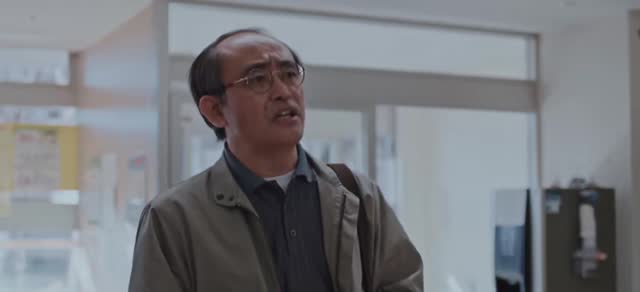
12 conversation scenes: chats among friends, talking about TV dramas after school, trading stickers as kids, arguing with a teacher in class, stopping a friend at karaoke, testifying on a train, and handling complaints at a pharmacy counter. The focus is on polite phrasing for making an argument and on the casual sentence endings used among friends.

Language highlights

  • 「〜っけ」(checking something you once knew)
  • 「〜んだけど」(trailing off to hand over the floor)
  • 「〜じゃないですか」(pulling the listener to your side)
  • 「あえて」(on purpose, even though it may hurt)
  • 「お待ちいただけますか」(may I ask you to wait?)

Scenes on this page

  1. Girls' night: all three of us as anteaters

    Scene 1 · 0:23

    Expressions: 〜っけ, 〜んだけど(言いさし), 〜とか(ぼかし)

  2. Girls' night: the popular ant hot spot

    Scene 2 · 0:22

    Expressions: 〜系, ふわっふわ, そんな〜いる?

  3. After school: the TV drama club

    Scene 3 · 0:24

    Expressions: 頭一つ抜けてる, どっちかっていうと, 掛け合い

  4. Sticker trade: negotiating with a 33-year-old mind

    Scene 4 · 0:30

    Expressions: 〜ておいたほうが〜, 〜狙い, 正直〜

  5. Adolescence: irritated by Dad for no reason

    Scene 5 · 0:28

    Expressions: 〜のに(二重), 〜感じ, ウザい

  6. Collective responsibility: arguing with the teacher

    Scene 6 · 0:21

    Expressions: 〜じゃないですか, 〜せいで, 〜なんだよ

  7. The teacher's sophistry: then there's no problem

    Scene 7 · 0:16

    Expressions: じゃないか / じゃないですか, そういうわけじゃない, ズルい

  8. That Mi-pon is driving

    Scene 8 · 0:16

    Expressions: あの〜(共有記憶の「あの」), かぶせ(同じ型を重ねる笑い), 〜んだもん

  9. Stopping him in public: I'll say the hard part

    Scene 9 · 0:21

    Expressions: あえて, 〜になってもらいたい, 〜とは思うんだけど

  10. That's just wishful thinking

    Scene 10 · 0:17

    Expressions: 希望的観測, 口をそろえて, 〜っていう+名詞

  11. He didn't touch her: testifying for the person she hates most

    Scene 11 · 0:25

    Expressions: 触っていない, 〜くらい〜だった, 〜んで

  12. Pharmacy counter: this complaint is nothing

    Scene 12 · 0:30

    Expressions: お待ちいただけますか, 〜だけでしょ / 〜だけだろ?, 〜にとって

Speed
All scenes

Girls' night: all three of us as anteaters

This scene

ブラッシュアップライフ Episode 2 Girls' night: all three of us as anteaters still

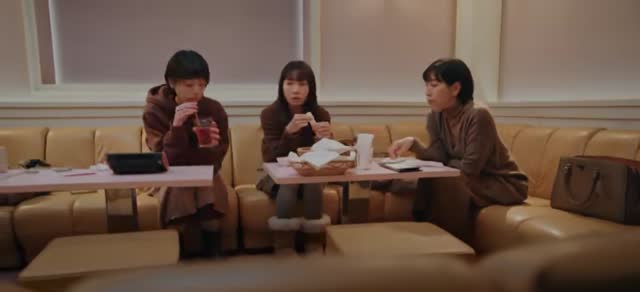
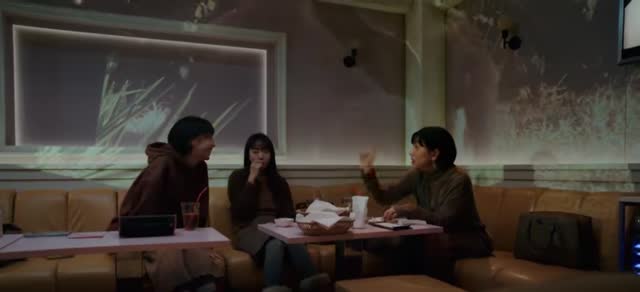
Asami tells Natsuki and Miho that she was told in the afterlife she would be reborn as an anteater for lack of virtue. The other two start counting up their own bad deeds.
  1. 麻美

    I don't know, but maybe it's because my conduct in my past life wasn't good?

  2. 美穂

    A-chin, did you ever do anything bad?

  3. 麻美/美穂

    Well, I haven't committed any crimes or anything. / Right.

  4. 美穂/夏希

    Huh? If even A-chin isn't good enough, aren't we in trouble too? / We are.

  5. 夏希/美穂

    I've got tons of things on my conscience. / Same.

  6. 美穂

    Me, in middle school, I used to cheat on tests and stuff.

  7. 麻美/美穂

    That's a pretty big minus. / Wow.

Speaking notes

〜っけ

asking about something you once knew but can't recall

「あーちん 何か悪いことしたっけ?」 = "A-chin, what bad thing did you do, again?"
「っけ」 is used to check something you "should know but can't quite recall right now."
⚠ Key restriction: it can only be used for things you once knew.
• 名前 何だっけ? ("What was your name again?" I knew it and forgot)
• 名前 何ですか? ("What's your name?" I never knew it)
You cannot use っけ to ask about something you never knew.
So what this sentence implies is: we're so close that I should know what you did, but I can't remember.
(In Episode 10, scene 20, the last line of dialogue in the whole drama is 「何で『ぴょろたん』になったんだっけ?」, a small thing all four of them should know but none can recall.)
〜んだけど(言いさし)

trailing 'but' that hands the floor to the listener

「カンニングとかしてたんだけど。」 = "I used to cheat and stuff, but..."
⚠ The final 「んだけど」 is not a contrast; it is a lead-in: she stops halfway and passes the turn to the other person.
Compare:
• カンニングしてた。 = I cheated. (an assertion thrown at the listener, who can only receive it flatly)
• カンニングしてたんだけど… = I'll start by saying this; what do you make of it?
Japanese speakers use this ending almost every time they tell something embarrassing or bring up a topic.
Leaving a sentence unfinished (言いさし) is a basic conversational technique and appears everywhere in this drama:
• 〜なので。 (Episode 1, scene 11, used to refuse)
• 〜していただきたくて。 (Episode 9, scene 10, used to ask)
• ちょっと… (the all-purpose refusal)

〜とか(ぼかし)

pretending to list examples in order to blur a statement

「犯罪とかはやってない」「カンニングとかしてた」
On the surface 「とか」 lists examples (A とか B とか), but its real effect is to blur what is said.
⚠ Even when there is only this one thing, adding 「とか」 pretends there are other similar things, which softens the impact:
• カンニングした = I cheated. (bare)
• カンニングとかしてた = cheating or something like that, I don't remember exactly
This is a common device in Japanese for avoiding saying things directly, and it is used far more often than "or something" in English.
Other blurring tools (frequent in this drama): とか, なんか, みたいな, 的な, って感じ.
⚠ Overuse makes you sound as if you have no opinion, so use it sparingly in business settings.

Key vocabulary

心当たり こころあたり
Something that comes to mind, a lead. 「心当たりがある/ない」 is used as a pair.
カンニング
Cheating on a test. From English "cunning," but English does not have this meaning; it is a Japanese-made English word.
前世 ぜんせ
Previous life. The counterparts are 「今世(こんぜ)」 and 「来世(らいせ)」, the three core words of this drama.
行い おこない
Conduct, behavior. 「行いが良くない」 = poor conduct.
犯罪 はんざい
Crime.
マイナス
A minus, a deduction. 「だいぶマイナスだね」 = "that's a big deduction."

↑ Scenes on this page

Girls' night: the popular ant hot spot

This scene

ブラッシュアップライフ Episode 2 Girls' night: the popular ant hot spot still

Natsuki imagines the three of them becoming anteaters together and going out to eat ants. As they get more into it, they describe the ants like trendy food.
  1. 夏希

    But wouldn't it be fun if all three of us became giant anteaters together?

  2. 美穂/夏希

    No way. Giant anteaters, really? / It'd be fine.

  3. 夏希

    Like, "I found some tasty ants, let's go eat them together,"...

  4. 夏希/麻美

    ...and so on. / A popular ant spot, huh.

  5. 美穂/夏希

    Wouldn't it be super crowded? / But they're super tasty ants!

  6. 麻美

    The kind that melt the moment you put them in your mouth.

  7. 夏希/美穂

    Right, really light and fluffy ones. / Are there ants like that?

Speaking notes

〜系

packing a description into a category label

「口の中 入れた瞬間 溶けちゃう系だ」 = "It's the kind that melts the moment it goes in your mouth."
「〜系(けい)」 packs a long description into a category label, and it is a very frequent word-forming device in young people's speech:
• 癒し系 (the soothing type) • 体育会系 (the athletic-club type)
• 天然系 (the naturally airheaded type) • 医療系 (medical field, Episode 5, scene 7)
⚠ The advantage is that you don't have to commit: saying "it's the melting type" leaves more room than asserting "it melts," and it sounds like an expert sorting things into categories.
That is the absurdity of this scene: two people earnestly classify the texture of an ant that does not exist.

ふわっふわ

doubling a mimetic word with a small tsu to intensify it

「ふわっふわの」 = "really, really fluffy."
Rule: insert a small 「っ」 in the middle of a reduplicated word to strengthen the degree.
• ふわふわ → ふわっふわ (fluffy → extra fluffy)
• もちもち → もっちもち (chewy → extra chewy)
• さらさら → さらっさら (smooth → extra smooth)
• ぺこぺこ → ぺっこぺこ (hungry → starving)
⚠ This is an emphasis device for speech only; you would not use it in formal writing.
Japanese mimetic words can be "conjugated": besides the small っ, you can stretch the vowel (ふわ〜っと) or add って to make an adverb (「バ~って」 in Episode 8, scene 17).

そんな〜いる?

a question that is really a comic retort

「そんなアリいる?」 = "Is there really such an ant?"
⚠ The form is a question, but it is really a retort: she isn't actually asking; she means "there's no such thing in this world."
Miho cuts down the increasingly absurd fantasy the other two have been spinning; this is the typical ツッコミ (comic retort) finish in Japanese conversation.
This is the basic structure of Japanese comedy and is very useful for listening:
• フリ (setup) → ボケ (the absurd statement) → ツッコミ (pointing it out)
If you catch where the ツッコミ comes in, you know the preceding part was a joke and don't need to agonize over each line.
Similar retorts: いるわけないでしょ, なんでやねん (Kansai), どのみーぽんのこと言ってんのよ? (scene 8).

Key vocabulary

スポット
Spot, location, attraction. 「人気スポット」 = a popular spot, jokingly applied here to "ant spot."
混む こむ
Crowded. 「混んでる」 = lots of people, packed.
溶ける とける
To melt. 「口の中で溶ける」 is a set phrase for food that melts in the mouth.
瞬間 しゅんかん
The moment. 「〜した瞬間」 = at the moment when...
人気 にんき
Popularity, popular. ⚠ Read にんき, not じんき.

↑ Scenes on this page

After school: the TV drama club

This scene

ブラッシュアップライフ Episode 2 After school: the TV drama club still

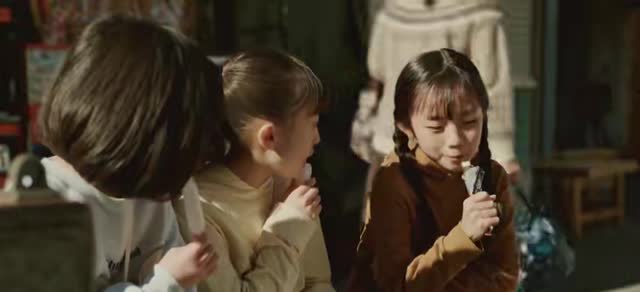
After school in elementary school, Asami, Natsuki, and Miho gather as the self-styled "TV drama club" and discuss the show they are following.
  1. 夏希

    But after all, this season it's got to be "ナースのお仕事," right?

  2. 麻美/美穂

    Well, yeah, that's how it goes. / It's a head above the rest.

  3. 夏希

    It's the banter between those two that makes it good.

  4. 美穂

    But honestly, I liked the first one better.

  5. 夏希/美穂

    Really? I like the current one too. / I like it too, but...

  6. 美穂/麻美

    If I had to say, I'd go with the first one. / True.

  7. 麻美/美穂

    The first one had more catharsis. / Exactly!

Speaking notes

頭一つ抜けてる

standing out clearly ahead of the others

「頭一つ抜けてるもんね」 = "It's a clear head above the rest, isn't it."
Literally "a head taller," meaning clearly better than others of the same kind. It started in horse racing and height comparisons and is now widely used to rate works, athletes, and products.
⚠ Note that it is 「抜けてる」 (the ている form), stressing "being in the leading state," not a one-time action.
(This is the 「〜ている」 = a state that continues after a change discussed in Episode 1, scene 4: 抜けた is the moment of passing, 抜けている is being ahead now.)
Similar body-part idioms: 一目置く (to defer to, Episode 7, scene 13), 足を引っ張る (to drag someone down, Episode 9, scene 12), 肩を並べる (to stand on a par with).

どっちかっていうと

a cushion before stating a preference

「どっちかっていうと『1』だね」 = "If I had to pick, the first one."
= the casual form of 「どちらかと言うと」. It is used when both options are good but you have to pick one.
⚠ Its function is a cushion:
• 「1」のほうが好き = I like the first one better (sounds like rejecting the one the other person likes)
• どっちかっていうと「1」 = I only lean slightly that way, so don't take it to heart
This is the standard device for stating a preference in Japanese: first declare "it's not black and white," then give your leaning.
Similar cushions: 個人的には (personally), 強いて言えば (if I must say), あくまでも (it's only, after all; Episode 8, scene 17).

掛け合い

back-and-forth exchange between two performers

「2人の掛け合いがいいよね」 = "The banter between those two is great."
掛け合い = a give-and-take exchange, a performance in dialogue. The verb is 「掛け合う」.
Comedy duos (漫才), two-lead dramas, and co-hosts all use this word.
⚠ Here the word also points back at the drama itself: this drama is carried by 掛け合い: the chatter among childhood friends, the exchanges between Asami and the counter, Asami and Mari trading retorts. Almost no scene is driven by plot; it is all two people passing words back and forth.
That is why the Japanese in this drama is especially good for listening practice: short sentences, quick exchanges, lots of repetition.

Key vocabulary

今期 こんき
This season (of TV). Japanese dramas air in seasons of three months, so 「今期のドラマ」 is a set phrase.
カタルシス
Catharsis (from Greek). The pleasure of release you feel after finishing a work.
正直 しょうじき
Honestly, to tell the truth. As an adverb it means "frankly speaking."
抜ける ぬける
To stand out; also "to fall out, to drop out." 「頭一つ抜けてる」 is explained in this scene's notes.
掛け合い かけあい
Banter, give-and-take between two people. The core technique of comedy duos.

↑ Scenes on this page

Sticker trade: negotiating with a 33-year-old mind

This scene

ブラッシュアップライフ Episode 2 Sticker trade: negotiating with a 33-year-old mind still

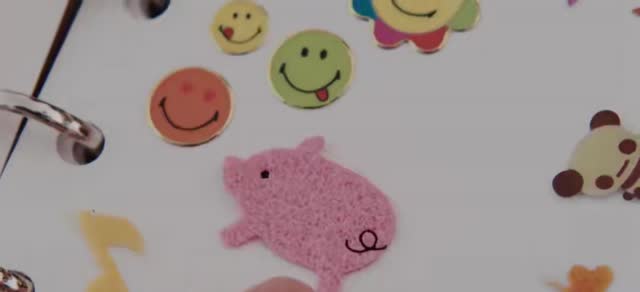
Sticker trading is the fad among elementary school girls, and stickers differ in value. Miho wants Asami's felt sticker, and Asami weighs in her head whether to agree gracefully.
  1. 麻美

    Shall we trade this and this for that?

  2. 麻美(心)

    ⟨A sparkly sticker, plus a regular sticker thrown in.⟩

  3. 麻美(心)/美穂

    ⟨This shouldn't be a bad deal.⟩ / If that's the case...

  4. 美穂

    I want A-chin's felt one!

  5. 麻美

    Oh, this one? / ⟨Whoa, she's after the felt.⟩

  6. 麻美(心)

    ⟨Hmm, honestly this is tough.⟩

  7. 麻美(心)

    ⟨But if I trade smoothly here,⟩

  8. 麻美(心)

    ⟨it should be easier to deal with her in the future...⟩

  9. 麻美/美穂

    Yeah, sure. / Thank you! Oh, yay!

Speaking notes

〜ておいたほうが〜

doing something now for the sake of later

「ここはスムーズに交換しておいたほうが 今後も取引がしやすくなるはず」 = "If I trade smoothly here, deals with her should go more easily from now on."
⚠ The core of 「ておく」 is not "finished," but "preparing for the future, setting things up in advance":
• 買っておく (buy in advance) • 言っておく (say something beforehand)
• やめておく (let's pass this time; preparing by not doing)
• 築いておく (Episode 9, scene 4: building up goodwill twenty years in advance)
Casual contractions: 〜ておく → 〜とく, 〜でおく → 〜どく (覚えといて、やっとこう).
The full calculation in Asami's line is: take a small loss now to maintain a long-term relationship.
An elementary-school sticker swap is run by her as a long-term trading relationship. That is how a 33-year-old mind works.

〜狙い

naming someone's real target in one word

「お~っと フェルト狙い」 = "Whoa, she's after the felt."
Noun + 狙い (ねらい) = compresses "someone's target is X" into one word. The verb is 「狙う」 (Episode 8, scene 8: 「福ちゃんのこと狙ってた」 = was eyeing Fuku-chan).
Common in sports, business, and election reporting:
• 優勝狙い (aiming for the title) • 一発狙い (going for one big shot)
• 若者狙いの商品 (a product aimed at young people)
⚠ In casual speech it is used to call out the other person's real intention, with a "I see through you" flavor.
Asami uses the voice of a sports commentator to describe a sticker negotiation among elementary school kids.

正直〜

'honestly' as a warning that bad news is coming

「正直厳しいな」 = "Honestly, this is tough."
⚠ At the start of a sentence, 「正直」 is an adverb meaning "to be honest," not the adjective "honest."
What follows is almost always negative or something awkward to say:
• 正直きつい (honestly, that's rough) • 正直微妙 (honestly, so-so)
• 正直わからない (honestly, I don't get it) • 正直だるい (honestly, it's a drag)
When you hear 「正直」 at the start, get ready for bad news.
Similar "advance notice" adverbs: あえて (I'll say it even though it won't go over well, scene 9), ぶっちゃけ (frankly; more casual), ここだけの話 (between us).

Key vocabulary

取引 とりひき
Trade, dealing. A business word; using it for elementary schoolers swapping stickers feels incongruous, and that is the joke.
スムーズ
Smooth (from English "smooth"). 「スムーズに」 = without a hitch.
キラキラ
Sparkling, glittering. A mimetic word, used for glitter stickers and the like.
フェルト
Felt. A premium item among 1990s Japanese elementary school stickers.
今後 こんご
From now on, in the future. More formal than 「これから」.

↑ Scenes on this page

Adolescence: irritated by Dad for no reason

This scene

ブラッシュアップライフ Episode 2 Adolescence: irritated by Dad for no reason still

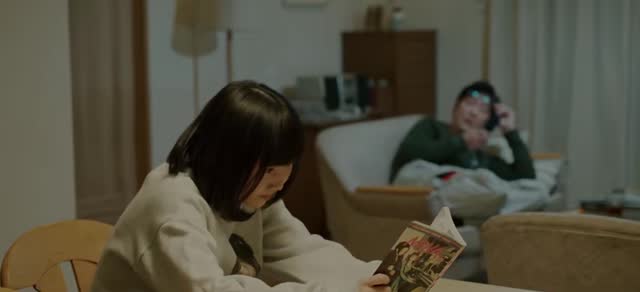
Middle-school Asami respects and is grateful to her father, but she can't help being irritated by everything about him. Her father asks what's wrong.
  1. 麻美(心)

    ⟨Ugh, this is bad. The way he has that glowing antenna on...⟩

  2. 麻美(心)

    ⟨...and the way he's got a bank's freebie strap on his phone...⟩

  3. 麻美(心)

    ⟨It's seriously annoying.⟩

  4. 麻美(心)

    ⟨And wearing some track pants from who knows where is super annoying too.⟩

  5. 麻美(心)

    ⟨I shouldn't think like that. I want to be a good daughter.⟩

  6. 寛

    What's wrong, Asami?

  7. 麻美

    What do you mean?

  8. 寛

    Do you need the bathroom?

  9. 麻美

    No...

  10. 麻美(心)

    ⟨So annoying!⟩

Speaking notes

〜のに(二重)

'even though...' left hanging, full of feeling

「そんなこと思っちゃダメなのに 親孝行したいのに」 = "I shouldn't think like that, even though I want to be a good daughter..."
「のに」 = "even though..." (things not going as wished), carrying the speaker's frustration and helplessness.
⚠ Here two 「のに」 are chained, and neither finishes the sentence.
The clause that should follow ("but I just can't help it") is something she cannot say even to herself, so leaving a 「〜のに」 ending unfinished is itself the expression of emotion.
Compare:
• 〜のに = regret, disappointment (neutral, leaning to resigned)
• 〜くせに = blame, looking down on (Episode 9, scene 7: 「今まで行かなかったくせに」)
Both mean "even though... yet...", but のに points at the situation, while くせに points at the person.

〜感じ

turning behavior into a disliked 'type of person'

「光るアンテナつけてる感じとか」 = "the way he's got that glowing antenna on and stuff."
"Verb ている + 感じ" does not point to one specific act but abstracts it into "that kind of vibe."
⚠ Saying it this way is vaguer than the direct 「アンテナをつけている」, and also meaner: what she dislikes is not the antenna, but "the kind of person who would put such a thing on."
That is exactly adolescent irritation: unable to say what exactly is wrong, you pack the whole person up and reject them with 「〜感じ」.
Similar vague-making tools: 〜的な (the 「流れ的に」 of scene 3), 〜系 (scene 2), 〜みたいな (Episode 6, scene 2: 「〜みたいなノリで」).

ウザい

shouting an adjective by its stem alone

「⟨ウザ!⟩」 = "So annoying!"
ウザい = annoying, irritating (shortened from 「うざったい」, young people's slang).
⚠ This is a fairly rude word that would hurt if said to someone's face, which is why this whole passage appears only in her inner monologue.
And in the last line, 「ウザ!」 even drops the 「い」.
Cutting an adjective down to its stem is how you say it when emotion peaks:
• すご! (wow!) • うま! (yummy!) • こわ! (scary!)
• ズルっ! (scene 7: Asami's inner voice when the teacher's sophistry corners her)
⚠ This kind of "stem shout" appears only in very casual speech and inner monologue, and cannot be used in writing.

Key vocabulary

ノベルティー
A promotional giveaway from a company, such as the straps and towels banks and insurers hand out.
親孝行 おやこうこう
Filial piety, caring for one's parents. 「親孝行する/したい」.
ストラップ
Phone strap, charm.
ジャージー
Sweatpants, track pants. In Japanese this usually means cheap loungewear, which is why it is mocked.
アンテナ
Antenna.

↑ Scenes on this page

Collective responsibility: arguing with the teacher

This scene

ブラッシュアップライフ Episode 2 Collective responsibility: arguing with the teacher still

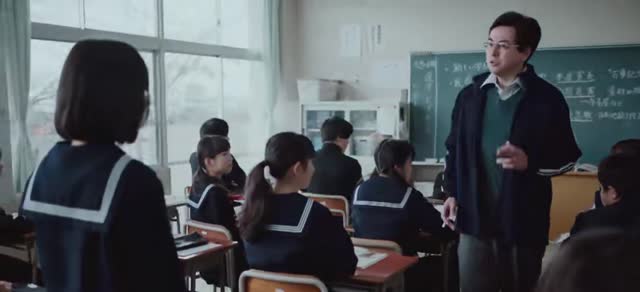
In a social studies class, Mr. Mita scolds two students who passed notes in front of the whole class, calling it collective responsibility. Asami raises her hand to object.
  1. 三田/麻美

    This is called collective responsibility. / Collective responsibility?

  2. 三田

    Listen. Once you're out in society, because of someone's mistake or error...

  3. 三田

    ...there are plenty of cases where everyone ends up in trouble.

  4. 三田

    Collective responsibility is there so you learn that now, while you can.

  5. 麻美

    But because it was made collective responsibility, those two might get isolated...

  6. 麻美

    ...and become targets of bullying, couldn't they?

Speaking notes

〜じゃないですか

a negative question that pulls the listener to your side

「いじめの対象になるかもしれないじゃないですか」 = "Couldn't they become targets of bullying?"
⚠ The form is a negative question; the substance is an assertion.
Why not simply say 「〜かもしれません」?
Because 「じゃないですか」 wraps the judgment as "isn't it obvious, you'd agree too, wouldn't you?", which first draws the other person to your side.
It sounds softer than an assertion but actually presses harder, so it can be used both for appealing and for talking back.
• おいしいじゃないですか ("Isn't it tasty?" agreement)
• おかしいじゃないですか ("Isn't that strange?" a challenge)
That a middle schooler dares to argue with a teacher using this pattern shows she isn't one.
In the next scene, the teacher will push her back with exactly the same structure.

〜せいで

'because of' for a bad result, the opposite of okage de

「連帯責任にしたせいで 2人が孤立したり」 = "Because you made it collective responsibility, those two might become isolated."
「せいで」 is used only to blame a bad result on a cause, with a clear accusing tone.
⚠ The positive counterpart is 「おかげで」 (thanks to). The two sit in exactly the same grammatical slot with opposite value:
• あなたのおかげで成功した (Thanks to you, I succeeded)
• あなたのせいで失敗した (It's your fault that I failed)
⚠ Mixing them up causes trouble: 「あなたのおかげで失敗した」 = "thanks to you I failed", which is heavy sarcasm.
Connection: noun + の / plain-form verb + せいで.
(In Episode 8, scene 12, Mari says 「自分のせいだ」. She takes the blame upon herself: the same word, pointing inward.)

〜なんだよ

'I'm explaining it to you' sentence ending

「それを今のうちに学ぶための連帯責任なんだよ」 = "Collective responsibility is there so that you learn that now."
Breakdown: noun + な + んだ (= のだ) + よ.
「んだ(のだ)」 has the tone of "let me explain to you," and adding 「よ」 makes it "listen to me, this is how things are."
⚠ This is the typical sentence ending of teachers, parents, and bosses lecturing: it presupposes the hierarchy "I hold the truth, you need to be told."
So be careful using 「〜んですよ」 to a superior; it can turn into "let me teach you."
Compare versions of the same sentence:
• 連帯責任だ (a plain assertion)
• 連帯責任なんだ (let me explain it to you)
• 連帯責任なんだよ (you listen to me)

Key vocabulary

連帯責任 れんたいせきにん
Collective responsibility. A common disciplinary tool in Japanese schools and workplaces: when one person errs, everyone is punished.
過ち あやまち
Fault, error. More formal and weightier than 「ミス」, with a moral tone.
ミス
Mistake, slip.
迷惑 めいわく
Trouble, bother. 「迷惑をかける」 = to cause trouble for someone, one of the things Japanese people worry about most.
孤立 こりつ
Isolation.
いじめ
Bullying. The verb is 「いじめる」.

↑ Scenes on this page

The teacher's sophistry: then there's no problem

This scene

ブラッシュアップライフ Episode 2 The teacher's sophistry: then there's no problem still

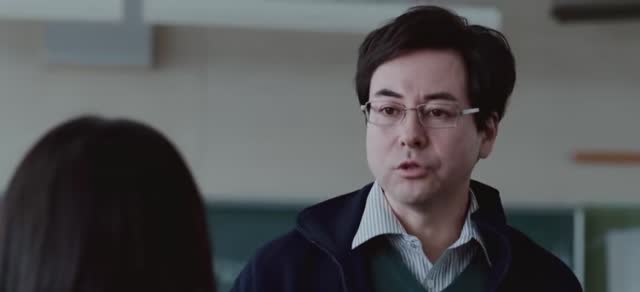
Asami says collective responsibility could lead to bullying. Mr. Mita asks her whether she wants to bully those two, and follows her answers with one question after another.
  1. 三田

    Kondo, do you want to bully those two?

  2. 麻美/三田

    No, I don't. / "I don't"...

  3. 三田

    Does that mean someone other than you wants to bully them?

  4. 麻美/三田

    No, that's not what I mean. / Then there's no problem, is there?

  5. 麻美(心)/三田

    ⟨What? That's cheating!⟩ / Well, fine.

Speaking notes

じゃないか / じゃないですか

the same weapon fired in polite and plain forms

⚠ In this confrontation, teacher and student use the same weapon.
• Asami: 「いじめの対象になるかもしれないじゃないですか」 (polite form)
• Teacher: 「じゃ 問題ないじゃないか」 (plain form)
The structure is exactly the same: forcing confirmation with a negative question. The only difference is polite vs plain form, that is, the hierarchy.
The teacher can use the plain form because he is the teacher; Asami has to use the polite form but copies the pattern.
⚠ For listening, catch this symmetry: whoever can use the plain form holds the lead in the conversation.
This rule runs through the whole drama: in Episode 10, scene 5, Captain Nakamura uses 「いいかげんにしろよ」 and 「〜じゃねえのか」 to Asami, plain and rough forms, while Asami can only answer 「すいません」.

そういうわけじゃない

denying an inference is not the same as making a claim

「いや そういうわけじゃないけど」 = "No, that's not what I mean, but..."
「わけ」 refers to "that reasoning / that implication (drawn from what came before)," so this line denies the other person's inference, not the fact.
It is the standard defensive line for Japanese people who are being misread.
⚠ But the weakness is also here: it only "denies the inference" and offers no positive claim, so it is easy for the other person to take over the floor, as happens to Asami (the teacher immediately follows with 「じゃ 問題ないじゃないか」).
Related 「わけ」 expressions (frequent in this drama):
• 〜わけじゃない = it's not that... (partial negation, Episode 8, scene 13)
• 〜わけがない = there's no way that... (total negation)
• 〜わけにはいかない = (given the circumstances) cannot...

ズルい

unfair, sneaky; shouted by its stem alone

「⟨は? ズルっ!⟩」 = "What? That's not fair!"
ズルい = sly, cheating, unfair. It can also mean "(he's so lucky) I envy him."
The 「ズルっ!」 Asami shouts in her mind is an adjective cut down to its stem (the same as 「ウザ!」 in scene 5), showing emotion bursting out before the word can be completed.
⚠ And this line is the verdict of the scene. The teacher's logic runs:
"Do you want to bully them?" → "No" → "Does anyone else?" → "That's not what I mean" → "Then there's no problem."
He swaps "possibility" for "intention." Asami sees through it, but a middle schooler in that situation can only shout it in her head.

Key vocabulary

いじめ
Bullying. The verb is 「いじめる」.
〜以外 いがい
Other than, apart from. Don't confuse it with the homophone 「意外(いがい)」, meaning "unexpected."
問題ない もんだいない
No problem. The teacher uses it to cut the discussion off.
ズルい
Sly, unfair. In casual speech it can also mean "(he's lucky) I'm envious."

↑ Scenes on this page

That Mi-pon is driving

This scene

ブラッシュアップライフ Episode 2 That Mi-pon is driving still

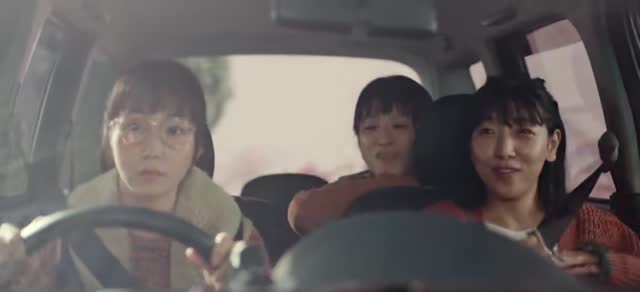
Miho has gotten her driver's license, so the three can go farther. Asami and Natsuki take turns teasing Miho in the driver's seat with the phrase "that Mi-pon...".
  1. 麻美

    It's weird that Mi-pon is driving.

  2. 夏希

    No, it's really moving. This is Mi-pon we're talking about, you know?

  3. 麻美

    That Mi-pon is actually driving.

  4. 夏希

    That Mi-pon, going forty kilometers an hour.

  5. 麻美

    That Mi-pon, sticking to the legal speed limit.

  6. 美穂

    Which Mi-pon are you even talking about?

  7. 夏希・麻美

    You know, that Mi-pon! Ahaha...!

Speaking notes

あの〜(共有記憶の「あの」)

'that' pointing at shared memory, not at a place

「あのみーぽんが運転してんだもん」 = "That Mi-pon is actually driving, you know."
⚠ This 「あの」 is not a distal "that" (Mi-pon is sitting right there in the driver's seat); it means "the one you and I both know," drawing on the memories and impressions shared by both sides.
The bigger the gap between what follows and that impression, the stronger the effect: the old, scatterbrained Mi-pon now calmly sticks to the legal speed limit.
This 「あの」 must be stressed, and it can be hammered repeatedly, as it is here.
Similar: あの田中が結婚?! ("That Tanaka got married?!"), あのチームが優勝.
⚠ This scene is replayed as it was in Episode 8, scene 6: the same four people, the same 「あのみーぽんが」, except this time, Asami is not in their memories.

かぶせ(同じ型を重ねる笑い)

stacking the same pattern, then a retort ends it

The three take turns raising the stakes with the same pattern 「あのみーぽんが〜」:
• あのみーぽんが運転してんだもん
• あのみーぽんが車間距離 取ってね
• あのみーぽんが時速40kmでさ
• あのみーぽんが法定速度をさ
Finally it is cut off by the target herself with 「どのみーぽんのこと言ってんのよ?」.
⚠ This is a very typical rhythm in Japanese conversation: repeating the same pattern is called 「かぶせ」 (layering), and the person being teased ends it with her own retort.
For listening, catching this repetition lets you follow the joke better than catching every line, because you don't need to listen to the repeated part, only the small piece swapped each time.
The drama uses this heavily: the 「鳥になった気分」 in Episode 9, scene 9 (Mari says it four times), the 「3チラ/4チラ」 in Episode 10, scene 16.

〜んだもん

'because...' offered with a pouty, self-justifying tone

「運転してんだもん」 = "Because he's driving, you know!"
Breakdown: 運転している → 運転してる → 運転してるんだ → 運転してんだ + もん.
「もん (= もの)」 at the end of a sentence gives a reason in a petulant, appealing way, with a flavor of "isn't it obvious, it's natural for me to think so."
⚠ Ladder of tone:
• 〜から (simply states a reason)
• 〜んだから (pushes the reason back at the listener, with a lecturing tone, Episode 1, scene 4)
• 〜んだもん (appealing and defending; softer than から but more willful)
It is mostly heard from women and children; men using it sound deliberately cute.
Similar: だって〜もん ("because...!"), 知らないもん ("I don't know, so there!").

Key vocabulary

感慨深い かんがいぶかい
Deeply moved, full of feeling. Used when looking back on how things have changed.
法定速度 ほうていそくど
Legal speed limit.
時速 じそく
Speed per hour.
運転 うんてん
Driving. 「運転する」.
不思議 ふしぎ
Mysterious, strange, hard to believe.

↑ Scenes on this page

Stopping him in public: I'll say the hard part

This scene

ブラッシュアップライフ Episode 2 Stopping him in public: I'll say the hard part still

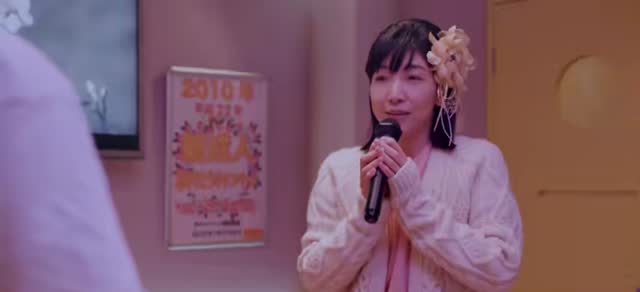
At karaoke after the coming-of-age ceremony, Fukuda announces he will pursue music and the whole room cheers him on. Asami stands up and tells him in front of everyone to give it up.
  1. 麻美

    Fuku-chan.

  2. 麻美

    As your childhood friend, I really want you to be happy, so...

  3. 麻美

    ...I'm going to say something harsh on purpose.

  4. 福田

    Huh?

  5. 麻美

    Fuku-chan, having a dream...

  6. 麻美

    ...is a wonderful thing, I do think, but...

  7. 麻美

    Honestly, about becoming a musician...

  8. 麻美

    I think you'd better give it up.

Speaking notes

あえて

'even though I know it's harsh', a disclaimer before bad news

「あえて厳しいことを言うね」 = "I'm going to say something harsh on purpose."
「あえて」 = I could have not done it, or it does me no good, but I do it deliberately.
⚠ Before heavy words, it works as a disclaimer and a lead-in: "I know this is unpleasant and that you may dislike me for saying it, but I will say it anyway," warning the other person about the coming impact.
Japanese speakers voicing disagreement or negative evaluation almost always need this word.
Similar "advance notice" devices: 正直 (honestly, scene 4), ぶっちゃけ (frankly), 厳しいことを言うようだけど (this may sound harsh, but).
(In Episode 7, scene 11, Asami thinks 「ここはあえて引っ張る」. There あえて is "on purpose," not "I have no choice." Same word; it depends on what follows.)

〜になってもらいたい

receiving someone's happiness as a favor, humbly

「福ちゃんには幸せになってもらいたい」 = "I'd like Fuku-chan to be happy."
⚠ This is an important extension of giving/receiving verbs: strictly, "you being happy" is not something Asami directly receives, but Japanese uses 「てもらう」 anyway.
Because 「てもらう」 does not express "I got a thing" but the stance that "the speaker hopes to be satisfied by the other person's act or state."
Compare (a fine but important difference):
• 幸せになってほしい = I want you to be happy (a wish, Episode 1, scene 2)
• 幸せになってもらいたい = I'd like to "receive" your happiness (one more layer of humility, like a plea)
That makes it well suited to just before saying something harsh: lower your stance as far as it will go first.
(In Episode 8, scene 19, Asami in her fifth round says 「ただ幸せになってほしいから」. By then she no longer needs to plead with anyone.)

〜とは思うんだけど

granting a point with は, then taking it back

「ステキなことだとは思うんだけど」 = "I do think it's a wonderful thing, but..."
⚠ The key is the 「は」.
• ステキなことだと思う = I think it's wonderful (full agreement)
• ステキなことだとは思う = I only grant that it's "wonderful" (implying: I can't say as much about the rest)
「〜とは思う」 singles out and limits "what I admit," and 「けど」 inevitably follows to take it back.
This is the standard lead-in for Japanese people about to object: give the other side half, then withdraw it.
This "range-limiting" function of 「は」 runs through the whole drama:
• Episode 8 「そう簡単に売れるとは思ってない」 (at least on this point he isn't naive)
• Episode 10 「入ってもらえるようにはしとく」 (I'll at least manage this much)

Key vocabulary

幼なじみ おさななじみ
Childhood friend. Someone you've known since you were little; not limited to a particular gender.
ミュージシャン
Musician. Leans more toward pop and band music than 「音楽家」.
夢 ゆめ
Dream. 「夢を持つ」 = to hold a dream.
ステキ すてき
Wonderful, lovely. Written 「素敵」 in kanji.
正直 しょうじき
Honestly. Asami uses it to give advance notice of the harsh words to come.

↑ Scenes on this page

That's just wishful thinking

This scene

ブラッシュアップライフ Episode 2 That's just wishful thinking still

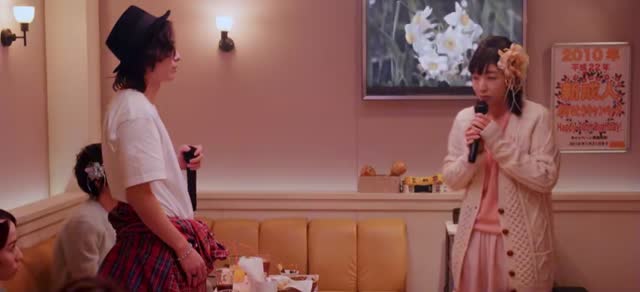
At karaoke after the coming-of-age ceremony, Asami keeps talking to Fukuda and the others. She points out that everyone just said in unison that Fuku-chan will definitely make it, but that is mostly wishful thinking.
  1. 麻美

    You know, ever since a while ago, everyone's been saying in unison...

  2. 麻美

    ...things like "I'm sure Fuku-chan will definitely make it big," but...

  3. 麻美

    That's just the idea that you want a star to come out of your own circle...

  4. 麻美

    ...and there's a lot of wishful thinking mixed in, isn't there?

  5. 麻美

    Right?

Speaking notes

希望的観測

a stiff formal term that exposes the content

「希望的観測がだいぶ入ってるでしょ?」 = "There's quite a lot of wishful thinking mixed in, isn't there?"
Literally "hopeful observation," that is, English "wishful thinking": believing something is so, not based on facts, but because you hope it is.
It is a fairly formal Sino-Japanese word often seen in news, commentary, and business.
⚠ And Asami throws it out in a karaoke room, at a group of childhood friends who just came of age.
The register and the setting don't match at all, and that exposes her 33-year-old mind.
The drama uses this trick repeatedly (a "mismatched register" that gives away her identity):
• Episode 1 「威力業務妨害罪かな?」 (passing sentence at a coming-of-age ceremony)
• Episode 2 「揺るがざる事実だね」 (saying "I can't eat the fries" in a classical-style phrase)
• Episode 7 「〜がために」 (mocking a disruptive person with classical grammar)

口をそろえて

everyone saying the same thing, so it's suspect

「さっきからみんな口をそろえて」 = "Since a while ago, everyone's been saying the same thing in unison."
Literally "lining up their mouths," meaning several people say exactly the same thing.
⚠ It often carries a reserved attitude of "they all say so, which doesn't necessarily make it believable." That is just what Asami means now: everyone says he'll definitely make it big, but only because everyone wants him to.
Similar body-part idioms: 口が堅い (tight-lipped), 口が滑る (to let something slip), 口を挟む (to cut in), 口をきく (to speak; also "to put in a good word").
A great many Japanese idioms are built from body parts (目、口, 手、足, 頭、腹), and learning them in groups is more efficient than one by one.

〜っていう+名詞

turning a whole clause into a modifier of a noun

「自分の身内からスターが出てほしいっていう希望的観測」 = "the wishful thinking of wanting a star to come out of your own circle."
「っていう」 turns the whole preceding sentence into a modifier of the following noun, the all-purpose spoken device for adding content to an abstract noun.
⚠ In writing, restore it to 「という」.
• 「もう無理」っていう気持ち (the feeling of "I can't take it anymore")
• 頑張れば巻けるということを伝える (Episode 4, scene 12, the written form)
• 〜みたいな (a more casual relative, Episode 6, scene 2)
This structure is the skeleton Japanese uses to express abstract content: without it, nouns like 「希望」「気持ち」「可能性」 could not be given specifics.

Key vocabulary

身内 みうち
One's own people, relatives. Means both family and members of the same small circle.
売れる うれる
(Of goods) to sell well; (of people) to become popular and famous. Here it is the latter.
スター
Star.
絶対 ぜったい
Absolutely, definitely.
希望的観測 きぼうてきかんそく
Wishful optimistic forecast. A translation of English "wishful thinking," explained in this scene's notes.

↑ Scenes on this page

He didn't touch her: testifying for the person she hates most

This scene

ブラッシュアップライフ Episode 2 He didn't touch her: testifying for the person she hates most still

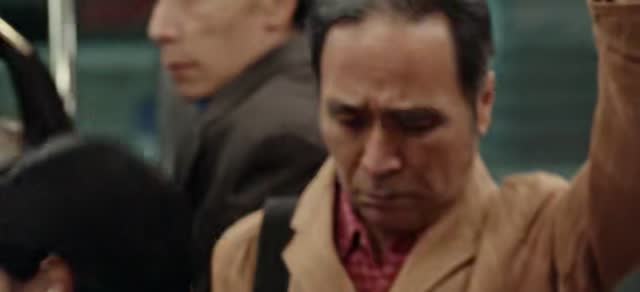
Asami now commutes by train and sees the teacher she dislikes, Mr. Mita, accused of groping on the train. She saw with her own eyes that he did not touch anyone, and tells the station staff.
  1. 麻美(心)

    ⟨Honestly, I hated him so much I didn't even want to see his face...⟩

  2. 三田

    No, no, no...

  3. 麻美(心)

    ⟨But he... didn't touch her.⟩

  4. 麻美

    Um, excuse me, excuse me, um.

  5. 麻美

    This gentleman didn't touch anyone.

  6. 駅員/麻美

    Is that true? / I was sitting where I could see...

  7. 麻美

    I'm certain.

Speaking notes

触っていない

'haven't done it' versus 'will not do it'

「この方 触ってないです」 = "This gentleman didn't touch anyone."
⚠ This is a matter of life and death:
• 触っていない = (up to now) the act did not take place, and this is what clears someone
• 触らない = (from now on) I won't touch / won't touch, which would be answering beside the point at a hearing like this
To say "I haven't done X" in Japanese you must use 「ていない」.
Other cases that need ていない:
• やっていません (I didn't do it) • 聞いていません (I wasn't told)
• もらっていません (I haven't received it) • まだ食べていない (I haven't eaten yet)
"Haven't done" and "won't do" are two different tenses in Japanese and must never be mixed up.
And this is the testimony Asami gives for a person she "hates so much she doesn't want to see his face."

〜くらい〜だった

measuring degree by a concrete extreme scene

「顔も見たくないくらい大嫌いだった」 = "I hated him so much I didn't even want to see his face."
Before 「くらい」 you put a concrete, exaggerated scene to measure the abstract adjective that follows.
⚠ This is far more vivid than just 「すごく嫌いだった」, and is the mainstream way Japanese describes degree: instead of piling up adverbs, give an example of "how far."
• 死ぬくらい眠い (so sleepy I could die)
• 信じられないくらいおいしい (so delicious it's unbelievable)
• 舌噛み切って死ぬレベル (Episode 10, scene 16, a modern version of the same device using 「レベル」 instead of くらい)
If you deliberately use this structure when speaking, your expressiveness goes up a notch immediately.

〜んで

contracted 'node', a reasoned 'because'

「私 見える所に座ってたんで」 = "Because I was sitting where I could see."
In speech, 「ので」 is often contracted to 「んで」, which feels more casual.
⚠ 「ので」 and 「から」 both give reasons but feel different:
• から = a subjective reason, with the speaker's judgment and insistence
• ので = objective cause and effect, more "reasonable," more neutral, and more polite
So when explaining to station staff, ので is more appropriate than から.
In business settings 「ので」 is used almost always: 「会議がありますので 失礼します」.
The counter staff in this drama use ので/なので all the way through (the 「決まりなので」 in Episode 1, scene 11), because it makes a refusal sound like an objective fact.

Key vocabulary

この方 このかた
This person (polite). A polite way of referring to a third person who is present.
間違いない まちがいない
No mistake, certain.
大嫌い だいきらい
Strongly dislike, hate. The opposite is 「大好き」.
触る さわる
To touch. The particle is 「に」: 体に触る.
見える みえる
To be visible (coming naturally into view). Distinct from 「見られる」 (can see, under certain conditions).

↑ Scenes on this page

Pharmacy counter: this complaint is nothing

This scene

ブラッシュアップライフ Episode 2 Pharmacy counter: this complaint is nothing still

Asami is now a pharmacist. At the dispensing pharmacy a patient presses her and complains that the medicine is slow. She asks him to wait and thinks that the complaints she took at the city hall counter were far worse.
  1. 患者

    Hey, isn't it ready yet?

  2. 麻美/患者

    Could you wait just a little longer? / Isn't this taking a bit long?

  3. 患者

    All you're doing is handing over medicine, right?

  4. 麻美(心)

    ⟨Of course, there are quite a few irritated patients.⟩

  5. 患者

    What on earth are you checking?

  6. 患者

    It's written on the prescription, so all you have to do is hand it over, no?

  7. 麻美(心)/回想・市民

    ⟨But...⟩ / 〔Can't you do something about it?〕

  8. 麻美(心)

    ⟨For me, having gone through...⟩

  9. 麻美(心)

    ⟨...harsh complaint handling at the city hall counter,⟩

  10. 麻美(心)

    ⟨a complaint of this level is nothing.⟩

Speaking notes

お待ちいただけますか

the same scene as Episode 1, two levels more polite

⚠ Compare with Episode 1, scene 1 by ear.
• Round 1, city hall: Asami says 「少々お待ちください」
 → ください is a request, but at bottom it is still a directive: "you go and wait."
• Round 2, pharmacy: she says 「もう少々お待ちいただけますか?」
 → Breakdown: お待ち (humble form) + いただく (humble of もらう) + potential form + か = "may I receive the favor of your waiting a bit longer?"
Same scene, same person, but in round 2 her keigo is gentler and more practiced than in round 1.
The politeness ladder for requests (memorize it as a set):
• 待って (plainest), then 待ってください, then お待ちください, then お待ちいただけますか, then お待ちいただけますでしょうか (most polite)

〜だけでしょ / 〜だけだろ?

'just that' used to dismiss someone else's work

「薬 渡すだけでしょ」「それを出せばいいだけだろ?」 = "You're just handing over the medicine, right?" / "All you have to do is take that out, no?"
「だけ」 compresses the other person's work into "no more than that," and 「でしょ/だろ」 forces them to admit it.
⚠ The contempt comes from that 「だけ」.
Degrees of roughness at the sentence end:
• 〜でしょ (relatively soft, but still pressing you to agree)
• 〜だろ? (very rough, men's speech)
The patient fires off two lines in a row, escalating step by step.
This is the classic combination for harassing service staff, and very common in real life too.
(The citizen in Episode 1, scene 1 said 「何とかならないの?」. That was begging for flexibility; this denies the labor itself, a notch harsher.)

〜にとって

'from the standpoint of', not 'toward'

「キツいクレーム対応を経験してきた私にとって この程度のクレームは何てことない」 = "For me, having gone through harsh complaint handling, a complaint of this level is nothing."
「にとって」 indicates "from whose standpoint," and what follows is necessarily an evaluation that varies by person (大切だ/難しい/何てことない).
⚠ Never mix it up with 「に対して」:
• 私にとって = to me / in my view (my perspective)
• 私に対して = directed at me (someone's action pointing at me)
Examples: 「彼は私に対して厳しい」 (He is strict with me) / 「彼は私にとって大切だ」 (He is important to me). Both could be glossed "toward me," but the meanings are unrelated.
This line is the close of the episode: the scolding she took in round 1 at city hall has become her armor in round 2.

Key vocabulary

処方箋 しょほうせん
Prescription. The slip a doctor writes, used to get medicine.
クレーム
Complaint (from English "claim"). A Japanese-made English word: English "claim" means assertion or demand for compensation, but in Japanese it refers specifically to a customer's complaint. 「クレーム対応」 = handling complaints.
何てことない なんてことない
Nothing, no big deal. Also said as 「どうってことない」.
患者 かんじゃ
Patient, sick person.
確認 かくにん
Confirmation. 「確認する」.
イライラ
Irritation, being on edge. A mimetic word made into a verb: 「イライラする」.
渡す わたす
To hand over, to deliver.

↑ Scenes on this page

Back to ブラッシュアップライフ