LearnWithSubs

ブラッシュアップライフ Episode 9 (page 2/2)

Scenes on this page

  1. Using polite speech on a senior: no, no way

    Scene 10 · 0:44

    Expressions: ~という者なんですけれども, 確認していただきたくて, ~でしかない

  2. Then I might as well tell the truth: my fifth life

    Scene 11 · 0:34

    Expressions: 装う, 顔見知り, 警察 呼ばれる

  3. I've been holding back the medical world

    Scene 12 · 0:46

    Expressions: 足を引っ張る, 考えないようにしよう, ~によっては / ~によって

  4. The last street gig: singing since eight

    Scene 13 · 0:52

    Expressions: 気が済む, ~放題, 踏ん切りがつかない

  5. Memories can't beat the need to pee

    Scene 14 · 0:52

    Expressions: ~としての, ~ということを学んだ, 正直なこと言っていい?

  6. Inviting in a way that's easy to turn down

    Scene 15 · 0:33

    Expressions: 断りやすい感じで誘う, ~ならまだしも, ~気がする / ~みたいなノリで

  7. Glad they didn't say no

    Scene 16 · 1:00

    Expressions: よかった 断られなくて, 無理しなくていい, 誘ってくれて

  8. The truth about the stickers

    Scene 17 · 0:44

    Expressions: 気を使われる vs 嫌われたくない, 言われてみれば, 雑魚 / 庶民 / 釣り合う

  9. Poison

    Scene 18 · 0:37

    Expressions: 土下座してでも, ~しかない(第8集の再出), 毒を盛る

Speed
All scenes

Using polite speech on a senior: no, no way

This scene

ブラッシュアップライフ Episode 9 Using polite speech on a senior: no, no way still

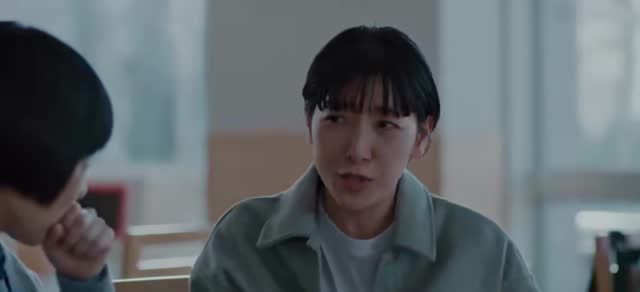
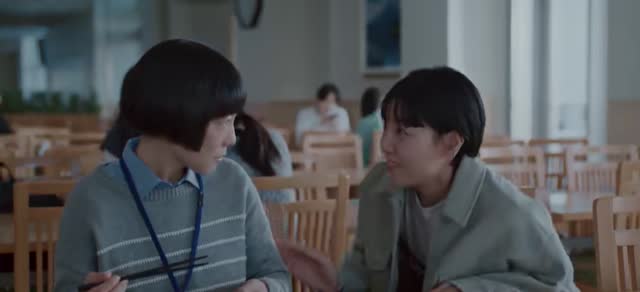
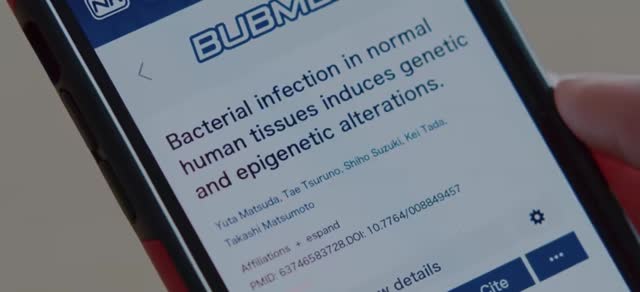
Asami visits the university to find Tae of the research lab, who doesn't know her. In very polite language she introduces herself, says she does private research, found an unfamiliar bacterium and wants the lab to confirm it.
  1. 麻美

    Excuse me, um, I'm a person by the name of Kondo.

  2. 多江/麻美

    Ms. Kondo? / Yes, sorry to interrupt your meal.

  3. 麻美/多江

    Do you have a moment? / Oh, yes.

  4. 麻美

    Um, I've always been doing personal research on genetic abnormalities

  5. 麻美

    and genetic modification.

  6. 多江/麻美

    Personal research? / Yes, that's right.

  7. 麻美

    In some tissue I collected the other day, I found an unfamiliar bacterium.

  8. 多江/麻美

    An unfamiliar bacterium? / That's right.

  9. 麻美

    I'd like your lab to confirm it as soon as possible.

  10. 多江/麻美

    At our lab? / That's right.

  11. 麻美(心)

    (No, impossible, impossible, impossible...)

  12. 麻美(心)

    (Saying "I do research personally"

  13. 麻美(心)

    just makes me a mad scientist.)

  14. 麻美(心)

    (Then I might as well just...)

Speaking notes

~という者なんですけれども

the most humble way to introduce yourself

「近藤という者なんですけれども」 = "I'm someone by the name of Kondo."
Breakdown: 〜という (called…) + 者(もの) = the humble word for "person" + なんですけれども (=のですが, trailing off and waiting for the other person to pick up).
⚠ 「者」 is the key: for yourself you use 「者」, for the other person you use 「方(かた)」, a basic pairing in humble/honorific Japanese.
• Self: 近藤という者です / 弊社の者が伺います (someone from our company will visit)
• Other: どちらの方ですか (who is it?) / お客様という方
The 「〜けれども」 at the end isn't a contrast; it is the standard cushion when opening a conversation: leaving the sentence half open doesn't force the listener to respond and lets them decide whether to pick it up.
確認していただきたくて

humble request: "I'd like you to kindly do this for me"

「確認していただきたくて」 = "I'd like you to kindly confirm it (so...)"
Layer by layer: 確認する → 確認していただく (humble form of もらう; learned in Episode 8: the benefit comes toward me) → いただきたい (want to…) → いただきたくて (the て-form stopping without finishing).
⚠ 「〜ていただきたくて」 is a golden pattern for making requests in business Japanese, because it phrases the request as your own wish rather than a demand on the other person and deliberately doesn't finish (omitting 「お願いできますか」), leaving the final decision to the listener.
The contrast in this scene is exactly here: Asami uses a full textbook set of honorifics, but the content is "I do bacterial research privately at home; please test this at your lab." The more perfect the form, the more suspicious the content.

~でしかない

"nothing more than...": a harsh self-judgment

「ただのマッドサイエンティストでしかない」 = "That makes me nothing but a mad scientist."
〜でしかない = nothing more than… (it is nothing other than that).
Construction: で (copula) + しか (only) + ない; しか must be followed by a negative (learned in Episode 7).
⚠ The tone compared with similar expressions:
• 〜にすぎない = is merely… (objective, written)
• 〜でしかない = can only be called…, when you come down to it it's just… (a strongly negative judgment with a sense of resignation)
• ただの〜だ = it's just a…
All three work together here: ただの + マッドサイエンティスト + でしかない; she hands herself the harshest verdict in her own head.
(「いっそのこと」 = might as well, simply; used for "since it's come to this, let's go to the extreme"; the next scene is that extreme.)

Key vocabulary

者 もの
person (humble). For the other person, use 「方(かた)」.
早急 そうきゅう
as soon as possible, immediately. Also read 「さっきゅう」.
見慣れない みなれない
unfamiliar, not seen before.
いっそのこと
might as well, simply.
組織 そしき
(biological) tissue; also an organization.

↑ Scenes on this page

Then I might as well tell the truth: my fifth life

This scene

ブラッシュアップライフ Episode 9 Then I might as well tell the truth: my fifth life still

Asami changes her approach and tells Tae she is actually on her fifth life, that she worked with Tae in this lab in her fourth, and that they often had lunch together; inwardly she realizes she has made a mistake.
  1. 麻美/多江

    You're Ms. Tae Tsuruno, aren't you? / Yes.

  2. 麻美

    Um, I... sorry, excuse me.

  3. 麻美

    Actually, this is my fifth life, and in my fourth life,

  4. 麻美

    I worked together with you at this lab.

  5. 麻美

    And I often had lunch with you, Ms. Tsuruno, right here.

  6. 多江

    Oh...

  7. 麻美(心)

    (Uh-oh, uh-oh, uh-oh, this is even worse.)

  8. 麻美(心)

    (She's going to call the police.)

  9. 麻美(心)

    (What do I do... For now, I'll pretend it's a chance encounter and strike up a conversation,

  10. 麻美(心)

    and just become a familiar face for today.)

Speaking notes

装う

to put on an appearance of something one isn't

「たまたまを装って話しかけて」 = "pretending it's a coincidence and striking up a conversation."
装う(よそおう) = to pretend to be, to put on the appearance of…. The original meaning is "to dress up, to adorn" (the 装 of 服装), extended to making your outward appearance look a certain way.
Common: 平静を装う (to feign calm), 偶然を装う (to pretend it's a coincidence), 無関心を装う (to act indifferent).
⚠ How it differs from 「〜ふりをする」:
• 〜ふりをする = to pretend (casual, neutral). 「寝たふりをする」 = to pretend to be asleep
• 〜を装う = written, more deliberate, often calculating
Asami uses the stiffer word 「装う」 because in her head she is coolly drawing up a plan of approach to a stranger; the grammar choice reveals her state of mind.

顔見知り

a face you know but not a friend; the distance-of-relationship vocabulary

顔見知り = someone you know by sight (an acquaintance, but not a friend). Literally "face" + "know."
Japanese slices interpersonal distance finely, so this whole series is worth learning as a set:
• 他人(たにん) = a complete stranger
• 顔見知り = a familiar face
• 知り合い = an acquaintance
• 友達 = a friend
• 親友 = a close friend
• 幼なじみ = a childhood friend (recurs in Episodes 7 and 8)
⚠ 「今日のところは」 = for today, for now; 「〜のところは」 means "as far as this stage is concerned," implying there's a next step. Asami is already calculating a long-term plan.

警察 呼ばれる

"I'll get the police called on me": the adversity passive

「警察呼ばれる」 = "I'm going to get the police called (on me)."
⚠ Note this is a passive, with both the agent and the particle dropped: the full form is 「(多江さんに)警察を呼ばれる」.
This is the typical Japanese 「迷惑の受身」 (adversity passive): someone else does something, and I suffer because of it.
Similar: 雨に降られた (I got rained on), 子どもに泣かれた (the child cried on me, and I was at a loss), 友達に来られて勉強できなかった (a friend came over and I couldn't study).
⚠ The point is not the event itself but "I got caught up in it."
Asami's line is exactly that: the emphasis is not "the police will come" but "I'm in for it."

Key vocabulary

装う よそおう
to pretend, to put on the appearance of…
顔見知り かおみしり
a familiar face, someone you know by sight.
たまたま
by chance, coincidentally.
ラボ
laboratory ("lab").
取りあえず とりあえず
for now, first of all.

↑ Scenes on this page

I've been holding back the medical world

This scene

ブラッシュアップライフ Episode 9 I've been holding back the medical world still

Asami searches a paper database and finds that someone discovered the bacterium long ago, much earlier than she did. She is relieved, then worries she has been holding things back.
  1. 麻美(心)

    (In other words, even if I hadn't found that bacterium,

  2. 麻美(心)

    someone would have found it.)

  3. 麻美(心)

    (That means the lives that were saved last time

  4. 麻美(心)

    will be saved properly this time too.)

  5. 麻美(心)

    (Great!)

  6. 麻美(心)

    (Thank goodness.)

  7. 麻美(心)

    (The only thing that bothers me is that

  8. 麻美(心)

    they discovered it quite a lot earlier than I did.)

  9. 麻美(心)

    (Looking at it one way,

  10. 麻美(心)

    that would mean I've been holding back the people in the lab, no, even more than that,

  11. 麻美(心)

    the whole medical world...)

  12. 麻美(心)

    (Let's try not to think about it.)

  13. 麻美(心)

    (Because I became a pilot,

  14. 麻美(心)

    more lives get saved.)

  15. 麻美(心)

    (Let's think of it that way.)

Speaking notes

足を引っ張る

to drag someone down, hold others back

足を引っ張る = to hold someone back, to drag others down. Literally to pull someone's leg (foot) so that they can't run.
⚠ A usage point: in Japanese it is often used for self-reproach, "I'm dragging everyone down," and also for someone sabotaging others behind their backs.
• 足を引っ張ってすみません (sorry for being a drag on everyone), a high-frequency humble phrase in the workplace
• 人の足を引っ張る (to hold other people back)
The cruelty of this passage is in its logic: the research result she took pride in last life was just discovering, slightly late, something "that would have been found earlier"; by occupying that spot, she actually delayed it.
「それどころか」 ("far from it," seen in Episodes 7 and 8) widens the scope from the lab to the whole medical world, pushing the thought to a point she can't stand herself, and then she says: 「考えないようにしよう」.

考えないようにしよう

"-you ni suru": make an effort not to

「考えないようにしよう」 = "Let's try not to think about it."
〜ようにする = to make an (conscious) effort to / not to…, expressing self-discipline in behavior or habit.
⚠ The difference from 「〜ことにする」 is a test favorite:
• 〜ことにする = a one-time decision. 「行かないことにした」 = I decided not to go
• 〜ようにする = a continuing effort or habit. 「食べすぎないようにしている」 = I try not to overeat
Asami uses 「ようにしよう」, meaning "from now on I'll try not to think about this", not that she's come to terms with it, but that she's decided to avoid it.
The following 「そう考えよう」 ("let's think of it that way") is more direct still: she assigns herself a fresh interpretation. This whole scene is her most honest piece of self-comfort in the entire drama.

~によっては / ~によって

"-ni yotte": three different uses

Two 「によって」 appear in this scene, and they mean quite different things:
①考え方によっては = depending on how you look at it (from some angles, it's so). 〜によっては + は = partial affirmation (you learned 「会社によっては」 in Episode 7).
②パイロットになったことによって = because of…, by means of… (cause, means). 〜によって = due to, through, written style.
⚠ 「〜によって」 has a third use: the agent in a passive sentence (「ラボの人たちによって発見されている」 = it has been discovered by the people in the lab).
The three uses are told apart by position and what they combine with:
• N によって + change/difference = depending on
• N によって + result = due to
• N によって + passive = by N (mostly written style, creative work)

Key vocabulary

足を引っ張る あしをひっぱる
to hold someone back, to drag others down.
それどころか
far from it, not only that.
気になる きになる
to be on one's mind, to be a concern.
だいぶ
quite, considerably.
医学界 いがくかい
the medical world.

↑ Scenes on this page

The last street gig: singing since eight

This scene

ブラッシュアップライフ Episode 9 The last street gig: singing since eight still

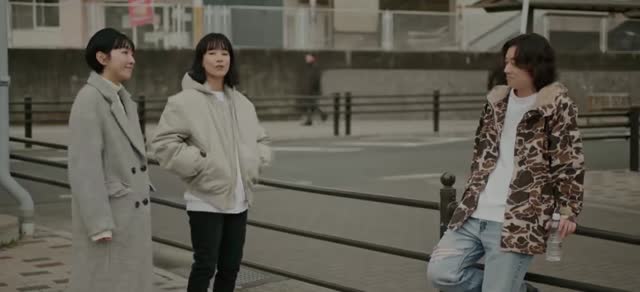
Fukuda has decided to give up music for the sake of his future and is giving a final street performance. Mari and Asami come to listen and find he has been singing since a little past eight in the morning, eight hours already.
  1. 福田

    So, well, thinking about the future too,

  2. 福田

    I've been thinking of quitting music.

  3. 真里/麻美

    Wow, that's admirable, though. / Yeah, so admirable.

  4. 真里/福田

    It takes courage to quit too, right? / Thanks.

  5. 福田

    Honestly, I wanted to do a final live show or something,

  6. 福田

    but renting a venue costs money too,

  7. 福田

    so I figured here would do, since it's a place with memories anyway.

  8. 福田

    If it's here, I can sing until I'm satisfied.

  9. 真里/麻美

    Right, it's all-you-can-sing. / What time did you start?

  10. 福田/麻美・真里

    Um, a little after eight, I guess? / What?

  11. 真里

    Isn't that kind of early?

  12. 麻美/福田

    You've been singing since morning? / Yeah.

  13. 麻美/福田

    Eight hours? / Yeah.

  14. 麻美

    So you're not satisfied at all.

  15. 福田

    Well, you know, when I think this is the last time,

  16. 福田

    I just can't seem to make up my mind to stop.

Speaking notes

気が済む

to feel settled and satisfied in one's heart

気が済む = to feel settled, to be content in one's mind, to have got it out of one's system.
⚠ It is not the same as 「満足する」: 満足 = being pleased with the result; 気が済む = the knot in your heart is finally released, so the focus is on "closure," not on "how good it was."
Common uses: 気が済むまでやれ (do it until you feel it's enough), 謝らないと気が済まない (I won't feel right unless I apologize), 気が済んだ? (have you got that out of your system?).
This scene's structure hangs on the word:
• Fukuda says 「気が済むまで歌える」 (I can sing until I'm satisfied)
• Asami does the math, eight hours, and says 「全然 気が済んでないじゃん」 (you haven't found closure at all)
One word, echoed before and after, points out the real issue: he can't let go.

~放題

suffix for "as much as you like"; positive or negative

歌い放題 = all you can sing, as much singing as you like.
Verb stem + 放題(ほうだい) = as much as you like…, unlimited…. The original idea of 「放つ」 + 「題(=まま)」 is "leaving it alone, letting it go."
A set worth memorizing: 食べ放題 (all-you-can-eat buffet), 飲み放題 (all-you-can-drink), 使い放題 (unlimited use, as in a data plan), 言いたい放題 (saying whatever one likes, negative), やりたい放題 (doing whatever one pleases, negative).
⚠ The two tones differ:
• stem + 放題 = a service or deal (positive or neutral)
• 〜たい放題 = letting things run wild, without restraint (negative)
(The 「出しっぱなし」 you saw in Episode 8 is a similar "left as it is" idea, but that one is purely a reproach.)

踏ん切りがつかない

can't make up one's mind to take the step

踏ん切りがつかない = can't bring oneself to decide, can't take that step.
「踏ん切り」 is a sound change of 「踏み切り」, whose original meaning is the take-off step in a long jump or high jump (the take-off board is also called 「踏切」, and a railway crossing is written 「踏切」 as well).
So the picture is: standing at the take-off line and your foot just won't lift.
Common: 踏ん切りがつく/つかない (can / can't make up one's mind), 踏ん切りをつける (to steel oneself and decide).
⚠ Near-synonyms: 決心がつかない (can't make up one's mind, neutral), 迷っている (hesitating), ふんぎれない (same, casual).
「踏ん切り」 specifically describes "knowing it should end but being unable to let go," which is exactly a person who has sung for eight hours and still won't leave the stage.

Key vocabulary

偉い えらい
admirable, praiseworthy. Can also refer to high rank.
押さえる おさえる
to reserve, to secure (a venue, seats).
気が済む きがすむ
to be settled in one's mind, to feel it is done.
~放題 ~ほうだい
as much as you like…, unlimited…
踏ん切り ふんぎり
to make up one's mind, to take the plunge.

↑ Scenes on this page

Memories can't beat the need to pee

This scene

ブラッシュアップライフ Episode 9 Memories can't beat the need to pee still

After Fukuda's last song, Asami asks Mari, his ex-girlfriend, what she felt while listening, and Mari confesses she needed to use the bathroom.
  1. 麻美

    Hey, Mari-rin, what were you feeling when you listened just now?

  2. 真里/麻美

    Feeling? / Well, you know, originally you two

  3. 麻美/真里

    were going out, right? / Yeah.

  4. 真里

    When he used to sing over there, I was often with him.

  5. 麻美/真里

    Oh, really. / Yeah.

  6. 麻美

    What was it like for you, just now?

  7. 真里

    Hmm...

  8. 麻美

    I mean, sure, even if you were going out,

  9. 麻美

    a lot happened, so I figure it's complicated.

  10. 真里/麻美

    Can I be honest? / Yeah, go ahead.

  11. 真里

    I was thinking I wanted to go pee.

  12. 真里

    But the fact that I didn't go in the middle

  13. 真里

    was the greatest kindness I could show as his ex.

  14. 麻美(心)

    (At Fuku's last live show, we

  15. 麻美(心)

    learned that memories can't beat the urge to pee.)

Speaking notes

~としての

"in the capacity of": ties a role to a noun

「元カノとしての最大限の優しさ」 = "the greatest kindness I could show as his ex-girlfriend."
• 〜として = in the capacity of, as (you learned 「幼なじみとして」 in Episode 7)
• 〜としての + noun = the … that comes with being…
Similar: 親としての責任 (a parent's responsibility), プロとしての自覚 (awareness as a professional), 友人としての忠告 (advice as a friend).
What makes the line funny is exactly the mismatch between the solemn pattern and the content: a structure normally used for duty and conviction, 「元カノとしての最大限の優しさ」, carries the content "I held it in and didn't go to the bathroom."
(This is the drama's whole trick: 「憧れの成人式暴れ」 in Episode 8, 「揺るがざる事実」 in this episode, and the 「〜ということを学んだ」 below are the same technique.)

~ということを学んだ

narrating a lesson learned, like a documentary or fable

「思い出は尿意に勝てない ということを学んだ」 = "We learned that memories can't beat the urge to pee."
〜ということを学ぶ/知る/悟る = to sum up a matter as a lesson; it is the style of documentary closings, textbooks and fable morals.
⚠ 「AはBに勝てない」 = A can't beat B, and the particle 「に」 marks the opponent (both 勝つ and 負ける take に: 「彼に勝った」 "I beat him," 「彼に負けた」 "I lost to him"; note that Japanese uses the same particle for "beat him" and "lose to him," a common slip).
Dropping 「尿意」 (the urge to urinate, a rather indelicate medical term) into this solemn lesson pattern is the sharpest cut of the whole episode.

正直なこと言っていい?

a warning that a truthful confession is coming

「正直なこと言っていい?」 = "Can I be honest?"
〜ていい? = may I…? (asking permission, the most casual form). The politeness ladder: 〜ていい? < 〜てもいい? < 〜てもいいですか < 〜てもよろしいでしょうか.
⚠ In Japanese conversation this line is a clear signal: what comes next is 「本音」 (real feelings), not 「建前」 (the public face).
Similar lead-ins: 正直に言うと (to be honest), ぶっちゃけ (frankly, very casual), ここだけの話 (between us; seen in Episode 7).
Switching between 本音 and 建前 almost always calls for a heads-up in Japanese, and after Mari solemnly asks permission, what comes out is "I wanted to go to the bathroom."

Key vocabulary

元カノ もとカノ
ex-girlfriend. An ex-boyfriend is 「元カレ」.
最大限 さいだいげん
the maximum, to the greatest extent.
尿意 にょうい
the urge to urinate. A medical term.
複雑 ふくざつ
complicated.
正直 しょうじき
honest, frank. 「正直に言うと」 = to be honest.

↑ Scenes on this page

Inviting in a way that's easy to turn down

This scene

ブラッシュアップライフ Episode 9 Inviting in a way that's easy to turn down still

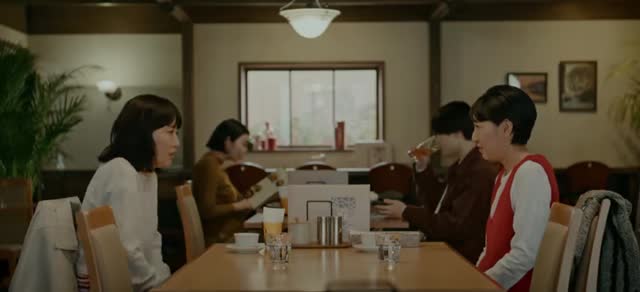
Asami and Mari are waiting for Natsuki and Miho to arrive and discuss whether to invite them. They decide to ask in a casual way that makes it easy for the other two to refuse.
  1. 麻美

    What should we do this time?

  2. 真里/麻美

    What do you mean? / They should be here soon, but

  3. 麻美/真里

    Should we take the plunge and invite them? / Huh, is that okay?

  4. 真里/麻美

    Wouldn't it be awkward if they said no? / True, but

  5. 麻美

    if we can't invite them here, I feel like it'll never happen in this life.

  6. 真里

    True, but you know, being turned down would be one thing,

  7. 真里

    but wouldn't it be hard if they felt it was too hard to say no and forced themselves to hang out with us?

  8. 麻美

    Then let's ask in a way that's easy to turn down.

  9. 真里/麻美

    Keep it casual. / Yeah, exactly...

  10. 真里

    With an attitude like "we're fine either way,"

  11. 真里/麻美

    if we ask, even if they say no, we can ask again, right? / Right.

Speaking notes

断りやすい感じで誘う

inviting so the other person can easily say no

「断りやすい感じで聞いてみよう」 = "Let's ask in a way that's easy to turn down."
This is the drama's most precise line about interpersonal distance.
• 〜やすい = easy to… (the counterparts are 〜にくい = hard to…, and 〜づらい = hard to do because of feelings; the three were compared in Episode 7)
• 断りやすい = easy to refuse
Why do it this way: Mari's reason is stated very clearly: 「断られるだけならまだしも、断りづらくて無理して一緒にいられるのもつらくない?」 Being refused isn't the scary part; the scary part is the other person agreeing only out of social pressure.
So the technical heart of a Japanese-style invitation is not "how to persuade them to say yes" but "how to bring the cost of saying no down to the minimum": speak lightly, act as if you don't mind either way, and let the other person back out at any time.
(Compare Episode 7, scene 12: when Asami invited Mr. Mita for tea, she used the opposite technique, deliberately raising the cost of refusing, thinking 「これは断りづらいはず」. Same principle, two uses.)

~ならまだしも

"if it were only X, fine, but...": a lesser evil, then the real one

「断られるだけならまだしも」 = "Being turned down would be one thing, but..."
〜ならまだしも = if it were only…, that would be tolerable, but (the actual case is worse).
⚠ This is a "lesser of two evils" pattern: it first admits the former can be accepted, then brings up the later, truly unacceptable thing.
Similar: 子どもならまだしも、大人がそれはない (a child maybe, but an adult can't do that), 一度ならまだしも (once would be one thing).
Connection: noun / plain form + ならまだしも.
By using this pattern, Mari shows she has weighed both bad outcomes and judged that "being forced to keep us company" is worse than "being refused." That judgment is what five lifetimes bought her.

~気がする / ~みたいなノリで

"I get the feeling that..."; "in a ... kind of vibe"

①〜気がする = I have a feeling that…, it seems to me that… 「一生 無理な気がする」 = I feel it'll never work in this whole life.
It is weaker than 「〜と思う」 and more subjective than 「〜かもしれない」: pure intuition with no grounds. That is exactly Asami's state when she says this.
②〜みたいなノリで = in a "…" kind of vibe, putting on a "…" attitude
「ノリ」 is a very common modern casual word, originally the rhythmic feel of music, extended to the mood of the moment, the tone of speech, a playful spirit: ノリがいい (game for anything, fun to be with), その場のノリで (going with the mood of the moment), ノリが合う (clicking with each other; later in this episode Asami uses it: 「ノリは合うはずなんだよね」).
⚠ 「〜みたいな」 + noun lets you tuck a whole sentence in as a quotation: 「どっちでも大丈夫だけどみたいなノリ」 = that "either way is fine" kind of attitude. It is a very common lazy way of quoting in casual speech.

Key vocabulary

思い切って おもいきって
to make up one's mind, to take the plunge.
気まずい きまずい
awkward, uncomfortable (in a relationship).
ノリ
mood, vibe, tone; playful spirit.
仮に かりに
supposing, even if.
一生 いっしょう
one's whole life.

↑ Scenes on this page

Glad they didn't say no

This scene

ブラッシュアップライフ Episode 9 Glad they didn't say no still

Following their plan, Asami casually invites Natsuki and Miho to have tea together, adding that they don't have to force themselves. The two accept and Asami is relieved.
  1. 麻美

    If you'd like, do you want to have tea together?

  2. 夏希/麻美

    Huh? Really? / Yeah, of course, of course.

  3. 麻美

    But if you two have something to talk about just the two of you,

  4. 麻美/真里

    you really don't have to force yourselves. / Really, don't push yourselves.

  5. 夏希・美穂

    Oh... oh...

  6. 夏希/美穂

    Yeah. / Right?

  7. 夏希/美穂

    Yeah, we'll do it, let's do it. / Right.

  8. 麻美/夏希

    Really? / Yeah.

  9. 美穂/夏希

    Then is it okay if I sit next to you? / Okay, sorry to intrude!

  10. 麻美

    I'm glad you didn't say no.

  11. 夏希/美穂

    Huh, why? We wouldn't say no. / Yeah, we wouldn't say no!

  12. 麻美

    Because with this kind of thing, even if it's fine with us,

  13. 麻美

    it would be awful if you two didn't feel like it.

  14. 夏希/美穂

    Why, not at all. / I was happy that you invited us.

Speaking notes

よかった 断られなくて

the same line Mari said in Episode 7

This line appears twice in the drama, word for word:
• Episode 7 (at the arcade): Mari summons her courage to invite Asami to take sticker photos, and afterward says 「よかった、断られなくて」
• Here: Asami summons her courage to invite Natsuki and Miho for tea, and says the same thing
Grammatically: it is an inversion (normal order 「断られなくてよかった」), passive (断られる) + 〜てよかった (relief).
The passive is used because the initiative in "refusing" lies with the other person, and the speaker can only receive it.
By having Asami repeat Mari's line exactly, the script tells us that Asami has finally stepped into Mari's old position: the place where you gather all your courage to reach out and are truly afraid of being turned down.
(And Natsuki's reply 「断んないよ」 matches word for word what Asami said in Episode 7.)

無理しなくていい

"you don't have to push yourself": offering an easy way out

「全然無理しなくていいんだけどね」 = "You really don't have to force yourselves, you know."
This is the concrete execution of the "easy to turn down" approach agreed on in the previous scene:
① Make the invitation (よかったら一緒にお茶しない?: 「よかったら」 + a negative question, a double cushion)
② Immediately offer an exit yourself (2人で話すことあるんだったら、無理しなくていい)
③ Mari adds one more line (ホント、無理しないでね)
⚠ 「〜なくていい」 = it's fine not to (exemption from an obligation; learned in Episode 7). 「無理する」 = to push oneself too hard is an extremely common word: 無理しないで (don't push yourself), 無理言ってすみません (sorry for asking something unreasonable), 無理がある (it's a stretch, doesn't hold up).
Giving a reason to refuse first and then waiting for the other person to choose: that is the whole technique of "making it easy to decline."

誘ってくれて

"kureru": a favor coming toward the speaker

「うれしかった 誘ってくれて」 = "I was happy that you invited us." (inverted; normal order 「誘ってくれてうれしかった」)
くれる = the other person does something for me, the benefit comes toward me (the core grammar of this drama, explained in Episode 7, scene 2 and Episode 8, scene 3).
This word is the answer to the whole scene: Asami and Mari have spent five lifetimes afraid that "if we invite them, we might be a bother."
And Miho's reply uses 「誘ってくれて」: she received the invitation as a kindness "for me."
In other words: Asami feared she was making the other person go to the trouble (「気を使わせる」), but the other side felt "kureru" (you were nice to me). An entire twenty years of misunderstanding hinges on this single giving/receiving verb.
(In the next scene, they'll lay that misunderstanding out from the beginning.)

Key vocabulary

無理する むりする
to push oneself, to overdo.
申し訳ない もうしわけない
sorry, I feel bad. More formal than 「すみません」.
お邪魔します おじゃまします
excuse me for intruding (said when entering someone else's space).
つもり
intention, plan (learned in Episode 7).

↑ Scenes on this page

The truth about the stickers

This scene

ブラッシュアップライフ Episode 9 The truth about the stickers still

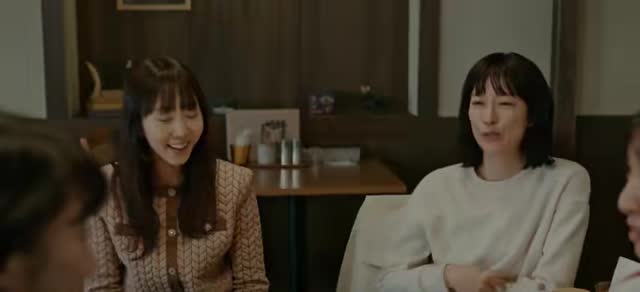
The four sit together. Asami asks Natsuki and Miho if they remember the sticker trade in elementary school: both picked the least valuable stickers, Asami thought they were being considerate, and they say they were afraid of being disliked.
  1. 麻美

    But, you know, I don't know if you two remember,

  2. 麻美

    but once, in elementary school, the four of us traded stickers.

  3. 真里/夏希

    We did, we did! We really did. / Oh, that I remember.

  4. 美穂/麻美/美穂

    I remember it too. / Really? / Because I was surprised, you know.

  5. 美穂/夏希

    I thought, you do sticker trading too? / Yeah, yeah...

  6. 夏希

    I thought, you're interested in a commoner's game like this?

  7. 真里/麻美

    We're total commoners, you know. / But, you know,

  8. 麻美

    when we said "take whichever sticker you like,"

  9. 麻美

    you both picked the cheapest, most worthless stickers.

  10. 麻美

    They were totally unequal in value, the ones you took.

  11. 麻美

    So I thought, "Oh, they're being a bit considerate of us"...

  12. 夏希/麻美

    Now that you mention it, we might really have been a bit considerate. / Right?

  13. 美穂

    I think that was probably because we didn't want you to dislike us.

  14. 夏希/美穂

    Yeah, yeah. / Right?

  15. 夏希

    If we gave you a weird sticker and you thought it was boring, that would be awful.

  16. 麻美

    Is that so? We wanted to get closer to you,

  17. 麻美

    so when I thought you'd been considerate of us, I was kind of shocked.

Speaking notes

気を使われる vs 嫌われたくない

two readings of one act, both through the passive

This is the most important unraveling of a misunderstanding in the whole drama. The same event, read in opposite ways by each side:
• Asami's side: 「気を使われてるな」 (passive: I'm being treated with care = I'm treated as an outsider) → a bit shocked
• Natsuki and Miho's side: 「嫌われたくなかった」, 「変なシールあげて つまんないとか思われたら嫌じゃん」 (passive again: afraid of being disliked, of being thought boring)
⚠ Notice: all four of them speak in the passive. Asami fears "being looked after," they fear "being disliked": both sides place themselves in the position of being judged by the other, each guessing how they are seen, so nobody dares to make the first move.
That is the whole tragedy of the word 「気を使う」: it is kindness, but once the other person senses it, it becomes proof of distance. (The line 「気を使われている」 Asami thought in Episode 6 finally gets its answer in Episode 9.)
And it took only one thing to untie it: sit down and say it out loud.

言われてみれば

a cue for shifting perspective, as in Episode 8

「言われてみれば 確かにちょっと気使ったかも」 = "Now that you mention it, we may have been a bit considerate."
〜てみれば = when you try… (you notice), a signal phrase for "switching viewpoint" (the 「今思えば」 of the same group was learned in Episode 8).
Similar: 考えてみれば (come to think of it), 言われてみれば (now that you say it), 振り返れば (looking back).
⚠ These 「〜ば」 are not conditionals; they mean "if you look at it from another angle, you find that…"
The weight of Natsuki's line lies in 「かも」: she herself didn't realize back then that she was 「気を使う」-ing: the consideration had become so instinctive that even she didn't know. That is the scary part of Japanese-style human relations.

雑魚 / 庶民 / 釣り合う

"small fry", "commoner", "balanced/matching"

①雑魚(ざこ) = small fish, worthless minnow, extended to "unimportant, weak." 「雑魚シール」 = the cheapest sticker. In games, weak enemies are 「雑魚敵」.
②庶民(しょみん) = ordinary people, commoners. When Natsuki says 「こんな庶民の遊び」, Mari immediately replies 「超庶民だし」: 「庶民」 here becomes a stand-in for distance: they placed the two honor students on the "not commoners" side. And Mari's retort is exactly what tears down that wall.
③釣り合う = to be balanced, to match (originally the two sides of a scale in balance). 「全然釣り合ってない」 = not balanced at all.
Common: 釣り合わない (not well matched), 釣り合いが取れる (to be balanced).
All three words say the same thing: a scale no one ever admitted to had been placed between them.

Key vocabulary

雑魚 ざこ
small fry, a worthless nobody.
庶民 しょみん
commoner, ordinary people.
釣り合う つりあう
to be balanced, to match, to suit each other.
若干 じゃっかん
slightly, a little. More formal than 「ちょっと」.
ショック
shock.

↑ Scenes on this page

Poison

This scene

ブラッシュアップライフ Episode 9 Poison still

Mari and Asami discuss how the captain's seat on that flight has been taken by Nakamura. Mari says she'll ask him once more, and if that fails they may have to take forceful measures, such as poison.
  1. 真里/麻美

    We're in trouble... / Yeah, we're stuck.

  2. 真里

    For now, we still have a little time,

  3. 真里

    so I'll go ask him one more time.

  4. 真里

    Even if I have to get on my knees, we have to get him to give up the spot.

  5. 麻美

    Yeah.

  6. 真里

    But if that doesn't work,

  7. 真里

    we might have no choice but to resort to drastic measures.

  8. 麻美

    Drastic measures?

  9. 麻美

    What?

  10. 真里

    Put poison in his food.

  11. 麻美

    Poison?

Speaking notes

土下座してでも

"even if I have to...": no method ruled out

「土下座してでも譲ってもらわないと」 = "Even if it means getting on my knees, we have to get him to give it up."
• 土下座 = kneeling on the ground with the forehead touching it, the ultimate posture of apology. In modern Japan it is an extreme act, almost never actually done in daily life, and when mentioned it usually expresses determination (「土下座してでも頼む」).
• 〜てでも = even if I have to resort to…. 「te-form + でも」 is much stronger than plain 「〜ても」, stressing that "no means are off the table."
Similar: 何をしてでも (whatever it takes), 借金してでも (even if I must borrow money), 這ってでも行く (I'll go even if I have to crawl).
• 譲ってもらわないと = receiving + condition + omission (=もらわないといけない, the "has to" half dropped).
⚠ もらう again: the decision to give up the seat is in Nakamura's hands, and she can only ask him to give it. In this drama, what they want is always in someone else's hands.

~しかない(第8集の再出)

"no choice but to": when the options run out

「強行手段に出るしかないかもね」 = "We might have no choice but to resort to drastic measures."
〜しかない = there's nothing for it but to… (しか must be followed by a negative).
This is Mari's catchphrase-like pattern, and it sums up her character:
• Episode 8: 「もう その飛行機に乗るしかない」 → so she spent four lifetimes getting a pilot's license
• Here: 「強行手段に出るしかない」 → so...
⚠ 「手段に出る」 = to take (certain) measures, to move to action. 「出る」 here means "to put into action, to adopt a certain stance": 強硬手段に出る (take hardline measures), 法的手段に出る (take legal action), 強気に出る (take a tough line).
The contrast between the breezy sentence ending 「かもね」 ("maybe") and the content of the next line is the episode's closing beat.

毒を盛る

"mori" not "ireru": the fixed way to say poisoning

毒を盛る = to poison (someone's food or drink).
⚠ Why 「盛る」 and not 「入れる」: 「盛る」 basically means "to dish food onto a plate, to heap it up" (ご飯を盛る). With poison, it means "to mix poison into the food and serve it to someone." This is a dedicated fixed collocation with the nuance of acting in secret, more formal and much more sinister than 「毒を入れる」.
Incidentally, the 「盛れてる」 (a photo that looks good) you learned in Episode 8 is the same 「盛る」: piling up the good parts. The same verb: in one case photo retouching, in the other poisoning.
• 参った = I give up, I'm stuck (originally what you say when conceding in sumo or judo). 「参ったね」 = we're really in a bind.
And the whole episode stops on Asami's "Poison?".

Key vocabulary

参る まいる
to give up, to be stumped; also the humble form of 「行く/来る」.
土下座 どげざ
kneeling with forehead to the ground (the ultimate apologetic posture).
譲る ゆずる
to give up, to yield (a seat, position); to hand over.
強行手段 きょうこうしゅだん
forceful measures, drastic action.
毒を盛る どくをもる
to poison.

↑ Scenes on this page

Back to ブラッシュアップライフ · Back to all scenes