パネェ
パネェ = short for 「半端ない」
「ハンパネェ→パネェ」 shows how words get clipped step by step: literally "not partway, not half-baked" turns into high praise meaning "super".
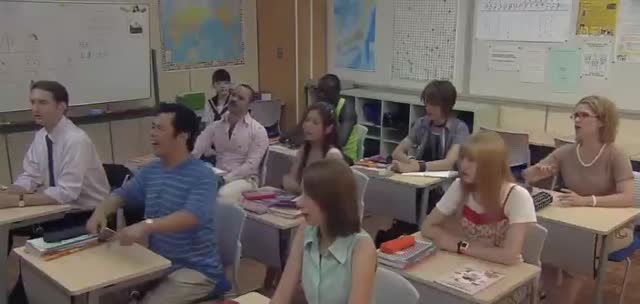
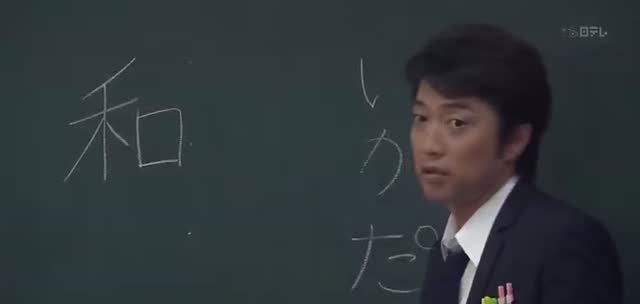
Bob is studying its accent (head-high or tail-high?).
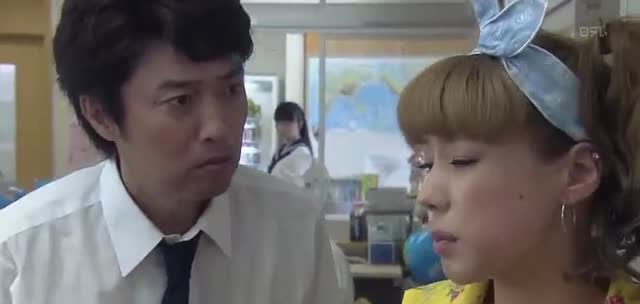

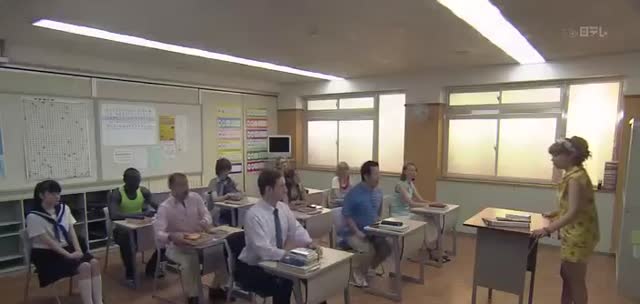
In a corner of the classroom, the students practice the accent of the youth slang 「パネェ」.
中途半端じゃなく ハンパネェ パネェ…→
Not half-hearted, but "hanpanee", "panee"...
ん?後ろにアクセントか。 パネェ パネェ!
Hm? Is the accent at the back? Panee, panee!
ちょっと! んっ!…お前かよ。
Hey! Hm!... Oh, it's you.
聞いてきたわよ。アヤカの気持ち。 ホントかよ おい!教えてくれよ。
I asked her. How Ayaka feels. Really?! Hey! Tell me.
Speaking notes
パネェ = short for 「半端ない」
〜てくる = go and ... and come back

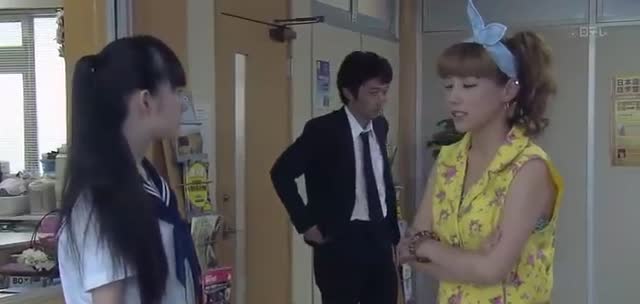
Takasu is furious and complains that Haruko told Ayaka he was the one who asked. Haruko says he should learn a thing or two from his daughter.
お前!俺から頼まれたって 言わずに 聞き出せつったろ!
You! I told you to find out without saying I'd asked you!
あんたも ちょっとは 娘を見習えば?
Why don't you learn a little from your daughter?
アヤカはね あんたと話がしたくて ここに来たのよ。
Ayaka came here because she wants to talk with you.
Speaking notes
頼まれる = to be asked, passive
見習う = to follow someone's example

Ayaka says she wanted to see Takasu's work no matter what, since he left her and her mother for this job.
どうしても見ときたかったの。 あなたの仕事。 何で?
I just had to see it. Your job. Why?
だって この仕事のために 私達を捨てたんだよね?
Because you abandoned us for this job, didn't you?
え?いや… 一概にそういうことではなく…。
Huh? No... it's not necessarily like that...
私達のこと10年もほっといて 気にならなかったの?
You left us alone for ten years, and it never bothered you?
気になるか ならないかといえば ならないと言ったら嘘になるね…。
If you ask whether it bothered me or not, I'd be lying if I said it didn't...
この仕事って何なの? 家族なんかより大事なの?
What is this job anyway? Is it more important than family?
答えてよ。
Answer me.
Speaking notes
一概に〜ない = not necessarily, can't generalize
〜と言ったら嘘になる = I'd be lying if I said ...

Pressed by his daughter, Takasu hedges, saying this is not a question he can answer so easily.
う~ん… そういったことに ついては→
Hmm... regarding that sort of matter...
そうおいそれと 答えるような問題ではなく→
it is not the kind of question one can readily answer...
今後 善処する所存では あるんですけども…。
I do intend to handle it appropriately going forward, however...
あ~ もう!何でそんな曖昧なの!? イライラするわね。 もういい。
Ugh, seriously! Why are you so vague?! This is so irritating. Forget it.
Speaking notes
善処する所存 = (official) I intend to handle it properly
おいそれと = easily (used with negatives)

Ayaka turns to leave. Haruko asks where she's going, saying she hasn't seen what Takasu's job is. Ayaka says she doesn't need to, as she more or less understands.
どこ行くのよ?まだ どういう仕事か見てないでしょ?
Where are you going? You haven't seen what kind of work he does yet, have you?
そのために来たんじゃないの? もういいの! だいたいわかったし。
Isn't that what you came for? It's fine! I more or less get it.
だいたいわかったしって どういうことよ?
What do you mean, "I more or less get it"?
今の答えで十分よ。
That answer was enough.
はっきり言えないんじゃ→
If he can't say it clearly...
どうせ大した仕事じゃ ないってことじゃない。
...then it obviously isn't an important job anyway.
私達… そんなことで捨てられたんだ。
We... were abandoned for something like that.
Speaking notes
どうせ = anyway (with a negative feeling)
大した + negative = nothing special

Ayaka says 「マジウケる」 and turns to leave, and Haruko tells her to stop.
マジ ウケる。
Maji ukeru.
待ちなさいよ!!
Wait!!
だいたいわかったとか言われて→
When someone tells you "I more or less get it"...
何で日本語教師ナメんなとか 言わないわけ?
...why don't you say something like "Don't underestimate a Japanese teacher"?
あんた いつも私に言ってんじゃない。
You always say that to me.
お互いわかったつもりになって 何なの?
What's the point of you both thinking you understood each other?
これが あんたが言ってた日本人の 奥ゆかしいコミュニケーションなわけ?
Is this the subtle communication of the Japanese that you were talking about?
Speaking notes
〜つもりになる = to think one has ... (but hasn't)
奥ゆかしい = reserved and refined

Left speechless by Haruko's shouting, Takasu asks her whether it would have been right to say that his work mattered more to him than his family. Haruko says that is just an excuse.
じゃあ 家族より 自分の仕事の方が大切だった…→
So should I have said I valued my own work more than my family...?
そう言えばよかったのか?
Was that what I should have said?
言ったろ?はっきりさせない方が いいことだってあるんだよ。
Didn't I tell you? There are times when not being clear is better.
そんなの ただの言い訳じゃない。
That's nothing but an excuse.
自分の気持ちを 伝えようとしないで→
You don't even try to convey your feelings...
日本語の曖昧さに 逃げてるだけでしょ!
...you're just running away into the vagueness of Japanese!
とにかく これ以上 関わらないでくれ。もう結構だ。
Anyway, don't get involved anymore. That's enough.
絶対 はっきりさせてやるんだから!
I'm absolutely going to make it clear!
Speaking notes
〜に逃げる = to escape into ...
〜てやる = I'll make sure to ... (strong resolve)

In the staff room, Haruko complains to Katori about why Japanese has so many ambiguous expressions. Katori says she is working hard, and Haruko says she is getting irritated.
ずいぶん頑張ってますね。
You're working quite hard.
う~ん!イライラしてきた。
Ugh! I'm getting irritated.
何で日本語って こう曖昧な表現が多いわけ?
Why does Japanese have so many vague expressions like this?
それは…。
That's because...
相手を思っていても→
even when you care about the other person...
はっきり伝えられないことって あるじゃないですか。
there are things you can't say clearly, aren't there?
けど 気持ちが伝わんなきゃ 意味ないじゃん。
But if your feelings don't get across, it's meaningless.
ですよね。やっぱり。
That's right. After all.
Speaking notes
ずいぶん = quite, considerably
〜じゃないですか = isn't it ...? (seeking agreement)

Ayaka tries to leave and Haruko grabs her. Ayaka struggles, telling her to let go, saying she has had enough.
ちょっと…。 いいから来なさい!
Hey... Never mind, come here!
離してよ! 今のままじゃ あんた ここに来た意味ないでしょ。
Let go of me! If it stays like this, there's no point in you coming here.
もういいんだって!
I said that's enough!
だって だいたいわかったし。
Because I more or less get it.
Speaking notes
Vなさい = (gentle) command
〜んだって = I said ... (emphasis)

Haruko tells Ayaka seriously that there is no such thing as understanding "more or less", and that if she goes on like this she will be the same as him.
「わかった」に だいたいなんてないのよ。
There's no "more or less" in "I understand".
このままだと あんたも あいつと一緒よ。
If you go on like this, you'll end up just like him.
向き合わなきゃいけないものから 逃げてるだけ。
You're just running away from something you ought to face.
わかったつもりになってないで 向き合ってみれば?
Instead of thinking you understand, why not try facing it?
あんたのために 10年分の 居残り授業してやるから。
I'll give you a detention class covering ten years, just for you.
授業?
A class?
早く!
Hurry up!
Speaking notes
向き合う = to face squarely
〜てやるから = I'll do ... for you (forceful kindness)

Haruko begins her lecture on the question the students asked most: whether there is a clear standard for Japanese ambiguous expressions.
じゃあ 始めるわよ~。
All right, let's begin.
え~ みんなから質問が多かった→
Um, the question you all asked most often...
日本語の あいまいな表現についての答えですが。
...is about the answer for ambiguous expressions in Japanese.
「明確な基準はない!」というのが 答えよ。 え~!?
The answer is: "There is no clear standard!" What~?!
だから 慣れてってもらわなきゃ 仕方ないのよ。
So there's nothing for it but for you to get used to it.
何よ?それ! ふざけんなよ。 そうだよ!
What is that?! Are you kidding me? That's right!
Speaking notes
〜てもらう = I need you to ...
〜というのが答え = the answer is ...

Haruko tells the students that long ago there were people who struggled with the same thing, and talks about the Portuguese missionaries who came to Japan in the sixteenth century.
はいはい! みんなの気持ちはわかるから。
All right, all right! I understand how you feel.
実は昔 みんなと同じように 悩んでた人達がいたのよ。 誰だよ?
Actually, long ago there were people who struggled just like you. Who?
16世紀頃に日本に来た ポルトガル人の宣教師たちよ。 はあ?
The Portuguese missionaries who came to Japan around the sixteenth century. Huh?
彼らは「ぱぴぷぺぽ」の発音で 悩んでたの。
They were troubled by the pronunciation of "pa pi pu pe po".
半濁音ですか。 そう!もともと→
The semi-voiced sounds? Yes! Originally...
半濁音の丸のしるしは 日本には なかったものなの。
the circle mark of the semi-voiced sounds was something that didn't exist in Japan.
Speaking notes
半濁音 = semi-voiced sounds (ぱぴぷぺぽ)
悩んでた = was troubled

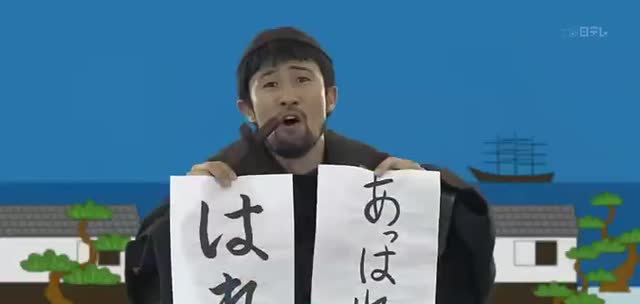
Haruko writes 「はれ」 and 「あっぱれ」 on the board and has the students read them.
これ なんて読みますか?
How do you read this?
「はれ」だね。
It's "hare".
じゃあ これ なんて読みますか? 「あっぱれ」。
Then how do you read this? "Appare".
同じ「は」なのに 「は」と読んだり 「ぱ」と読んだり!
It's the same "ha", yet sometimes it's read "ha" and sometimes "pa"!
どうやって 読みわけしてるんですか?
How do you tell which way to read it?
なんとなく…感覚っていうか?
It's just... a feel, you could say?
感覚~!?
A feel~?!
Speaking notes
あっぱれ = Bravo! Well done!
読み分け = reading differently depending on the case

Haruko says the Japanese of that time also decided how to read things from context. The students protest that they can't do things by feel.
当時の日本人も 文脈によって どう読むかを決めてたわけよ。
The Japanese back then also decided how to read it based on context.
感覚で決めてるとか言われても 俺らムリだし!
Even if you say it's decided by feel, we can't do that!
なんとかしてください! なんとかしてくださいよ
Please do something! Please do something about it!
はいはい 静かに!
All right, all right, quiet!
で ポルトガル人は どうしたと思う?
So, what do you think the Portuguese did?
Speaking notes
〜わけ = (explaining) so it is that ...
〜と言われても = even if you tell me ...

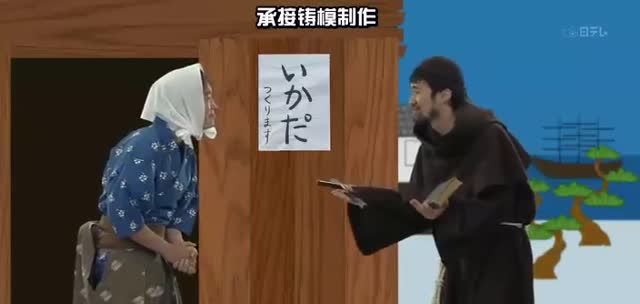
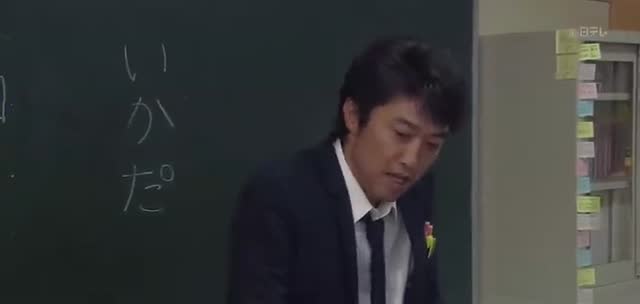
Haruko writes up a word for the students to read, and Jack says he can't read it.
はい これは なんて読むでしょうか?
All right, how do you read this?
いか…とわ?読めません。
Ika... what? I can't read it.
正解は…。
The correct answer is...
「いかだ」を ひとつ 作って欲しいのですが。
I'd like you to make me one "ikada".
出た!まただよ!
Here we go again! Not this again!
いいか?うちが作ってるのは 「いかだ」じゃないの。
Listen, what we make isn't an "ikada".
うちは「いかた」屋! ほら これよく見てみろよ!→
We're an "ikata" shop! Look, take a good look at this!
「だ」じゃないですよって印 ちゃんと つけてるだろうが!
Haven't I clearly put the mark that says "this is not da"?!
Speaking notes
読めません = I can't read it (potential negative)
印をつける = to put a mark on

The students realize that the circle on 「ぱぴぷぺぽ」 is the very same mark.
あ~!ホントだ。
Ah! You're right.
この丸は その印でしたか。
So this circle was that mark.
ああ ん?
Ah... hm?
そこで ポルトガル人たちは→
So the Portuguese...
この印を そのままもらって 半濁音の記号にしました。
...took this mark as it was and made it the symbol for the semi-voiced sounds.
じゃあ ぱぴぷぺぽの丸は ポルトガル人が作ったの?
Then the circle on pa pi pu pe po was made by the Portuguese?
そう。彼らは この印をつけて はっきりさせたの。
Right. They added this mark to make it clear.
Speaking notes
そのまま = as it is, unchanged
〜にする = to make it, to decide on

The students ask whether this means ambiguous things are bad after all. Bob says that is just what they were saying.
では やはり あいまいなものは 良くないという事ですか?
Then does that mean ambiguous things are bad after all?
俺たちが言ってる事と 同じじゃん。
That's the same as what we've been saying.
やっぱ日本語おかしいんだよ。 そうだよ。
I knew it, Japanese is weird. That's right.
はいはい 静かに!
All right, all right, quiet!
やっぱり みんな そうなるよね。 そこで…。
I knew everyone would think that. So...
Speaking notes
やはり / やっぱ = as expected
〜ということですか = do you mean ...?

Haruko slides open the classroom door and ushers Takasu in. The startled students ask if he is a ninja.
何やってんだよ! 忍者ですか!?
What are you doing?! Are you a ninja?!
いやいやいや…。
No no no...
ようこそ 鷹栖先生。
Welcome, Mr. Takasu.
さて みんな。この続きは 鷹栖先生に教えてもらいましょう。
Now then, everyone. Let's have Mr. Takasu teach us the rest.
うえ?
Huh?
日本語を知るために大事な事があるんでしょ。 お前 ちょっとさあ…。
There's something important about knowing Japanese, isn't there? Hey, you, just a moment...
Speaking notes
〜てもらいましょう = let's have him ... for us
ようこそ = welcome

The students urge Takasu to take this chance to make things clear. He clears his throat and says solemnly that making everything clear is not necessarily a good thing.
鷹栖先生 この際 はっきりさせてくれよ!
Mr. Takasu, since we're at it, make it clear for us!
そうだよ。 あいまいにしないでくれよ!
That's right. Don't be vague about it!
お前達…。
You lot...
なんでも はっきりさせる事が 大事なんじゃないぞ。 何でだよ!
Making everything clear isn't the most important thing. Why not?!
Speaking notes
この際 = now that things have come to this
〜んじゃない = it's not that ... (explanatory negation)

Takasu explains to the students in earnest why Japanese is so ambiguous.
日本語が あいまいなのには 理由がある。
There is a reason Japanese is ambiguous.
日本語は この「和」の心を重んじて 断定を避けたり→
Japanese values the spirit of "harmony" (wa), so it avoids definite statements...
相手に配慮したりするから あいまいになるんだ。
...and shows consideration for the other person, which is why it becomes ambiguous.
だが 大切なのは あいまいだからといって→
But what matters is that, just because something is ambiguous...
投げ出さず 相手と向き合うことなんだ。
...you don't give up, but face the other person.
Speaking notes
「和」 = harmony
〜からといって = just because ... (doesn't necessarily follow)

Takasu returns to the Portuguese missionaries and says they never gave up on facing the Japanese language.
ポルトガル人宣教師たちは きっと→
The Portuguese missionaries surely...
向き合うことを 諦めなかったんだろうなぁ。
did not give up on facing it, I'm sure.
わかりたい一心で 日本語の 文化の中に飛び込んだんだ。
With a single-minded desire to understand, they threw themselves into the culture of the Japanese language.
だからこそ 彼らの残した この小さな丸が→
And that's exactly why the little circle they left behind...
今も日本語の中にあるんだ。
is still in Japanese today.
「和」の精神。 向き合う気持ちを 捨ててはいけませんね。
The spirit of "wa". We mustn't abandon the will to face things, must we?
Speaking notes
〜んだろうなぁ = I suppose it was that ...
〜一心で = with single-minded devotion

The students warmly applaud Takasu and praise his lesson. Haruko, furious, says she was the one who made it all happen.
難しくても諦めちゃダメだな。
Even if it's hard, you shouldn't give up.
さすが鷹栖先生! 素晴らしい授業です。
As expected of Mr. Takasu! A wonderful lesson.
やっぱりハルコと違うな! 全然 違うよ
He's different from Haruko, after all! Completely different!
ちょ…ちょ…みんな待ってよ!
Wa... wait, everyone, hold on!
これ あたしがやったんだからね! わかってないんだから もう…。
I'm the one who did this, you know! You don't get it at all, honestly...
ハルコ!わかってない!
Haruko! You don't understand!
わかってないのは あんた達でしょ!
You're the ones who don't understand!
あたしが全部 やったんだから。
I did all of it!
Speaking notes
さすが = as expected of ...
〜んだからね = you know, I'm the one who ...

Takasu speaks to his daughter, saying he has something to tell her, in answer to her earlier question.
お前に 話しておきたい事がある。
There's something I want to tell you.
お前の質問への答えだが…。
It's the answer to your question...
実は…捨てられたのは 父さんのほうなんだ。
Actually... the one who was abandoned was your dad.
えっ?
Huh?
Speaking notes
〜ておきたい = I'd like to ... in advance
捨てられる = to be abandoned

Looking back, Takasu says he quit his company without consulting anyone and chose this job on his own, and the children's mother lost patience with him.
何の相談もせずに会社を辞めて 勝手に この仕事を選んだから→
I quit my job without consulting anyone and chose this work on my own, so...
母さんに愛想を つかされちゃってな。
your mother gave up on me.
でも考えてみたら…本当は俺が 家族を捨ててたのかも知れん。
But thinking about it... maybe I was the one who abandoned my family.
どういうこと?
What do you mean?
わかり合えてたつもりになってた。
I thought we understood each other.
母さんと向き合わず お前達の事も よく考えずに→
I didn't face your mother, and I didn't think carefully about you girls either...
ひとりで勝手に決めてたんだ。
I decided everything on my own.
会えなかったのは その罪悪感からだ。すまん。
I couldn't see you because of that guilt. I'm sorry.
Speaking notes
愛想をつかす = to be fed up with someone
〜つもりになる = to think one has ... (but hasn't)

Takasu tells his daughter that in these ten years he never forgot about them even once.
しかし この10年間 お前達のことを→
But in these ten years, you girls...
忘れたことは 一度もなかった。 …お父さん。
...I never forgot you even once. ...Dad.
あたしね 実は 今日の お父さん見てて→
You know, actually, seeing Dad today...
もうちょっと一緒にいたいかもって思った。
I thought I might want to be with you a little longer.
Speaking notes
〜たことは一度もない = never once
〜かも = maybe ...

The students interpret Ayaka's words: she said she might want to stay a little longer. Jack says that "might" is almost a definite statement.
いたい「かも」? その「かも」っていうのは→
"I might want to stay"? That "kamo"...
いたいってことを ほぼ 断定してるって意味だよね? 嘘でしょ!?
...means she is almost certain she wants to stay, right? No way!?
さっきの お父さん見て 私も決心がついたの。 決心!?
Seeing Dad just now, I've made up my mind too. A decision!?
うん うん。 私も…。
Yeah, yeah. Me too...
新しいパパのところへ 行こうって!
I'm going to my new dad's place!
ええええっ!? いやいや…新しいパパって?
What?! No no... what new dad?
Speaking notes
「かも」 = nearly a definite statement
決心がつく = to make up one's mind

Kaori arrives late and tells Ayaka that her dad is on his private jet and will be arriving soon.
遅くなってゴメンね アヤカ。 お母さん!
Sorry I'm late, Ayaka. Mom!
早く。パパが自家用ジェットで 着く頃よ。 うん!
Hurry. Dad should be landing in his private jet about now. Okay!
自家用ジェット? ちょ…ちょ… 新しいパパって何者?
A private jet? Wait... wait. Who is this new dad?
パパ ニューヨークの実業家なの。 ニュ…ニューヨーク?
He's a businessman in New York. N... New York?
Speaking notes
何者 = what kind of person
〜なの / 〜のよ = (feminine) informing

Ayaka says that meeting foreigners today and seeing her father finally gave her the courage to live abroad. She and her mother are going to Miami.
だから私 海外で暮らすことに 一歩 踏み出せなかったんだけど。
So I couldn't take that first step toward living overseas.
今日 外国人の人たちとも 接することが出来たし!
Today I got to interact with foreigners too!
最後に お父さんにも会えたし! さ…最後?
And finally, I got to see Dad too! F... finally?
ありがとうございました! 鷹栖先生!
Thank you very much! Mr. Takasu!
行こ!お母さん。 あら もういいの?
Let's go! Mom. Oh, are you done already?
うん! パパが週末は マイアミに行こうって。
Yes! Dad said we'd go to Miami for the weekend.
やった!水着どうしよう~。
Yay! What am I going to do about my swimsuit?
あは…まあ ある意味 いろいろ はっきりして よかったじゃない!
Ha ha... well, in a way, a lot of things have become clear, haven't they?
Speaking notes
〜ことが出来た = was able to ...
ある意味 = in a sense

Haruko tries to slip away quietly, but Takasu calls after her and quietly thanks her.
じゃ あたしは これで帰りま~す。
Well then, I'll be heading home now.
待てよ! はい?
Wait! Yes?
ありがとな カリスマ。
Thanks, Charisma.
はっきり言わなきゃ伝わらない。 はっきり言わなきゃ…。
If you don't say it clearly, it won't get across. If you don't say it clearly...
Speaking notes
〜な = (masculine) casual tone
〜なきゃ = if you don't ...

One morning, Katori musters her courage and tries to invite a colleague to the tea room at her home, but she says it in a vague way.
おはようございます。
Good morning.
カトリーヌ先生 おはようございます。
Catherine, good morning.
あの! はい?
Um! Yes?
鹿取みゆきです。
I'm Miyuki Katori.
あの よかったら お茶でも どうですか?
Um, if you like, would you like to have some tea?
ああ 自分でいれるから大丈夫。 いや!そうじゃなくて…。
Oh, I make my own, so I'm fine. No! That's not what I meant...
今度 うちの茶室で。 茶室!?
Next time, in the tea room at my house. A tea room?!
あ いや…3人なんで お気軽に。
Ah, no... it's only three people, so please don't be formal.
は…あ~すんごい お茶濁してる。
Ha... wow, that's some serious beating around the bush.
Speaking notes
「大丈夫」 = no thanks
お茶を濁す = to dodge the question, to fudge

Haruko catches up with Takasu outside the classroom and says he promised not to interfere in her lessons. Takasu says he only said 「結構だ」.
うわ…。 明日までに これ読んどけよ。
Whoa... Read this by tomorrow.
ちょちょ ちょっと… あたしの授業に→
Wait wait, hold on... in my class...
口出ししないって 約束したじゃん!
You promised not to interfere!
ん?そんな約束してないよ。 はぁ!?
Hm? I didn't make any such promise. What?!
だって あの時 約束するって 結構だって!
But at the time, you said you'd promise, you said "kekkou da"!
あ~!俺は あん時 「結構だ」としか言ってないよ。
Ah! All I said back then was "kekkou da".
あの「結構だ」は ノーって意味でしょ。 いや ちょちょ…。
That "kekkou da" meant no, didn't it? No, wait wait...
日本語の奥深さを 理解しないほうが悪いんだよ!
It's your fault for not understanding the depth of Japanese!
明日から これまで以上に ビッシビシいくから 覚悟しとけ。
From tomorrow, I'll be stricter than ever, so be prepared.
Speaking notes
「結構だ」 = yes or no?
ビシビシ = strictly, relentlessly

Outmaneuvered by Takasu, Haruko cries out to the sky that Japanese is just too ambiguous.
日本語って あいまいすぎ! マジ ウケる~。
Japanese is too ambiguous! Maji ukeru~.
Speaking notes
〜すぎ = too ...
「マジウケる」 (ironic) = (wry) I give up