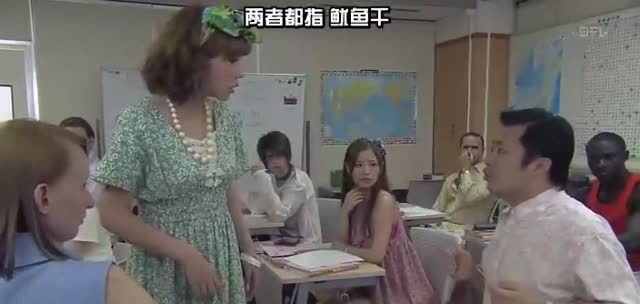
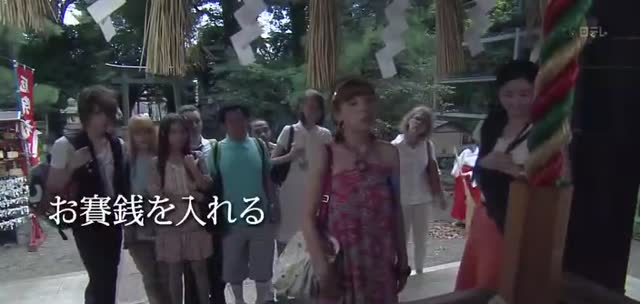
This episode has 55 conversation scenes: taboo words and lucky substitutes (「するめ」 must be said as 「あたりめ」), unlucky numbers, shrine etiquette and vocabulary, torii gates, komainu, and omikuji fortunes. The focus is on taboo words and expressions of good luck.
Haruko hands back last week's tests, calling students up to the front to collect them. Jack is congratulated on his good score, and those who did badly are told to review.
ハルコ
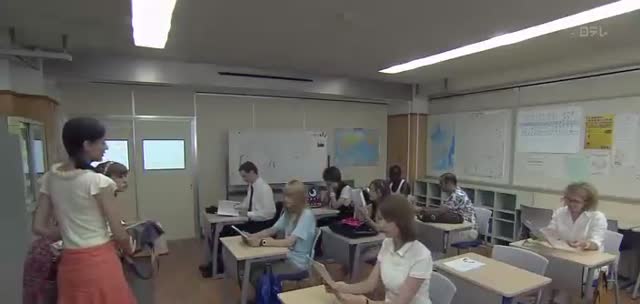
は~い こないだのテスト返すよ~。
Okay, I'm handing back the test from the other day.
ハルコ
みんな前に取りに来て~はい。
Everyone, come up to the front and get yours. Here you go.
ハルコ
成績が悪かった人は ちゃんと復習しとくように。
Those of you who did poorly, make sure you review properly.
ハルコ
はい ポール。 はい。
Here, Paul. Here you go.
ハルコ
ジャック おめでとう。 ルカ はい。
Jack, congratulations. Luca, here you are.
Speaking notes
〜ように
the teacher's way of telling people to do something, softer than a command
「復習しとくように」 = "Make sure you review (in advance)." Verb dictionary form + 「ように」 is a typical way for a teacher or boss to give an instruction. It is softer than a command form, but still carries the authority of "this is expected of you": • 「遅刻しないように」 = "Make sure you don't arrive late." 「しとく」 is the casual contraction of 「しておく」 (do something in advance, so it's ready). Haruko uses 「ように」 here: classroom language that gives an instruction without barking an order.
おめでとう
congratulations, in plain form for peers and juniors
「おめでとう」 = "Congratulations." The polite form is 「おめでとうございます」. Haruko uses the plain form 「おめでとう」 with her student. Use it with peers and people junior to you; with a superior, say 「おめでとうございます」.
Wang, snacking in class, asks Haruko what the difference is between 「するめ」 and 「あたりめ」 when they taste the same. Haruko is caught off guard.
ハルコ
あんた なに食べてんのよ! くっさ。
What are you eating?! Ugh, it stinks.
王
ハルコ わかりません! 何がよ!
Haruko, I don't understand! - Understand what?!
王
「するめ」と「あたりめ」 どこが違う?
What's the difference between 「するめ」 and 「あたりめ」?
王
味 同じです!
The taste is the same!
ハルコ
当たり前でしょ。「するめ」も 「あたりめ」も同じなんだから。
Of course it is. 「するめ」 and 「あたりめ」 are the same thing, after all.
ハルコ
え~っ!? じゃあ 何で名前違うの?
Huh?! Then why do they have different names?
Speaking notes
当たり前
obvious; only natural
「当たり前(あたりまえ)」 = "natural, obvious, of course." • 「当たり前でしょ」 = "Well, obviously." Note: it can sound a bit scolding, as in "how can you not know that?"
〜んだから
because it's just so; gives a reason you're meant to accept
「同じなんだから」 = "because they're (simply) the same, you know." 「〜んだから」 states a reason and expects the listener to accept it: • 「子供なんだから、仕方ない」 = "He's a child, so it can't be helped." Haruko uses it to mean "what's there to ask?", with a slight tone of impatience.
Key vocabulary
するめ
するめ: dried squid.
あたりめ
あたりめ: dried squid (the lucky-sounding substitute for 「するめ」).
Haruko explains to her students why 「するめ」 gets a different name. Jack asks whether 「する」 is a bad word.
ハルコ
それは 「する」が縁起が悪いから 言いかえてんの。
That's because 「する」 is bad luck, so people say it differently.
ジャック
「する」は悪い言葉なのですか?
Is 「する」 a bad word?
ハルコ
この場合の「する」っていうのは お金を無くすっていう意味。
In this case, 「する」 means losing your money.
ボブ
おぉ!そういや よく 鷹栖先生が…。
Oh! Now that you mention it, Mr. Takasu often says...
鷹栖
なっ!またスッた! くっ!! って言ってる。
"What?! I lost again! Damn!!" - he says things like that.
ハルコ
そう。ね? 何か やな感じでしょ?
Right. See? Doesn't it give you a bit of a bad feeling?
Speaking notes
縁起が悪い
unlucky; a bad omen
「縁起(えんぎ)が悪い」 = "unlucky; a bad omen." • 「縁起がいい」 = "lucky; auspicious" / 「縁起でもない」 = "Don't say such unlucky things!" In Japan, people are especially careful about unlucky associations at weddings, exams, shop openings and the like, so they "reword" things.
スる
to lose money gambling; to pick a pocket
「スる」 = to lose money (gambling); (of a thief) to pick a pocket. It describes money vanishing from your hands: • 「競馬で全部スった」 = "I lost everything at the horse races." Because 「する」 can also be heard in words like 「刷る」 and 「擦る」, the sound of 「するめ」 recalls 「スる」 (losing money).
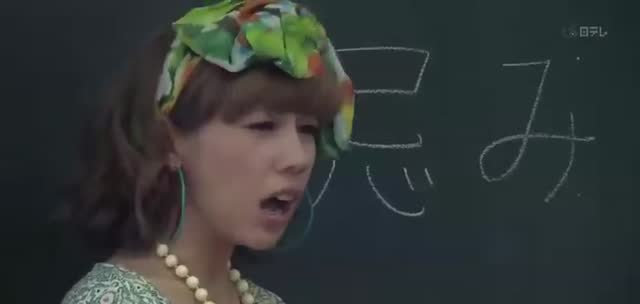
Haruko introduces the Japanese idea of taboo words, replacing unlucky words with lucky ones. Elaine asks what the term means.
ハルコ
だから そういう縁起の悪い言葉を 「忌み言葉」って言うの。
That's why unlucky words like that are called 「忌み言葉」.
エレーン
イミ言葉!? どういうイミですか?
"Imi" words?! What kind of "imi" (meaning) is that?
ハルコ
「忌み」っていう言葉は 嫌うってこと。
The word 「忌み」 means to dislike, to avoid.
ハルコ
だから そういう言葉は ハッピーな言葉に置きかえよう→
So let's replace such words with happy ones.
ハルコ
ってことで「する」めを→
So, we take the 「する」 in 「するめ」...
ハルコ
「あたり」めにしたわけよ。
and turn it into 「あたり」, giving 「あたりめ」.
ハルコ
「あたり」のほうが 何か いい感じじゃん?
Doesn't 「あたり」 just feel better?
Speaking notes
忌み言葉
taboo words avoided because they bring bad luck
「忌(い)み言葉(ことば)」 = words avoided because they are unlucky. 「忌む」 means to shun, to avoid. Typical examples: • Weddings avoid 「切る」, 「別れる」, 「去る」 • Exams avoid 「落ちる」, 「滑る」 • Funerals avoid 「重ね重ね」, 「再び」 (they suggest the misfortune happening again) Elaine hears 「忌み」 as 「イミ(意味)」: a homophone mix-up.
〜わけよ
explaining how it came about: 'so that's what we did'
「あたりめにしたわけよ」 = "So that's why we made it 「あたりめ」." 「〜わけ」 is used to explain the background so the listener understands. Haruko uses 「〜わけ」 plus 「〜じゃん?」 in a relaxed, teacherly way. 【Extra】 「当たり」 = a hit; a win. In gambling and lotteries, winning is a lucky sign, so 「当たりめ」 neatly reverses the bad omen of 「スる」 (losing).
Haruko goes on to give more examples of replacement words, such as the word for sashimi and the one used at weddings.
ジャック
そうですね! そういう言いかえは→
Yes! That kind of rewording is...
ハルコ
他にもあって 例えば→
There are others, too. For example...
ハルコ
「刺身」っていうのを 「おつくり」って言うでしょ。
People say 「おつくり」 instead of 「刺身」, right?
ハルコ
「刺す」って言葉が 怖い言葉だからよ。
That's because the word 「刺す」 is a frightening word.
ボブ
「身を刺す」 切腹でござる。
"Stab the body"... that's seppuku, my lord! (samurai-style joke)
ハルコ
あと 「終わる」って言葉も あんまり縁起が良くないから→
Also, the word 「終わる」 isn't very lucky either, so...
ハルコ
結婚式では 「お開き」って言うでしょ。
at weddings, people say 「お開き」, right?
ハルコ
へえ~なるほど。 そうなんだ。
Oh, I see. So that's how it is.
Speaking notes
お開き
the end of a party (lucky replacement for 'owaru')
「お開(ひら)き」 = the end (of a party, wedding reception, etc.). It avoids 「終わる」 and 「閉じる」, replacing them with the lucky word "to open" (開く): • 「宴もたけなわですが、そろそろお開きに」 = "The party is in full swing, but it's about time we wrapped up." Similar cases: • 「すり鉢」 → 「あたり鉢」 / 「梨」 → 「ありの実」 (to avoid 「無し」)
お造り
sashimi, in a refined, honorific form
「おつくり(御造り)」 = sashimi. 「刺す」 suggests stabbing, so the word 「造る」 (to make) is used instead. 【Note】 The 「お〜」 is a beautifying prefix that makes the food sound more refined and pleasant. Bob's joke 「身を刺す=切腹でござる」 plays on reading 「刺身」 as "stabbing the body" and brings up seppuku. His 「ござる」 is samurai speech, used for comic effect.
Haruko says that once you start worrying about unlucky things you want to change them. Bob asks her to change his score of 13, and Jack adds that 13 is considered unlucky in Europe and America.
ハルコ
縁起の悪いものって→
Unlucky things...
ハルコ
気になっちゃうと かえたくなるもんなのよ。
Once you start to worry about them, you want to change them.
ボブ
だったら ハルコ これも かえてくれよ!
In that case, Haruko, change this one for me too!
ボブ
13点はないだろ! はあ?
13 points is just too much! - Huh?
ジャック
欧米では13は 一般的に 不吉な数字とされてますからね。
In Europe and America, 13 is generally considered an unlucky number.
ボブ
こんなことなら 12点にしてくれよ! 下げて どうすんのよ!
If that's how it is, make it 12 points! - What good is lowering it?!
ルカ
僕も かえて欲しいです。
I want mine changed too.
Speaking notes
〜ものなのよ
it's just human nature to do that
「かえたくなるもんなのよ」 = "people just end up wanting to change it." 「〜ものだ」 expresses a general truth or human nature: • 「人は忘れるものだ」 = "People forget things." Haruko appeals to common human nature, presenting the replacing of taboo words as a natural psychological tendency.
〜とされている
is regarded as...; the commonly held view
「不吉な数字とされてます」 = "is regarded as an unlucky number." 「Aとされている」 expresses a common view or social consensus, stating it without taking personal responsibility for it: • 「〜と言われている」 = "it is said that..." Jack uses this objective-sounding pattern for a studious, rational explanation. Bob's 「これも かえてくれよ」 uses 「くれる」 to frame changing his score as a favor to him, with a coaxing, pushy tone.
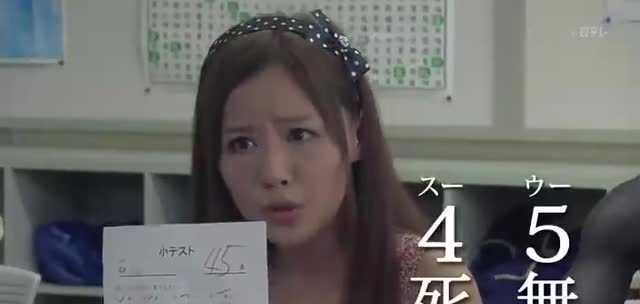
The students list numbers considered unlucky in their countries: 17 in Italy, 4 and 5 in China. Haruko tells them to study harder.
ジャック
イタリアでは17 縁起悪いです。 死を表す。
In Italy, 17 is unlucky. It stands for death.
金麗
中国では4と5がダメ!
In China, 4 and 5 are bad!
金麗
発音が「スー」と 「ウー」で似てる。
The pronunciations "suu" and "uu" are similar.
ハルコ
あんた達 縁起も悪いけど もうちょっと勉強しなさいよ!
You may have bad luck, but you should also study a bit more!
ボブ
俺達の運は最悪だ! ハルコのせいだぞ!
Our luck is the worst! It's Haruko's fault!
ハルコ
ちょ…自分のせいでしょ!
Hey... it's your own fault!
Speaking notes
〜のせい
because of...; blaming someone or something for a bad result
「ハルコのせいだぞ」 = "It's Haruko's fault!" 「Nのせい」 is used to blame a bad result on someone or something: • 「雨のせいで遅れた」 = "I was late because of the rain." Contrast 「〜のおかげ」 = "thanks to..." (the cause of a good result). Haruko's retort 「自分のせいでしょ」 bounces the same pattern straight back.
縁起も悪いけど
'although...' - concedes a point, then turns
「縁起も悪いけど、もうちょっと勉強しなさい」 = "Sure, your luck is bad, but you should also study a bit more." 「〜けど」 is concessive: it admits the other person's point, then turns to the real one: • 「大変だけど、頑張ろう」 = "It's tough, but let's do our best." Haruko uses it to downgrade "bad luck" to an excuse, since the real problem is not studying enough.
Key vocabulary
最悪 さいあく
最悪: the worst.
表す あらわす
表す: to express; to represent.
発音 はつおん
発音: pronunciation.
似る にる
似る: to resemble; to be similar.
〜のせい
〜のせい: because of...; (blaming) it's the fault of...
Talking about luck, Diana says the class will soon visit a power spot together. Haruko asks what that is.
ダイアナ
大丈夫です。もうすぐ みんなで パワースポットに行きますから。
Don't worry. We'll all be going to a power spot soon.
ハルコ
パワースポット?
A power spot?
マリー
幸運の力が もらえるところです。
It's a place where you can receive the power of good luck.
マリー
卒業イベントの遠足で 神社に行くでしょう?
For the graduation event excursion, we're going to a shrine, right?
ハルコ
遠足~?
An excursion...?
ハルコ
もう そんな時期かぁ。
Is it that time already?
ハルコ
そういや 神社に行くことに なってたわ…はぁ。
Come to think of it, it was decided that we'd go to a shrine... sigh.
Speaking notes
パワースポット
a place said to hold spiritual energy that brings luck
「パワースポット」 = a place said to hold spiritual energy and bring good fortune (Japanese-made English). Examples include shrines, temples, giant rocks and waterfalls.
〜ことになっている
it has been decided/arranged that...
「神社に行くことになってた」 = "It had been arranged that we'd go to the shrine." 「Vることになる」 expresses an arrangement or rule that you didn't decide yourself: • 「来週、出張することになった」 = "It's been decided (by others) that I'll go on a business trip next week." Haruko uses this pattern to suggest "the school decided this, not me", with a reluctant tone.
Shibuya tells Haruko that the shrine her class is visiting is quite famous, and that a website calls it a top power spot in Tokyo. Haruko decides to pray for her students to graduate.
渋谷
ハルコ先生達が行く神社って 結構 有名なんだね。
That shrine you and the students are going to is pretty famous, isn't it, Haruko?
ハルコ
えっ? これ…。
Huh? This is...
渋谷
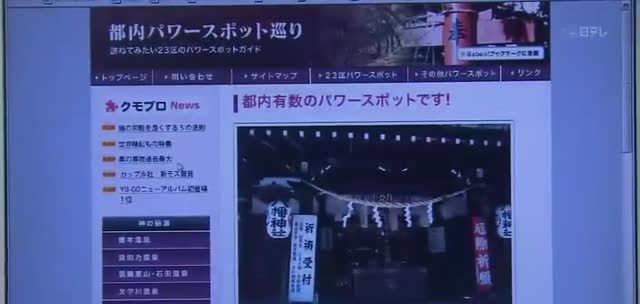
「都内有数の パワースポットです!」だって。
It says, "One of the best power spots in Tokyo!"
ハルコ
私も みんなが 無事 卒業できるよう→
I'll pray that everyone can graduate safely, too...
ハルコ
お祈りしとこ! 生徒さん思いなんですね。
I'll go say a prayer! - You really care about your students, don't you?
ハルコ
そしたら 私も 晴れて高校教師に!
And then I'll finally be able to become a proper high school teacher!
鹿取
結局 自分のことですか。
So in the end, it's all about yourself.
Speaking notes
〜思い
caring about, looking out for (someone)
「生徒さん思い」 = "caring about one's students." 「N+思い」 means putting N first and being considerate toward N: • 「家族思い」 = "devoted to one's family" / 「母親思い」 = "devoted to one's mother" Katori praises Haruko, but Haruko's real motive (becoming a high school teacher) gives it away, so Katori turns resigned with 「結局 自分のことですか」.
晴れて
finally, openly and officially
「晴れて高校教師に」 = "finally becoming a high school teacher, openly and officially." 「晴れて」 is used when a long-standing obstacle is gone and you can finally do something publicly or formally: • 「晴れて夫婦になる」 = "to officially become husband and wife" Haruko uses this celebratory tone to look forward to "graduation = escaping the language school and becoming a high school teacher."
Key vocabulary
有数 ゆうすう
有数: one of the best; among the leading.
無事 ぶじ
無事: safely; without incident.
祈る いのる
祈る: to pray; to wish.
晴れて はれて
晴れて: openly and officially (after an obstacle is removed).
Takasu butts in to say Haruko should get a purification ritual, since she is a jinx for the school. Haruko hits back with "god of poverty" and the two argue in the staff room.
鷹栖
お前の場合 お祓いでもした方が いいんじゃないか?
In your case, you'd better get a purification ritual done.
鷹栖
はっ? 何しろ この学校にとって 厄病神だからな。
Huh? - After all, you're a jinx for this school.
ハルコ
うっさいわね! あんたは貧乏神でしょ!
Shut up! You're the god of poverty!
渋谷
貧乏神ではないですか?鷹栖先生 …って誰がじゃい!
Aren't you the god of poverty, Mr. Takasu? ...Who is, you say?!
鷹栖
お前が この学校に来て ろくな事がない!
Since you came to this school, nothing good has happened!
鷹栖
生徒は みんな問題起こすし わしの馬券は外れるし。
The students all cause trouble, and my betting slips never win.
Speaking notes
〜の場合
in the case of; as for
「お前の場合」 = "in your case." 「Nの場合」 singles out N as a special case: • 「私の場合は違う」 = "My case is different." Takasu uses it to set Haruko apart from ordinary people, implying "you're a special case (bad luck)".
ろくな〜ない
anything decent; used only in negative sentences
「ろくな事がない」 = "nothing good ever happens." 「ろくな」 only goes with negatives, meaning "not a single decent or good one": • 「ろくな物を食べていない」 = "I haven't eaten anything decent." Takasu even blames his own gambling luck on Haruko, the typical 「〜せい」 logic of blaming someone else. 「厄病神(疫病神)」 = a person who brings disaster (a jinx), and 「貧乏神」 = the god who brings poverty.
Takasu's warning: trouble on the trip means firing
0:00 / 0:22
This scene
Takasu warns Haruko that if she causes trouble outside and brings complaints on this trip, she will be fired on the spot. Haruko brushes it off as just a school excursion.
ハルコ
それ私 関係なくね? いいか!
What does that have to do with me? - Listen up!
鷹栖
今度 外で何か問題起こして クレームでも来ようもんなら→
This time, if you cause any trouble outside and we get a complaint...
鷹栖
即刻クビだからな! そんなミスはしませんから~。
you're fired on the spot! - I'm not going to make that kind of mistake.
鷹栖
せいぜい そうならないように 賽銭でも はずんでおくんだな。
At the very least, you'd better toss in a generous offering so it doesn't come to that.
ハルコ
フン!何よ! たかが遠足でしょ。
Hmph! What's that supposed to mean? It's only a school trip.
Speaking notes
〜ようもんなら
if it should happen even once (disaster follows)
「クレームでも来ようもんなら」 = "if, heaven forbid, a complaint comes in..." 「Vようものなら」 presents a hypothetical bad event and warns of serious consequences; 「もん」 is the casual form of 「もの」: • 「遅刻しようものなら、怒鳴られる」 = "If you're even a little late, you'll get yelled at." Takasu uses this pattern as a threat of serious consequences, with an exaggerated, bookish tone.
たかが
a mere...; just a...
「たかが遠足でしょ」 = "It's only a school trip, isn't it?" 「たかが+N」 expresses belittling or underestimating something: • 「たかがゲームじゃないか」 = "It's just a game, isn't it?" Haruko uses it to downplay the risks of the trip.
Key vocabulary
即刻 そっこく
即刻: immediately; on the spot.
クビ
クビ: being fired.
賽銭 さいせん
賽銭: money offered at a shrine.
はずむ
はずむ: to be generous with money; to splurge.
せいぜい
せいぜい: at most; at best (here, sarcastic: 'the least you can do').
Shibuya and Katori warn Haruko that school trips tend to bring trouble. Shibuya tells what happened on a yakatabune boat ride.
渋谷
ハルコ先生 遠足って トラブルが多いんですよ。
Ms. Haruko, school trips involve a lot of trouble, you know.
ハルコ
えっ!そうなの?
Huh! Really?
渋谷
俺のクラスは屋形船に乗ったけど どうなったと思う?
My class once took a yakatabune boat. What do you think happened?
渋谷
まず 知り合いを 大勢連れてきてパニック。
First, they brought along a bunch of friends, and there was panic.
渋谷
次に 畳に土足で上がって パニック。
Next, they stepped onto the tatami with their shoes on, and there was panic.
渋谷
最後に 魚の活き造りで 大パニック。
Finally, there was live sashimi, and there was total panic.
Speaking notes
土足
with shoes on (indoors)
「土足(どそく)」 = wearing outdoor shoes (into an indoor space). • 「土足厳禁」 = "No shoes allowed." In Japan, shoes are not worn indoors (especially on tatami, in shrine halls, or in traditional restaurants), and foreign students often make this mistake.
活き造り
sashimi from a live fish, served still moving
「活(い)き造(づく)り」 = sashimi made from a live fish, served with the fish's shape kept intact on the plate. What startled the foreign students was that the fish on the plate was still moving. Note: 「〜と思う?」 is Shibuya's quiz-style question to Haruko, in a teacher-like manner.
Key vocabulary
屋形船 やかたぶね
屋形船: yakatabune, a traditional covered pleasure boat.
Katori recalls her own school trip, when all the students bought wooden swords as souvenirs and were questioned by a police officer for carrying them.
鹿取
私の時は なぜだか みんな お土産に木刀買っちゃって→
On my trip, for some reason, everybody bought wooden swords as souvenirs...
鹿取
木刀担いで歩いてたら おまわりさんに→
and when they walked around carrying them, a police officer...
鹿取
職務質問されちゃって。 げっ!
stopped and questioned us. - Eek!
鹿取
ほぼ100パー 卒業遠足って 何か起こるから。
On a graduation trip, something almost 100 percent always happens.
鹿取
気を付けて下さいね。 そ…そうなんだ。
Please be careful. - Ri-really?
Speaking notes
職務質問
police questioning of a suspicious person
「職務質問(しょくむしつもん)」 = police questioning of a person who looks suspicious (shortened to 「職質」). Japanese police can stop and question people who look suspicious. Katori tells it with 「〜ちゃって」 (a tone of regret).
ほぼ100パー
percent, in casual speech
「ほぼ100パー」 = "almost 100 percent." 「パー」 is the casual shortening of 「パーセント」.
Haruko asks Katori whether she will join the school trip too, saying the shrine is especially good for love luck.
ハルコ
ちょっと ちょっと… ちょっと待って ちょっと待って。
Wait, wait... hold on, hold on.
ハルコ
遠足 カトリーヌも 一緒に行くよね?
Catherine, you're coming on the trip too, right?
カトリーヌ
え?私が!?何でですか?
Huh? Me?! Why?
ハルコ
だって この神社 都内有数の パワースポットじゃん。
Because this shrine is one of the best power spots in Tokyo, right?
ハルコ
ってことは 恋愛成就のパワーも スゴイってことじゃん。
Which means its power for love coming true must be amazing, too.
ハルコ
そらもう当然 行くっしょ!
So of course you'd go, right?!
カトリーヌ
あ…あの… じゃあ せっかくなんで。
Um... well then, since it's a rare chance.
ハルコ
おし!決まり~!
Okay! It's settled!
Speaking notes
恋愛成就
a wish for love to come true
「恋愛成就(れんあいじょうじゅ)」 = a romance that works out as hoped. It is one of the typical wish categories at Japanese shrines (恋愛成就, 合格祈願, 商売繁盛, 交通安全, 厄除け).
〜っしょ
casual 'right?'; 'of course, isn't it?'
「行くっしょ!」 = "You'll go, right? (Of course you will!)" A casual variant of 「〜でしょ」; 「っしょ」 is more relaxed and younger-sounding than 「でしょ」: • 「いいっしょ」 = "Good, right?" / 「そうっしょ」 = "Right?" Haruko uses this light tone to turn an invitation into a given that can't be refused. 「せっかくなんで」 = "since it's a rare opportunity (I'll go)", a common Japanese way of accepting indirectly.
Haruko stands up in high spirits, trips and bangs her hand, crying out in pain. Shibuya asks if she is okay, and Takasu coolly adds an insult.
ハルコ
うっ!いって…。
Ow! That hurts...
ハルコ
痛い!いたた…。 ハルコ先生 大丈夫ですか?
Ow! Ouch, ouch... - Ms. Haruko, are you all right?
ハルコ
痛い 痛い…マジで。 はっ!?
It hurts, it hurts... seriously. - Huh?!
鷹栖
ほ~ら見ろ お前はもう 呪われている。
See? You're already cursed.
Speaking notes
ほ〜ら見ろ
see? (I told you so)
「ほら見ろ」 = "See? (Look at that!)", pointing out smugly that the other person was wrong or you were right. The tone is "I told you so", self-satisfied and mocking: • 「ほら見ろ、言った通りだ」 = "See? Just as I said." Takasu draws out the sound (ほ~ら), which sounds sarcastic.
呪われている
to be cursed
「呪われている」 = "is cursed." It is the passive form of 「呪う(のろう)」 plus 「ている」 (continuing state).
On the day of the trip, Haruko hands out a handbook she drew herself. The students say it is cute and note that she drew herself the biggest.
ハルコ
はい 今日の遠足のしおりよ。
Okay, here's the handbook for today's trip.
ダイアナ
カワイイです。 ハルコいちばん大きい!
So cute. Haruko is the biggest!
ハルコ
当たり前よ! 私が描いたんだから。
Of course! I'm the one who drew it.
鹿取
王さん 遅いですね。
Wang is late, isn't he?
王
すいませ~ん!
Sorry!
王
遅れました!荷物が重くて。 ハァ ハァ…。
I'm late! My luggage was heavy. Huff, huff...
ハルコ
日帰りなんだけど。
But it's only a day trip.
ハルコ
は~い もうすぐ着くからね!
Okay, we'll be there soon!
Speaking notes
しおり
a handbook for a trip or event; also a bookmark
「しおり」 = a handbook (for a trip or event); also a bookmark. • 「遠足のしおり」 = "a trip handbook" Before school trips and class excursions in Japan, a 「しおり」 listing the itinerary, meeting time and cautions is handed out.
日帰り
a day trip; there and back in one day
「日帰り(ひがえり)」 = a day trip; going and returning the same day. • 「日帰り旅行」 = "a day trip" Haruko teases Wang for bringing luggage as if for a long journey, and one 「日帰りなんだけど」 sums up the whole exaggerated scene. Note: 「〜んだけど」 states a fact instead of criticizing directly, so the listener realizes for themselves that they overdid it.
The group walks toward the shrine. Haruko is strict, telling everyone to line up, and Jin Li complains that she is being too strict.
ハルコ
ちょっと!バラバラに歩かない! 整列して!
Hey! Don't walk all over the place! Line up!
金麗
ハルコ!ちょっと 厳しすぎるんじゃないの?
Haruko! Aren't you being a bit too strict?
ハルコ
言うこと聞く!
Do as I say!
ハルコ
今日は絶対 トラブル無しで 乗り切るんだから。
Today I'm absolutely going to get through this without any trouble.
ハルコ
はい みんな 着いたわよ~! 早く~。
Okay, everyone, we're here! Hurry up!
生徒たち
ホントだ ホントだ! スッゲ~!
It's true! It's true! Wow, amazing!
Speaking notes
〜すぎる
too much; beyond a suitable degree
「厳しすぎる」 = "too strict." 「Aすぎる」 means going beyond the appropriate level and is often used to criticize: • 「食べすぎ」 = "eating too much" Jin Li wraps her complaint in a question with 「〜んじゃないの?」, a typical way of complaining indirectly in Japanese, much softer than a flat 「厳しすぎる!」.
乗り切る
to get through (a difficult period or situation)
「乗(の)り切(き)る」 = to get through something successfully; to pull through. • 「ピンチを乗り切る」 = "to get through a crisis" Haruko stresses her determination with 「〜んだから」.
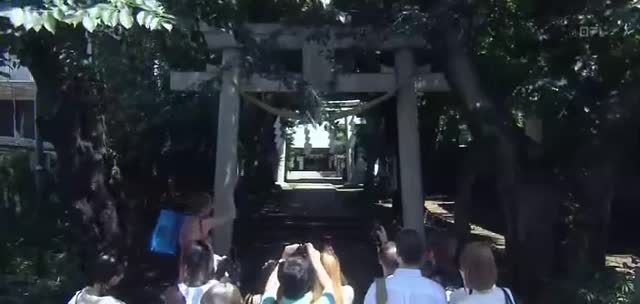
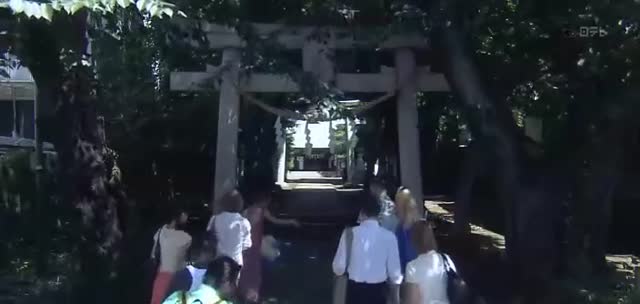
At the shrine, Haruko plays tour guide and explains the torii gate. The students are impressed, and Bob says it looks like an American football goalpost.
ハルコ
こちらに見えますのが 鳥居でございます。
What you can see here is the torii gate.
生徒たち
うお~! スゴイ!
Wow! Amazing!
ボブ
アメフトのゴールみたいだな。 そうそうそう!
It looks like a football goalpost. - Yeah, yeah, yeah!
ハルコ
違うわよ!いい?
No, it doesn't! Listen, okay?
ハルコ
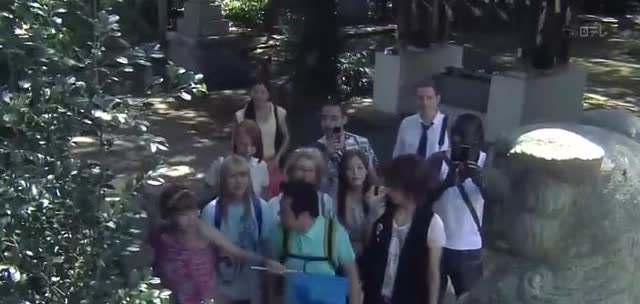
鳥居を くぐってから先の道は 「参道」っていうの。
The path beyond the torii gate is called the 「参道」.
ハルコ
で 参道の真ん中は 「正中」っていって→
And the middle of the approach is called the 「正中」...
ハルコ
神様が通る道なの。だから みんな 端っこ歩くように。
It's the path the gods walk. So everyone, walk along the edges.
ハルコ
いい?わかった? は~い。
Okay? Got it? - Got it.
Speaking notes
鳥居
the gate at a shrine entrance
「鳥居(とりい)」 = the gate at a shrine entrance, marking the boundary between sacred ground and the everyday world. Passing through it means entering the territory of the gods. Custom: before entering, bow once in front of the torii (一礼). Bob compares it to an American football goalpost.
参道・正中
the shrine approach, and its center path 'seichuu'
「参道(さんどう)」 = the approach leading to the main hall of a shrine.The middle of the path (正中) is the path of the gods, and visitors walk along the sides (端っこ)as a sign of respect. Haruko uses 「〜ように」 (instruction) to keep a teacherly tone.
Key vocabulary
鳥居 とりい
鳥居: torii, the gate at a shrine entrance.
参道 さんどう
参道: the approach to a shrine.
正中 せいちゅう
正中: the center of the approach (the path of the gods).
Haruko leads the class in bowing and passing through the torii gate. Shibuya and Katori quietly praise how dependable she is today.
ハルコ
じゃあ 一礼お辞儀して…はい。
Okay, now let's make a bow...okay.
ハルコ
はい じゃあ行くわよ!
All right, let's go!
ハルコ
みんな!ストップ 真ん中ダメよ! ダメよ 真ん中。
Everyone! Stop, don't walk in the middle! Not the middle!
ハルコ
はい 端っこ!端 端っこ!
Okay, the edge! The edge, the edge!
渋谷
今日のハルコ先生は 頼りになりますね。
Ms. Haruko is dependable today, isn't she?
ハルコ
ふふん。 私の実力は こんなもんよ。
Heh heh. That's about what I can do.
Speaking notes
頼りになる
reliable; someone you can count on
「頼(たよ)りになる」 = reliable; someone you can depend on. • 「頼りになる先輩」 = "a senior colleague you can count on" Shibuya adds a light, exclamatory touch of praise with 「〜ね」. Note that he praises "today's" Haruko, which implies "she usually isn't".
こんなもん
this is nothing; my ability is just this much (modest boast)
「私の実力はこんなもんよ」 = "That's about the level of my ability." (a proud kind of modesty) It is the casual contraction of 「こんなもの」. On the surface it is modest, but it is really a boast: "this is nothing for me."
The students rush onto the center of the approach, and Bob shouts "touchdown". Haruko hurriedly tells them to stop.
ハルコ
こらこらこらこら! あ~っ!!
Hey, hey, hey, hey! Aaah!!
ボブ
お~!真ん中にタッチダウンだ!
Whoa! A touchdown in the middle!
鹿取
罰が当たりますよ。
You'll be punished by the gods.
ハルコ
いででで…。 大丈夫ですか?
Ow, ow, ow... Are you okay?
ハルコ
私は大丈夫だけどさ~ サンダルがさ~ほら。
I'm fine, but my sandal, look.
鹿取
鼻緒が切れたみたいで 不吉ですね。
The strap seems to have snapped. How ominous.
ハルコ
遠足 始まったばっかなのに。
And the trip has only just started.
Speaking notes
罰が当たる
to be punished by the gods; to get one's comeuppance
「罰(ばち)が当たる」 = to be punished by the gods; to suffer retribution. • 「そんなことをすると罰が当たるよ」 = "You'll be punished if you do that." Katori uses the polite form plus 「〜ますよ」, a mild warning.
鼻緒が切れる
a sandal strap snaps (a bad omen)
「鼻緒(はなお)が切れる」 = the strap of a sandal (geta or zori) snaps. Japanese superstition holds that a broken shoe strap or sandal thong is a bad omen, linked to a sign of misfortune: • 「靴紐が切れると不吉」 = "A snapped shoelace is unlucky." Katori calmly sums up the sorry sight with 「不吉ですね」.
Wang points at a stone statue and shouts "Hachiko". Haruko quickly corrects him, explaining that it is a komainu.
王
お~!こんなとこにいた!
Oh! You're here!
王
みんな見て!ほら ハチ公!
Everyone look! See, it's Hachiko!
生徒たち
お~! うわ~これがそうか!
Oh! Wow, so this is it!
ハルコ
ちょ…ちょ…違う違う違う! ピピピピーッ!
Wait, wait, no, no, no! (blows whistle)
ハルコ
これは狛犬!
This is a komainu!
ハルコ
口を アーッって開いてる方は ライオン 獅子ね。
The one with its mouth open wide, going "aah", is the lion, the 「獅子」.
ハルコ
そして 口を ん~って閉じてる方は犬。
And the one with its mouth closed, going "mmm", is the dog.
Speaking notes
狛犬
the paired guardian statues at a shrine
「狛犬」 = a pair of guardian statues placed at the entrance of a shrine: one with its mouth open (阿形), one with it closed (吽形). Wang mistakes it for the statue of the faithful dog Hachiko at Shibuya Station. 「ハチ公」 is a famous bronze dog in Tokyo.
〜方
the one that...; picks out one of two
「口を開けている方」 = "the one that has its mouth open." 「Vている+方」 points to one of two options: • 「大きい方」 = "the bigger one"
Key vocabulary
狛犬 こまいぬ
狛犬: komainu, a guardian lion-dog statue at a shrine.
The students touch the komainu, and Wang wants to buy one as a souvenir and asks how much it costs. Haruko says she doesn't know the price.
王
お土産に買いたいです! おいくらですか?
I want to buy one as a souvenir! How much is it?
ハルコ
いや…値段は わかんないなぁ。
No... I don't know the price.
ボブ
なるほど!これがウンか!
I see! So this is "un"!
ボブ
こっちを触るとウンがつくかも!
Maybe if I touch this side I'll get "un" (luck)!
ハルコ
そういうことじゃないから!
That's not what it means!
ハルコ
うわぁ!
Waaah!
ボブ
お!ハルコにフンがついた! アハハハ!
Oh! Haruko got hit by "fun" (droppings)! Ha ha ha!
ジャック
運がつかずに フンがつきましたね。
She didn't get "un", she got "fun".
ハルコ
くっそ~! ついてないですね。
Damn it! Just my luck, I'm so unlucky.
Speaking notes
運がつく/ウンがつく
a pun: 'un' for luck and 'fun' for droppings
「ウン(運)がつく」 = to get lucky; 「フン(糞)がつく」 = to get droppings on you. In Japanese, 「運がつく」 means good luck arrives, while 「糞がつく」 means getting something dirty on you. Bob connects the closed-mouth "un" (吽) of the komainu to 「運」, and the joke lands when the dropping actually hits Haruko. Jack's dry remark 「運がつかずにフンがつきましたね」 turns it into bad luck: she didn't get luck, she got the droppings.
ついてない
to be unlucky; to have no luck
「ついてない」 = to be unlucky; to be having bad luck. 「ついている」 = to be lucky. • 「今日はついてる!」 = "I'm so lucky today!"
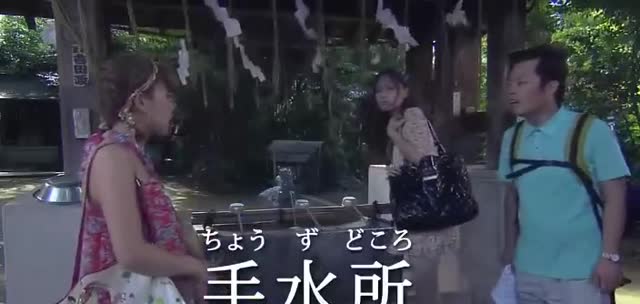
Haruko takes the group to the hand-washing basin and explains that it is where you cleanse yourself before meeting the gods. Bob says he should have brought a towel.
ハルコ
はい ここは 神様に会う前に 体を綺麗にする所です。
Okay, this is where you purify your body before meeting the gods.
ボブ
体をキレイに? タオル持ってくればよかった。
Clean my body? I should've brought a towel.
ハルコ
あるよ~。 違う違う!
I have one~. No, no, that's not it!
ハルコ
洗うのは 手だけ。
You only wash your hands.
ハルコ
手を水で洗う所で「手水所」ね。
The place where you wash your hands with water is called the 「手水所」.
ハルコ
手を洗うだけで 体を清めたことになんのよ。
Just washing your hands counts as purifying your body.
ボブ
この竜のよだれで? よだれじゃないから。
With this dragon's drool? - It's not drool.
ハルコ
その後は 口をすすぐ。これは 言葉を綺麗にするって意味なの。
After that, you rinse your mouth. This means making your words clean.
ハルコ
ただし!柄杓には直接 口をつけないように。わかった?
But! Don't put your mouth directly on the ladle. Got it?
ボブ
すぐ すすぐ!
Rinse right away!
ボブ
はい 入れるよ~美味しいかい?
Okay, I'll put it in~. Is it tasty?
ハルコ
そういうことじゃないから!
That's not what it's for!
Speaking notes
手水
the water for washing hands and mouth before worship
「手水(ちょうず/てみず)」 = washing hands and rinsing the mouth with water at the entrance of a shrine or temple, to remove impurity. The steps: (1) take the ladle in your right hand and scoop water to wash your left hand; (2) switch hands and wash your right; (3) pour water into your left hand and rinse your mouth (never put your mouth directly on the ladle); (4) rinse your left hand again; (5) stand the ladle upright so water runs down the handle. 【Extra】 On screen it is written 「手水所」, but the standard word is 「手水舎(ちょうずや/てみずや)」. 「言葉を綺麗にする」 means that rinsing the mouth is also seen as purifying your words (言霊).
〜ことになる
counts as having done X; is treated as...
「体を清めたことになんのよ」 = "that counts as having purified your body." 「Vたことになる」 means "by a certain standard, it can be regarded as so". 「なんのよ」 is the casual contraction of 「なるのよ」 (る → ん). Haruko tells the students that a simplified form is considered enough.
Haruko brings the students to the main hall. Wang asks whether the proprietress (okamisan) is inside.
ハルコ
はい ここが本殿です。
Okay, this is the main hall.
王
ここに いるんですね… おかみさんが!
She's in here, isn't she... the proprietress!
ハルコ
料亭じゃないから… あ こんにちは~。
This isn't a traditional restaurant... Oh, hello.
ハルコ
はい!正式なお参りの仕方を 今から教えるよ。
Okay! Now I'll teach you the proper way to worship.
ハルコ
まず…。
First...
ハルコ
そして…。
And then...
ハルコ
神様を呼ぶ。
Call the gods.
ハルコ
2回お辞儀をします。
Bow twice.
ハルコ
そして 2回手を打つ。
Then clap your hands twice.
ハルコ
そして…。
And then...
ハルコ
お祈りをし終わったら 最後に…。
When you've finished praying, finally...
ハルコ
わかった? はい。
Got it? - Yes.
Speaking notes
二拝二拍手一拝
two bows, two claps, one bow: the basic shrine worship
The basic shrine worship routine: (1) throw in an offering; (2) ring the bell if there is one; (3) bow twice (二拝); (4) clap twice (二拍手); (5) put your hands together and make a wish; (6) bow once (一拝). Note: at Buddhist temples you do not clap, you only press your palms together; at Shinto shrines you clap. 【Extra】 A few shrines, such as Izumo Taisha, use "two bows, four claps, one bow".
おかみさん
the proprietress of an inn or traditional restaurant
「おかみさん(女将)」 = the proprietress of an inn or traditional restaurant. Wang mishears 「神様」 as 「おかみさん」, a mix-up from the shared sounds (か・み): • 「神様」 vs 「おかみさん」 Haruko's retort 「料亭じゃないから」 is a crisp comic correction, and 「あ こんにちは~」 is her cover-up on spotting an actual shrine attendant.
In front of the hall, the students make their wishes one after another: doujinshi sales, meeting a ninja, bags, clothes and cosmetics. Haruko tries to stop them from saying them aloud.
生徒たち
同人誌 売れろ! 忍者に会いたい!
May my doujinshi sell! I want to meet a ninja!
金麗
バッグと服と化粧品と あと…→
A bag, clothes, cosmetics, and also...
金麗
ハワイで結婚式できますように!
May I have my wedding in Hawaii!
ハルコ
口に出さなくていいから! ってか金麗 欲張りすぎ。
You don't have to say it out loud! And Jin Li, you're being way too greedy.
生徒たち
じゃあ ハルコにも 幸せきますように。
Then may happiness come to Haruko, too.
ハルコ
ついでみたいに 言わないでいいから。
Don't say it like an afterthought.
Speaking notes
〜ますように
may it be so; a prayer or wish form
「結婚式できますように」 = "May I be able to have a wedding." 「Vますように」 is the pattern for prayers and wishes (seen on shrine ema plaques and Tanabata wish strips): • 「合格できますように」 = "May I pass the exam." Note: 「ように」 expresses a hope whose fulfillment is not up to the speaker, a humble stance of asking the gods for help.
〜みたいに
like; as if
「ついでみたいに言わないで」 = "Don't say it as if it were an afterthought." 「Nみたい」 expresses a comparison or impression: here, "as if (it were) just a side matter", which carries a resentful feeling at being treated as an extra. 【Comparison】 「ようだ」 is more formal, 「みたい」 more casual, and 「らしい」 takes the stance of hearsay or an outside view.
Key vocabulary
祈願 きがん
祈願: prayer; a wish made to the gods.
欲張り よくばり
欲張り: greedy; a greedy person.
同人誌 どうじんし
同人誌: doujinshi, fan-made or self-published magazine.
Haruko looks for small change for the offering, finding only 200 yen, then cries out that her money has been taken.
ハルコ
細かいのあったかな…200円だ。
Do I have any small change... It's 200 yen.
ハルコ
あっ!あ~ちょっと! 私のお金が~!!
Ah! Hey, wait! My money!!
鹿取
先生!お賽銭泥棒と 間違えられちゃいますよ。 はなしてよ!
Ms. Haruko! You'll be mistaken for an offering-box thief! - Let go of me!
ボブ
お~!ハルコが 賽銭おごってくれたぞ!
Oh! Haruko is treating us to an offering!
生徒たち
マジかよ!? ありがとう!やった~!
Seriously?! Thank you! Great!
生徒たち
車が欲しい!高級車! 毎日 合コン! マーボー豆腐を!
I want a car! A luxury car! - A group date every day! - Mapo tofu!
ハルコ
お前ら 勝手に願うなぁ!!
Don't wish for things on your own!!
ジャック
はずんじゃいましたね お賽銭。
You really splurged on that offering.
ハルコ
残ったの こんだけ。
This is all that's left.
Speaking notes
おごる
to treat someone (pay for them)
「おごってくれた」 = "treated us (paid for us)." 「おごる」 means one person pays for the other(s). • 「今日は私がおごるよ」 = "It's on me today." Bob uses 「〜てくれた」 to turn Haruko's money flying into the offering box into a favor done for them, a playful use of giving-and-receiving verbs that spins a mishap into an act of kindness.
はずむ
to splurge; to be generous with money
「はずむ」 = to spend generously (in a good mood or to keep up appearances). • 「チップをはずむ」 = "to tip generously" 「〜ちゃう」 is the casual form of 「〜てしまう」 (regret or something unintended): "you ended up being generous".
Beside an old tree at the shrine, Jack asks what it is. Shibuya explains that Japanese gods are called the eight million gods.
ジャック
これは 何ですか?
What is this?
渋谷
日本の神様は ヤオヨロズの神といって→
Japanese gods are called the 「ヤオヨロズ」 gods...
渋谷
こういう木とか石とか→
They dwell in trees like this, and in stones...
渋谷
ありとあらゆるところに 宿ってるんです。
in absolutely every place.
エレーン
ヤオヨロズ? 八百万っていう字です。
"Yaoyorozu"? It's written 八百万.
ボブ
八百万!?いすぎだろ。 うふふ…。
Eight million?! That's way too many. Heh heh...
渋谷
それだけ色んなものに 宿ってるっていう事ですね。
It means they dwell in that many different things.
ハルコ
お客様にも宿ってます! 「お客様は神様です」。
They dwell in customers too! "The customer is a god."
渋谷
それはまた 違う意味だと思いますけど…。
I think that's a different meaning, though...
渋谷
何にでも魂が宿ってるという 考え方ですね。
It's the idea that a spirit dwells in everything.
ボブ
あそこに 魂抜けた奴がいるぞ。
There's a guy over there whose soul has left his body.
Speaking notes
八百万
eight million; a countless number
「八百万(やおよろず)」 = a vast number (not literally eight million). 「八百万の神」 = the Shinto belief that spirits dwell in all things. • Reading: 「やおよろず」 (an old native reading), not 「はっぴゃくまん」 Shinto holds that mountains, rivers, trees, stones, wind, thunder... all have a god dwelling in them. 「お客様は神様です」 is a famous slogan of Japanese service culture, meaning "treat the customer like a god", and Shibuya's 「意味が違う」 points out that Haruko is mixing the two up.
宿る
to dwell in; to reside (of spirits or life)
「宿(やど)る」 = (of a soul, god or life) to dwell in... • 「魂が宿る」 = "a spirit dwells in it" • 「宿屋」 = "inn" (a place to lodge) 【Nuance】 Using 「宿る」 rather than 「ある/いる」 suggests the god is staying temporarily, not living there permanently.