This episode collects 62 conversation scenes: the pitch accent of 「箸・橋・端」, whether 「いい」, 「大丈夫」 and 「結構だ」 mean yes or no, the two faces of 「適当」 and 「いい加減」, misunderstandings caused by dropped subjects, slang such as 「やばい」, 「マジウケる」 and 「パネェ」, and how to pronounce the semi-voiced 「ぱ」. The focus is on ambiguous Japanese expressions.
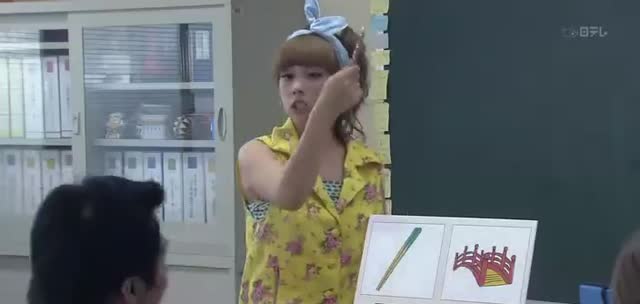
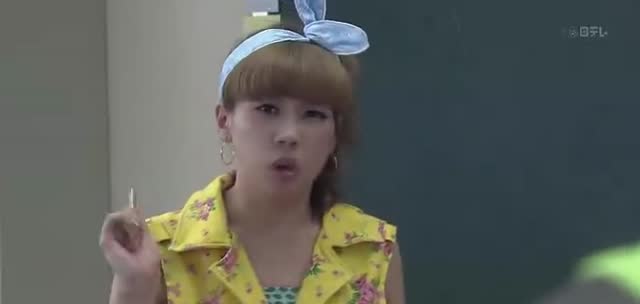
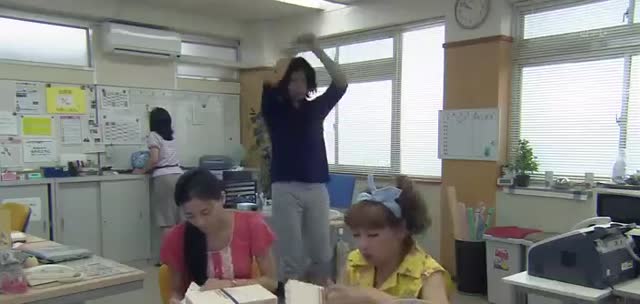
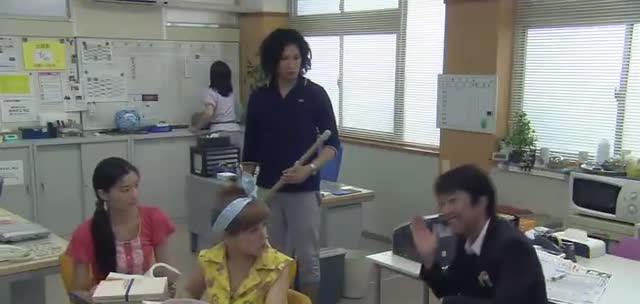
Haruko's class begins with homophones: the word 「はし」 has three meanings, told apart only by pitch accent, and the students get confused.
ハルコ
ご飯を食べる時に使う「箸」。
"Hashi", the chopsticks you use when you eat.
ハルコ
これは「は」の方にアクセントを 付ける。はい!
For this one, put the accent on "ha". Go!
ハルコ
で 川にかかってるこの「橋」。
And "hashi", the bridge that spans a river.
ハルコ
これは「し」の方を強調して はい!
For this one, stress the "shi" part. Go!
ハルコ
さらに端っこの「端」ってのもあんのよ。
And there's also "hashi", meaning an edge or end.
ハルコ
「箸」の「端」をつかむのか「橋」の「端」を歩くのか。
Are you grabbing the end of the chopsticks, or walking along the edge of the bridge?
Speaking notes
アクセント
Japanese uses pitch accent (high and low pitch), not stress
Japanese 「アクセント」 is pitch accent, based on high and low pitch, not the loud-and-soft stress of English. • 箸 (ha↑shi↓) / 橋 (ha↓shi↑) / 端 (ha↓shi→) The same 「はし」 is told apart by where the pitch drops. Haruko teaches by choosing which mora gets the accent, which is the classic minimal-pair drill in Japanese teaching. [Conversation tip] Japanese listeners almost never confuse these words, because context has already narrowed down the answer.
端っこ
〜っこ = (casual) a place or person that is ...
「端(はし)っこ」 = the edge, the corner. 「〜っこ」 is a suffix that makes a noun sound casual, affectionate or childlike: • 「隅っこ」 a corner / 「末っ子」 the youngest child By saying 「端っこ」 instead of 「端」, Haruko sounds casual and relaxed.
Two students start arguing. One invited the other to dinner and was answered with 「いい」, but the other didn't show up. They ask what 「いい」 really means: "good" or "no thanks".
ボブ
あ~もう!日本語って 色々ややこしいんだよ!
Ugh! Japanese is so complicated in so many ways!
ポール
はあ!? もっと違いをハッキリさせろよ!
What?! Then make the differences clearer!
ハルコ
どういうことよ~。
What's going on, you two?
ボブ
例えば こないだ こいつに 晩飯 誘ったら…。
For example, the other day I invited this guy to dinner...
ボブ
…って言ったくせに 来なかった。
...he said "...", but he didn't come.
ポール
だってさ「いい」って言ったら 普通は「ノー」って意味だろ?
But if you say "ii", it usually means "no", right?
ボブ
なんでだよ。 「いい」は「オーケー」だよ。
Why would it? "Ii" means "OK".
Speaking notes
〜くせに
〜くせに = even though ... (a reproach)
「言ったくせに来なかった」 = "He said he'd come, but he didn't." 「Vた+くせに」 marks a contradiction and carries a tone of dissatisfaction or blame: • 「知ってるくせに」 even though you know • 「子供のくせに」 even though you're only a child It is more emotional than 「のに」 and is often used to complain to someone close; it can hardly be used to a superior or an elder.
いい(OK/不用)
the two faces of 「いい」: OK, or no thanks
「いい」 = "good, fine", but it can also mean "no thanks, never mind". • 「コーヒー、いかが?」「あ、いいです」 (= no, thank you) • 「手伝おうか?」「いいよ」 (= "Sure" or "No need", depending on tone) In invitations and offers, 「いい」 can either accept or politely decline, and the difference lies in intonation, facial expression and context. This is the classic example of Japanese ambiguity (「あいまいさ」): the speaker tries to be polite without hurting the other person, and the listener has to "read the air".
The students ask Haruko who is right. She says both are, and the students are even less convinced.
ボブ
ハルコ どっちが正しい?
Haruko, which of us is right?
ハルコ
どっちもじゃない? え? はあ?
Both, don't you think? Huh? What?
ハルコ
いいって意味の時もあるし そうじゃない時もあるし→
Sometimes it means "good", and sometimes it doesn't.
ハルコ
その時によって どっちも取れるから どっちも正解なのよ。
Depending on the situation it can be taken either way, so both are correct.
ボブ
なんだ それ? 納得いかね~よ。 はい!
What is that?! I can't accept that! Come on!
Speaking notes
〜によって
〜によって = depending on ...
「その時によって」 = depending on the situation at the time. 「Nによって+different」 means "it varies depending on N" and is used in both written and spoken Japanese: • 「人によって違う」 it differs from person to person • 「場合によっては」 depending on the case
納得いかない
納得がいかない = can't accept it, not convinced
「納得(なっとく)いかない」 = can't accept it, not satisfied in one's own mind. (The 「が」 is dropped, which is very common in speech.) • 「その説明には納得いかない」 I can't accept that explanation It is stronger than 「分からない」: it isn't "I don't understand" but "I understand, yet I'm not convinced".
Elaine says that even though she was told 「大丈夫」, she got turned down. Haruko explains what the word means.
エレーン
…って言われたのに 断られたことがある。
...I was told that, but I got turned down anyway.
ハルコ
だって それ「いらない」って意味だからね。
Because that means "I don't need it".
エレーン
どうして?「大丈夫は」「オーケー」って意味でしょ?
Why? Doesn't "daijoubu" mean "OK"?
ハルコ
まあ…そうだけど。
Well... it does, yes.
Speaking notes
大丈夫
「大丈夫です」 = no problem / no thanks
「大丈夫(だいじょうぶ)です」 has two completely opposite uses: ① "No problem / that's fine": 「この日で大丈夫ですか?」「はい、大丈夫です」 ② "No thanks / I don't need it": 「袋、要りますか?」「大丈夫です」 The second use is a polite refusal: instead of saying 「要らない」 (too blunt), you say "I'm fine (so I don't need it)". [Attitude] Japanese people tend to avoid saying a direct no, so they use phrases that are positive on the surface but negative in meaning.
断られた
〜られる = to be (turned down), passive
「断られた」 = "was turned down". The passive (「受身」) of 「断る」. Note that the Japanese passive often carries a feeling of suffering or inconvenience: • 「雨に降られた」 I got caught in the rain (and it was a nuisance) Elaine uses the passive with a feeling of having been wronged: "They said 「大丈夫」, which I took to mean OK, and I still got refused."
Wang wanted to say "just right" but said 「いい加減」 and got scolded. The class talks about how the same 「いい」 changes meaning from word to word.
王
はい!私も「ちょうどいい」って 言いたくて…。
Yes! I wanted to say "choudo ii" too...
王
…って言ったら 怒られました!
...but when I said "...", I got scolded!
ハルコ
そりゃ怒られるわよ。
Of course you got scolded.
ハルコ
「いい加減」って言うと 「適当」って意味だからね。
Because when you say "ii kagen", it means "half-hearted".
Speaking notes
いい加減
the two meanings of 「いい加減」
「いい加減(いいかげん)」 has two opposite meanings: ① "In moderation, just right" (positive): 「いい加減に炒める」 stir-fry until just done ② "Sloppy, irresponsible" (negative): 「いい加減な人」 an unreliable person / 「いい加減にしろ!」 That's enough! Knock it off! In modern speech ② is the main meaning. Wang wanted to say 「ちょうどいい」 (just right) but said 「いい加減」, which amounts to "you are such a sloppy person", so of course Wang got scolded.
怒られる
怒られる = to be scolded (passive of suffering)
「怒られた」 = "was scolded (by someone)". The passive of 「怒る」. • 「先生に怒られた」 I was scolded by the teacher In Japanese, being scolded is expressed with 「怒られる/叱られる」: 「怒る」 leans toward "losing one's temper", while 「叱る」 leans toward "correcting someone (out of concern for them)".
Jack says that 「適当」 is also a vague word: when someone says it, it means "anything is fine", but on a test it means something else.
ジャック
その「適当」の意味もいい加減です。 え?
The meaning of that "tekitou" is also vague. Huh?
ジャック
「適当」って言われたら 「何でもいい」という意味ですが→
If someone says "tekitou", it means "anything is fine", but...
ジャック
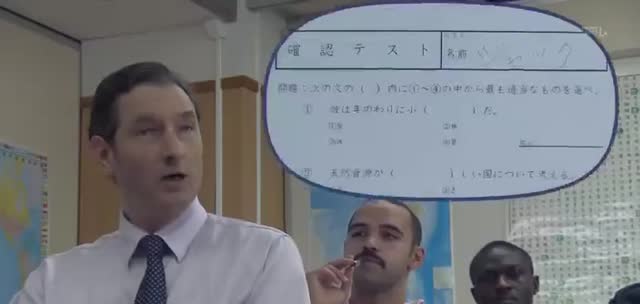
問題文に「適当なものを選べ」と 書かれてたら→
If a test question says "choose the tekitou one"...
ジャック
ちょうど当てはまるものを選べという意味になります。
...it means "choose the one that fits exactly".
Speaking notes
適当
「適当」 = suitable / random, careless
「適当(てきとう)」 has two levels of meaning: ① "Suitable, appropriate" (the original sense): 「適当な答えを選びなさい」 Choose the appropriate answer ② "Random, half-hearted" (colloquial): 「適当にやっといて」 Just do it any old way / 「適当な人」 an unreliable person
当てはまる
当てはまる = to fit, to apply
「当てはまる」 = (a condition or rule) applies to, fits. • 「この条件に当てはまる人」 people who meet this condition • 「当てはまるものに○をつけてください」 Please circle the ones that apply Typical instructions on Japanese exams are 「適当なものを選べ」 and 「当てはまるものを選べ」. Both mean "choose the correct answer", not "choose at random".
Marie asks what else "Who is it?" can refer to besides a computer, and the students bring up misunderstandings caused by dropped subjects.
ハルコ
そっか…。 あと…。
I see... And also...
マリー
誰ですか。…って聞かれた時にパソコンの他に何のこと言ってるの?
When someone asks "Who is it?", what are they talking about besides the computer?
ハルコ
いや…パソコン以外 指してないからね。
No... they're not pointing at anything but the computer.
金麗
…って好きなの?嫌いなの?誰?
...Does he like it, or hate it? Who?
ハルコ
そりゃ好きってことなんだよね。
Well, of course it means he likes it.
Speaking notes
主語の省略
dropped subjects and "reading the air"
In Japanese conversation, the subject and object are often dropped, and the listener works them out from context. • 「好きなの?」「うん、好き」 The students' confusion comes precisely from so much being omitted that they can't tell who is being talked about. The 「…って」 here is a quotation: someone says "...". [High-context culture] Japanese tends to leave a sentence half-said and let the other person guess the rest, which is why foreign students find it "ambiguous".
〜ってことなんだよね
〜ってこと = in other words ...
「好きってことなんだよね」 = "That means he likes her, you know." 「〜ってこと」 sums up or explains what came before: • 「つまり、行かないってこと?」 So, you mean you're not going? Haruko uses this pattern with a tone of "don't you get even that?", and the final 「よね」 seeks confirmation and shared understanding.
The students complain that when people talk they can't tell what is being referred to, and Haruko says they should just ask right then.
ボブ
しゃべってても わけわかんねえよ。
Even when people are talking, I have no idea what's going on!
ハルコ
わかんない時は その場で聞けばいいでしょ!?
When you don't understand, you can just ask on the spot, can't you?!
ジャック
会話をやめて いちいち聞くのですか?
Stop the conversation and ask every single time?
ダイアナ
それじゃ話が進みません!
Then the conversation won't move forward!
ボブ
面倒だし 誰も話 してくれなくなるよ!
It's a hassle, and nobody will talk to us anymore!
ジャック
何かハッキリした ルールはないのですか?
Isn't there some clear rule?
Speaking notes
わけわかんねえ
わけわからない = I have no idea what's going on
「わけ(訳)わかんない」 = it makes no sense, I can't tell why. 「わけ」 means "reason, logic": • 「わけがわからない」 I can't make sense of what is going on 「わかんねえ」 is a rough, masculine contraction of 「わからない」 (〜ねえ = 〜ない): • 「知らねえ」, 「行かねえ」 It is used only by men, among people they know well, or when emotions are running high, never in polite situations.
〜てくれなくなる
〜てくれなくなる = (they) stop doing ... for us
[Giving and receiving verbs] 「話してくれなくなる」 = people stop being willing to talk to us. 「〜てくれる」 means "the other person does something for us (a favor)", and adding 「なくなる」 means "that favor disappears". By using 「くれる」, Bob treats people's willingness to chat with us as an act of goodwill, so no longer being talked to feels like losing their kindness, with more of a sense of loss than 「話さなくなる」 would convey.
The students demand clear rules from Haruko, or they'll stop studying. Haruko, anxious to see everyone graduate properly, promises to do something.
ボブ
じゃあ もういい!勉強しないよ!
Then forget it! I'm not studying!
ハルコ
それじゃ困るわよ!ちゃんと 全員 卒業してもらわないと!
That's a problem for me! I have to get everyone to graduate properly!
ジャック
ハルコ!何とかしてください!
Haruko! Please do something!
王
そうだよ~。 よろしくお願いしますよ。
That's right. We're counting on you.
ハルコ
頼むよ。 わかったわよ!
I'm counting on you. All right, I get it!
ハルコ
なんとか すれば いいんでしょ!
I just have to do something about it, right?!
ハルコ
う~ん。
Hmm.
ハルコ
ダメだ!どこにも答えがない!
It's no good! There's no answer anywhere!
Speaking notes
卒業してもらわないと
〜てもらわないと = I need you to ...
[Giving and receiving verbs] 「卒業してもらわないと」 = "You have to graduate for me." 「〜てもらう」 means "to ask the other person to do something for me, with me as the beneficiary", and 「ないと(困る)」 means "if not, I'll be in trouble". Note that she says 「卒業してもらう」 rather than 「卒業させる」, which shows her position: "I can't force you, I can only ask for your cooperation."
何とかして
何とかする = to find a way to deal with it
「何(なん)とかして」 = do something about it, find a way. • 「何とかなる」 it will work out somehow • 「何とかしてください」 please do something (asking for help) 「〜んでしょ」 is the casual form of 「〜のでしょう」, and here it carries a sulky "that's what you want, isn't it?".
Katori says Japanese really does have many ambiguous expressions, and Haruko says you can only grasp them by a general feel.
鹿取
まあ確かに日本語には あいまいな表現が たくさんありますからね。
Well, it's true that Japanese has a lot of ambiguous expressions.
ハルコ
なんとなくの感じでしか わかるしかないしさ。
All you can do is understand them by a vague sense of things.
ハルコ
なんかこうバシッとした 答えはないわけ?
Isn't there a snappy, clear-cut answer?
渋谷
日本人でも戸惑うもんね~。
Even Japanese people get confused by them.
ハルコ
いいならいい!好きなら好き!ってね。
Good is good! Like is like! That's how it should be.
ハルコ
あいまいさが分かんない 人たちには→
For people who don't understand ambiguity...
ハルコ
「イエス」なのか「ノー」なのか ハッキリ言うべきよね!
you should say clearly whether it's "yes" or "no"!
Speaking notes
バシッと
バシッと = (mimetic) crisply, decisively
「バシッとした答え」 = a crisp, decisive answer. 「バシッ」 is originally the sound of a slap or smack, and in colloquial speech it has come to mean "clean and decisive, with no hedging": • 「バシッと決める」 decide decisively
〜べき
〜べき = should ... (a strong opinion)
「ハッキリ言うべきよね」 = "You should say it clearly, right?" 「Vる+べき」 means "ought to, should" and is stronger than 「〜たほうがいい」, with a preachy, opinionated flavor: • 「もっと反省すべきだ」 you should reflect on it more By using 「べき」, Haruko raises a personal preference to the level of "it should be this way".
Takasu tells Haruko she understands nothing: not spelling things out in Japanese is a form of consideration for the other person. Haruko asks why.
鷹栖
やっぱりおめえは 何もわかってねえな~!
As I thought, you really don't understand anything!
ハルコ
なんでよ!
Why not?!
鷹栖
ハッキリさせないから いいことだって あるんだよ。
There are good things that come from not being clear.
鷹栖
「ノー」っていうより 「あ…大丈夫です」って答える方が→
Rather than saying "No", answering "Ah... no, I'm fine"...
鷹栖
相手への思いやりや気遣いを 感じられるだろう。
...lets you feel the other person's consideration and thoughtfulness, doesn't it?
渋谷
なるほど。そういったあいまいさも含めて→
I see. Including that kind of ambiguity...
渋谷
日本語なんだね~。
...is what makes it Japanese.
Speaking notes
おめえ
おめえ = (rough) you
「おめえ」 is a rougher variant of 「お前(おまえ)」. 「〜わかってねえ」 and 「〜ねえ」 are likewise rough masculine speech.
思いやり・気遣い
思いやり / 気遣い = consideration, thoughtfulness
「思(おも)いやり」 = putting yourself in someone's shoes; 「気遣(きづか)い」 = worrying about and looking after the other person. Takasu reads vague speech as goodwill toward the listener: • Not refusing directly is a way to avoid making the other person lose face This is the core logic of 「和(わ)」 (harmony) and 「察し(さっし)」 (intuiting) in Japanese culture: the speaker doesn't spell everything out, and the listener is expected to pick up the unspoken meaning. Note that 「〜だろう」 is a masculine or written-style conjecture, with the tone "isn't it? (you should get that)".
Shibuya and Takasu say that teaching even the depth of communication is what counts as teaching Japanese.
渋谷
そういうコミュニケーションの 奥深さも教えてこそ→
Only if you also teach the depth of that kind of communication...
鷹栖
これ…日本語を 教えたことになるんだよ~。
...can you say you've taught Japanese.
ハルコ
けど伝わんなきゃ意味ないじゃん。
But if it doesn't get across, it's meaningless.
鷹栖
んなこたぁない。
That's not true.
鷹栖
ま…おめえには日本語の奥深さを 伝える授業なんてのは無理だな。
Well... a class that conveys the depth of Japanese is beyond you.
ハルコ
決め付けないでくれる?
Would you stop jumping to conclusions?
鹿取
決め付けないで下さい。鷹栖先生。
Please don't jump to conclusions, Mr. Takasu.
Speaking notes
〜てこそ
〜てこそ = only by doing ..., (truly)
「教えてこそ」 = only if you teach this does it become truly ... 「Vてこそ+V/N」 stresses that value is established only when this condition is met: • 「やってこそ意味がある」 it only has meaning if you actually do it The tone is fairly formal and preachy, used to sum up a lesson or assert a value.
〜ことになる
〜ことになる = it counts as ... (as a result)
「教えたことになる」 = (only then) it counts as having taught. 「Vた+ことになる」 means "by a certain standard, it can be regarded as ...": • 「これで契約したことになる」 with this, the contract counts as signed
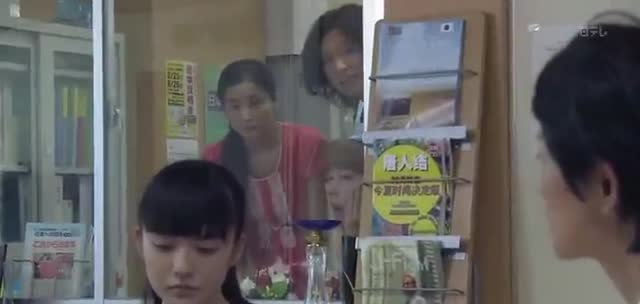
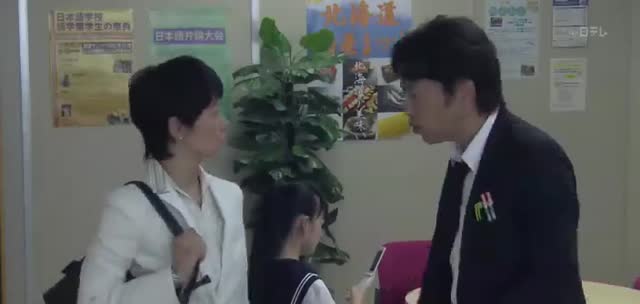
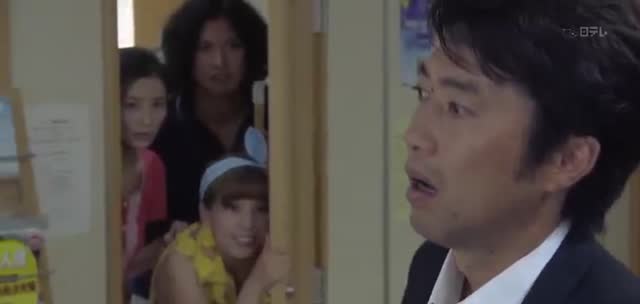
In the office, Takasu's ex-wife Kaori has arrived with their daughter, and Haruko, Katori and Shibuya peek in from the doorway.
鹿取
鷹栖先生。お客様です。
Mr. Takasu. You have a visitor.
ハルコ
あれ?
Huh?
ハルコ
まさか…! え?
Don't tell me...!
鹿取
鷹栖先生の元奥さんと 娘さんらしいです。
It seems to be Mr. Takasu's ex-wife and daughter.
鷹栖
まあ 座れよ。
Well, have a seat.
鹿取
ハルコ先生。見すぎですよ。
Haruko, you're staring too much.
ハルコ
そりゃ見るでしょ~。
Of course I'm going to stare!
Speaking notes
〜らしい
〜らしい = it seems, I hear that ...
[そう / よう / みたい / らしい] 「元奥さんと娘さんらしいです」 = "It seems to be his ex-wife and daughter." 「らしい」 expresses a conclusion based on information (heard from others): not something confirmed with your own eyes, but "I hear" or "as far as I know". By using 「らしい」, Katori keeps the stance "I'm only passing this on, I can't say for sure": • 「そうです」 hearsay (direct report) • 「ようです」 an inference after the speaker's own observation • 「らしい」 indirect information in an objective tone, with the speaker standing apart from it.
元奥さん
元奥さん = ex-wife (honorific)
「元(もと)奥(おく)さん」 = ex-wife. 「奥さん」 is the honorific for "someone else's wife" (you call your own wife 「妻」 or 「家内」). • 「娘(むすめ)さん」 someone else's daughter (honorific) Katori still uses honorifics for a colleague's family, which reflects workplace etiquette. 「見すぎ」 = looking too much (「Vすぎ」 means "too much").
The teachers watch from outside the door. One says they never expected Takasu to have such a grown daughter, and another says she is apparently a first-year high school student this year.
ハルコ
いや~しかし あんな大きな娘がいたとはね~。
Well, well, I never thought he had such a big daughter.
鹿取
確か今年 高一らしいよ。
She's apparently a first-year high school student this year, I think.
ハルコ
結婚って大変だなぁ。俺は まだまだ自由の身でいいや。
Marriage sure looks tough. I'm happy to stay a free man for a while yet.
ハルコ
しかし 何 話してんだろ。
But what are they talking about?
鹿取
あ…ちょっ…!ハルコ先生!
Ah... wait...! Haruko!
Speaking notes
〜とは
〜とは = I never expected ... (surprise)
「あんな大きな娘がいたとはね」 = "To think he had such a big daughter!" 「〜とは」 expresses surprise or amazement at an unexpected fact: • 「彼が先生だったとは」 I never thought he was a teacher It is more formal and exclamatory than 「〜なんて」, and the final 「ね」 is a self-addressed exclamation.
自由の身
自由の身 = a free man, not tied down
「自由(じゆう)の身(み)」 = the status of being unrestrained. 「身」 means "oneself, one's situation": • 「自由の身になる」 to become free The speaker refers to himself with the masculine 「俺」, in a breezy, easygoing way. 「まだまだ〜でいいや」 is a lazy attitude of "I'd like to stay like this".
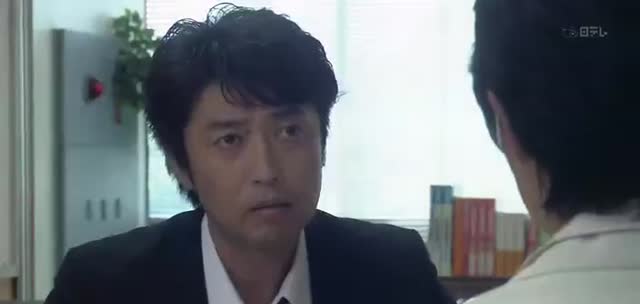
Takasu assumes his ex-wife has come about child support and hurriedly apologizes, saying he'll do something about it next month.
鷹栖
養育費の件なら すまん。
If this is about the child support, I'm sorry.
鷹栖
来月には何とかするから…な。
I'll sort something out by next month... okay?
香
あいかわらずね。 私がそんなことで来たと思う?
You haven't changed a bit. Do you think I'd come for something like that?
鷹栖
はい? ここに来たのは アヤカが どうしてもっていうからよ。
What? We came here because Ayaka insisted.
Speaking notes
すまん
すまん = sorry (masculine)
「すまん」 = a contraction of 「すまない」, an apology from a man to an equal or someone younger. Compared with 「ごめん」, it has more of a grown man's air: • 「すまない」 more formal / 「すみません」 polite form
あいかわらず
相変わらず = as usual, unchanged
「あいかわらずね」 = "You're the same as ever." 「相変わらず」 can be praise or criticism depending on tone: • Positive: 「相変わらずお元気ですね」 you're as lively as ever • Negative: here it means "you haven't changed at all, still as unreliable as ever".
Kaori says she is leaving their daughter here and will pick her up at seven. Takasu tries to refuse, and Kaori says it is only one day.
香
この子ね あなたの…。 お母さん。もういいって→
This girl, you see, is your... Mom. That's enough.
香
早く行けば? そうお?
Why don't you hurry up and go? Really?
鷹栖
じゃ! ちょちょちょ!待てよ。おい。
Well, then! Wait wait wait! Hold on. Hey.
鷹栖
あの子 どうすんだよ! 7時には迎えに来るわ。
What are you going to do about that girl! I'll come pick her up at seven.
鷹栖
何いってんだ。お前。 10年も会ってないんだぞ。
What are you talking about? You. I haven't seen her in ten years!
香
だったら今日1日ぐらい かまわないでしょ?
Then it shouldn't matter for just one day today, should it?
鷹栖
いや お前 1日ぐらいってさ。
No, you, just one day, you say...
香
じゃ よろしくね。
Well then, I'm counting on you.
Speaking notes
〜ぐらい
〜ぐらい = only ..., just ... (downplaying)
「1日ぐらい」 = just one day. 「Nぐらい/くらい」 can mean "about", or "no more than ... (playing something down)": • 「一度ぐらい会ってあげれば?」 Why don't you at least meet her once? By using 「ぐらい」, Kaori deliberately plays down ten years of absence to "one day", in a firm tone that allows no negotiation.
かまわない
かまわない = it's fine, I don't mind
「かまわないでしょ?」 = "It's fine, isn't it?" 「構(かま)わない」 = "I don't mind", and conversely 「構わないでくれ」 = "leave me alone". The ending 「でしょ?」 is a pushy confirmation: I've already decided, so just agree.
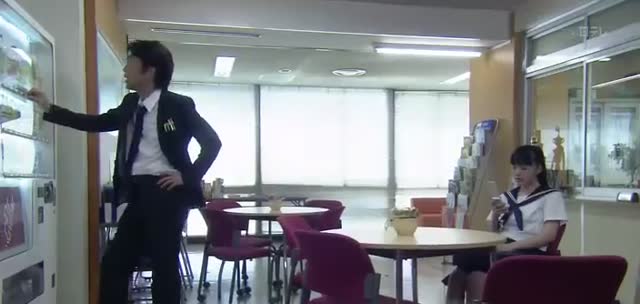
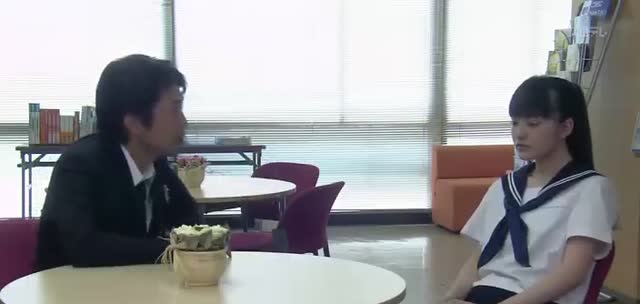
Trying to find something to say, Takasu asks his daughter if she'd like a drink, coffee or tea or something. She answers 「どっちでも」.
鷹栖
あ~なんか飲むか?
Um, would you like something to drink?
鷹栖
ねえ コーヒー的なものとか。お茶的なものとか…ね?
You know, something coffee-like. Or something tea-like... right?
アヤカ
どっちでも。
Either one.
鷹栖
その「どっちでも」ってのは 飲むか飲まないかってこと?
That "either one", does it mean drink or don't drink?
鷹栖
それともコーヒー的なものでも いいし→
Or does it mean coffee-ish stuff is fine...
鷹栖
お茶的なものでもいいってこと? うざっ。
...and tea-ish stuff is fine too? Ugh, so annoying.
Speaking notes
〜的なもの
〜的なもの = something like ...
「コーヒー的なもの」 = something along the lines of coffee. 「〜的(てき)」 is an all-purpose suffix that adds vagueness: • 「コーヒー的なもの」, 「感じ的に」, 「普通に」 [Youth language] 「〜的」, 「なんか」, 「普通に」 and 「全然」 are verbal habits of young Japanese people for "not nailing things down".
うざい
ウザい = annoying
「うざっ」 = a contraction of 「うざい」, "annoying, irritating". This is young people's slang, and it can be aimed at a person, a situation or a thing. It is strong and basically unusable in front of elders. When Ayaka says 「うざっ」 to her father, it means "you're being so annoying with all this beating around the bush".
Takasu realizes his daughter was talking about her phone and offers his desk if she is going to wait here, but she shuts him down with a single line.
鷹栖
ああ…携帯…携帯ね。携帯のことだったんだな。
Ah... a phone... a phone, right. So you meant your phone.
鷹栖
そうだ ここで ずっと待ってるんだったら→
That's right, if you're going to wait here the whole time...
鷹栖
職員室の俺の席 使ってもいいぞ。
you can use my seat in the staff room.
アヤカ
いやいや それ普通に おかしいし。
No no no, that's just plain weird.
鷹栖
んんん?普通に?おかしい?
Hm? "Just plain"? "Weird"?
アヤカ
別に私の勝手でしょ?違くない?
It's my business anyway, isn't it? Aren't I right (chigaku nai)?
鷹栖
「違く」…「ない」?どっちだい?
"Chigaku"... "nai"? Which is it?
Speaking notes
普通に〜
「普通に」 = (youth slang) simply, totally
「普通におかしい」 = "it's just weird." In young people's speech, 「普通に」 no longer means "normally" but "simply, without a doubt": • 「普通においしい」 it's just delicious / 「普通に無理」 absolutely not possible Takasu takes it literally as "normal" and presses her on it.
違くない?
違くない? = isn't that so? (youth speech)
「違(ちが)くない?」 = "Isn't that right? / Isn't it so?" Standard grammar would be 「違わない?」, but young people conjugate 「違う」 like an adjective (違くない), a case of language change. Takasu notices the odd grammar of 「違く+ない」 but can't tell what it means (affirmative or negative). In Japanese, 「〜くない?」 is often a request for agreement, meaning "...right?": • 「これ、可愛くない?」 Isn't this cute?
Haruko and Katori peek from behind a door as Takasu is thrown off by his daughter. Ayaka says the man understands nothing and can leave her alone.
アヤカ
なによ あいつ。全然わかってないじゃない。
What's with that guy? He doesn't get anything at all.
アヤカ
私のことは ほっといてくれていいし。
You can just leave me alone, you know.
鹿取
完全に翻弄されている。
He's completely being toyed with.
鹿取
あんな鷹栖先生の顔 見るの 初めてです。
It's the first time I've seen Mr. Takasu with a face like that.
ハルコ
いい気味よ。 聞こえてんだよ!
Serves him right. I can hear you!
Speaking notes
ほっといてくれていい
〜てくれていい = you can leave me alone
[Giving and receiving verbs] 「ほっといてくれていい」 = "You don't have to bother with me." 「〜てくれる」 means "the other person does something for me", but here it is used to say "please leave me alone": • On the surface it is polite (「〜でいい」), but the actual tone is "leave me alone" Note that by using 「くれる」 to turn "leaving me alone" into "a favor you do for me", she adds irony, a coldness like 「どうぞご自由に」 ("be my guest").
いい気味
いい気味 = serves him right
「いい気味(きみ)」 = feeling satisfied at the misfortune of someone you dislike; "serves them right". • 「いい気味だ」 serves you right / 「ざまあみろ」
Takasu notices Haruko and the others peeking and demands to know what they're looking at. Haruko says she saw everything.
鷹栖
何 見てんだ?お前ら。 いや…別にその…。
What are you looking at? You lot. No... it's nothing, um...
ハルコ
ばっちり見たわよ。
I saw the whole thing.
ハルコ
さっきは えらそうなこと 言ってたけど→
You were talking so big earlier...
ハルコ
娘の日本語 全然わかってない じゃない。日本語教師のくせに。
...but you don't understand your own daughter's Japanese at all, do you? And you a Japanese teacher.
鷹栖
長い間 会ってないんだから 仕方がねえだろ!
It can't be helped, we haven't met in a long time!
鷹栖
だいたい そんなこと お前に関係ねえだろ!どけ!
Anyway, it has nothing to do with you! Get out of the way!
Speaking notes
〜のくせに
〜のくせに = even though you are ... (sarcasm)
「日本語教師のくせに」 = "even though you're a Japanese teacher." 「Nのくせに」 points out a mismatch between someone's status and behavior, with strong sarcasm: • 「大人のくせに」 even though you're an adult (you ...)
仕方がない
仕方がない = it can't be helped
「仕方がねえだろ」 = the rough masculine form of 「仕方がないだろう」. It means "nothing can be done, that's how it is" and is also "making an excuse for oneself".
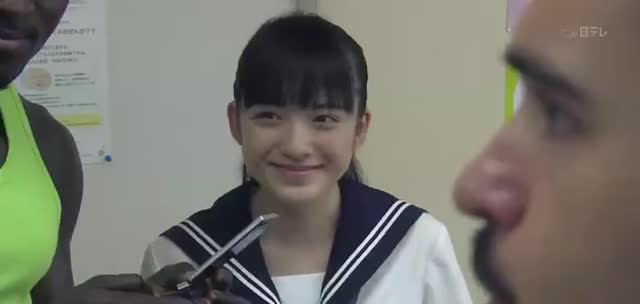
Ayaka sits in on the class. The students are taken with her school uniform and say it is cute, but her use of 「やばい」 confuses everyone.
ボブ
お~いいね~。
Oh, nice!
ダイアナ
制服かわいい。
The uniform is so cute.
ダイアナ
コスプレじゃない本物。初めて見ました。
A real one, not cosplay. It's my first time seeing one.
ボブ
お!すげ。いい写真撮れたぞ。
Oh! Wow. I got a great photo.
アヤカ
なになに? ホントだ。やばくない?これ。
What, what? Oh really. Isn't this yabai?
ボブ
やばい?どこが?
Yabai? Where?
アヤカ
だって…いいじゃん。これ。
Well... it's good, isn't it? This.
ボブ
「やばい」っていいって意味でも 使うのかよ?
Is "yabai" used to mean "good" too?
アヤカ
うん。 へ~。
Yeah. Oh, I see.
Speaking notes
やばい
やばい = bad (originally), awesome (now)
「やばい」 originally means "bad, dangerous" (a rough word), but young people now also use it to mean "awesome, amazing": • 「このラーメン、やばい!」 This ramen is amazing! • 「テストやばい」 I'm in trouble with the test The meaning is judged by tone and facial expression, so this is another ambiguous expression (「あいまい表現」). Ayaka uses 「やばくない?」 ("isn't it awesome?") to ask for agreement, and 「〜じゃん」 = 「〜じゃない」, young people's casual speech.
〜じゃん
〜じゃん = isn't it, you know
「いいじゃん」 = "It's good, isn't it?" 「〜じゃん」 is the colloquial form of 「〜じゃない」, a confirmation meaning "you know that too", and can carry emphasis, coaxing or dissatisfaction: • 「いいじゃん、別に」 what's wrong with that? It is used among young people or friends and can't be used in polite situations.
Ayaka says 「マジウケる」 with a completely blank face, leaving the students puzzled. She explains that it is also said when you're not laughing.
アヤカ
みんな 知らないんだ。マジウケる。
None of you knew that? Maji ukeru.
ボブ
全然ウケてないよ。ウケてない時にも言うんだ。
You're not laughing at all. You say it even when you're not laughing.
ボブ
マジウケる。お~全然ウケてないよ。
Maji ukeru. Oh, you're not laughing at all.
ダイアナ
スゲー真顔。
What a straight face.
アヤカ
マジウケる~。今度は ちゃんとウケてま~す。
Maji ukeru! This time I'm really laughing!
ジャック
どっちでも使うってことですね。
So it's used either way, I see.
ダイアナ
実用的ですね。 ちょっと!
It's very practical. Hey!
Speaking notes
マジウケる
マジウケる = totally hilarious / a catchphrase
「マジ(真面目)+ウケる(受ける)」 = "seriously funny" (colloquial). Young people use it to express "that's funny, that's wild, that's over the top", and sometimes it has nothing to do with being funny and is just a filler meaning "I heard you". [Distinction] 「ウケる」 = to get laughs, to be popular.
〜ってことですね
〜ってことですね = in other words ...
「どっちでも使うってことですね」 = "So you can use it either way, right?" Jack sums up using polite form plus 「ってこと」, a handy pattern for checking your understanding: • 「つまり、〜ってことですね?」
Ayaka stays in the classroom to listen in. The students say she is more entertaining than Haruko's class, and Haruko tells everyone to hurry up and sit down.
ボブ
おお~この子 ハルコの授業より 面白いぞ。
Wow, this girl is more fun than Haruko's lessons.
ハルコ
うるさいわね~授業 始まってんだから 早く席 着きなさい。
Quiet, you lot. Class has started, so sit down quickly.
ハルコ
ねえ!
Hey!
ハルコ
日本語の授業に興味あんの?
Are you interested in Japanese class?
アヤカ
別に。
Not really.
Speaking notes
別に
別に = (nothing in particular)
「別に」 = "nothing in particular; not really." It is used to answer a question, meaning "I have no particular thoughts" or "I don't feel like saying more": • 「どうしたの?」「別に」 What's wrong? Nothing. Teenagers often use it as a cold shield, and it can actually mean "there's something I want to say but I'm reluctant to".
席に着く
席に着く = to take one's seat
「席(せき)に着(つ)く」 = to sit down in one's seat. 「着く」 means "to arrive, to take one's place" (not to be confused with 「付く」 or 「就く」). • 「席に着いてください」 Please take your seats Haruko uses 「着きなさい」, a "gentle command" that teachers often use (verb stem + なさい).
Takasu comes over and asks Haruko a hypothetical question: if you had a father you hadn't seen in ages, why would a daughter go to see him?
鷹栖
何? ちょっと質問があるんだ。
What? I have a question.
ハルコ
何よ?
What is it?
鷹栖
やっぱ いいや…。 気になるわね。言いなさいよ!
Never mind... Now I'm curious. Spit it out!
鷹栖
その~ 例えば…まあ あくまで仮の話なんだが。
Well, say... it's just a hypothetical, mind you.
鷹栖
お前に…ものすごく長~い間 会えなかった父親がいたとする。
Suppose you have a father you haven't been able to see for a really, really long time.
ハルコ
は? だから仮の話だよ。
Huh? Like I said, it's hypothetical.
鷹栖
で お前は そこに会いに行くとする。何故だ?
And suppose you go to see him. Why?
ハルコ
わかんないわよ。 だよな~。
How should I know? Right, I guess so.
Speaking notes
あくまで〜
あくまで = only, strictly
「あくまで仮の話」 = "purely a hypothetical." 「あくまで」 means "it stays strictly within this scope, don't read more into it": • 「あくまで個人的な意見です」 This is strictly my personal opinion Takasu asks his question in the form of a 「仮の話」, which is a typical indirect question in Japanese. [Stance] Instead of asking directly "why did my daughter come?", he asks "if there were a father...", which saves face and makes the listener "read the air".
〜とする
〜とする = suppose that ...
「父親がいたとする」 and 「会いに行くとする」 = "suppose there is ...", "suppose you go ..." 「〜とする」 sets up a premise: • 「Aだとすると、Bになる」 If we suppose A, then B follows
Haruko asks Takasu what that vague question was about, and says he simply wants to know what the girl came here for.
ハルコ
てか 何? その あやふやな質問。
Anyway, what was that? That vague question.
ハルコ
要するに あの子が 何しにここに来たのか→
In short, you're wondering why that girl came here in the first place...
ハルコ
気になってるってことでしょ? んなことは 一言も言ってないよ! あくまで仮定の話だよ!
...you're curious about it, right? I never said anything like that! It was purely a hypothetical!
ハルコ
ふ~ん。聞き出してあげよっか? えっ?
Hmm. Want me to find out for you? Huh?
鷹栖
あの子が ここに来た理由。そんなこと できんのかよ?
The reason she came here. Can you really do something like that?
Speaking notes
あやふや
あやふや = vague, unclear
「あやふやな質問」 = a vague, unclear question. • 「あやふやな返事」 a noncommittal answer Haruko uses 「あやふや」 to describe Takasu's "hypothetical" question. The word is close to 「あいまい」, but leans more toward "unreliable, shaky".
聞き出してあげよっか
〜てあげる = I'll do ... for you (offering)
[Giving and receiving verbs] 「聞き出してあげよっか?」 = "Want me to find out for you?" 「〜てあげる」 means "I do something for you", and here it is offered on her own initiative with a touch of superiority. 「〜しよっか」 = the colloquial form of 「〜しようか」, in a friendly, casual tone. By saying 「あげる」, Haruko takes the initiative and the position of the one doing a favor, hinting that "you need me, I'll help, but there's a price".
Takasu asks whether Haruko can do it, and she brags that she is a former charisma clerk and good at handling people.
鷹栖
できるんですか? ハルコ先生。
Can you do it? Ms. Haruko.
鷹栖
できるん…ですか? ハルコ先生~。
Can you...do it? Ms. Haruko~.
ハルコ
元カリスマですから。こう見えても 人の扱いには慣れてるんで。
I'm a former 「カリスマ」, after all. You may not think so to look at me, but I'm used to handling people.
鷹栖
そっか。じゃあ頼むわ。
I see. Then I'm counting on you.
ハルコ
うっ! ただし 条件があるわ。
Ugh! But there's a condition.
ハルコ
もし それができたのならば→
If I manage to do it...
ハルコ
今後一切 私の行動に 口出ししないって約束できる?
can you promise not to interfere in anything I do from now on?
Speaking notes
こう見えても
こう見えても = don't let my looks fool you
「こう見えても」 = "Even though I may not look it (I'm actually quite ...)." It is a way of lowering the listener's expectations first and then showing your ability: • 「こう見えても、料理は得意なんです」 You wouldn't think so to look at me, but I'm good at cooking Haruko uses her status as a former 「カリスマ」 as her qualification, and the polite 「慣れてるんで」 (ので→んで) carries a "polite confidence".
口出しする
口出しする = to butt in, to interfere
「口出(くちだ)し」 = chiming in on or interfering in someone else's business. • 「余計な口出しをするな」 Don't butt in where you're not wanted Haruko demands that Takasu "never interfere from now on", as a condition in exchange for her help.
Takasu readily answers 「結構だ」 and tells Haruko not to say he asked her. Haruko asks if the thing about the father wasn't just a hypothetical.
鷹栖
結構だ。俺が頼んだってことは 言うなよ。
Fine. Don't tell her I asked.
ハルコ
あれ?父親の話は 仮の話じゃなかったっけ?
Huh? Wasn't the thing about the father a hypothetical?
ハルコ
さてと…。
Now then...
Speaking notes
結構だ
「結構」 = fine / no need
「結構(けっこう)だ」 = "fine, all right", but it can also mean "no need, no thank you". • 「お茶はいかがですか?」「結構です」 (= no, thank you) • 「それで結構です」 (= that will do) 「結構」 is another typical two-faced word in Japanese: whether it means agreement or refusal depends on intonation and context.
〜じゃなかったっけ
〜っけ = (recalling) wasn't it ...?
「仮の話じゃなかったっけ?」 = "Wasn't it a hypothetical?" 「〜っけ」 is used when you recall something and want to confirm it: • 「明日は休みだったっけ?」 Wasn't tomorrow a day off? Haruko uses 「っけ」 to pretend she has a bad memory, but she is really teasing him.
Haruko brings Ayaka into the classroom and has her ask the students why they came to Japan. The answers are all over the place.
ハルコ
何やってんだよ?入ってこいよ。こっち!
What are you doing? Come on in. Over here!
ハルコ
えっ? 入って 入って。
Huh? Come in, come in.
ジャック
どうしたんですか?
What's the matter?
アヤカ
すいません…聞いてもいいですか? 何を?
Excuse me... may I ask something? What?
アヤカ
皆さん 何で 日本に来たんですか?
Why did all of you come to Japan?
ボブ
俺は うどん屋になるため。 は?
Me, to become an udon shop owner. Huh?
エレーン
私は演歌歌手です。 俺 漁師。 私 忍者!
I'm an enka singer. I'm a fisherman. I'm a ninja!
アヤカ
意味わかんないし。
That makes no sense.
ハルコ
じゃあ 何で あんたは ここに来たの?
Then why did you come here?
Speaking notes
〜ため
〜ため = in order to ...
「うどん屋になるため」 = "in order to become an udon shop owner." 「Nになるため(に)」 expresses purpose. • 「日本語を勉強するため」 in order to study Japanese
意味わかんないし
〜し = (listing reasons) and besides ...
「意味わかんないし」 = "I don't get the meaning at all." The final 「〜し」 originally means "listing reasons", but in colloquial speech it is often used alone to imply "and there are other reasons, I'll leave them unsaid": • 「疲れたし」 I'm tired (and there are other reasons) Young people end with 「し」 with a vagueness of "I listed only one, you can guess the rest".
Haruko says Ayaka has come to see Mr. Takasu after ten years. The students learn she is his daughter and start talking about missing their own families.
ハルコ
10年ぶりに 鷹栖先生に会いに来たんでしょ。
You came to see Mr. Takasu for the first time in ten years, didn't you?
ボブ
マジで!?鷹栖先生の娘かよ。 マジかよ? ホント?
Seriously!? So you're Mr. Takasu's daughter? Seriously? Really?
ジャック
離れてる家族に 会いたいと思うのは当然です。
It's only natural to want to see family who are far away.
王
私もたまに家族恋しい。ハウスシックです。
I sometimes miss my family too. I'm house sick.
ハルコ
ホームシックだろ!
It's homesick!
マリー
私も息子に会いたいです。
I want to see my son too.
ボブ
え? マリー 息子いんの?
Huh? Marie, you have a son?
マリー
うん。三番目の夫の。 ええっ!?
Yes. By my third husband. What!?
ボブ
意外に波瀾万丈なんだ。
Her life is full of unexpected ups and downs.
Speaking notes
〜ぶりに
〜ぶりに = for the first time in ...
「10年ぶりに」 = for the first time in ten years. 「period+ぶり」 means "again after an interval of ...": • 「久しぶり」 long time no see / 「一年ぶりに会った」 met for the first time in a year Note that it can only be used when a state that existed before recurs.
ホームシック
ホームシック = homesick
「ホームシック」 = homesickness. Wang says 「ハウスシック」 ("house sick") and is corrected by Haruko: 「home」 corresponds to "home (family, hometown)", while 「house」 is a building. 「〜恋しい」 is an emotion word meaning "to long for, to miss": • 「家族が恋しい」 I miss my family 「波瀾万丈(はらんばんじょう)」 = a life full of ups and downs (a four-character idiom).
The students' talk about homesickness deepens. Some have been separated from family by war, and they urge Ayaka to say what she wants to say now that she has the chance.
ジャック
戦争で家族が離れて 会いたくても会えない人もいます。
There are people whose families were separated by war and who can't see them even if they want to.
ジャック
会えるだけでも幸せです。 せっかく会えたなら→
Just being able to meet is happiness. Since you've finally got the chance...
王
言いたいこと 言った方がいいです。
you should say what you want to say.
アヤカ
私は…あの人に確かめたいことが あって…ここに来たんだけど。
There's something I want to confirm with that person... and that's why I came here.
ハルコ
ふうん…で?
Hmm... and?
Speaking notes
〜だけでも
〜だけでも = even just ...
「会えるだけでも幸せです」 = "Just being able to meet is happiness." 「〜だけでも」 means "even the bare minimum condition is enough to ...": • 「生きているだけでも幸せだ」 Just being alive is happiness
せっかく
せっかく = rare opportunity, after all the effort
「せっかく会えたなら」 = "Since you finally got to meet ..." 「せっかく」 means "the chance is rare and shouldn't be wasted": • 「せっかくだから食べていって」 Since you're here, have something to eat [Distinction] 「せっかく〜のに」 = "I went to the trouble of ... but ..." (regret). Jack uses it to urge Ayaka "not to waste this chance". 「あの人」 is how she refers to her father, with a sense of distance: Ayaka doesn't say 「お父さん」 but 「あの人」 ("that person").