This episode contains 50 dialogue scenes: keigo ranked by level of respect, business keigo for visits and requests, 「弊社/御社」, the vocabulary and etiquette of the tea ceremony, and 「一期一会」 and 「和敬清寂」. The main focus is polite ways of opening a request such as 「恐縮です」, 「恐れ入りますが」 and 「差し支えなければ」.
Language highlights
「恐縮です」(humbled; "I'm honored")
「頂けますか/下さいませんか」(two polite ways to request)
「弊社/御社」(our company / your company)
「恐れ入りますが」(a humble cushion phrase that nearly commands)
「お点前頂戴いたします」(the tea ceremony phrase for receiving tea)
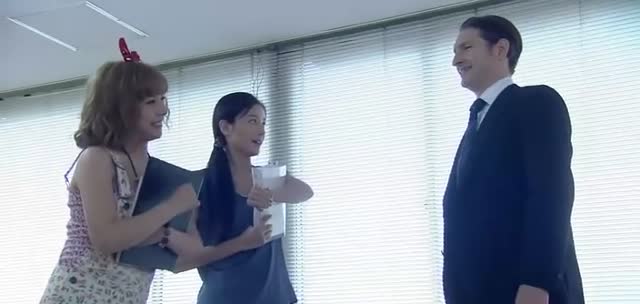
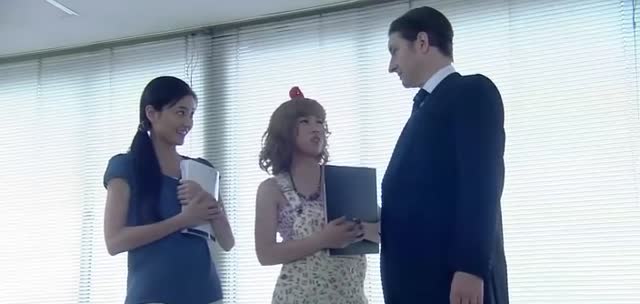
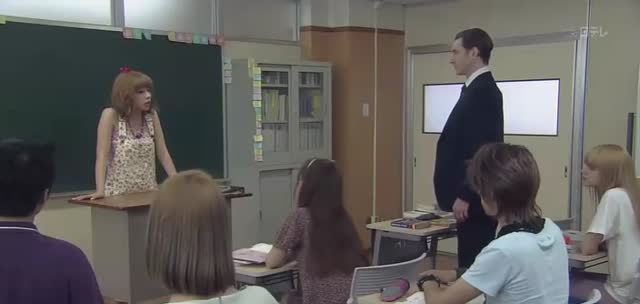
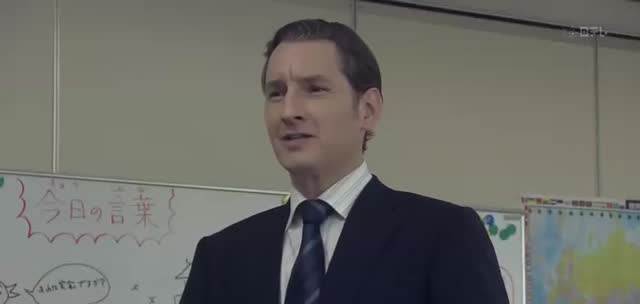
Haruko asks Katori whether keigo comes up on the graduation exam, and he says it does, often. Then Jack walks into the classroom and greets Haruko in old-fashioned, over-polite keigo.
ハルコ/鹿取
卒業試験に 敬語の問題なんか出んの? ええ よく出ますよ。
Will there be keigo questions on the graduation exam? / Yes, they come up a lot.
ジャック/ハルコ
おはようございます! あ おはよう ジャック。
Good morning! / Oh, morning, Jack.
ジャック/ハルコ
遅刻でしょうか? ギリギリセーフ。
Am I late? / Just barely made it.
ジャック
会社で早朝会議が あったものですから。
We had an early-morning meeting at the office.
ハルコ
つらいねぇ サラリーマンは。
That's rough. Being a salaryman.
ジャック
社運のかかった仕事を 任されていますので。
I've been entrusted with a job that the company's fate depends on.
ジャック
ところで 今日も 素敵な お召し物ですね。
By the way, that's a lovely outfit you're wearing again today.
Speaking notes
〜ものですから
「〜ものですから」 = giving a reason as an excuse
「会議があったものですから」 = "It's because I had a meeting (so I was late)." 「〜ものですから/ものだから」 is used to explain your own reason, in a humble tone that implies "I couldn't help it": • 「道が混んでいたものですから」 = "It's because the road was crowded." Jack uses polite form + 「ものですから」, a textbook-perfect excuse. Notice that within this short exchange he uses 「ものですから」 and 「ので」, so he sounds like he is writing a business letter.
お召し物
「お召し物」 = (your) clothes, honorific
[Keigo] 「お召し物(おめしもの)」 = the clothes you are wearing. 「召す」 is the honorific verb for 「着る」, 「飲む」, 「食べる」, 「呼ぶ」 and more: • お召し物 = clothes (honorific) • お召し上がりください = please eat / please help yourself Jack uses an honorific for Haruko's clothes, which is clearly over-the-top.
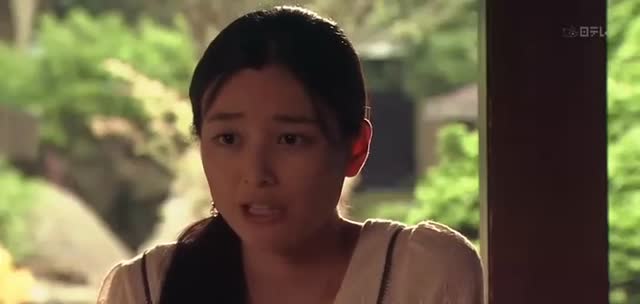
Haruko proudly says her outfit is Double C's new collection. Jack replies that his is merely a rag, and everyone in the room is stunned.
ハルコ
え…?ああ これ?
Huh...? Oh, this?
ハルコ
ダブルシーの新作。イケてるっしょ。
It's Double C's new collection. Pretty cool, right?
ハルコ
ジャックも今日の イケてんじゃ~ん。
Yours is cool today too, Jack!
ジャック
いえ こんなのは ボロでございます。
No, this is nothing but a rag.
ハルコ
ボロでございます…?
"Nothing but a rag"...?
ジャック
では 教室へ はせ参じましょう。
Now then, let us hasten to the classroom.
ハルコ
はせ参じる…?
"Hasten"...?
Speaking notes
ボロでございます
「ボロでございます」: humility plus the most formal copula
「こんなのはボロでございます」 = "This is nothing but a rag" (humble). In Japanese, when someone praises your belongings, you play them down (humility): • 「つまらないものですが」 (when giving a gift) = "It's only a small thing, but..." Jack takes humility too far: he combines 「ボロ」 (a rag) with 「でございます」 (the most formal way to say "is"), putting two opposite ends of the register side by side, so Haruko is left blank-faced with 「ボロでございます…?」.
はせ参じる
「はせ参じる」 = (archaic) to hurry to a superior
「はせ参じる」 = to hurry (respectfully) to the side of a superior or lord. It is a classical, old-fashioned word, almost never used in modern daily life. Haruko's reaction, 「はせ参じる…?」, is just repeating the word back, meaning "I don't get it / I'm shocked". This is the typical Japanese "confused echo." 【イケてる】 「イケてるっしょ」 = "Pretty cool, right?" (young people's casual speech: 「イケてる」 + 「っしょ」 = 「でしょう」).
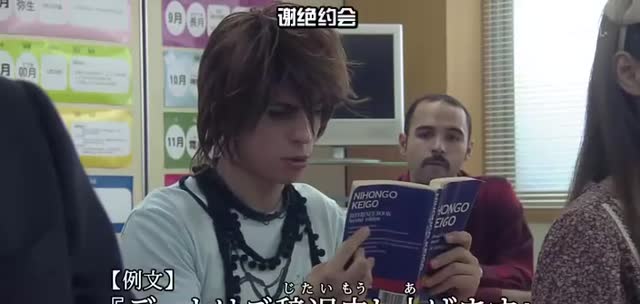
Jack brings a book full of classical honorifics, and his classmates get curious. Someone suggests using casual tameguchi for everything, but Haruko says keigo will be on the exam.
ハルコ/ジャック
あ…ねぇ ジャック。 はい。
Oh... hey, Jack. / Yes?
ハルコ
ニホンゴ ケイゴ? って これ外国の本?
"Nihongo Keigo"? Is this a foreign book?
ジャック
はい。会話をする時 かなり重宝してます。
Yes. I find it quite handy when having conversations.
エレーン
見せて。
Let me see.
ジャック
お目もじ…? 日本の敬語は雅で美しいです。 まさに日本の文化です。
"Omemoji"...? / Japanese keigo is elegant and beautiful. It is truly Japanese culture.
ポール
美しいけど 難しいのがイヤだね~。
It's beautiful, but it's hard, and I hate that.
ボブ
うん 全部タメ口でいいよ。
Yeah, just using casual speech for everything is fine.
ハルコ
な~に言ってんの。敬語は 卒業試験に出るんだからね。
What are you talking about? Keigo will be on the graduation exam, you know.
Speaking notes
重宝する
「重宝する」 = to find handy and useful
「重宝(ちょうほう)する」 = to find something very convenient and useful (and to value it). • 「携帯電話を重宝している」 = "I find my mobile phone very handy." The noun/na-adjective form is 「重宝(な)」: 「重宝な道具」 = "a handy tool." Jack says 「かなり重宝してます」, treating a keigo handbook as an essential tool for everyday conversation. (Style note: he uses the contracted spoken form 「〜てます」 together with the bookish word 「重宝」, a typical "mixed register" of a learner.)
タメ口
「タメ口」 = casual speech without keigo
「タメ口(ぐち)」 = speaking to someone as an equal, that is, without keigo. Bob suggests "casual speech for everything", and Haruko shoots it down with 「卒業試験に出るんだからね」 = "because it's going to be on the exam".
Jack says there is a "three-step method" for memorizing keigo and draws a chart ranking respect by job title at a company. Haruko and the students are completely lost.
ジャック/ハルコ
スリーステップで 覚えればいいんです。 何それ?
You can just memorize it in three steps. / What's that?
ジャック
じゃあ 教科書の…。 教科書の85ページに書いてあります。
Then, in the textbook... / It's written on page 85 of the textbook.
ジャック
尊敬語の場合…。
In the case of honorific language...
ジャック
…という順番で 敬意が高くなります。
...respect gets higher in this order.
ハルコ/ジャック
高くなるって? 例えば…。 例えば会社の役職で言いますと…。
What do you mean, "gets higher"? / For example... / For example, in terms of job titles at a company...
ダイアナ/ジャック
やくそく? 役職です。
Promise? / No, job title.
ジャック
相手の地位によって…。
Depending on the other person's position...
ジャック
という順に敬意が高くなるのです。
...respect gets higher in this order.
Speaking notes
敬意が高くなる
The degree of respect depends on the other person's position
[Keigo] How you use keigo depends on the other person's "status" (above or below you), "closeness" (in-group or out-group), and "situation" (formal or informal). Jack uses company job titles as an example: president > department head > section chief > subsection chief...; the higher the title, the higher the level of respect.
役職/約束
「役職」 vs 「約束」
「役職(やくしょく)」 = job title; 「約束(やくそく)」 = promise, appointment. Both words start with 「やく」, and Diana heard 「役職」 as 「約束」: • 役職: 社長, 部長, 課長, etc. • 約束: a promise This is a listening trap caused by similar-sounding words: Japanese has many words that begin with 「やく〜」 (役, 約, 薬, 訳...).
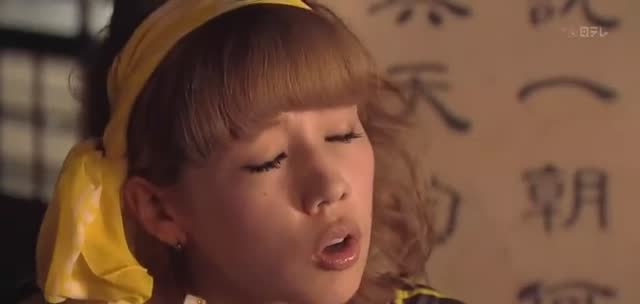
Wang praises Jack in keigo for being like a teacher. Haruko finds it odd and asks who he is talking to.
ハルコ
あんた どこ見て言ってんの?
Where are you looking when you say that?
王
ジャックは先生みたいで ございますね~。
Jack, you are just like a teacher, if I may say so.
ジャック
恐縮です。
I am honored.
ハルコ
ジャック 「特別な形」って何?
Jack, what are "special forms"?
ジャック
それは…。 それは尊敬の形になると 別の言葉に変化するやつです。
That is... When a verb becomes honorific, it changes into a different word.
ハルコ
前にも言ったけど…。
Like I said before...
ハルコ
いらっしゃ~い!
Irasshaaai!
ハルコ
…に変化するの。
...it changes into that.
ジャック
私の本には「する」の尊敬語は 「あそばす」とありますが?
In my book, it says the honorific of "suru" is "asobasu." Is that right?
Speaking notes
恐縮です
「恐縮です」 = I'm honored / I'm sorry to trouble you
[Keigo] 「恐縮(きょうしゅく)です」 = "I'm humbled / I'm honored / I'm sorry (for the trouble)." It is used when you are praised, looked after, or causing someone trouble: • 「お褒めいただき恐縮です」 = "I'm honored by your praise." When his classmates say he is "like a teacher," Jack answers with 「恐縮です」.
特別な形
「特別な形」 = special honorific forms
「特別な形」 = special keigo forms, where the verb has its own dedicated honorific word: • 食べる/飲む → 召し上がる • 言う → おっしゃる • 来る/行く/いる → いらっしゃる • する → なさる Haruko demonstrates with "Irasshaaai!" (来る/いる = いらっしゃる). Jack's book, however, says the honorific of 「する」 is 「あそばす」, an old-fashioned expression (used mainly by the aristocracy or upper-class women), and Haruko reacts with 「古っ!」 ("So old!").
Haruko laughs at how old-fashioned Jack sounds, but Jack asks in all seriousness about the difference between 「教えて頂けますか」 and another way of making a request.
ハルコ/ジャック
古っ! ついでに お伺いしますが→
So old-fashioned! By the way, may I ask you something—
ジャック
「教えて頂けますか」と→
What is the difference between "oshiete itadakemasu ka"
ジャック
「教えて下さいませんか」の 違いは何ですか?
and "oshiete kudasaimasen ka"?
ハルコ
「教えて頂けますか」と 「教えて下さいませんか」!?
"Oshiete itadakemasu ka" and "oshiete kudasaimasen ka"!?
ジャック
あと「差し支えなければ」と→
And also, "sashitsukae nakereba"
ジャック
「恐れ入りますが」の違い 知りたいんですが。
and "osore irimasu ga": I would like to know the difference.
ハルコ
「差し支えなければ」と 「恐れ入ります」の違い!?
The difference between "sashitsukae nakereba" and "osore irimasu"!?
金麗/ハルコ
ひょっとして知らないの? 日本人なのに。
Don't tell me you don't know? You're Japanese, aren't you?
Speaking notes
頂けますか/下さいませんか
「頂けますか」 vs 「下さいませんか」
[Giving/receiving verbs + keigo] The difference between two request sentences: • 〜ていただけますか (potential-form question) = "Could I have you...?" (I "receive" your action) • 〜てくださいませんか (negative question) = "Would you be so kind as to...?" (you "give" me your action) Both are very polite requests, and the difference is extremely subtle: ① 「いただけますか」 takes the viewpoint of "me" (the receiver) and sounds politely humble ② 「くださいませんか」 takes the viewpoint of "you" (the giver) and carries a sense of "would you be so kind".
差し支えなければ/恐れ入りますが
「差し支えなければ」 and 「恐れ入りますが」
「差し支えなければ」 and 「恐れ入りますが」 are both "cushion words" (クッション言葉) that go before a request. • 差し支えなければ = "if it's no trouble / if it doesn't get in the way" • 恐れ入りますが = "I'm very sorry to trouble you, but..."
Haruko says Jack is excellent, but wonders whether he is a bit too into keigo.
ハルコ
っていうか ジャックは優秀だけど→
I mean, Jack is excellent, but
ハルコ
なんか敬語マニアに 入ってない?
aren't you kind of obsessed with keigo?
ハルコ/ジャック
敬語ってさ 使いすぎると ちょっとウザく感じるじゃん。 ウザいですか?
You know, if you use keigo too much, it feels a little annoying. / Is it annoying?
ハルコ
ボブが言ってたみたいに タメ口じゃないけどさ→
I'm not saying use casual speech like Bob said, but
ハルコ
もうちょっと気楽に しゃべった方がいいんじゃないの。
wouldn't it be better to talk a bit more casually?
ハルコ
そっちの方が 距離感が 縮まるっていうか…親近感?
That would shorten the distance between you, or, how should I put it... a feeling of closeness?
ジャック/ハルコ
親近感ですか。 そう。
A feeling of closeness? / Right.
Speaking notes
ウザい
「ウザい」 = annoying
「ウザい」 = (casual) annoying, a nuisance, an eyesore. It comes from the shortened form of 「うざったい」. • 「あいつ、ウザい」 = "That guy is so annoying." Haruko uses 「ウザく感じる」 to say that "too much keigo feels annoying", which is a "young person's perspective." Jack asks back in polite form, 「ウザいですか?」, putting young people's slang together with polite form.
距離感/親近感
Distance and closeness through speech style
[Key point] In Japanese, "how you speak" directly determines "the distance between people": • Keigo (です・ます, honorific, humble) = distant, polite, formal • Tameguchi (plain form) = close, friendly, casual Haruko's advice, 「もうちょっと気楽にしゃべった方がいい」, is not "use tameguchi for everything" but "relax a little".
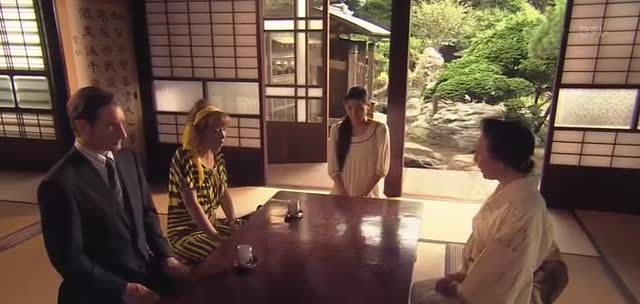
Jack visits the chairwoman with a company project and, at the front door, asks in keigo whether she is at home.
ジャック
ごめんください。 会長は ご在宅でしょうか?
Excuse me. Is the chairwoman at home?
静子
お待たせいたしました。
Sorry to have kept you waiting.
ジャック
フロンティアコーポレーションの ジャック・パウエルと申します。
I am Jack Powell from Frontier Corporation.
静子
マイネーム イズ シズコ…。
My name is Shizuko...
ジャック
ああ 日本語で結構です。 ご無理をなさらずに。
Ah, Japanese is quite all right. Please don't strain yourself.
静子
どうぞ…。
Please, come in...
Speaking notes
ご在宅でしょうか
「ご在宅でしょうか」 = (honorific) are you at home?
[Keigo] 「ご在宅(ざいたく)でしょうか」 = "Are you at home?" 「ご+kanji-compound noun」 is a pattern for forming honorific expressions: • ご在宅/ご不在/ご出席/ご確認 「でしょうか」 is a softer way to ask than 「ですか」. On this visit, Jack gets a whole series of keigo right: 「ごめんください」, 「ご在宅でしょうか」, 「〜と申します」, 「ご無理をなさらずに」, so formally he is flawless.
〜と申します
「〜と申します」 = humble form of 「言う」
[Keigo] 「〜と申します」 = "My name is..." (humble way to introduce yourself). 「申す」 is the humble form of 「言う」 (used when you yourself speak): • 「田中と申します」 = "My name is Tanaka." • Contrast: 「おっしゃる」 is the honorific form (used for what others say) Jack uses it perfectly here.
Jack explains the purpose of his visit to the chairwoman: his company runs a chain of Japanese restaurants across the US and wants to carry her family's sake.
ジャック
さっそくですが 弊社は→
Let me get straight to the point: our company
ジャック
和食のレストランを全米で チェーン展開しておりまして→
operates a chain of Japanese restaurants across the United States, and
ジャック
ぜひ 御社の商品を。
we would very much like to carry your company's products.
静子
お話は伺っております。
I've heard about it.
静子
ただ ウチは大手さんとは違って 生産数にも限りがありますし。
But we're not like the big companies, and our production volume is limited.
ジャック
そこを何とか…。
Even so, I beg you to somehow make it work...
Speaking notes
弊社/御社
「弊社」 / 「御社」 = our company / your company
[Business keigo] 「弊社(へいしゃ)」 = our company (humble, for your own); 「御社(おんしゃ)」 = your company (honorific, for the other party). • Your own company: 弊社/当社/わが社 • The other party's company: 御社/貴社 (「貴社」 in writing, 「御社」 in speech) Jack distinguishes humble and honorific accurately.
そこを何とか
「そこを何とか」 = please, somehow, make an exception
「そこを何とか」 = "Even so, please find some way (despite the difficulty)." It is a plea commonly used in negotiations and requests: • 「そこを何とかお願いします」 Up to now Jack has been speaking "textbook keigo"; this line is a casual-sounding plea.
The chairwoman says, begging his pardon, that she doesn't think a foreigner can appreciate the taste of her family's sake. Jack keeps pleading.
静子
それに 失礼ですけど→
Besides, I hate to be rude, but
静子
外国の方に ウチの日本酒の味が 分かるとは思えません…。
I don't believe a foreigner could understand the taste of our sake...
ジャック
何とぞ お力添えを お願い申し上げます。
I humbly ask for your kind assistance.
静子
いくら 丁寧な日本語で おっしゃられても…。
No matter how polite the Japanese you use...
ジャック
ぶっちゃけ アメリカは今 和食ブームでさぁ。
Honestly, Japanese food is booming in America right now, you know?
ジャック
和食ってったら やっぱ日本酒じゃん?→
And when you say Japanese food, it's got to be sake, right?
ジャック
ウチに任せてよ。 損はさせないからさ 会長さん。
Leave it to us. We won't let you lose out, Madam Chairwoman.
静子
無礼者!!
How rude!!
Speaking notes
何とぞ/お力添え
「何とぞ」 / 「お力添え」
「何とぞ〜お願い申し上げます」 = "I most humbly request..." 「何とぞ」 is a very formal "please / by all means" (written style), and 「お力添え」 means your help (honorific). This line is keigo at its extreme, yet the chairwoman answers 「いくら丁寧な日本語でおっしゃられても…」: no matter how polite the language, it is useless without "heart." 【Double honorific】 Note that she says 「おっしゃられても」 (おっしゃる + られる = double honorific), which is often regarded as non-standard usage.
ぶっちゃけ/〜じゃん
「ぶっちゃけ」 / 「〜じゃん」: a sudden switch to casual speech
Jack suddenly switches to young people's casual speech: 「ぶっちゃけ」, 「〜でさぁ」, 「〜ってったら」, 「〜じゃん」, 「任せてよ」, 「損はさせないからさ」.He jumps from 100-degree keigo straight to zero-degree tameguchi. The chairwoman answers with 「無礼者!!」, an old-fashioned way of scolding a rude person. 【Lesson】 "Relaxing" takes judgment; a gradual shift in register is safer than a sudden one.
Jack has been thrown out. He says he thought speaking casually would bring them closer, and Shibuya asks why he used tameguchi, which was not like him.
ジャック
出入り禁止!? 気楽に話せば 距離が縮まると思ったのです。
Banned from the house!? I thought that if I spoke casually, we would get closer.
渋谷
…にしても なんでタメ口だったの ジャックらしくない。
Even so, why did you use tameguchi? That's not like you, Jack.
ジャック
ハルコに アドバイスされたのです。
Haruko advised me to.
鷹栖
やっぱ オメーの せいじゃね~かよ!
I knew it, it's your fault!
金麗
ジャックがクビになったら ハルコのせいよ!
If Jack gets fired, it's Haruko's fault!
生徒たち
そうだよ!
That's right!
ハルコ
うるさいな お前ら!シッ!!
Shut up, all of you! Shh!!
Speaking notes
アドバイスされた
「アドバイスされた」 = I was advised (passive)
「アドバイスされた」 = "I was advised (by Haruko)." The passive form quietly shifts the "responsibility" onto the person who gave the advice: "She advised me, and I only followed." Jack uses polite form and the passive: instead of saying "you were wrong" directly, he says "I was advised by you."
〜のせいじゃねえかよ
「〜のせいじゃねえかよ」 = isn't it your fault!
「オメーのせいじゃねーかよ!」 = "Isn't it your fault!" 「〜のせい」 = "because of ...; ...'s fault." 「おめー」 is a rough version of 「お前」, and 「じゃねーかよ」 is a rhetorical question with emphasis. Takasu uses the roughest tone to put Haruko in the position of the person responsible. Jin Li's 「ハルコのせいよ!」 is the same accusation in feminine speech.
Jack asks Haruko to come with him to apologize, and she doesn't look happy about it. Takasu chimes in coldly and gets a keigo lesson from Haruko.
ジャック
ハルコ 一緒に 謝りに行って下さい。
Haruko, please come with me to apologize.
ハルコ
一緒に?あたしも? ん~…。
Together? Me too? Hmm...
ハルコ/鷹栖
それは どうでしょう? ジャック。
Well, I wonder, Jack.
鷹栖
墓穴 掘ることに なるんじゃないか?
Aren't you going to dig your own grave?
ハルコ/鷹栖
何か言った? いや だから→
Did you say something? / No, so I said—
ハルコ
「何か おっしゃいましたか? 鷹栖先生」でしょ。
You should say, "Nani ka osshaimashita ka? Takasu-sensei," right?
鷹栖
何か おっしゃいましたか? 鷹栖先生。
Did you say something, Takasu-sensei?
Speaking notes
墓穴を掘る
「墓穴を掘る」 = to dig your own grave
「墓穴(ぼけつ)を掘る」 = to bring trouble on yourself through your own words or actions. • 「余計なことを言って墓穴を掘った」 = "I said too much and dug my own grave." Takasu predicts that if Haruko goes too, she will only make things worse.
おっしゃいましたか
「おっしゃいましたか」 = did you say (honorific)
[Keigo] Haruko "teaches Takasu in reverse": 「何かおっしゃいましたか?鷹栖先生」. 「おっしゃる」 is the honorific form of 「言う」. Haruko adopts the tone of a teacher correcting a student and forces Takasu to repeat the sentence in keigo.
Takasu isn't happy with Jack's appearance either, saying that his golden-monkey hair and his cocky attitude will only cause trouble.
ハルコ/鷹栖
そうそう…。 黄色いな お前。 あ?
Right, right... / You're really yellow, you know. / Huh?
鷹栖
だからさ このゴールデンモンキー みてぇな頭と→
What I'm saying is, with this head of hair like a golden monkey
鷹栖
この生意気な態度が アダに なるんじゃねぇかっつってんだよ。
and this cocky attitude, it's going to backfire on you.
ハルコ
そこ どんな会社なんですか?
What kind of company is it?
ジャック
老舗の造り酒屋です 鹿取酒造という。
It is a long-established sake brewery called Katori Shuzo.
Speaking notes
アダになる
「アダになる」 = to backfire
「アダになる」 = for a good intention or action to turn out harmful instead. • 「好意が仇になる」 = "Good intentions backfire." Takasu says 「〜んじゃねぇかっつってんだよ」 (= 「〜んじゃないかと言っているんだ」).
老舗
「老舗」 = long-established shop
「老舗(しにせ)」 = a shop that has been handed down for generations and has a long history. Note the special reading: 「老舗」 is read 「しにせ」 (not 「ろうほ」). • 「造り酒屋」 = sake brewery Jack sums up the client concisely as 「老舗の造り酒屋」. Takasu's 「ゴールデンモンキー」 (golden monkey) is a jab at Jack's blond hair.
The room is in an uproar, begging Haruko to step in. She finally loses patience and shouts that she will go and apologize.
ハルコ
あ~!うるさい!うるさい! うるさい!うるさい!もう!!
Aaah! Shut up! Shut up! Shut up! Shut up! Geez!!
ハルコ
シーッ!謝りに行けば いいんでしょ!謝りに行けば!!
Shh! I just have to go and apologize, right! Just go and apologize!!
ハルコ/鹿取
ハルコ…。 任せなさいよ 大丈夫だから。
Haruko... / Leave it to me. It'll be fine.
鹿取/ハルコ
心配して来てくれたの? カトリーヌ。
Did you come because you were worried about me, Catherine?
鹿取
カトリーヌじゃなくて 鹿取です。
It's not Catherine, it's Katori.
Speaking notes
行けばいいんでしょ
「行けばいいんでしょ」 = fine, I'll just go, okay?
「謝りに行けばいいんでしょ!」 = "Fine, I just have to go and apologize, right!" This is Haruko's "sulky agreement": on the surface she agrees, but what she really means is "stop nagging me." 【V + ば + いい】 "All you have to do is..." (said with irritation).
任せなさいよ
「任せなさいよ」 = leave it to me
「任せなさいよ」 = "Leave it to me." 「任せる」 + 「なさい」 (an imperative form, here with the feeling of "I'll vouch for it"). Haruko's 「心配して来てくれたの?」 uses 「〜てくれる」: "Did you come for me (for us)?", and she calls Katori 「カトリーヌ」.
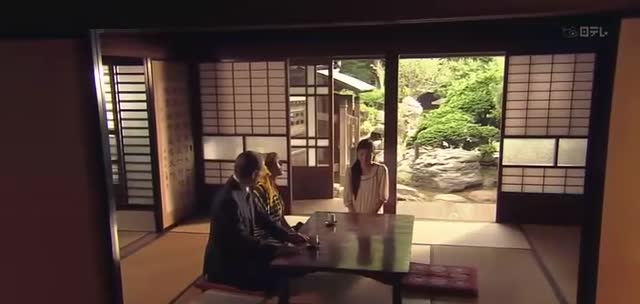
Haruko and Jack arrive at the chairwoman's house. A housekeeper opens the door and bows to Katori with "Welcome home, young miss," leaving all three stunned.
家政婦
おかえりなさいませ お嬢様。
Welcome home, young miss.
鹿取/ハルコ
ただいま帰りました。 えっ?
I'm home. / Huh?
鹿取
ここ…私の家です。
This... is my home.
ジャック
会長の ご令嬢だったのですか。
So you are the chairwoman's daughter.
鹿取
私の祖母なんです。
She is my grandmother.
ハルコ
よし!カトリーヌが味方につけば 鬼に金棒よ!
All right! With Catherine on our side, we're unstoppable!
鹿取
ですから カトリーヌじゃなくて鹿取です。
Like I said, it's not Catherine, it's Katori.
ハルコ/鹿取
鹿取カトリーヌ? 鹿取みゆきです。
Katori Catherine? / I'm Miyuki Katori.
静子
みゆき? あ…。
Miyuki? Oh...
Speaking notes
ご令嬢
「ご令嬢」 = (your) daughter, honorific
[Keigo] 「ご令嬢(れいじょう)」 = someone else's daughter (honorific). • 「ご子息」 = someone else's son Jack immediately uses the most standard honorific term.
鬼に金棒
「鬼に金棒」 = like giving an iron club to an ogre
「鬼に金棒(かなぼう)」 = (giving an iron club to an ogre who is already strong) to become unbeatable. • 「彼が味方なら鬼に金棒だ」 = "With him on our side, we're unbeatable." Haruko uses this idiom because she thinks "Katori = the chairwoman's granddaughter" is a trump card.
Chairwoman Shizuko looks coldly at Haruko and Jack and asks if Jack is a student at Katori's school. Haruko still calls Katori "Catherine," and the chairwoman looks puzzled.
鹿取
ただいま帰りました。
I'm home.
静子
あなたの学校の 生徒さんだったんですか。
Is he a student at your school?
ハルコ
嘉納ハルコです。 このたびはウチの生徒が…。
I'm Haruko Kano. About what our student did this time...
静子
あなたも教師なんですか?
Are you a teacher too?
鹿取
あ…ハルコ先生は例外なんです。
Uh... Haruko-sensei is an exception.
静子
例外ってないでしょ カトリーヌ。
There's no such thing as an "exception," Catherine.
静子
カトリーヌ?
Catherine?
鹿取
あ…ニックネームのようなもので。
Um... it's sort of a nickname.
Speaking notes
このたびは
「このたびは」 = on this occasion (formal)
[Keigo] 「このたび」 = this time, on this occasion (more formal than 「今回」). • 「このたびはご迷惑をおかけして…」 = "I'm sorry for the trouble this time..." Haruko says 「このたびはウチの生徒が…」 (leaving the sentence unfinished), which is the standard opening of a Japanese apology: you don't finish, and let the other person fill in "we caused you trouble."
ニックネームのようなもの
「ニックネームのようなもの」 = something like a nickname
「ニックネームのようなもの」 = "something like a nickname." 【そう/よう】 「〜ような」 is used for a softened explanation: Katori can't say "Haruko got my name wrong," so she says "it's sort of a nickname."
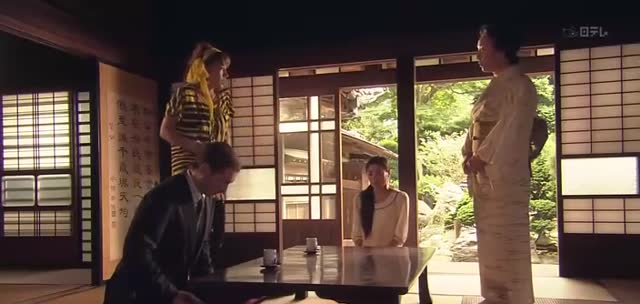
Haruko visits to apologize, but the chairwoman shuts her out with a polite "please leave." Haruko refuses to give up and asks her to wait.
静子
申し訳ありませんが お引き取り下さい。
I'm very sorry, but please leave.
ハルコ
会長!? ちょっと待って下さい!
Chairwoman!? Please wait a moment!
ハルコ
ジャックに タメ口で話せって 言ったのは このあたしなんです。
I'm the one who told Jack to speak to you in tameguchi.
ハルコ
このままだとジャック 会社を クビになるかもしれなくてですね。
If things stay like this, Jack might get fired from his company, you see.
静子
だから 取り引きしろと?
So you're asking me to make a deal?
ハルコ
いえ…せめて出入り禁止だけでも 解いて頂けませんか?
No... could you at least lift the ban on his visits?
静子
ずいぶん虫のいい話ですね。
That is a very self-serving request.
ハルコ
じゃあ どうしたら 許してくれますか?
Then what can I do to make you forgive him?
静子
じゃあ…?
"Then..."?
Speaking notes
お引き取り下さい
「お引き取り下さい」 = please leave (a polite dismissal)
[Keigo] 「お引き取りください」 = "Please leave / please take your leave" (politely refusing the other person). 「引き取る」 means to withdraw, to leave: • 「お引き取りを」 = "Please go." Shizuko opens with 「申し訳ありませんが」 but the content is a dismissal: an apology in form, a refusal in substance.
虫のいい話
「虫のいい話」 = a self-serving, wishful request
「虫のいい話」 = a self-serving scheme that thinks only of oneself and ignores the other side. • 「そんな虫のいい話があるか」 = "How could there be such a convenient deal?" Shizuko delivers a cutting verdict in a calm tone. Haruko's 「じゃあどうしたら許してくれますか?」 contains 「じゃあ」, and Shizuko picks up on it: 「じゃあ…?」. This conjunction carries the flavor of "you're bargaining."
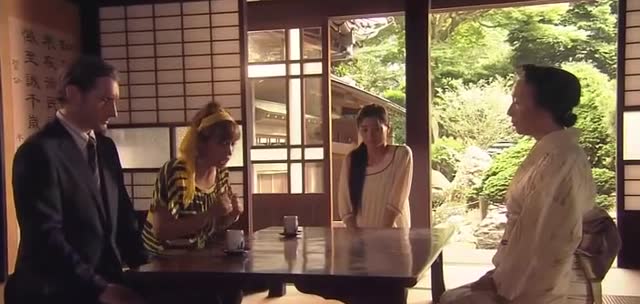
The chairwoman shows Haruko and Jack how to ask her a question by giving two phrasings, 「恐れ入りますが」 and 「差し支えなければ」, and has them compare.
静子
恐れ入りますが 教えて頂けませんか?
Osore irimasu ga, could you tell me?
静子
差し支えなければ 教えて頂けませんか?
If it is no trouble, could you tell me?
ハルコ/静子
えっ? 「恐れ入りますが」という言葉は→
Huh? / The phrase "osore irimasu ga"...
静子
へりくだっていますけど 命令に近い言葉で→
sounds humble, but it is close to a command,
静子
相手に必ず答えてほしい という意味合いが強く→
and strongly implies that you want the other person to answer without fail,
静子
「差し支えなければ」の方は 答えるかどうかは→
whereas with "sashitsukae nakereba," whether to answer or not
静子
相手の意思にゆだねる という意味合いの言葉なんです。
is left up to the other person's wishes.
Speaking notes
恐れ入りますが
「恐れ入りますが」 = excuse me, but... (cushion phrase)
[Keigo: key point] 「恐れ入りますが」 is a humble cushion phrase, but in feel it leans toward a "request/command": "I've been very polite, so please do answer." • Feature: a humble shell with strong expectation inside (close to "please, without fail") Example: 「恐れ入りますが、お名前をお願いします」 (a shop clerk to a customer) This pattern suits situations where the other person is obliged to answer (service, asking directions) and is less suited to asking about private matters.
差し支えなければ
「差し支えなければ」 = if it's no trouble
[Keigo: key point] 「差し支えなければ」 = "if it doesn't get in your way."Its feature: it leaves the decision of whether to answer up to the other person (相手の意思にゆだねる), and it is used for asking private questions or asking someone for a favor: • 「差し支えなければ、ご年齢を教えていただけますか」 = "If you don't mind, could you tell me your age?"
The chairwoman says Haruko's keigo was rude. She also points at Haruko's and Jack's looks and asks how people who dress like foreigners can teach Japanese.
ハルコ/静子
なら「恐れ入りますが」で 合ってるじゃないですか。
Then isn't "osore irimasu ga" correct?
静子
失礼にあたると 言ってるんです。
I'm telling you it counts as rude.
静子
それでよく 教師をやってますね。
And you call yourself a teacher?
静子
それに何ですか。外国人かぶれの ような身なりをして。
And what is this? Dressed like some foreigner-worshipper.
ハルコ
外国人かぶれ?
Foreigner-worshipper?
鹿取
鹿取酒造は 江戸時代から続く 造り酒屋で…。
Katori Shuzo is a brewery that has continued since the Edo period...
ハルコ
会長さんって もしかして 外国人に偏見持ってません?
Chairwoman, could it be that you have a prejudice against foreigners?
Speaking notes
失礼にあたる
「失礼にあたる」 = to count as rude
「失礼にあたる」 = to amount to rudeness, to fall under "rude." 「〜にあたる」 means "to correspond to / to fall under": • 「法律違反にあたる」 = "It constitutes a violation of the law." Shizuko is pointing out that your usage counts as rude.
かぶれ
「〜かぶれ」 = infatuated with, in a shallow way
「〜かぶれ」 = overly infatuated with or influenced by something (and becoming a bad imitation of it). • 「西洋かぶれ」 = a Western wannabe • 「外国人かぶれ」 = a foreigner wannabe Shizuko classifies "blond hair and flashy clothes" as 「外国人かぶれ」. Haruko asks straight back, 「外国人に偏見持ってません?」.
Ignoring Katori's attempt to stop her, Haruko praises Jack to the chairwoman: his Japanese is fluent, he is great at keigo, and he knows Japanese culture.
鹿取/ハルコ
ハルコ先生…。 カトリーヌは口はさまないで。
Haruko-sensei... / Catherine, don't butt in.
ハルコ
ジャックは優秀な生徒で→
Jack is an excellent student.
ハルコ
日本語だってペラペラだし 敬語なんか得意中の得意だし→
His Japanese is fluent, and he's the best at keigo,
ハルコ
日本の文化や歴史について チョー詳しいし→
and he's super knowledgeable about Japanese culture and history.
ハルコ
ひょっとしたら 会長さんより 日本人らしいかもしれませんよ。
He might even be more Japanese than you, Chairwoman.
ハルコ
追い返す前に 彼の内面を見て 言って下さいよ。
Before you send him away, please look at his inner self and then decide.
静子
いいでしょう。
Very well.
Speaking notes
得意中の得意
「得意中の得意」 = the very best thing one does
「得意中の得意」 = the best of one's strong points. The pattern 「AのA」 means "the A of A" (emphasizing the extreme): • 「苦手中の苦手」 = "the thing I'm worst at" • 「十八番」 (おはこ) = one's signature specialty Haruko praises Jack as 「得意中の得意」, taking his strength in keigo to the limit.
日本人らしい
「日本人らしい」 = typically Japanese
[そう/よう/みたい/らしい] 「日本人らしい」 = "very Japanese, true to what a Japanese person is like." Haruko says "more Japanese than you, Chairwoman." 「内面を見て」 = "look at his inner self": judge a person by their "inner self," not their appearance.
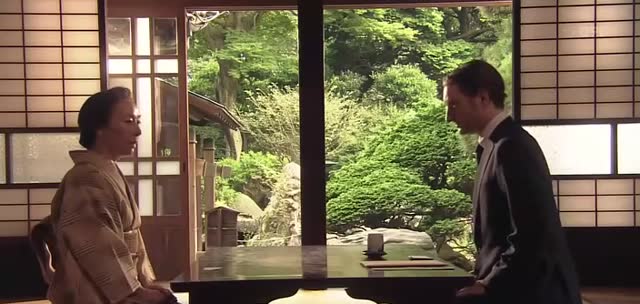
After hearing Haruko out, the chairwoman says she will see Jack's inner self at a tea gathering. Jack asks whether it will be Urasenke or Omotesenke.
静子/ハルコ
なら お茶会で 見せてもらいます。 お茶会?
Then I will let you show me at a tea gathering. / A tea gathering?
ジャック
それは 裏千家ですか? 表千家ですか?
Is that Urasenke? Or Omotesenke?
静子/ジャック
裏千家です。 わかりました。
Urasenke. / Understood.
静子/ハルコ
いいでしょう やりましょうよ お茶会。 何 言ってるんですか!?
Very well. Let's have the tea gathering. / What are you saying!?
静子
では 後日 学校へ お伺いします。
Then, at a later date, I will visit your school.
ハルコ/静子
学校に? いい機会ですから→
To our school? / Since this is a good opportunity...
静子
あなたの職場も 見せてもらいます。
I will have a look at your workplace too.
Speaking notes
裏千家/表千家
「裏千家」 / 「表千家」 = schools of tea ceremony
「裏千家(うらせんけ)」 and 「表千家(おもてせんけ)」 = the two main schools of Japanese tea ceremony (descended from Sen no Rikyu). They differ in how tea is whisked and in details of etiquette (for example, Urasenke whisks up plenty of foam, Omotesenke less).
お伺いします
「お伺いします」 = I will visit (humble)
[Keigo] 「お伺いします」 = "I will visit you." 「伺う」 is the humble form of 「訪ねる/聞く/行く」: • 「明日伺います」 = "I'll visit tomorrow." Shizuko uses a humble form, but what she means is "inspection."
Katori tells Haruko her grandmother holds a master's teaching certificate in tea ceremony. Haruko asks Jack if he's going to be okay.
鹿取
祖母は 師範のお免状も 持ってるんですよ。
My grandmother even holds a master's certificate.
ハルコ
いや…大丈夫だよね?ジャック。
Uh... you'll be fine, right, Jack?
ジャック
免許は 運転免許しか 持っていません。
The only license I have is a driver's license.
ハルコ
えっ?あんた だって さっき→
Huh? But you just now—
ハルコ
裏千家とか何か言ってたじゃん。
you were saying something about Urasenke, weren't you?
ジャック
本で読んだだけで やったことは一度もありません。
I have only read about it in books. I have never done it even once.
Speaking notes
お免状
「お免状」 = a school's certificate
「免状(めんじょう)」 = a certificate of qualification that a master gives to a student (tea ceremony, flower arranging, etc.). • 「師範のお免状」 = a master's certificate Katori says her grandmother holds a "master's certificate,"one of the highest ranks in tea ceremony. Jack's answer, 「免許は運転免許しか持っていません」, takes 「免状」 as 「免許」 (a driver's license), a sound-alike mix-up (めんじょう/めんきょ).
読んだだけで
「読んだだけで」 = only having read
「本で読んだだけで、やったことは一度もありません」 = "I've only read it in a book and have never done it even once." 「〜ただけ」 means "only / merely." Jack admits this in polite form: he is a "knowledge type," not a "practice type."
Katori says that if Jack makes even a small etiquette mistake, his company's deal will be completely off. She adds that her grandmother has long wanted her to quit teaching and come home to brew sake.
鹿取
少しでも作法を間違えたら→
If you make even a slight mistake in etiquette,
鹿取
ジャックさんの会社の取り引きは 一切なくなりますよ。
Jack's company's deal will be gone completely.
ジャック/ハルコ
それは困ります! 私も困る!
That would be a problem! / It's a problem for me too!
鹿取
私だって困ります!
It's a problem for me too!
鹿取
祖母は 私を辞めさせて→
My grandmother wants me to quit my job
鹿取
造り酒屋を 継がそうとしてるんです。
and take over the sake brewery.
鹿取
だから 縁談を 持ちかけられていて…。
So I'm being offered an arranged marriage...
ハルコ
縁談?お見合いってこと?
An arranged marriage? You mean an omiai?
Speaking notes
縁談/お見合い
「縁談」 / 「お見合い」 = marriage proposal / arranged meeting
「縁談(えんだん)」 = a marriage proposal or match; 「お見合い」 = a meeting arranged to consider marriage (omiai). • 「縁談が持ち上がる」 = "a marriage proposal comes up"
継がそうとしてる
「継がそうとしてる」 = is trying to make me take over
「継がそうとしてる」 = is trying to make (me) inherit. The causative form of 「継ぐ」, 「継がせる」, becomes 「継がそう」 (a spoken contraction), plus 「としてる」. Notice that Katori is the one being "made" to do it. 「持ちかけられていて」 (passive + て) is a passive form (the proposal is brought to her).