This episode has 55 conversation scenes: why color words like 「青信号」, 「みどり」, and 「真っ赤」 do not work the way we expect, uniquely Japanese expressions like 「ハタチ」, 「肩こり」, and 「畳化」, talk of romance among friends, and life between foreigners and Japanese people. The main focus is the special uses of color words in Japanese.
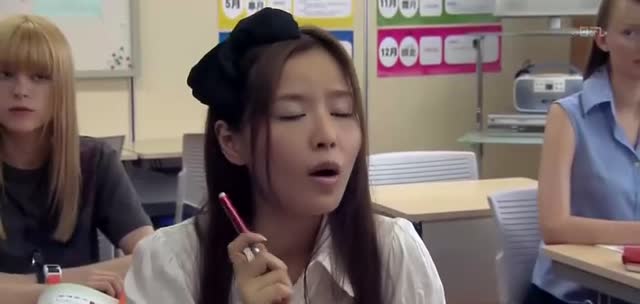
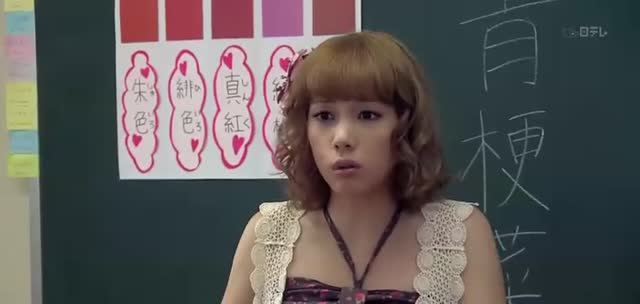
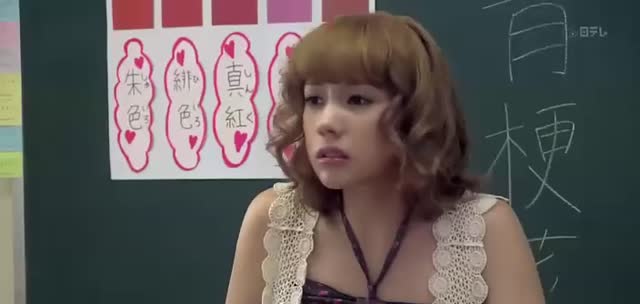
In class, Haruko is explaining that even a single word like "red" covers many named colors in Japanese. Jin Li jumps in with another question: why is a green traffic light called "ao shingo"?
ハルコ
このように日本じゃ 一言で「赤」と言っても→
So you see, in Japan, even when you just say "red"...
ハルコ
いろんな名前の色があります。
there are colors with all sorts of different names.
金麗
そんなとこは細かいのに 何で日本人→
You're so picky about things like that, so why can't Japanese people...
金麗/ハルコ
緑と青の違い わかんないの? は?
tell the difference between green and blue? -- Huh?
金麗
だって 緑色の信号のことを 青信号って言う。
Because you call a green traffic light an "ao shingo" (blue light).
王
そう!野菜も緑色なのに 青菜って言う。変だよ!
Right! Vegetables are green too, but you call them "aona" (blue greens). It's weird!
ハルコ
中国だって 緑色なのに 青って言うことあるでしょ?
Don't they also sometimes call green things "blue" in China?
王/ハルコ
ないよ! だって…。
No, we don't! Because...
Speaking notes
青信号/青菜
"ao" in Japanese also covers green
The range of 「青(あお)」 is wide in Japanese: a green traffic light is 「青信号」, leafy vegetables are 「青菜」, and unripe apples are 「青りんご」. It is not that Japanese people "can't tell the difference." In old Japanese, 「青」 originally covered a broad band of colors, including blue, green, and even grayish black. Jin Li's question 「何で日本人、緑と青の違いわかんないの?」 uses 「〜わかんないの?」 (a casual, rhetorical question), and it carries an accusing tone: "What is wrong with you people?"
〜のに
〜のに = even though ... / despite ...
「緑色なのに青って言う」 = "Even though it's green, you call it 'blue.'" 「〜のに」 marks a result that goes against expectation, and often carries dissatisfaction or puzzlement. Wang and Jin Li keep using 「〜なのに」 to point out "contradictions" in Japanese.
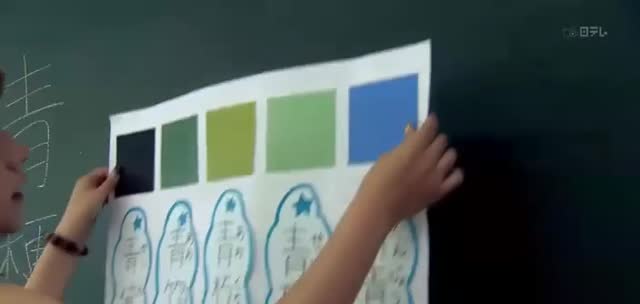
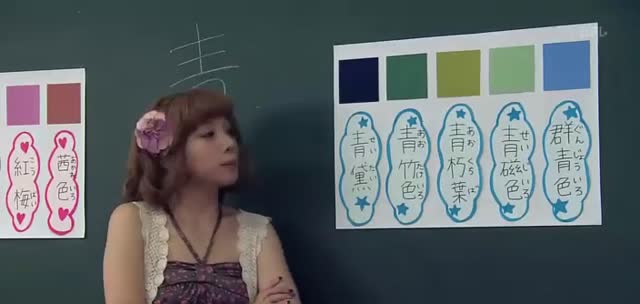
Wang argues that "chingensai" is green even though it is written with "blue". Haruko seems to have been expecting this and pulls out a board of color samples.
王
「青梗菜」ってこう書くでしょ。 緑色なのに。
"Chingensai" is written like this, right? Even though it's green.
ハルコ/王
そうか。 でも 何で緑なのに青? ややこしいよ!
I see. -- But why is it "blue" when it's green? It's confusing!
「そういう質問があろうかと思って…」 = "I figured there'd be a question like that, so (I came prepared)." 「あろう」 is the classical conjectural form of 「ある」 (= あるだろう), and it has a calm, "I've got this covered" tone: • 「こんなこともあろうかと」 = "I knew this day would come." Haruko deliberately uses the old-fashioned 「あろうか」 to show that she has done her homework.
青の仲間たち
Ancient "ao" covered blue, green, gray, black
The color names on the board include blues (群青, 青黛), a grayish blue-green (青磁), a yellow-green (青朽葉), and a green (青竹色), and every one of them carries the character 「青」. This shows that the old Japanese 「青」 was a broad range of colors: any "cool" color that is not red, white, or black could be called 「青」. • The basic color words of old Japanese: 赤・青・白・黒 (a bright/dark contrast)
The students stare at the color samples and point out that they look green, and some look black to them.
生徒たち/ボブ
へ~っ。 どう見ても 真ん中のは グリーンじゃねえかよ。
Wow. Come on, the one in the middle is clearly green, isn't it?
ジャック
端のは黒にしか見えません。
The one on the end only looks black to me.
ハルコ
そう。つまり元々 「青」っていうのは→
Right. In other words, "ao" originally...
ハルコ
こういう色 全体を 指す言葉だったのよ。
was a word that referred to this whole range of colors.
エレーン
だったら 緑って言葉は なんだったの?
Then what was the word "midori" originally?
Speaking notes
〜にしか見えない
〜にしか + negative = only looks like ...
「黒にしか見えません」 = "It only looks black to me." 「〜にしか+negative」 means "nothing other than ... is possible": • 「嘘にしか聞こえない」 = "It can only sound like a lie." Jack states his visual judgment in polite, careful language. Compared with Bob's blunt 「どう見てもグリーンじゃねえかよ」 (a rough assertion), he sounds more like a scholar.
指す
指す = to refer to, to point to
「〜を指す言葉」 = "a word that refers to ..." • 「この言葉は何を指しているの?」 = "What does this word refer to?" Haruko's concluding sentence pattern 「AというのはBを指す言葉だった」 is an all-purpose frame for explanations in linguistics.
Haruko explains the earliest meaning of the word "midori" and says it was not originally a color name. Elaine asks what it was, if not a color.
ハルコ
実は「緑」っていうのは そもそも 色の名前じゃありませんでした!
Actually, "midori" was not originally the name of a color at all!
エレーン
色じゃなかったら何?
If it wasn't a color, what was it?
ハルコ
本来「緑」っていうのは→
Originally, "midori"...
ハルコ
植物の「新芽」や「若々しい」って いう意味を あらわす言葉だったの。
was a word that expressed meanings like a plant's "new sprout" and "youthfulness."
Speaking notes
そもそも
そもそも = in the first place, originally
「そもそも〜」 = "in the first place," "fundamentally." It is often used to trace something back to its origin or to reject a premise: • 「そもそも、それが間違いだ」 = "That's wrong in the first place."
若々しい
若々しい = youthful and full of energy
「若々(わかわか)しい」 = "looking young and full of vitality." • 「若々しい声」 = "a young, energetic voice" [Contrast] 「若い」 = young (objective), 「若々しい」 = looking young and vigorous (a subjective impression).
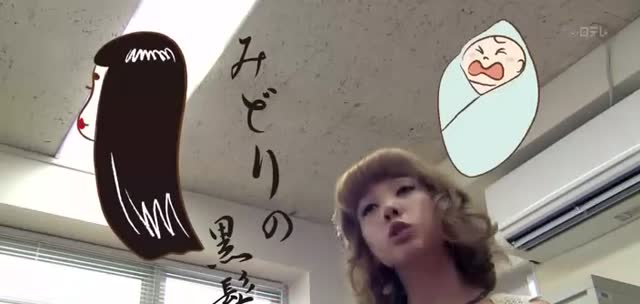
Haruko gives two examples, "midori no kurokami" and "midorigo," to explain how "midori" is used.
ハルコ
だからほら 例えば つややかな髪を→
So, look, for example, glossy hair
ハルコ
「みどりの黒髪」って言ったり→
is called "midori no kurokami" (green black hair),
ハルコ
生まれたての赤ちゃんのことを→
and a newborn baby
ハルコ
「みどり児」って言ったりするのよ。
is called "midorigo."
ジャック
なるほど。「緑」は 若々しいという意味ですか。
I see. So "midori" has the meaning of being young?
Speaking notes
みどりの黒髪
緑の黒髪 = glossy, jet-black hair (of a woman)
「みどりの黒髪(くろかみ)」 = glossy, jet-black hair (describing a woman). Black hair is not green, so the 「みどり」 here describes being "fresh and lustrous." • 「緑の黒髪」 is a literary, classical expression. • 「みどり児」 (嬰児) = a newborn baby Both examples refer not to a color but to "freshness" and "youth," which supports the idea that 「緑」 = the state of a new sprout.
The students are interested in the word "midori." Haruko mentions an acquaintance, the proprietress of the "Snack Midori," who always says she is forever twenty.
ハルコ
そういえば 私の知り合いの スナックみどりのママが いっつも…。
Come to think of it, the madam of Snack Midori, an acquaintance of mine, is always...
ミドリ
永遠のハタチよ…。
"Forever twenty!"
ハルコ/鹿取
…って言ってる。 それ 知らないけどさあ→
...saying that. -- I don't know about that, but...
ハルコ
てか 何であんた 水商売してる知り合い いんのよ?
Anyway, why do you have an acquaintance who works in the nightlife business?
Speaking notes
ハタチ
ハタチ (二十歳) = twenty years old
「ハタチ(二十歳)」 = twenty years old. Note: age 20 is not read 「にじゅっさい」 but 「はたち」 (a special reading). Other special readings of this kind: • 一日(ついたち) • 二日(ふつか) • 二十日(はつか) • 二十歳(はたち) The proprietress's name 「みどり」 echoes "緑 = youth," so she always calls herself 「永遠のハタチ」.
水商売
水商売 = the nightlife / bar trade
「水商売(みずしょうばい)」 = businesses such as bars and nightclubs that depend on customers' patronage. Katori's question to Haruko, 「あんた、何で水商売してる知り合いいんのよ?」, carries a surprised tone: "How do you know people in that line of work?" 「いんのよ」 = a casual contraction of 「いるのよ」.
In class, the students ask Haruko why Japanese people always draw the sun in red.
ルカ
ハルコ!太陽を絵で描く時→
Haruko! When you draw the sun in a picture,
ルカ
日本人 赤い色で描くのは どうして?
why do Japanese people use red?
マリー
花札でも「松に鶴」の太陽 赤い。 何故 太陽 赤いですか?
In hanafuda too, the sun in the "pine and crane" card is red. Why is the sun red?
ハルコ
いや 何でって… 太陽は 赤色でしょ?
Well, why... isn't the sun red?
ジャック
夕日ならともかく 普通 太陽の色は 黄色かと思います。
Sunsets are one thing, but I think the sun is normally yellow.
王
中国では 黄色か白だよ。 太陽はゴールド。金色だよ。
In China it's yellow or white. The sun is gold. It's gold.
Speaking notes
〜ならともかく
〜ならともかく = (X is one thing, but) ...
「夕日ならともかく」 = "A sunset, maybe (that's another matter)." 「AならともかくB」 = "Setting A aside, B is a different story": • 「子供ならともかく、大人がそんなことを…」 = "A child, maybe, but an adult doing that..." Jack makes a careful rebuttal in polite language: "I'll grant that a sunset is red, but the everyday sun is not."
太陽は赤色でしょ
Differences in how cultures see color
Japanese people draw the sun in red (the 日の丸 flag also shows a red sun). This is tied to classical Japanese art (the red sun in 「松に鶴」) and to the national flag. Haruko's answer 「太陽は赤色でしょ?」 shows that the things that seem "obvious" are the hardest to explain.
The students compare the color of the sun in different countries. One says it is also called red in Russia, and another that it turns bright red during the white nights in northern Europe.
ハルコ/ダイアナ
太陽は赤って…少数派なんだ。 ハルコ!ロシアでは 赤とも言いますよ。
"The sun is red" is a minority view, then. -- Haruko! In Russia, people also say it's red.
ハルコ
北欧でも 白夜の時は真っ赤です! 日本は 白夜ないからね。
In northern Europe, too, it's bright red during the white nights! Japan has no white nights, though.
ボブ/ハルコ
ハルコ!「ピンク映画」って何だよ? 「ピンク映画」!?
Haruko! What's a "pink film"? -- A "pink film"!?
生徒
何それ? どんな映画ですか?
What's that? What kind of movie is it?
ハルコ
いや…それは 桃色な感じの映画です。
Well... it's a movie with a kind of "peach-colored" feel.
生徒
何だ?それ。 何が桃色なんですか?
What? What's that supposed to mean? What's "peach-colored" about it?
Speaking notes
真っ赤
真っ+color = pure, completely ...
「真っ赤(まっか)」 = "bright red." 「真っ〜」 attached to a color word means "pure, thoroughly that color": • 真っ白 (pure white) / 真っ黒 (jet black) / 真っ青 (deep blue; pale with fear) / 真っ赤 (bright red) • 真っ暗 (pitch dark)
桃色
桃色 = (euphemism) with an erotic flavor
「桃色(ももいろ)」 = pink; also a euphemism for "erotic." • 「ピンク映画」 = the general term for low-budget adult films (a Japanese specialty) • 「桃色遊戯」 = a romantic escapade When pressed with 「ピンク映画って何?」, Haruko can only say "it has a peach-colored feel". This is a typical case of Japanese using a color in place of a word that is awkward to say outright: color words themselves can work as euphemisms.
The students bring up color expressions from their own countries. Haruko says "momoiro" has an erotic nuance, the students yell, and she tells them they are being too loud.
ハルコ
ん…桃色 イコール エッチな感じよ!
Well... "pink" equals a, um, naughty feel!
生徒/ハルコ
あ~っ!エロい映画か~! シーッ!声デカイわよ!
Ahh! So it's a dirty movie! -- Shh! You're too loud!
ボブ
アメリカじゃ そういうの 「ブルーフィルム」って言うぞ~。
In America, we call that kind of thing a "blue film."
生徒
だから 青がエロい。
So blue is the dirty color.
王
中国では黄色です。でも「幸せの 黄色いハンカチ」って映画→
In China it's yellow. But there's a movie called "The Yellow Handkerchief of Happiness"...
ジャック/ハルコ
普通にいい話でした。 あんた 何 期待してんの?
It was just a good story. -- What were you expecting?
エレーン/生徒
スペインでは 確か緑ですよ。 エコじゃなくてエロかよ。
In Spain, it's green, I'm pretty sure. -- Not "eco" but "ero," huh?
Speaking notes
エロい
エロい = erotic, dirty
「エロい」 = (colloquial) erotic, dirty. It comes from 「エロ」 (from "erotic"). • 「エロい映画」 = a dirty movie Haruko circles around with "桃色イコールエッチな感じ" before saying it, and the students cut straight to it: 「エロい映画か〜!」. 「シーッ!声デカイわよ!」 is a reminder about their volume: in class, you keep your voice down for topics like this.
色の連想
Color associations differ by culture
[Cultural comparison] Different cultures associate colors differently: • Japan: pink (桃色) = erotic • America: blue film = pornographic film • Spain: verde (green) = (older men's) lecherousness
Haruko is about to steer the class back on topic when Paul arrives late, strolling into the classroom with a suave air.
ハルコ/生徒
…ってしてる。 よ~し!そのママ 見に行こう!
...is doing that. -- All right! Let's go see that madam!
ハルコ/ポール
行かなくていいのよ! 静か…座る!! おっと~!→
We don't need to go! Quiet... sit down!! -- Oh my!
ポール
男と女についての質問なら この俺に聞いてくれ。
If it's a question about men and women, ask me.
ハルコ
てか 何あんた かっこつけてんの? でか 遅刻だからね!
I mean, why are you acting so cool? And you're late!
ポール
俺のハニーが 離してくれなくてね。
My honey wouldn't let go of me.
ハルコ/ポール
待ちなさいよ! いやん。
Wait right there! -- Oh, stop it.
Speaking notes
かっこつける
かっこつける = to act cool, to show off
「かっこつける」 = to deliberately put on a cool, stylish act. • 「かっこつけてる」 = "He's trying to look cool." Paul makes an entrance with 「男と女についての質問ならこの俺に聞いてくれ」, in a hugely self-confident tone. Haruko's 「何かっこつけてんの?」 is the most instinctive retort.
離してくれなくて
〜てくれない = (someone) won't do ... for me
[Giving and receiving verbs] 「ハニーが離してくれなくてね」 = "My sweetheart wouldn't let go of me." 「〜てくれない」 is the negative of 「〜てくれる」: "the other person doesn't do it (let go) for my sake." Paul uses 「くれる」 to put himself on the side of "the one being clung to", which is a way of bragging that he is popular. Haruko's 「待ちなさいよ!」 and Paul's 「いやん」 form a stock exchange: the former is a command, the latter a playful coy reply.
Paul is late. The other students say he started a new part-time job last week and seems to have found a Japanese girlfriend, and the classroom erupts.
ハルコ/ボブ
いやんじゃないわよ! こいつ 先週から 新しいバイト始めてさ→
Don't say "oh, stop it"! -- This guy started a new part-time job last week, and...
ボブ/生徒たち
日本人の彼女できたらしいよ。 え~っ!!
I hear he got a Japanese girlfriend. -- What!?
ハルコ
それと遅刻とは関係ないでしょ。 何なの?そのセンスの悪さは!
That has nothing to do with being late. What is it with your terrible sense!
ポール/ハルコ
ハルコ… そんなに俺に見とれるなよ。 ばっかじゃないの?
Haruko... don't stare at me like that. -- Are you stupid?
ポール
さてはハルコも俺に惚れたんだな。
I bet Haruko has fallen for me too.
ハルコ
んなわけないでしょ… あとで職員室来なさい!
No way... Come to the staff room later!
ポール/ハルコ
もしかして 告白? 違うわよ!!
Could it be... a confession? -- No, it's not!!
Speaking notes
見とれる
見とれる = to be mesmerized, to stare in fascination
「見とれる」 = to be so drawn in that you gaze at something entranced. • 「景色に見とれる」 = "to gaze at the scenery, spellbound" Paul interprets Haruko's glaring at him as "she's under my spell", a textbook "man who has the wrong idea" (勘違い男). Note the 「〜な」 (negative command: "don't ...") used in a playful show-off: 「そんなに俺に見とれるなよ」 is a "prohibition" said with a smile, which is really an "invitation."
んなわけない
んなわけない = そんなわけない (No way)
「んなわけないでしょ」 = "No way." 「そんな」 becomes 「んな」. • 「〜わけない」 = "there's no way that ..." Haruko's string of denials: 「ばっかじゃないの?」「んなわけないでしょ」「違うわよ!!」.
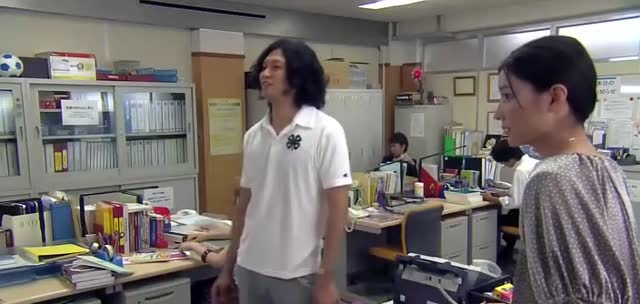
After class, Haruko grumbles in the staff room that men who get the wrong idea are equally annoying the world over. Katori comes in and asks Shibuya a question.
ハルコ
ったく!勘違い男って 万国共通でめんどくさいわね。
Honestly! Men who get the wrong idea are annoying the world over.
鹿取/渋谷
失礼します。渋谷先生…。 おお どうした?
Excuse me. Mr. Shibuya... -- Oh, what is it?
鹿取/渋谷
日本の男性の好みの色を 教えてほしいのですが。 好みの色…どうして?
I'd like to ask you what colors Japanese men like. -- Favorite colors... why?
鹿取
お世話になってるんで 「肉体」をプレゼントしたいんです。
You've been so good to me, so I'd like to give you my "body" as a present.
Speaking notes
万国共通
万国共通 = common to all countries
「万国共通(ばんこくきょうつう)」 = the same in every country. • 「万国共通の言語」 = "a universal language" Haruko uses this four-kanji compound to complain about "wrong-idea men."
お世話になってる
お世話になる = to be indebted to, to be looked after
[Keigo] 「お世話になっている」 = "I am indebted to you; you have looked after me." It is an all-purpose Japanese phrase for expressing thanks and a sense of obligation: • 「いつもお世話になっております」 (a standard opening for business letters and phone calls) Katori wants to give someone a present out of a feeling of gratitude, but what sounds like 「肉体」 (nikutai, "body") is actually 「ネクタイ」 (necktie).
Katori says something that sounds like "I'd like to give you my body." Shibuya is startled and asks whether that means he can do as he pleases.
渋谷
に…肉体を?
M-my... body?
渋谷
俺の好きにしていいってこと?
Does that mean I can do what I like with it?
鷹栖
何言ってんだよ ネクタイ! 肉体じゃなくて ネクタイ!
What are you saying? A necktie! Not "body," a necktie!
鹿取/ハルコ
あ ネクタイでした。 な~んだ もう! 早く言ってよ。
Oh, it was a necktie. -- Oh, for crying out loud! You could have said so sooner.
鹿取
ネクタイでしたっ! あの…早口ってことじゃなくて。
It was a necktie! Um... it's not about talking fast.
ハルコ
な~んだ つまんね。
Oh, is that all. How boring.
Speaking notes
肉体/ネクタイ
肉体 / ネクタイ (a mishearing)
「肉体(にくたい)」 and 「ネクタイ」 sound alike: 「にくたい」 vs 「ねくたい」. Katori said "ネクタイをプレゼントしたい" indistinctly, and Shibuya heard it as "肉体", which set off an awkward misunderstanding. Linguistically, words whose vowels are similar and whose kana line up closely are easy to confuse by ear: • 肉体 (nikutai) / ネクタイ (nekutai)
俺の好きにしていい
好きにする = to do as one pleases
「俺の好きにしていいってこと?」 = "So I can do whatever I want with it?"「Xを好きにする」 = to do as one pleases with X. Shibuya understood 「肉体をプレゼント」 as "giving me her body," so he blurted out 「俺の好きにしていいってこと?」.
After the misunderstanding is cleared up, Shibuya suggests that Katori subtly ask the intended recipient directly. Realizing the gift was not for him, Shibuya looks a little let down, and Takasu asks what he is disappointed about.
鹿取/渋谷
あの…それとなく ご本人に聞いてみたら? そうですね。聞いてみます。
Um... why don't you ask the person themselves, discreetly? -- Good idea. I'll try asking.
渋谷/鷹栖
なんだ 俺じゃなかったのか。 何がっかりしてんだよ。
Oh, so it wasn't for me. -- What are you disappointed about?
渋谷
がっかり…してませんよ!
I'm... not disappointed!
ハルコ
ホント 勘違い男って多いよね。
Honestly, there are so many men who get the wrong idea.
Speaking notes
それとなく
それとなく = subtly, without saying it outright
「それとなく」 = indirectly, without making it obvious. • 「それとなく聞く」 = "to ask in a roundabout way" Shibuya suggests "quietly asking the person themselves": rather than ask "what color do you like?" outright, you fish for the information through another topic.
がっかり
がっかり = disappointed
「がっかりする」 = to be disappointed, to feel let down. Shibuya assumed that "肉体/ネクタイ" was meant for him; when it wasn't, he immediately denies it: 「してませんよ!」.
In the staff room, Paul asks whether any calls came for him. Shibuya says several girls called the school, and Haruko tells Paul to sit down properly.
ポール
ハロー ハルコ!
Hello, Haruko!
ハルコ
ちょっと 席座りなさいよ。
Hey, sit down properly.
ポール/ハルコ
ねえねえ 俺に電話なかった? 電話?
Hey, hey, did I get any calls? -- Calls?
渋谷
あったぞ。マリって女の子から。
Yes, you did. From a girl named Mari.
渋谷
「今日 お店行くから プライベートレッスンよろしこ」。
"I'm coming to the shop today, so please give me a private lesson!"
ハルコ/渋谷
は? まだまだあるぞ。 マユミ エリカ マイカ…。
What? -- There are more. Mayumi, Erika, Maika....
Speaking notes
よろしこ
よろしこ = よろしく (playful)
「よろしこ」 = a playful, youthful version of 「よろしく」. • 「よろ」「よろしこ」「ヨロシクー」 In the message, this phrase gives away that the caller is young and casual. 「プライベートレッスン」 = a private lesson.
あったぞ
〜ぞ = (announcing) I'm telling you, there was
「あったぞ。」 = "Yes, there was." The sentence-final particle 「ぞ」 is a masculine way of informing someone or adding emphasis: • 「あったぞ」「来たぞ」「ないぞ」 Shibuya normally speaks gently with 「〜ですよ」, but here he uses 「ぞ」, which shows he is teasing Haruko, with a touch of playfulness.
Haruko demands to know why Paul had the girls call the school, saying the staff room is not a call center. Paul replies smugly that his phone battery can't keep up.
ハルコ
ちょちょ…ちょっと!あんた 職員室はコールセンターじゃないのよ。
H-hey, wait a minute! The staff room is not a call center, you know.
ハルコ
何で あんた 学校に電話させてんのよ!
Why are you making them call the school!?
ポール/ハルコ
俺のケータイ 教えちゃまずいだろ? 何で?
It wouldn't be good to give out my cell number, right? -- Why not?
ポール
バッテリーがもたないんだよ。 俺 モテモテだから。
Because my battery can't last. I'm so popular.
店員
ああっ!可愛い!
Ah! How cute!
ハルコ
あんた 彼女いるんでしょ? 何 他の女に手ぇ出してんのよ。
You have a girlfriend, don't you? Why are you making moves on other women?
ポール
桃子はそんな事で文句言わないよ。 ヤマトナデコシだもん。
Momoko wouldn't complain about something like that. She's a "Yamato Nadeshiko," after all.
ハルコ/ポール
はあ? ナデシコです。
Huh? -- It's "Nadeshiko."
Speaking notes
もたない
もつ = to last, to hold out
「バッテリーがもたない」 = "the battery can't last." 「もつ」 = to last, to endure: • 「体がもたない」 = "my body can't take it" • 「この傘は三年もった」 = "This umbrella lasted three years." Paul gives a reason that is really a boast about his popularity, a line typical of a "man who has the wrong idea": he turns "being pestered" into "being in demand."
ヤマトナデシコ
大和撫子 = the traditional ideal Japanese woman
「大和撫子(やまとなでしこ)」 = in the traditional view, the ideal Japanese woman: gentle, virtuous, and reserved. Paul says 「ナデコシ」 instead of 「ナデシコ」 (a pronunciation mistake), and Haruko immediately corrects him with 「ナデシコです」.
Paul says that since Momoko is a Yamato Nadeshiko, she would devote herself to him even if he cheated. Haruko asks what he means by "cheating is fine."
ハルコ
だったら浮気してもいいって どういう意味よ?
Then what do you mean, cheating is fine?
ポール
浮気しても尽くしてくれる。 それが日本の女性でしょ?
Even if I cheat, she'll still devote herself to me. That's what Japanese women are like, right?
ハルコ
あんたねえ…あんたが モテるわけないんだからね!
Listen, you... there's no way you're popular!
ハルコ/渋谷
どこにあんのよ。モテる要素が。 ハルコ先生 それは失礼ですよ。
Where is there anything about you that would make you popular? -- Ms. Haruko, that's rude.
ハルコ/鹿取
じゃあ カトリーヌ 賭けてみる? え?
Then, Catherine, want to bet on it? -- Huh?
ハルコ
もし こいつが本当に モテているのならば→
If this guy really is popular,
ハルコ/鹿取
寿司おごってあげるわ。 いや 私はそんな…。
I'll treat you to sushi. -- No, I wouldn't...
ハルコ
今日 あんたのバイト先に行って 確かめてやるからね!
I'm going to your part-time job today and checking for myself!
Speaking notes
尽くしてくれる
尽くす = to devote oneself wholeheartedly
「尽くす」 = to give everything for someone, expecting nothing in return. • 「彼に尽くす」 = "to devote oneself to him" Paul's view of Japanese women: "they devote themselves even when they are betrayed." [Giving and receiving verbs] 「尽くしてくれる」 means "the other person makes an effort for me," so Paul's viewpoint is entirely that of the beneficiary.
確かめてやる
〜てやる = I'll do it (with determination)
「確かめてやるからね!」 = "I'll go and check for myself!" [Giving and receiving verbs] 「〜てやる」 expresses a defiant "I'll do it, just watch me". Haruko uses 「〜てやる」 to announce her "investigation" and draws Katori in with 「賭けてみる?」: "If he's really popular, I'll treat you to sushi."
Paul says something smug to Katori and leaves the staff room. Takasu tells Haruko that the plan for everyone to graduate has hit a yellow light.
ポール
カトリーヌ先生 お寿司食べれるよ。→
Ms. Catherine, you'll get to eat sushi.
ポール
何しろ俺 色男だからね。
After all, I'm a ladies' man.
ハルコ/鷹栖
あの勘違い男! 身の程を知るがいいわ! そいつは お前だ!
That guy, getting the wrong idea! He should know his place! -- That's you!
鷹栖/ハルコ
全員卒業は 黄色信号だぞ。 は?何でよ?
Everyone graduating is at a yellow light. -- Huh? Why?
鷹栖
ああやって女にうつつを抜かして 辞めていく生徒を→
Students who get carried away over women like that and drop out,
鷹栖/鹿取
今まで何人もみてきた。 そうなんですか?
I've seen quite a few so far. -- Is that so?
鷹栖
見ただろ?あの浮かれよう。 ありゃ典型的なパターンだ!
You saw it, right? How giddy he is. That's a classic pattern!
ハルコ/鹿取
ハハハ…。 痛っ!はっ!?…誰?誰?
Ha ha ha.... -- Ow! Huh!? ...Who? Who?
鹿取/ハルコ
ハルコ先生…。 大丈夫よ。あいつがホントに モテてるわけないんだから。フン!
Ms. Haruko.... -- It's fine. There's no way he's really popular. Hmph!
Speaking notes
身の程を知る
身の程を知る = to know one's place
「身の程(みのほど)を知る」 = to be aware of one's own status and abilities. • 「身の程知らず」 = "someone who doesn't know their place" Haruko is thoroughly scornful of Paul's "wrong idea" and says 「身の程を知るがいいわ」 (an old-fashioned way of saying "let him learn his place"). Takasu fires back 「そいつはお前だ!」, throwing the line right back at her: she herself is being "overly self-assured" by betting with the students.
黄色信号/赤信号
Traffic-light metaphor: yellow = warning
「黄色信号」 = a warning, a sign of danger ahead; 「赤信号」 = danger, you must stop. • 「健康に黄色信号が灯る」 = "a yellow light comes on for one's health" Here Takasu uses traffic-light imagery to predict Paul's risk of dropping out (yellow, then red). [Contraction] 「ありゃ典型的なパターンだ」 = "That's a classic pattern" (「ありゃ」 is a casual contraction of 「あれは」). 「うつつを抜かす」 = to be absorbed in something, neglecting what one should be doing.
Haruko sees a new girl walk into the shop and act very close with Paul. Haruko and Takasu both ask who she is.
ハルコ
あっ!また新しい女の人が!
Ah! Another new woman!
ハルコ/鷹栖
ちょっと ちょっと!誰?あの子。 何 あれ?
Hey, hey! Who's that girl? -- What's with her?
鹿取/ハルコ
もしかして ポールさんの彼女さん? えっ?嘘!
Could that be Paul's girlfriend? -- What? No way!
鹿取
ラブラブですね。 うらやましい。
They're so lovey-dovey. I'm jealous.
ハルコ
くっそ~!
Damn it!
鹿取
別によかったんですけど…。
I really didn't mind either way....
ハルコ
一応 勝負は勝負だから。
Still, a bet is a bet.
Speaking notes
ラブラブ
ラブラブ = lovey-dovey
「ラブラブ」 = very affectionate, sweet together. It's a reduplicated form: • 「ラブラブカップル」 = "a couple head over heels in love"
勝負は勝負
AはA = X is X (a rule is a rule)
「勝負は勝負」 = "a bet is a bet" (no matter what). The 「AはA」 pattern means "since it's X, it has to be treated as X." Haruko has lost her bet (she has to buy sushi); she is frustrated but still ready to honor it. 「一応」 = for now, at any rate (insisting on the formality of it).
Haruko can't understand why such a cute girl would fall for Paul, while Katori seems to see it more clearly.
ハルコ
しかし そんなに可愛かったんだ 彼女。
But she was that cute, huh, his girlfriend.
ハルコ/鹿取
納得がいかないわ! 何で あんな子が。
I can't accept it! Why would a girl like that...
鹿取
でも あんな人ならポールさんが はまる理由もわかる気がします。
But if it's a girl like that, I can understand why Paul would fall for her.
渋谷/鹿取
だとすると こないだ鷹栖先生が 言ってたパターンに。
In that case, it's the pattern Mr. Takasu mentioned the other day.
鹿取/ハルコ
もし 今日も遅刻してきたら…。 赤信号だね。→
If he's late again today... -- It's a red light, then.
渋谷
このままじゃ ポールは辞めます。
If it goes on like this, Paul will quit.
ハルコ
いや…まだよ!
No... not yet!
ハルコ
勝負は これからよ。
The game is just beginning.
Speaking notes
納得がいかない
納得がいかない = can't accept it, not convinced
「納得がいかない」 = can't accept it, doesn't make sense to me. • 「その説明には納得がいかない」 = "I'm not convinced by that explanation." Haruko can't make sense of Paul having a cute girlfriend and uses the rather formal 「納得がいかない」.
はまる
はまる = to get hooked on, to fall for
「はまる」 = (to fall into) to become absorbed in something or someone. • 「ゲームにはまる」 = "to get hooked on a game" Katori uses 「はまる」 to describe Paul's infatuation with his girlfriend, which also implies "sinking in and being unable to climb out." 「〜気がします」 expresses a judgment based on a feeling: 「わかる気がします」 = "I feel like I can understand."
Paul has skipped class. Haruko asks the students how they are, and when Jack says he has stiff shoulders, the whole class is amazed.
ハルコ
やっぱり来てないか…。
He still hasn't come, I see....
ハルコ
ジャック どうしたの?
Jack, what's wrong?
ジャック/生徒たち
最近 肩こりがひどくて。 え~っ!?
My shoulders have been terribly stiff lately. -- What!?
ハルコ
何 みんな驚いてるの?
Why is everyone so surprised?
生徒
肩こるなんて 日本人みたい。
Getting stiff shoulders is so Japanese.
ハルコ
え?あんた達 肩こんないの?
Huh? Don't you all get stiff shoulders?
ジャック
ええ。アメリカでは そもそも「肩こり」っていう概念がありません。
No. In America, there is no concept of "katakori" in the first place.
ジャック
こっちに来てから シップが手放せなくなって…。
Since I came here, I can't do without these medicated patches....
ハルコ
確かに その仕草 日本人くさいわね。
True, that gesture does look very Japanese.
Speaking notes
肩こり
肩こり = stiff shoulders (a very Japanese concept)
「肩こり(かたこり)」 = stiff, aching shoulders.
日本人くさい
〜くさい = smelling of, having the air of
「日本人くさい」 = having a Japanese air about one. 「〜くさい」 attaches to a noun to mean "having the smell or manner of ..." and is usually slightly negative or teasing: • 「年寄りくさい」 = "old-fashioned, like an old person" • 「学生くさい」 = "student-like, immature" Haruko uses it for Jack's gesture of rubbing his shoulder, half teasingly.
Jack uses a word, "tatami-ka," that Haruko has never heard, and writes it on the board for everyone.
ジャック/ハルコ
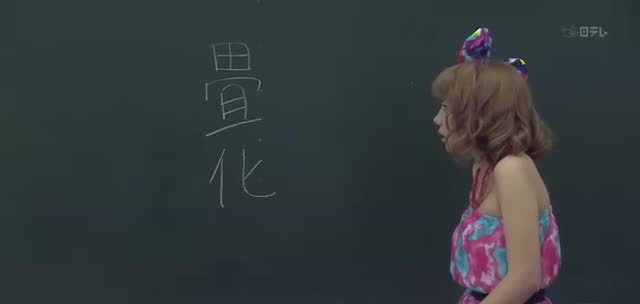
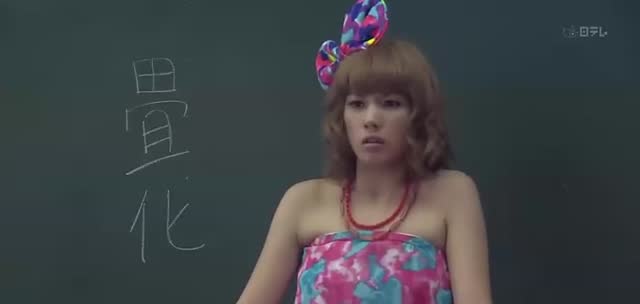
それ 畳化ですよ。 畳化?何 それ?
That's called "tatamika." -- "Tatamika"? What's that?
ジャック
外国人の「日本化」のことです。 漢字で書くと…。
It means "Japanization" of foreigners. If you write it in kanji...
ジャック/ハルコ
こうです。 そんな言葉あるんだ。
Like this. -- There's a word like that?
ジャック
日本に長くいると 日本の常識に だんだん慣れてきます。
When you live in Japan for a long time, you gradually get used to Japanese common sense.
ジャック
最近 本屋さんに行って 本に カバーをかけてくれることが→
Recently, when I go to a bookstore, the clerk wrapping a cover on my book
ジャック/ハルコ
当たり前に感じられてきて…。 それ 当たり前じゃないの?
has started to feel natural to me.... -- Isn't that natural?
ジャック
今 一番お気に入りは アキバで流行っている この透明カバー。→
My current favorite is this clear cover that's popular in Akiba.
ジャック
汚れも防いで イラストも見える。 もう これないとダメ!
It keeps the book clean and you can still see the illustration. I can't do without it now!
ハルコ
それ 貰えるんだ…。
So you can get one of those....
Speaking notes
畳化
畳化 = foreigners becoming "Japanized"
「畳化(たたみか)」 = the process by which foreigners living in Japan gradually pick up Japanese habits and sensibilities (such as 「肩こり」, or finding it natural for a bookstore to wrap a cover on your book). How the word is built: 「畳(たたみ)」 = tatami mat, which stands for Japanese living; 「〜化」 = becoming .... • 「日本化」 = Japanization
カバーをかけてくれる
〜てくれる = (someone) does ... for me
[Giving and receiving verbs] 「本にカバーをかけてくれる」 = "(the bookstore clerk) puts a cover on the book for me (the customer)." Jack uses 「くれる」 from the viewpoint of the customer, the recipient, to describe the Japanese bookstore service of providing a cover by default. He gradually starts to feel that "of course there should be one", and that is a sign of 「畳化」: taking a kindness for granted.
The students, one after another, mention their own signs of "tatami-ka," such as nodding and saying "un-un" on the phone without thinking.
生徒
私も気がついたら 電話中に 「うんうん」ってうなずいてて→
I noticed too that I'd been nodding "un-un" during phone calls,
生徒
主人が「何 うなってるの?」って。
and my husband said, "What are you groaning about?"
生徒たち
うんうん。
Un-un.
ハルコ
うわっ みんな言ってる。
Wow, everybody's saying it.
ルカ
僕も!最近の悩みは 焼きギョーザがどうしても食べたくなって…。
Me too! My latest problem is that I really want grilled gyoza....
ハルコ
それのどこが悩みなのよ?
How is that a problem?
Speaking notes
うなずく
うなずく = to nod
「うなずく」 = to nod (to show agreement or that you are listening). Japanese people often nod and bow while saying 「はい、はい」 on the phone (even though the other person can't see): this is the most typical Japanese "phone etiquette." The students, after being 「畳化」'd, have picked up the habit too: they nod "un-un." 「何うなってるの?」: 「うなる」 = to groan or moan; here the husband mistakes "nodding (うなずく)" for "groaning."
悩み
悩み = a worry, a trouble
「悩み」 = a worry, a trouble. Luca calls "wanting to eat grilled gyoza" a 「悩み」, and Haruko's 「それのどこが悩みなのよ?」contrasts the formal feel of 「悩み」 with the triviality of an appetite.
Wang talks about his own "tatami-ka": in China gyoza means boiled dumplings, but now he is hooked on Japanese fried gyoza, and on draft beer with edamame.
王
中国では ギョーザと言えば水餃子。
In China, "gyoza" means boiled dumplings.
王
なのに日本の焼きギョーザ。 パーリパリ 美味しいね。
But Japanese fried gyoza... crisp and crunchy, so delicious.
王
それに 生ビールあれば 最高だよね。
And if you have draft beer with them, it's the best.
ハルコ/ボブ
生ビールには 枝豆でしょ! それ 畳化っていうか オヤジ化じゃねえか!
Edamame goes with draft beer, of course! -- That's not "tatamika," that's "oyajika" (turning into a middle-aged guy), isn't it!
Speaking notes
パーリパリ
パリパリ = crispy, crunchy
「パリパリ」 = the crisp texture of something fried or crunchy. It is a mimetic word. In Japanese, the mimetic vocabulary for food textures is extremely rich: • サクサク (light and crispy) / ふわふわ (fluffy) / もちもち (chewy) / ジューシー (juicy) Wang stretches it out as 「パーリパリ」 with relish.
オヤジ化
〜化 = becoming ...
「オヤジ化(か)」 = turning into a middle-aged guy (in tastes and habits). 「〜化」: • 「オヤジ化」 = "becoming like a middle-aged man" With 「畳化っていうかオヤジ化じゃねえか!」, Bob neatly files Wang's tastes (fried gyoza + draft beer + edamame) under "Japanese middle-aged man" tastes.
Jack mentions a worry: if foreigners don't seem foreign, Japanese people end up displeased. Haruko asks what he means.
ジャック
でも 外国人が外国人ぽくないと 日本人 嫌がるんですよね。
But when foreigners don't seem foreign, Japanese people don't like it.
生徒たち/ハルコ
うんうん。 どういうこと?
Yeah, yeah. -- What do you mean?
ジャック
会社で私がシップのにおいを させてると→
At the company, if I smell of medicated patches,
ジャック
何だか がっかりされるんです。
somehow people end up disappointed.
ハルコ
う~ん…畳化かぁ…。
Hmm... "tatamika," huh....
生徒たち
うんうん。
Yeah, yeah.
Speaking notes
外国人ぽくない
〜っぽい = -ish, seeming like ...
「外国人ぽくない」 = not like a foreigner. 「〜っぽい」. Jack points out a "double standard": foreigners are expected to fit in, but not to fit in too well, or Japanese people are disappointed.
がっかりされる
〜される = (passive) to be ...-ed by others
「がっかりされる」 = to be found disappointing; to have people feel let down. The passive describes "others' reaction to me": the subject is "I," the agent is "my Japanese colleagues." Using the passive turns "other people's disappointment" into "something that affects me," a common "affected party" viewpoint in Japanese.