LearnWithSubs

日本人の知らない日本語 Episode 6 (page 2/2)

Scenes on this page

  1. If she quits, who will teach them?

    Scene 27 · 0:38

    Expressions: もしよろしければ, 落ち着かない

  2. "I really met a ninja"

    Scene 28 · 0:13

    Expressions: 信じてあげる, 信じんのよ

  3. The ninja way of running

    Scene 29 · 0:21

    Expressions: 走り方, 速い速い速い

  4. "Yakubusoku" or "chikarabusoku"?

    Scene 30 · 0:20

    Expressions: 役不足, 知んなかった

  5. What "yakubusoku" originally means

    Scene 31 · 0:15

    Expressions: 役不足の本来の意味, 〜にとって

  6. "You can't trust someone who runs away"

    Scene 32 · 0:16

    Expressions: とっとと, 逃げ出すようなやつ

  7. The ninja's cell phone

    Scene 33 · 0:41

    Expressions: 落し物は届ける, あれ嘘なの

  8. "No one believes a teacher who lies"

    Scene 34 · 0:27

    Expressions: 嘘をつく, 〜んじゃないの

  9. "You're a ninja, aren't you?"

    Scene 35 · 0:31

    Expressions: お返ししますから, 人目につく

  10. Lost the students' trust, too

    Scene 36 · 0:34

    Expressions: さぼる, かえって

  11. "You can't go dressed like that"

    Scene 37 · 0:41

    Expressions: 同じ過ちを繰り返す, 私らしくない

  12. Where did the ninja go?

    Scene 38 · 0:18

    Expressions: 〜かなと, 〜だって

  13. The photo as evidence

    Scene 39 · 0:22

    Expressions: 見せるんだって, びっくりさせたい

  14. The ninja's phone...

    Scene 40 · 0:21

    Expressions: やばいかも, ドロンと消えた

  15. Save the student first!

    Scene 41 · 0:25

    Expressions: 頼んだんだろ, 優先させる

  16. "Are you really a ninja?"

    Scene 42 · 0:30

    Expressions: 教えてあげようか, ごめんね嘘ついて

  17. A Japanese school is "not enough"?

    Scene 43 · 0:36

    Expressions: 意思の疎通, 〜やすい

  18. "You're underestimating them"

    Scene 44 · 0:27

    Expressions: 役不足(用法), 満足にできない

  19. "They're dead serious"

    Scene 45 · 0:38

    Expressions: 大真面目, ひっくるめて

  20. Not "yakubusoku" but "chikarabusoku"

    Scene 46 · 0:41

    Expressions: 役不足じゃない/力不足, やり直さないか

  21. "I only ever look ahead"

    Scene 47 · 0:17

    Expressions: 前しか見てない, 勘違いしないでよ

  22. "Keep your hands off my student!"

    Scene 48 · 0:40

    Expressions: 手を出すな, ド変態

  23. "Master, you came!"

    Scene 49 · 0:22

    Expressions: ケガはないか, 聞こえたような気が

  24. The real enemy

    Scene 50 · 0:29

    Expressions: おのれ, 助けなさいよ

  25. Good thing she skipped the interview

    Scene 51 · 0:50

    Expressions: クビにする楽しみ, 不謹慎

  26. The origin of "suppanuku"

    Scene 52 · 0:27

    Expressions: 透破, つまり/〜ようになった

  27. "Kunoichi" and "tamani"

    Scene 53 · 0:24

    Expressions: たまたま/たまに(回收), あんた助けるために

Speed
All scenes

If she quits, who will teach them?

This scene

日本人の知らない日本語 Episode 6 If she quits, who will teach them? still

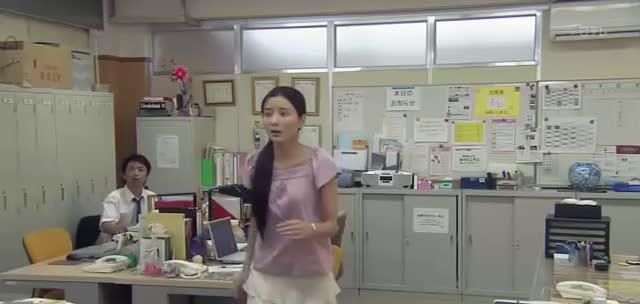
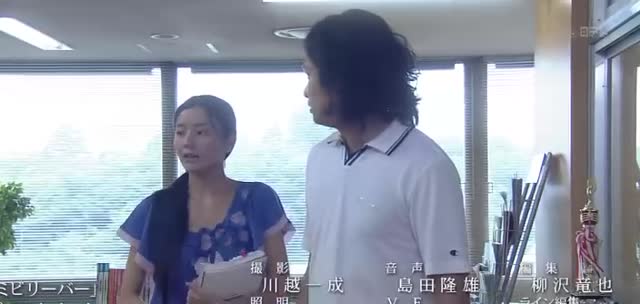
After school, Shibuya and Katori stay behind to talk, and Katori wonders whether Haruko will leave the school.
  1. 鹿取

    Ah, Ms. Haruko, about what we were talking about...

  2. 鹿取

    Ms. Haruko, will she be leaving our school?

  3. 渋谷

    Well...

  4. 渋谷

    Ah, are you hungry?

  5. 渋谷

    It's like this area feels unsettled, you know.

  6. 渋谷

    Um, if it's convenient for you, maybe a meal or something.

  7. 渋谷

    Hahaha... also, what kinds of things does Mr. Shibuya like?

Speaking notes

もしよろしければ

もしよろしければ = if it's convenient for you

「もしよろしければ〜」 = "if you wouldn't mind / if it suits you." [Honorifics] 「よろしい」 (the formal form of 「いい」) + 「ば」, used for a soft invitation.
Katori invites Shibuya to a meal with the safest honorific stock phrase: no awkwardness if refused, no abruptness if accepted.
This kind of "all-purpose opener" is standard issue in Japanese workplaces and social life.


落ち着かない

落ち着かない = restless, unsettled

「落ち着かない」 = unable to calm down, ill at ease. • 「気持ちが落ち着かない」 = "I feel unsettled."
Katori turns "worrying that Haruko will quit" into "this area feels unsettled" (「この辺り」).
Linguistically, 「〜っていうか」 is trailing off, stopping halfway.

Key vocabulary

辞める やめる
辞める: to quit.
お腹がすく おなかがすく
お腹がすく: to get hungry.
落ち着く おちつく
落ち着く: to calm down, to settle.
よろしい
よろしい: good, acceptable (formal).
好きなもの すきなもの
好きなもの: things one likes.

↑ Scenes on this page

"I really met a ninja"

This scene

日本人の知らない日本語 Episode 6 "I really met a ninja" still

Elaine excitedly tells Haruko she really met a ninja; Haruko says no one would believe that, and Elaine says "look at this".
  1. エレーン

    I really met a ninja, you know.

  2. ハルコ/エレーン

    Who'd believe that? -- But, look at this.

  3. ハルコ

    If you bring back a photo, I'll believe you. Once you've "scooped" them, that is.

Speaking notes

信じてあげる

信じてあげる = 〜てあげる: "I'll humor you and believe"

[Giving/receiving verbs] 「信じてあげる」 = "I'll graciously believe you." The condescension of 「あげる」 is very obvious here: believing is "a favor I'm granting you", on condition that "you produce evidence".
Compare:
• 信じてあげる: I'll deign to believe (conditional)
• 信じている: I believe (unconditionally)
• 信じてくれる: (the other person) is willing to believe me

信じんのよ

信じんのよ = 〜んのよ: colloquial rhetorical question

「誰が信じんのよ?」 = "Who'd believe that?" A colloquial contraction of 「信じるのよ」: 「〜んのよ」.
The rhetorical question 「誰が〜んのよ?」 means "nobody would ever ...".

Key vocabulary

信じる しんじる
信じる: to believe.
写真 しゃしん
写真: photograph.
撮る とる
撮る: to take (a photo).
証拠 しょうこ
証拠: evidence, proof.
あげる
あげる: to give (here, a favor-doing auxiliary).

↑ Scenes on this page

The ninja way of running

This scene

日本人の知らない日本語 Episode 6 The ninja way of running still

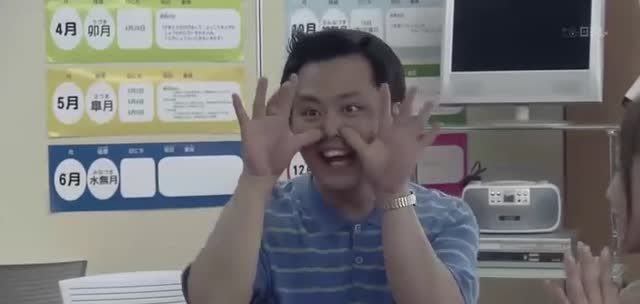
Elaine shows Haruko the ninja running style she picked up as she runs along; Haruko laughs, and Elaine insists it really is fast.
  1. ハルコ

    Elaine! Hurry up.

  2. ハルコ

    Hurry! Hurry!!

  3. ハルコ

    What is that way of walking, honestly!

  4. エレーン

    It's the ninja way of running.

  5. ハルコ/エレーン

    A way of running? Like this? Like this? -- Yeah.

  6. ハルコ/エレーン

    You can't run like this, can you? -- No, no... it's fast, fast, fast.

  7. ハルコ

    It's fast?

Speaking notes

走り方

走り方 = verb stem + 方: the way of doing

「走り方」 = the way of running / running form. 「verb stem + 方 (かた)」 means "the way of doing ...":
• 「食べ方」 = "way of eating"
• 「歩き方」 = "way of walking"
• 「読み方」 = "way of reading"
This is a good example of nominalizing word-building: one suffix 「〜方」 turns any verb into a "method".

速い速い速い

速い速い速い = 速い (fast) vs. 早い (early)

Same sound, different kanji: 「速い」 = fast in speed; 「早い」 = early in time. Haruko just shouted 「早く!早く!」 ("hurry", the "early" of time), and Elaine replies 「速い速い速い」 (fast in speed).
• 速い: fast (of the speed of an action)
• 早い: early (of time)
This is an important pair of homophones in Japanese, and a practical example of choosing the right kanji.

Key vocabulary

歩き方 あるきかた
歩き方: way of walking.
走る はしる
走る: to run.
速い はやい
速い: fast (speed).
早い はやい
早い: early (time).
こういう
こういう: like this, this kind of.

↑ Scenes on this page

"Yakubusoku" or "chikarabusoku"?

This scene

日本人の知らない日本語 Episode 6 "Yakubusoku" or "chikarabusoku"? still

Elaine is brought back to school by the police, and Takasu is furious, accusing Haruko of putting a student in danger; Haruko talks back but uses the wrong word.
  1. 鷹栖

    She was taken into protective custody by the police!?

  2. 鷹栖

    Unheard of, unheard of... to a dangerous place like that --

  3. 鷹栖/ハルコ

    You sent Elaine there! -- I didn't know it was a dangerous place!

  4. 鷹栖

    It's because you teach students lies!

  5. 鷹栖

    You can't even teach proper Japanese, yet you...!

  6. ハルコ

    Are you saying I'm "yakubusoku" for this?

  7. 鷹栖/ハルコ

    If you're going to say that, it's "chikarabusoku". -- Huh?

Speaking notes

役不足

役不足 = yakubusoku: the role is too small for one's ability

[Key point] 「役不足 (やくぶそく)」 = the role or duty assigned is too small for one's ability (being underused). It is often misused to mean "lacking ability" (that is 「力不足 (ちからぶそく)」):
• 役不足: my (ability) is bigger than this task; the task is beneath me
• 力不足: my (ability) isn't enough for this task
When Haruko says 「私じゃ役不足って言いたいんですか?」, she means "are you saying I'm not capable?", but she has used the wrong word -- she is corrected on the spot: 「それ言うんなら力不足ね」.

知んなかった

知んなかった = 知らなかった, contracted

「知んなかった」 = a colloquial contraction of 「知らなかった」 (ら becomes ん). • 知らない → 知んない
• 知らなかった → 知んなかった
Under accusation, Haruko's contractions get heavier.
「〜せやがって」 (行かせやがって) is a rude reproach: "how dare you let her go".

Key vocabulary

保護 ほご
保護: protection, protective custody.
前代未聞 ぜんだいみもん
前代未聞: unheard of.
役不足 やくぶそく
役不足: underused (role too small for one's ability).
力不足 ちからぶそく
力不足: lack of ability.
まとも
まとも: decent, proper.

↑ Scenes on this page

What "yakubusoku" originally means

This scene

日本人の知らない日本語 Episode 6 What "yakubusoku" originally means still

Takasu explains on the spot what 「役不足」 originally means, correcting Haruko's word choice.
  1. 向井/鷹栖

    "Yakubusoku" means that the role given, relative to one's own ability,

  2. 向井

    is of little consequence. In other words, for Ms. Haruko,

  3. 向井

    the role of Japanese-language teacher is the one that falls short.

  4. ハルコ/鷹栖

    Then I was right, wasn't I? -- What did you say!!

  5. ハルコ

    Please wait a moment.

Speaking notes

役不足の本来の意味

役不足の本来の意味 = 役不足 = "the role falls short"

「役不足」 literally means "the role (役) is insufficient": the assigned role "lacks weight" for me. The original meaning is:
• 「彼には社長は役不足だ」 = "The presidency is too small a role for him."
So 「役不足」 was originally a word of "self-confidence", not "self-deprecation"; to say "I don't have enough ability", you should use 「力不足」.
By the original meaning, "the role of Japanese teacher lacks weight for Ms. Haruko", which is why Haruko replies 「合ってんじゃん」 ("isn't that exactly right?").

〜にとって

〜にとって = for, from the standpoint of

「ハルコ先生にとって」 = "for Ms. Haruko." 「〜にとって」 marks a "standpoint / perspective":
• 「私にとって大切な人」 = "a person who is important to me"
The speaker uses polite, written-style language and explains a word with clear logic.

Key vocabulary

役割 やくわり
役割: role, duty.
能力 のうりょく
能力: ability.
与える あたえる
与える: to give, to grant.
不足 ふそく
不足: shortage, insufficiency.
つまり
つまり: in other words.

↑ Scenes on this page

"You can't trust someone who runs away"

This scene

日本人の知らない日本語 Episode 6 "You can't trust someone who runs away" still

At the height of the argument, Takasu tells Haruko to go to the high school if she doesn't like it here; Katori says it's the students who'll suffer if she quits.
  1. 鷹栖

    If you don't like it, hurry up and go to the high school.

  2. 鹿取

    If Ms. Haruko quits, it's the students who'll be in trouble!

  3. 鷹栖

    Is it only the students who'll be in trouble?

  4. 鷹栖

    Students who trust and follow someone who'd run away right before graduation --

  5. 鷹栖

    are to be pitied.

Speaking notes

とっとと

とっとと = hurry up (colloquial)

「とっとと」 = quickly, hurry up (with impatience). • 「とっとと帰れ」 = "Get lost, now."
Takasu issues a "dismissal" in the roughest tone.

逃げ出すようなやつ

逃げ出すようなやつ = 〜ようなやつ: the kind of person who ...

「逃げ出すようなやつ」 = "the kind of guy who runs away." 「〜ような + noun」 means "of that type":
• 「嘘をつくような人」 = "the kind of person who lies"
[Grammar] Here 「ような」 expresses "an example / a category", not "like": it pins "running away" on the person's character.
Takasu ties Haruko's "resignation" to her "character" in one sentence.

Key vocabulary

とっとと
とっとと: quickly, right away.
逃げ出す にげだす
逃げ出す: to run away.
信用 しんよう
信用: trust.
かわいそう
かわいそう: pitiful, poor.
困る こまる
困る: to be in trouble.

↑ Scenes on this page

The ninja's cell phone

This scene

日本人の知らない日本語 Episode 6 The ninja's cell phone still

Elaine proudly shows everyone a cell phone, saying it is a "ninja's phone" she found in Hanzomon.
  1. エレーン

    Nice, isn't it?

  2. 生徒/エレーン

    It's cool. -- Nice, isn't it?

  3. ハルコ

    Elaine, Elaine! Elaine!

  4. ハルコ

    Elaine, what's with that phone?

  5. エレーン

    A ninja's phone that I found in Hanzomon.

  6. ハルコ

    You found it in Hanzomon!? Lost property has to be handed in to the police, you know.

  7. エレーン

    I'll hand it to the ninja myself, so it's fine!

  8. ハルコ

    I'm sorry, that was a lie.

  9. ハルコ

    There are no ninja anywhere! Not even in Hanzomon.

Speaking notes

落し物は届ける

落し物は届ける = 落し物: lost property; 届ける: to turn in

「落し物」 = a lost item; 「届ける」 = to deliver, to report. The Japanese custom is that found items are handed in to a 「交番」 (police box).
Haruko's 「警察に届けなきゃダメでしょ」 is a teacher's "life guidance".

あれ嘘なの

あれ嘘なの = あれ: "that (thing I said earlier)"

「ごめん、あれ嘘なの」 = "Sorry, that was a lie."
「あれ」 = refers back to something said earlier. 「〜の」 = an explanatory tone (feminine).

Key vocabulary

携帯 けいたい
携帯: cell phone.
拾う ひろう
拾う: to pick up, to find.
落し物 おとしもの
落し物: lost property.
届ける とどける
届ける: to hand in, to deliver.
嘘 うそ
嘘: lie.

↑ Scenes on this page

"No one believes a teacher who lies"

This scene

日本人の知らない日本語 Episode 6 "No one believes a teacher who lies" still

Elaine insists she isn't lying and really met a ninja: his face and body were jet black, and he vanished with a "doron".
  1. エレーン

    It's not a lie! I met a ninja.

  2. エレーン

    His face and body were all black. He vanished with a "doron"!

  3. ハルコ

    Haah... aren't you just dreaming?

  4. ハルコ

    Hello... Elaine! Class is starting!

  5. 金麗

    Is a teacher allowed to lie?

  6. 金麗

    Nobody will believe anything that liar Haruko says.

Speaking notes

嘘をつく

嘘をつく = to tell a lie

「嘘をつく」 = to tell a lie. The collocation uses 「つく」 (not 「言う」). The noun form 「嘘つき」 = a liar:
• 「嘘つきは泥棒の始まり」 = "A liar is the beginning of a thief" (proverb)
Jin Li puts 「嘘つき」 right before the name: 「嘘つきハルコ」, a "title-style" jab at the teacher.

〜んじゃないの

〜んじゃないの = isn't it that ...?

「夢でも見てたんじゃないの?」 = "Aren't you just dreaming?" A negative question used to offer a "rationalizing" explanation (Haruko wants Elaine to "accept that she saw wrong").
This is a common way in Japanese of "gently denying" the other person: instead of "you're wrong", you say "isn't it that you ...?"

Key vocabulary

嘘つき うそつき
嘘つき: liar.
真っ黒 まっくろ
真っ黒: pitch black.
夢 ゆめ
夢: dream.
信じる しんじる
信じる: to believe.
教師 きょうし
教師: teacher.

↑ Scenes on this page

"You're a ninja, aren't you?"

This scene

日本人の知らない日本語 Episode 6 "You're a ninja, aren't you?" still

After school, Elaine goes alone to a meeting; a man, Kimura, who called her out asks if she is a ninja.
  1. キムラ

    Um... sorry for calling you out.

  2. エレーン/キムラ

    You're a ninja, aren't you? -- What!?

  3. エレーン

    I won't tell anyone your secret.

  4. エレーン

    Please make me vanish with a "doron" too.

  5. エレーン

    If you do, I'll give you back your phone.

  6. キムラ

    Sure. But in the daytime, people would notice,

  7. キムラ/エレーン

    so at night, at the place where we met the other day. -- Okay!

Speaking notes

お返ししますから

お返ししますから = お返しする: (humble) to return to you

[Honorifics] 「お返しします」 = "I will return it to you." 「お + verb stem + する」 (humble form, as in 「お待たせしました」).

人目につく

人目につく = to attract attention

「人目 (ひとめ) につく」 = to be seen by people, to attract attention.
• 「人目を避ける」 = "to avoid being seen"
The man says 「昼間は人目につくから、夜に」, meaning "it would attract attention in the daytime, so at night instead."

Key vocabulary

呼び出す よびだす
呼び出す: to call out, to summon.
返す かえす
返す: to return.
昼間 ひるま
昼間: daytime.
人目 ひとめ
人目: other people's eyes, public notice.
秘密 ひみつ
秘密: secret.

↑ Scenes on this page

Lost the students' trust, too

This scene

日本人の知らない日本語 Episode 6 Lost the students' trust, too still

Shibuya asks Haruko whether she will go to the interview and whether she can't at least wait until the students graduate; Haruko turns and asks Elaine where she went after skipping class.
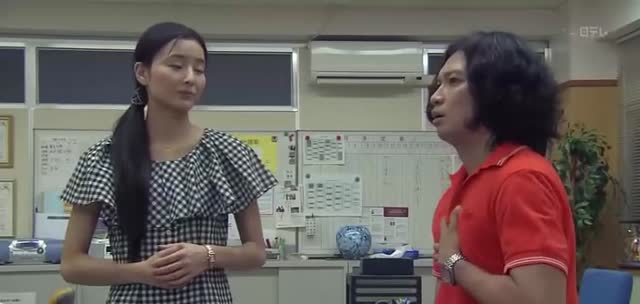
  1. 渋谷/ハルコ

    Are you going to take it? Can't you at least wait until the students graduate?

  2. ハルコ

    Elaine! You skipped class -- where did you go?

  3. エレーン/鷹栖

    It's a secret. -- Hey, why did you skip?

  4. エレーン

    I'll tell my master, so come over here.

  5. ハルコ/エレーン

    Ah... -- Huh?

  6. 鷹栖

    So you've finally lost your students' trust, too.

  7. ハルコ

    Actually, I feel a lot lighter!

Speaking notes

さぼる

さぼる = to skip, to slack off

「さぼる」 = to slack off, to skip (class or work).
• 「授業をさぼる」 = "to skip class"
• 「仕事をさぼる」 = "to slack off at work"
Takasu asks point-blank 「何でさぼったんだ?」 in a teacher's tone of reproach; Elaine parries with just one word, 「秘密」.

かえって

かえって = on the contrary, rather

「かえって〜」 = on the contrary, rather (opposite to what was expected).
• 「かえって迷惑をかけた」 = "I ended up causing even more trouble."
Haruko answers Takasu's "you've lost their trust" with "I actually feel lighter".

Key vocabulary

さぼる
さぼる: to skip, to slack off.
失う うしなう
失う: to lose.
かえって
かえって: on the contrary.
楽 らく
楽: easy, relieved.
信用 しんよう
信用: trust.

↑ Scenes on this page

"You can't go dressed like that"

This scene

日本人の知らない日本語 Episode 6 "You can't go dressed like that" still

Mukai urges Haruko to set off for her interview at Hanzomon High School; Haruko complains about the outfit she is in and says it is "not like me", and Mukai tells her to be herself after she is hired.
  1. 向井

    Haruko! Shall we go?

  2. ハルコ

    Yeah.

  3. 向井

    Oh, wait, wait. Are you planning to repeat the same mistake?

  4. ハルコ

    Huh?

  5. 向井

    Are you ready? -- No way.

  6. 向井

    You've changed, haven't you? -- So I said no way!

  7. 向井

    We're out of time.

  8. ハルコ

    There's no way I can go dressed like this!

  9. 向井

    It's totally fine, yeah.

  10. ハルコ

    It's not like me.

  11. 向井

    You can be yourself after you've been hired.

Speaking notes

同じ過ちを繰り返す

同じ過ちを繰り返す = to repeat the same mistake

「同じ過ち (あやまち) を繰り返す」 = to repeat the same mistake. • 「過ち」 = a mistake, an error

私らしくない

私らしくない = らしい: typical of, in character

[そう/よう/みたい/らしい] 「私らしくない」 = "It's not like me." Here 「らしい」 means "true to type, in character":
• 「男らしい」 = "manly"
• 「春らしい」 = "spring-like"
• 「私らしい」 = "like the way I really am"
Different from the hearsay 「〜らしい」 ("I hear that..."): here 「らしい」 attaches to a noun and means "having the typical qualities of that noun".

Key vocabulary

着替える きがえる
着替える: to change clothes.
過ち あやまち
過ち: mistake, error.
繰り返す くりかえす
繰り返す: to repeat.
格好 かっこう
格好: outfit, appearance.
〜らしい
〜らしい: typical of, in the manner of.

↑ Scenes on this page

Where did the ninja go?

This scene

日本人の知らない日本語 Episode 6 Where did the ninja go? still

Just before her interview, Haruko gets a phone call from Shibuya, who asks where she is now; she says she's about to have the interview.
  1. 渋谷

    Ah, Ms. Haruko? Where are you now?

  2. ハルコ

    Now? Well, I'm about to go to an interview, they say.

  3. 渋谷

    What! The interview was today?

  4. 渋谷

    I see... No, we have kendo practice, but --

  5. 渋谷

    even when it was time, Elaine didn't come, so I thought she might be with you.

  6. ハルコ

    Elaine?

Speaking notes

〜かなと

〜かなと = 〜かなと思って: "I wondered if ..."

「一緒かなと」 = "I wondered if she was with you." 「〜かなと (思った)」 expresses an uncertain guess:
• 「雨かなと思った」 = "I thought it might be raining."

〜だって

〜だって = 〜だって: quoting, "they say"

「これから面接だって」 = "(they say) I'm about to have an interview." 「〜だって」 indicates hearsay or quotation:
• 「彼は来ないんだって」 = "I hear he's not coming."
With 「〜だって」, Haruko is "relaying what Mukai said": "the interview was arranged by the other side, not something I asked for".

Key vocabulary

面接 めんせつ
面接: interview.
剣道 けんどう
剣道: kendo.
練習 れんしゅう
練習: practice.
一緒 いっしょ
一緒: together.
これから
これから: from now, about to.

↑ Scenes on this page

The photo as evidence

This scene

日本人の知らない日本語 Episode 6 The photo as evidence still

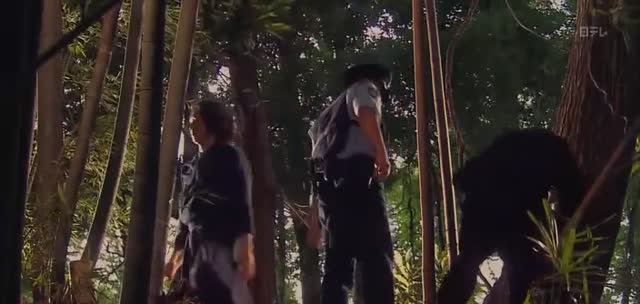
Shibuya tells Haruko what he heard: the phone's owner is a ninja, and Elaine went to the woods to take a photo as evidence, planning to surprise Haruko.
  1. 渋谷

    I didn't fully understand it, but the owner of the cell phone is a ninja, and

  2. 渋谷

    she said that once she went to the woods and took a photo as proof, she'd show it to Ms. Haruko.

  3. 渋谷/ハルコ

    She said she'd show it to you. -- To me?

  4. 渋谷

    Yeah. She wanted to surprise you, so she'd been told to keep it

  5. 渋谷

    a secret from you, Ms. Haruko.

  6. 向井

    Shall we get going soon?

Speaking notes

見せるんだって

見せるんだって = 〜んだって: hearsay, "she says she'll ..."

「見せるんだって言ってたよ」 = "She said she'd show you." 「〜んだって」 is colloquial hearsay: Shibuya relays Elaine's own words.

びっくりさせたい

びっくりさせたい = 〜させたい: want to make someone ...

「びっくりさせたい」 = "want to surprise (someone)." Causative 「させる」 + 「たい」.
• 「驚かせたい」 = the same

Key vocabulary

持ち主 もちぬし
持ち主: owner.
証拠 しょうこ
証拠: evidence.
びっくり
びっくり: surprise, startled.
そろそろ
そろそろ: soon, about time to.
秘密 ひみつ
秘密: secret.

↑ Scenes on this page

The ninja's phone...

This scene

日本人の知らない日本語 Episode 6 The ninja's phone... still

Haruko puts the clues together: the woods, the phone, Hanzomon, and Elaine's remark that the ninja she met had a jet-black face and body.
  1. エレーン(回想)

    ((I met a ninja.

  2. エレーン(回想)

    His face and body were all black. He vanished with a "doron"!))

  3. ハルコ

    He vanished with a "doron"...

  4. エレーン(回想)

    ((A ninja's phone that I found in Hanzomon))

  5. ハルコ

    Hey, that might be bad!

Speaking notes

やばいかも

やばいかも = やばい: bad, dangerous

「やばい」 = uh-oh, dangerous.
• 「やばいかも」 = "this might be bad"

ドロンと消えた

ドロンと消えた = ドロン (callback)

「ドロンと消えた」 = "vanished with a doron."

Key vocabulary

やばい
やばい: bad, dangerous (slang).
拾う ひろう
拾う: to pick up, to find.
消える きえる
消える: to disappear.
かも
かも: maybe, might.
容疑者 ようぎしゃ
容疑者: suspect.

↑ Scenes on this page

Save the student first!

This scene

日本人の知らない日本語 Episode 6 Save the student first! still

After hearing Shibuya out, Haruko asks whether the woods are in Hanzomon and whether the man is the suspect in the assaults on women, and can no longer sit still.
  1. ハルコ

    The suspect in the assault case against women!?

  2. ハルコ

    Then the woods -- are they the ones in Hanzomon?

  3. ハルコ

    Got it. Anyway, I'm going to go and see.

  4. 向井

    Hey, wait. Where are you going?

  5. ハルコ/向井

    My student might be in danger. -- Didn't you already ask the other teachers?

  6. 向井

    Today, you should put yourself first. Right?

Speaking notes

頼んだんだろ

頼んだんだろ = 頼む + んだろ: "you did ask, didn't you?"

「他の教師に頼んだんだろ?」 = "You've already asked the other teachers, haven't you?" 「〜んだろ」 is a "confirming question"; Mukai tries to persuade Haruko with common sense: you've done what you needed to, so you don't need to go yourself.

優先させる

優先させる = 優先する: to give priority

「自分を優先させる」 = "to put yourself first." The causative 「させる」: to make yourself the priority:
• 「安全を優先させる」 = "to put safety first"

Key vocabulary

優先 ゆうせん
優先: priority.
頼む たのむ
頼む: to ask, to request.
とにかく
とにかく: anyway.
森 もり
森: woods.
べき
べき: ought to, should.

↑ Scenes on this page

"Are you really a ninja?"

This scene

日本人の知らない日本語 Episode 6 "Are you really a ninja?" still

Elaine follows the "ninja" farther and farther and asks if they're still going; he says they'll go until a place nobody can find them, because he's a ninja.
  1. エレーン

    Are we still walking?

  2. キムラ

    Until a place where no one can find us. Because I'm a ninja.

  3. キムラ

    Oh right, shall I teach you the rope-escape technique?

  4. エレーン/キムラ

    I know it! -- Oh, you know it?

  5. エレーン

    I know other things too. The depth of a moat is Pythagoras, right?

  6. キムラ/エレーン

    What's that? -- Are you really a ninja?

  7. エレーン

    I'm sorry I lied.

Speaking notes

教えてあげようか

教えてあげようか = 〜てあげようか (callback)

[Giving/receiving verbs] 「縄抜けの術、教えてあげようか」 = "Shall I teach you the rope-escape technique?"

ごめんね嘘ついて

ごめんね嘘ついて = 〜て: "because ..." (reason)

「ごめんね、嘘ついて」 = "Sorry, for lying." 「〜て」 expresses a reason and is placed after the apology:
• 「遅れてごめん」 = "Sorry for being late."

Key vocabulary

縄抜け なわぬけ
縄抜け: rope escape (ninja technique).
歩く あるく
歩く: to walk.
見つかる みつかる
見つかる: to be found.
深さ ふかさ
深さ: depth.
嘘をつく うそをつく
嘘をつく: to tell a lie.

↑ Scenes on this page

A Japanese school is "not enough"?

This scene

日本人の知らない日本語 Episode 6 A Japanese school is "not enough"? still

Mukai tells Haruko that a language school has students who come with a tourist mindset and that the standard of education is very different.
  1. 向井

    You're not satisfied with a Japanese-language school, are you? The level of education is too different.

  2. 向井/ハルコ

    Level? -- Don't some students come with a tourist mindset?

  3. 向井

    Plenty of them aren't serious, right?

  4. エレーン(回想)

    ((The "idiot" technique)) ((It's not "manuke"! It's the "nawanuke" technique!))

  5. 向井

    Dealing with foreigners, trouble also tends to happen easily,

  6. 向井

    and in the first place, wouldn't it be impossible to communicate with them at all?

  7. ハルコ(回想)

    ((Students who trust and follow someone who runs away right before graduation --

  8. ハルコ(回想)

    are to be pitied.))

Speaking notes

意思の疎通

意思の疎通 = communication of intentions

「意思の疎通 (いしのそつう)」 = mutual understanding, getting one's thoughts across.
• 「意思の疎通が図れる」 = "to be able to communicate"
Mukai's speech uses entirely "workplace / administrative" vocabulary: レベル, トラブル, 意思の疎通.

〜やすい

〜やすい = easy to, prone to

「トラブルも起こりやすい」 = "trouble also tends to happen easily." 「〜やすい」 follows a verb stem and means "easy to ...".

Key vocabulary

不満 ふまん
不満: dissatisfaction.
観光気分 かんこうきぶん
観光気分: tourist mindset.
不真面目 ふまじめ
不真面目: not serious, insincere.
意思 いし
意思: intention, will.
疎通 そつう
疎通: communication, mutual understanding.

↑ Scenes on this page

"You're underestimating them"

This scene

日本人の知らない日本語 Episode 6 "You're underestimating them" still

Mukai tells Haruko he thinks this job is beneath her abilities; Haruko asks back: "yakubusoku?"
  1. 向井

    Frankly, I think it's beneath Haruko's abilities (yakubusoku).

  2. ハルコ

    Yakubusoku?

  3. 向井

    Let's go.

  4. ハルコ/向井

    That's not it. -- Huh?

  5. ハルコ

    There are students who can't read or write adequately, but

  6. ハルコ

    the desire to study is the same for all of them!

  7. ハルコ

    If anything, I think it's stronger than ours, as Japanese people.

Speaking notes

役不足(用法)

役不足(用法) = Mukai's 「役不足」: (original sense) underusing talent

Mukai's 「ハルコには役不足だと思う」 = "I think it's beneath Haruko's abilities." (Original meaning: the role given is too small for your ability.)
He uses the word to "compliment" Haruko: you deserve a better stage; but Haruko hears the implied "looking down": he is belittling the profession of Japanese teacher.

満足にできない

満足にできない = 満足に〜ない: cannot properly ...

「満足にできない」 = "can't do it adequately." 「満足に」 is followed by a negative:
• 「満足に食べられない」 = "can't eat enough"
Haruko admits the students' "shortcomings" while rebutting "they aren't serious": poor reading and writing does not mean a lack of effort.

Key vocabulary

満足 まんぞく
満足: satisfaction; adequate.
勉強 べんきょう
勉強: study.
むしろ
むしろ: rather, if anything.
強い つよい
強い: strong.
読み書き よみかき
読み書き: reading and writing.

↑ Scenes on this page

"They're dead serious"

This scene

日本人の知らない日本語 Episode 6 "They're dead serious" still

Haruko tells Mukai that what looks unserious to him is something her students take extremely seriously, because they sincerely believe ninja exist.
  1. 向井/ハルコ

    What are you talking about? -- Even things that look unserious --

  2. ハルコ

    they themselves are dead serious. They sincerely believe that ninja exist.

  3. 向井/ハルコ

    Ninja? -- Of course there's a lot of trouble, too.

  4. ハルコ

    But isn't it the same at any school?

  5. ハルコ

    Isn't education the whole package, including all that?

  6. ハルコ

    They all love Japan. Yakuza movies, samurai, ninja, and so on.

  7. ハルコ

    They all know more about it than I do!

Speaking notes

大真面目

大真面目 = dead serious

「大真面目 (おおまじめ)」 = very serious, straight-faced. 「大〜」 means "very":
• 大間違い / 大成功 / 大好き
「本気で忍者がいると信じてる」 is grammatically 「〜と信じる」.

ひっくるめて

ひっくるめて = ひっくるめる: to include everything

「ひっくるめて」 = taking everything together. • 「全部ひっくるめて」 = "all of it taken together"

Key vocabulary

大真面目 おおまじめ
大真面目: dead serious.
ひっくるめる
ひっくるめる: to lump together, to include.
教育 きょういく
教育: education.
詳しい くわしい
詳しい: knowledgeable.
トラブル
トラブル: trouble.

↑ Scenes on this page

Not "yakubusoku" but "chikarabusoku"

This scene

日本人の知らない日本語 Episode 6 Not "yakubusoku" but "chikarabusoku" still

Haruko tells Mukai that her dream hasn't changed, she still wants to be a high school teacher, and says what she thinks of the job of Japanese teacher right now.
  1. ハルコ/向井

    But, you know... my dream hasn't changed: becoming a high school teacher.

  2. 向井/ハルコ

    Yeah. Then... -- But right now --

  3. ハルコ

    For me, being a Japanese teacher isn't "yakubusoku" at all.

  4. ハルコ

    If anything, I think it's "chikarabusoku".

  5. 向井

    If you come to the high school, I'll support you. Like in the old days.

  6. ハルコ

    Like in the old days?

  7. 向井

    Shall we start over, the two of us?

  8. ハルコ

    Is that why you introduced me?

  9. 向井

    Because I thought you were looking backward, Haruko.

Speaking notes

役不足じゃない/力不足

役不足じゃない/力不足 = the episode title's payoff

[Key point]
• 役不足 (やくぶそく) = the role is beneath my ability (being underused)
• 力不足 (ちからぶそく) = my ability is not up to the role
Haruko says 「役不足なんかじゃない。むしろ力不足なんだと思う」 = "Being a Japanese teacher is not beneath my ability; if anything, my ability isn't enough for it."

やり直さないか

やり直さないか = 〜ないか: invitation, "why don't we ..."

「やり直さないか?」 = "Shall we start over?" 「〜ないか」 is a masculine invitation (more familiar than 「〜ませんか」):
• 「一緒に行かないか?」 = "Want to go together?"

Key vocabulary

役不足 やくぶそく
役不足: underused (role too small for one's ability).
力不足 ちからぶそく
力不足: lack of ability.
やり直す やりなおす
やり直す: to start over, to redo.
後ろ向き うしろむき
後ろ向き: looking backward, negative.
昔 むかし
昔: the old days.

↑ Scenes on this page

"I only ever look ahead"

This scene

日本人の知らない日本語 Episode 6 "I only ever look ahead" still

Haruko tells Mukai not to get the wrong idea: she only ever looks ahead.
  1. ハルコ

    Don't get the wrong idea.

  2. ハルコ/向井

    I only ever look ahead. -- No, Haruko...

  3. ハルコ

    There's no point running away from reality and just dreaming.

  4. 向井

    I'm sorry.

Speaking notes

前しか見てない

前しか見てない = 〜しか〜ない: only

「前しか見てない」 = "I only look ahead." 「〜しか + negative」 expresses limitation (only ...), emphasizing "nothing else":
• 「水しか飲まない」 = "I drink nothing but water."

勘違いしないでよ

勘違いしないでよ = 勘違い (callback) + 〜ないでよ

「勘違いしないでよ」 = "Don't get the wrong idea."
「〜ばっかり見てたら意味ない」 = "There's no point if all you do is keep looking at ..."

Key vocabulary

勘違い かんちがい
勘違い: misunderstanding, mistaken idea.
現実 げんじつ
現実: reality.
逃げる にげる
逃げる: to run away, to escape.
意味 いみ
意味: meaning, point.
前 まえ
前: front, ahead.

↑ Scenes on this page

"Keep your hands off my student!"

This scene

日本人の知らない日本語 Episode 6 "Keep your hands off my student!" still

Haruko rushes into the woods and finds Elaine, asking if she's all right.
  1. ハルコ

    Elaine! Are you okay?

  2. エレーン

    H-Haruko!

  3. ハルコ

    Ah...

  4. ハルコ

    A shuriken!?

  5. ハルコ

    Whoa! Keep your hands off my student!!

  6. エレーン/キムラ

    Waaah!! -- Ah!

  7. ハルコ

    You total pervert!!

Speaking notes

手を出すな

手を出すな = 手を出す: to lay a hand on

「手を出す」 = to meddle with, to make a move on, to lay hands on (a person or thing).
• 「人に手を出す」 = "to lay hands on someone"
• 「教え子に手を出すな」 = "Keep your hands off my student!"
Here Haruko uses 「教え子」 ("a child I have taught"), which carries more closeness than 「生徒」.

ド変態

ド変態 = ド〜: intensifying prefix

「ド〜」 = an intensifying prefix (colloquial, associated with Kansai speech) meaning "extremely, thoroughly".
• 「ド下手」 = "hopelessly clumsy"
• 「ドケチ」 = "super stingy"

Key vocabulary

教え子 おしえご
教え子: a student one has taught.
手裏剣 しゅりけん
手裏剣: shuriken, throwing star.
手を出す てをだす
手を出す: to lay a hand on, to meddle.
変態 へんたい
変態: pervert.
野郎 やろう
野郎: guy, bastard (rough).

↑ Scenes on this page

"Master, you came!"

This scene

日本人の知らない日本語 Episode 6 "Master, you came!" still

Elaine calls out "master", and Haruko asks if she is hurt.
  1. エレーン

    Master! Haruko, my master came...

  2. ハルコ

    Elaine! Are you okay? Are you hurt?

  3. エレーン

    Master...

  4. 渋谷

    I feel like I just heard Ms. Haruko's voice...

  5. エレーン

    He vanished with a "doron"...

Speaking notes

ケガはないか

ケガはないか = 〜ないか: "aren't you ...?" (concerned)

「ケガはないか?」 = "Are you hurt?" 「〜ないか?」 is the concerned tone of a man or an older person:
• 「大丈夫か?」 = "Are you all right?"

聞こえたような気が

聞こえたような気が = 〜ような気がする: I feel like ...

[そう/よう/みたい/らしい] 「声が聞こえたような気が…」 = "I feel like I heard a voice..." 「〜ような気がする」 expresses a subjective, uncertain feeling.

Key vocabulary

師匠 ししょう
師匠: master, mentor.
ケガ
ケガ: injury.
声 こえ
声: voice.
聞こえる きこえる
聞こえる: to be audible, to be heard.
気がする きがする
気がする: to feel as though.

↑ Scenes on this page

The real enemy

This scene

日本人の知らない日本語 Episode 6 The real enemy still

The police arrive at the scene, and Katori sees Elaine and repeats in surprise the phrase Elaine had used, "vanished with a doron".
  1. 鹿取

    E-Elaine!?

  2. 鹿取

    Vanished with a "doron"?

  3. 警官/渋谷

    Stand up! -- You scoundrel! This is Elaine's enemy!

  4. 警官/渋谷

    Stop it! -- Men!

  5. ハルコ

    Ow, ow, ow... ouch!

  6. ハルコ

    Hey! Hey~! Ow... somebody help me!

Speaking notes

おのれ

おのれ = scoundrel! (archaic)

「おのれ!」 = "You scoundrel! Damn you!" (archaic, angry). In period dramas it is the roar a samurai directs at an enemy.
Shibuya (who practices kendo) also slips into a "period-drama tone" in the heat of the moment: 「おのれ〜!エレーンの敵じゃ!」.

助けなさいよ

助けなさいよ = 〜なさいよ (command)

「誰か助けなさいよ!」 = "Somebody help me!" 「〜なさい」 is a command, and it is unusual when used to ask for help: not a "request" but a "demand".

Key vocabulary

敵 かたき/てき
敵: enemy, foe.
おのれ
おのれ: you scoundrel (archaic).
面 めん
面: men (a strike to the head in kendo).
警官 けいかん
警官: police officer.
助ける たすける
助ける: to help, to rescue.

↑ Scenes on this page

Good thing she skipped the interview

This scene

日本人の知らない日本語 Episode 6 Good thing she skipped the interview still

Katori says Haruko seems not to have gone to the high school interview; Takasu says honestly that's just as well, and Shibuya agrees.
  1. 鹿取

    Ms. Haruko seems not to have gone to the high school interview.

  2. 鷹栖/渋谷

    Honestly, that's good. -- Mr. Takasu...

  3. 鷹栖

    I would have lost the pleasure of firing her.

  4. 鹿取

    That's good, isn't it? We can work with Ms. Haruko again.

  5. 渋谷

    Yeah. When I thought about a colleague at work leaving,

  6. 渋谷

    for some reason this area felt lonely.

  7. 鹿取

    What? So that's what it was about?

  8. 渋谷

    Generally, bringing romantic feelings into the workplace is inappropriate, isn't it!

  9. 鹿取

    Yes...

  10. ハルコ

    Thank you very much, Doctor.

Speaking notes

クビにする楽しみ

クビにする楽しみ = クビにする: to fire

「クビにする」 = to fire, to dismiss. Takasu uses the barbed phrase "the pleasure of firing you" to say "I'm glad you didn't leave".

不謹慎

不謹慎 = inappropriate, improper

「不謹慎 (ふきんしん)」 = imprudent, improper (especially joking or flirting at a time or place where one shouldn't).
• 「不謹慎な発言」 = "an inappropriate remark"
Shibuya first says 「寂しくなっちゃって」 (genuine feeling), then immediately negates it with 「不謹慎だよな!」.

Key vocabulary

クビ
クビ: dismissal, being fired.
職場 しょくば
職場: workplace.
仲間 なかま
仲間: companion, colleague.
不謹慎 ふきんしん
不謹慎: improper, imprudent.
恋愛感情 れんあいかんじょう
恋愛感情: romantic feelings.

↑ Scenes on this page

The origin of "suppanuku"

This scene

日本人の知らない日本語 Episode 6 The origin of "suppanuku" still

Haruko tells Elaine that she looked up where the word 「スッパ抜く」 comes from.
  1. ハルコ

    Ah, Elaine! I looked it up -- the "suppa" in "suppanuku"

  2. ハルコ

    actually refers to ninja.

  3. エレーン/ハルコ

    Ninja? -- Yes, ninja --

  4. ハルコ

    In other words, because the "suppa" (ninja) would quickly gather information,

  5. ハルコ

    it came to be called "suppanuku".

  6. エレーン/ハルコ

    Wow~! -- But in modern Japan...

  7. エレーン

    I know without being told: there are no ninja.

Speaking notes

透破

透破 = suppa: another name for ninja

「透破 (すっぱ)」 = the name given to scouting, infiltrating ninja in the Sengoku period.

つまり/〜ようになった

つまり/〜ようになった = 〜ようになる: come to ...

「言われるようになった」 = "came to be called ...". 「〜ようになる」 expresses the result of a change:
• 「泳げるようになった」 = "I became able to swim"

Key vocabulary

透破 すっぱ
透破: suppa (old term for a ninja).
調べる しらべる
調べる: to look into, to look up.
情報 じょうほう
情報: information.
仕入れる しいれる
仕入れる: to stock up; to pick up (information).
スッパ抜く すっぱぬく
スッパ抜く: to expose, to scoop.

↑ Scenes on this page

"Kunoichi" and "tamani"

This scene

日本人の知らない日本語 Episode 6 "Kunoichi" and "tamani" still

Elaine tells Haruko with a laugh that ninja do exist, because Haruko herself is a kunoichi; Haruko doesn't know whether to laugh or cry.
  1. エレーン

    But they really do exist, you know. Because Haruko is a "kunoichi".

  2. ハルコ/エレーン

    Kunoichi? -- Just happened to vanish with a "doron", you see.

  3. ハルコ

    No, wait... this leg! It's because I fell trying to save you --

  4. ハルコ

    that I got this, really... It wasn't "tamatama" --

  5. ハルコ

    and besides, it was only "tamani", you know!

Speaking notes

たまたま/たまに(回收)

たまたま/たまに(回収) = payoff of the first lesson

「たまたま」 = by chance (one-off); 「たまに」 = once in a while (low frequency).
Elaine says Haruko 「たまたま ドロンと消えてね」, and Haruko corrects her on the spot: 「『たまたま』じゃなくて…しかも『たまに』だからね!」 -- "It wasn't by chance, and besides, it's only once in a while!"

あんた助けるために

あんた助けるために = 〜ために: in order to / because of

「あんた助けるために落ちたんだから」 = "because I fell in order to save you." 「〜ために」 expresses purpose or reason, and 「〜んだから」 stresses the reason.
Note: 「あんた」 is a casual way of addressing someone close.

Key vocabulary

くノ一 くのいち
くノ一: female ninja.
落ちる おちる
落ちる: to fall.
助ける たすける
助ける: to save, to help.
たまたま
たまたま: by chance.
たまに
たまに: once in a while.

↑ Scenes on this page

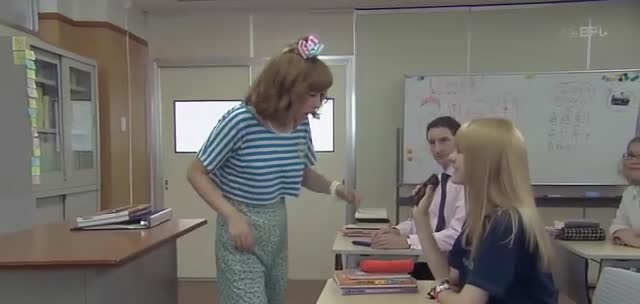
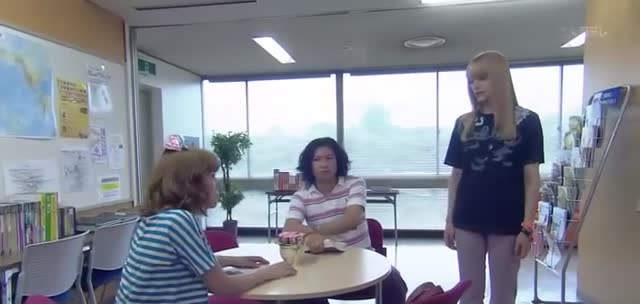
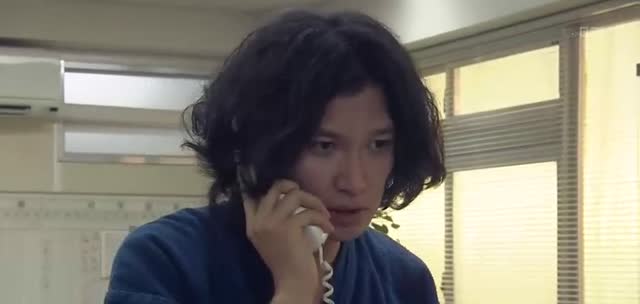
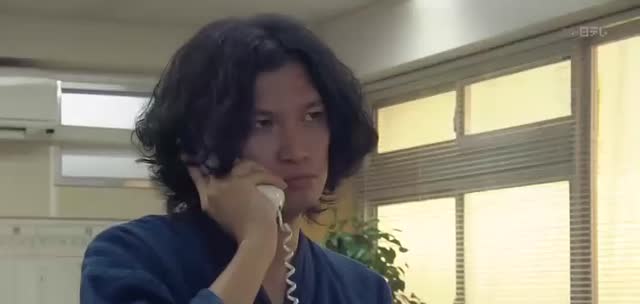
Back to 日本人の知らない日本語 · Back to all scenes