This episode contains 53 dialogue scenes: frequency adverbs, the difference between 「嬉しい」 and 「楽しい」, ninja-related expressions (「くノ一」, 「ドロン」), the place name 「半蔵門」, the original meaning of 「役不足」, and the language used when talking to the police or handing in lost property. The focus is on telling near-synonyms apart and on words that are easy to misuse.
Language highlights
「嬉しい/楽しい」(a moment of joy vs. lasting enjoyment)
「役不足の本来の意味」(the original meaning: the role is too small for one's ability)
「言わんこっちゃない」(the colloquial way to say "I told you so")
「容疑者/被害者」(police and news terms: suspect / victim)
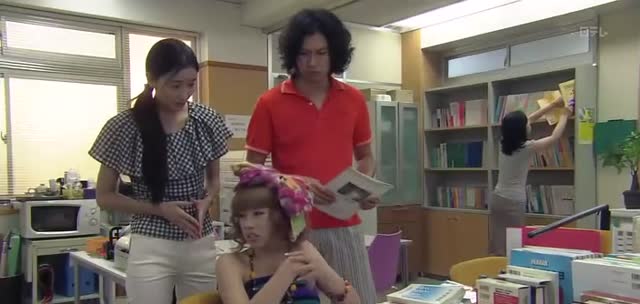
Early in the morning, Takasu calls Haruko over and lays out a test paper; Haruko answers curtly without any title and gets corrected on the spot.
鷹栖
カリスマ!ちょっと来い!!
Charisma! Get over here!!
ハルコ
はぁ?
Huh?
ハルコ
うっさいなぁ。何?
Shut up, will you. What?
鷹栖
何ですか 鷹栖先生でしょうが!
It should be "Yes, what is it, Mr. Takasu"!
ハルコ
何ですか 鷹栖先生。
Yes, what is it, Mr. Takasu.
鷹栖/ハルコ
お前さ これ ちょっと見てみろよ。 はぁ…。
Hey, take a look at this. -- Haah...
Speaking notes
〜でしょうが
〜でしょうが! = (a forceful correction) it should be ..., you know!
「鷹栖先生でしょうが!」 = "It should be 'Mr. Takasu'!" 「〜でしょうが」 is a forceful form of 「〜でしょう」 that carries reproach and leaves no room for argument: • 「そうでしょうが!」 = "Isn't that obviously so!" Takasu is correcting how she addressed him: Haruko said only 「何?」 to her senior, with no title. She immediately repeats the corrected pattern back: 「何ですか、鷹栖先生」.
うっさいなぁ
うっさい = colloquial short form of うるさい
「うっさい」 is the clipped, colloquial form of 「うるさい」. 「うるさい」 becomes 「うっさい」 (a sokuon, small っ, contraction). It is casual speech used by women: fine with friends and juniors, but rude toward a senior. Haruko reflexively used the tone she'd use with a friend, which is why Takasu snaps back with 「何ですか鷹栖先生でしょうが!」. As for tone, 「てみろ」 (the imperative of 〜てみる) is how Takasu talks down to a junior.
Key vocabulary
うるさい
うるさい: noisy, annoying (colloquial 「うっさい」).
先生 せんせい
先生: teacher.
見る みる
見る: to look, to watch.
カリスマ
カリスマ: a charismatic figure (Haruko's nickname).
お前 おまえ
お前: "you" (used toward someone of lower standing).
On the test paper, everyone except Jack has read 「気に入らない」 as 「気にはいらない」; Haruko is stunned.
ハルコ
え~と 「次の例文の読み方を答えなさい」。
Um... "Answer how the following example sentence is read."
ハルコ
気にはいらない。
"Ki ni wa iranai."
ハルコ/鷹栖
はぁ?気にはいらない。 ジャック以外全員!?
Huh? "Ki ni wa iranai." -- Everyone except Jack!?
鷹栖
どんな授業してんだ お前は!
What kind of class are you teaching!
ハルコ
もしかして 「気にはいらない」が正解なの?
Could it be that "ki ni wa iranai" is the right answer?
鷹栖
正解なわけねぇだろうがよ!忘れんなよ!
Of course it's not the right answer! Don't forget that!
鷹栖
1人でも落第したら お前の 高校教師になるっていう夢は→
If even one person fails the year, your dream of becoming a high school teacher will --
鷹栖
おじゃんですから!
go down the drain!
Speaking notes
気に入らない
気に入らない = to dislike (気に入る = to like, to be to one's taste)
「気に入る (きにいる)」 = to suit one's taste, to like; the negative 「気に入らない」 = to be displeased with, to dislike. It is a fixed expression: • 「この服、気に入った」 = "I like this outfit." The students read it as 「気にはいらない」, splitting it into 「気に」 + 「入らない」 and even adding a 「は」, as if something "doesn't get into" the 気. This is a classic "reading it piece by piece" mistake: 「気に入る」 is one unit and can't be taken apart.
おじゃん
おじゃん = ruined, scrapped
「おじゃんになる」 = (of a plan or matter) to fall through, to come to nothing. • 「計画がおじゃんになる」 = "The plan falls through." Takasu is reminding Haruko of the price of their bet: if even one student fails, your dream of teaching high school is finished. 「落第 (らくだい)」 = failing an exam or being held back a year (opposite: 「及第」).
Haruko decides to hold a review class and picks a student at random to ask whether he drinks black tea often; one 「たまたま」 sets off a string of corrections.
ハルコ
はい 今日は 今までの復習をします。
Okay, today we're going to review everything so far.
ハルコ
ビシビシいくからね!
I'm going to be strict with you, all right!
ボブ/ポール
なんか機嫌悪くない? 男に振られたんじゃねぇ?
She seems to be in a bad mood, doesn't she? -- Maybe she got dumped by a guy?
ハルコ
ポール 紅茶はよく飲む?
Paul, do you drink black tea often?
ポール/ハルコ
たまたま飲むよ。 たまたま?
I drink it tamatama. -- Tamatama?
ハルコ
「たまたま」の意味は偶然! たまに飲むでしょ?
「たまたま」 means "by coincidence"! You mean you drink it once in a while, right?
ポール
たまに 時々飲むよ。
Tamani... I drink it sometimes.
ハルコ
「たまに」と 「ときどき」も意味が違う!
「たまに」 and 「ときどき」 don't mean the same thing either!
Speaking notes
ビシビシ
ビシビシ = strictly, without mercy
「ビシビシ (と)」 = strictly, showing no mercy. An ideophone often used in teaching and training: • 「ビシビシ鍛える」 = "to train someone hard" Haruko's 「ビシビシいくからね!」 is a declaration of resolve after being needled by Takasu: she uses a harsh ideophone to psych herself up.
たまたま/たまに
たまたま/たまに = by chance / once in a while
「たまたま」 = by chance, as it happens (a one-off coincidence); 「たまに」 = once in a while (low frequency). • たまたま見かけた: "I happened to see (him/her)" • たまに行く: "I go once in a while" Paul expressed "frequency" with "coincidence": 「たまたま飲むよ」 ends up meaning "I only drink it if it just happens to come up". Both words contain 「たま」, so foreigners easily mix them up.
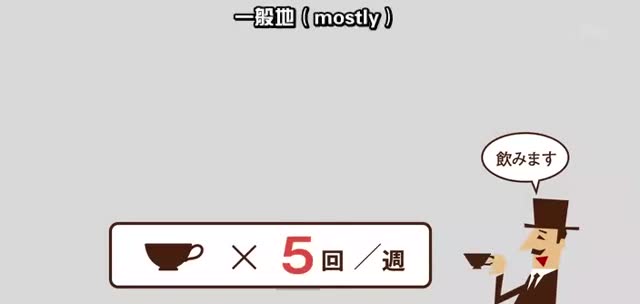
[Key point] Japanese "frequency adverbs", roughly from highest to lowest frequency: • いつも (always, 100%) • たいてい (usually, about 80%) • よく (often, about 60-70%) • ときどき (sometimes, about 50%) • たまに (once in a while, about 20%) • あまり〜ない (not very often) • ぜんぜん〜ない (not at all) Haruko's "five times / four times / three times a week" is a quantification for teaching purposes (in real use there are no strict cutoffs).
使い分ける
使い分ける = to use differently depending on the case
「使い分ける」 = to use different words/forms depending on the situation or the person. • 「敬語を使い分ける」 = "to use honorifics appropriately" • 「〜によって」 = depending on ... Haruko's line 「頻度の割合によって使い分ける」 is the backbone of the whole lesson: the difference between these words lies not in "meaning" but in "frequency". Note 「ぜんぜん+negative」: 「全然」 must be followed by a negative (colloquial speech also has a newer use like 「全然いい」, but lessons teach only the standard form).
Haruko quizzes the class as she teaches; Diana says she always drinks black tea, Haruko asks if it's Russian tea, and then another kanji-reading question follows.
ダイアナ
わたし いつも紅茶飲みます。
I always drink black tea.
ハルコ
ロシアンティーでしょ?
You mean Russian tea, right?
ハルコ
ジャムを紅茶に入れて 飲むんだよね ロシアは。
You put jam in your tea and drink it -- that's what they do in Russia, right?
ダイアナ
ジャムは なめながら飲む。 入れるのは ウシのチチ。
You lick the jam while you drink. What you put in is cow's milk.
ハルコ
「牛の乳」と書いて音読みで「牛乳」。
You write it "牛の乳", and the on'yomi reading is 「牛乳」.
ハルコ
って これも前 授業で教えたよね?
Wait, I taught you this in class before too, didn't I?
Speaking notes
牛の乳=牛乳
牛の乳=牛乳 = kun'yomi to on'yomi review
On'yomi and kun'yomi: • 牛 (うし) の乳 (ちち) = kun'yomi (native Japanese words) • 牛乳 (ぎゅうにゅう) = on'yomi (Sino-Japanese words) While listening to Diana's "spoken" phrase (ウシのチチ), Haruko casually "translates" it into the written-style word. Spoken vocabulary tends to use kun'yomi; written or formal vocabulary tends to use on'yomi, a very useful pattern in Japanese: • Kun'yomi words: more colloquial, friendlier • On'yomi words: more written, more formal
なめながら飲む
なめながら飲む = 〜ながら: doing two things at once
「なめながら飲む」 = to drink while licking. 「verb stem + ながら」 = two actions done at the same time: • 「歩きながら話す」 = "to talk while walking" Diana answered in plain form, with just 「ウシのチチ」: grammatically correct, yet not in the "teacher's voice" Haruko uses. 「って、これも前授業で教えたよね?」 is Haruko's catchphrase, with a touch of "I really did teach this!" exasperation.
The students say Haruko's classes are scary; Marie asks whether class can't be done "happily", and Haruko corrects her word choice.
エレーン/ハルコ
ハルコ怖い! 怖くない!
Haruko is scary! -- I'm not scary!
マリー
授業は嬉しくやりませんか?
Don't we do class in a "ureshiku" way?
ハルコ
「嬉しく」じゃなくて 「楽しく」です!
Not 「嬉しく」, it's 「楽しく」!
ハルコ
「嬉しい」と「楽しい」は 喜ばしい気持ちが続く→
「嬉しい」 and 「楽しい」 -- a joyful feeling that continues --
ハルコ/マリー
時間の長さで使いわけんの! 時間の長さ?
are used differently depending on length of time! -- Length of time?
Speaking notes
嬉しい/楽しい
嬉しい/楽しい = ureshii (glad, a moment) / tanoshii (enjoyable, ongoing)
[Key point] 「嬉しい」 is a moment of joy; 「楽しい」 is enjoyment that continues. • 嬉しい: the instant something good happens (receiving a gift, being praised) • 楽しい: feeling pleasure over a stretch of time (a trip, a game, a party) So since "class" is an ongoing activity, it should be 「楽しくやる」, not 「嬉しくやる」. Haruko's "length of time" classification is a very practical way to explain the difference (linguistically there is also a distinction of "object versus subject", but for teaching purposes the time distinction is enough).
使いわけんの
使いわけんの = 〜んの: colloquial 〜のだ
「使いわけんの!」 = "You use them differently, that's why!" 「〜んの」 is the colloquial form of 「〜のだ」, expressing explanation or emphasis: • 「そうなの!」 = "That's how it is!"
Haruko gives an exercise: if you could meet Ken Takakura, would you use 「嬉しい」 or 「楽しい」? Marie answers that she'd be delighted.
ハルコ
もし 高倉健に会えたら どっち使う?
If you could meet Ken Takakura, which one would you use?
マリー/ハルコ
うれしいですね。 でしょ?
I'd be ureshii. -- Right?
ハルコ
じゃあ 任侠映画を観てるときは?
Then what about when you're watching a yakuza movie?
マリー/ハルコ
う~ん 楽しいわ。 そう。
Hmm... tanoshii, I'd say. -- That's right.
ハルコ
「嬉しい」に比べて「楽しい」の方が 時間的に長く続くの。
Compared with 「嬉しい」, 「楽しい」 lasts longer in terms of time.
ハルコ
って これも前 授業で教えたよね?
Wait, I taught you this in class before too, didn't I?
生徒
すいません。
Sorry.
Speaking notes
会えたら/観てるとき
会えたら/観てるとき = potential + 〜たら / 〜ときは
「会えたら」 = "if I could meet (him)." 「会える」 is the potential form of 「会う」, and 「〜たら」 is the conditional: • 「会えたら嬉しい」 = "I'd be happy if I could meet him." Haruko's two examples: "meeting him in person" = a momentary event (嬉しい); "watching a movie" = an ongoing process (楽しい). Marie's answer 「楽しいわ」 ends in the feminine 「わ」.
〜に比べて
〜に比べて = compared with ...
「Aに比べてBの方が〜」 = compared with A, B is more ... This is the standard comparison pattern in Japanese (the more written-style counterpart of 「AよりBのほうが好き」). • 「東京に比べて京都の方が静かだ」 = "Compared with Tokyo, Kyoto is quieter." Haruko's sentence is grammatically complete, a textbook-style summary.
Diana asks Haruko whether 「忍び」 and 「くノ一」 also mean different things; Haruko says to ask after class, but the students keep pressing.
ダイアナ
ハルコ 「忍び」と「くノ一」も 意味が違う?
Haruko, do "shinobi" and "kunoichi" also mean different things?
ハルコ
そういう質問は 授業が終わってから。
Questions like that come after class.
ダイアナ
ねぇ どっちも忍者?
Hey, are both of them ninja?
ハルコ
はぁ~もう! 「くノ一」は女性の忍者。
Haah, honestly! "Kunoichi" is a female ninja.
ハルコ
ほらっ!く…ノ…一。ほらっ!!
Look! Ku... no... ichi. Look!!
生徒たち
おぉ~!!
Ooh~!!
ジャック
外国人は みんな忍者に 興味を持ってますから。
Because all foreigners are interested in ninja.
ボブ
スウェーデン あんなスゴイ人たちいない。
In Sweden, there are no amazing people like that.
Speaking notes
くノ一
くノ一 = kunoichi, a female ninja (a riddle in the characters)
「くノ一」 is the kanji 「女」 taken apart: 「く」 + 「ノ」 + 「一」 = 「女」. So 「くノ一」 = a woman, a female ninja. Haruko explains while splitting the character on the blackboard: 「く…ノ…一」. This is a typical "word-puzzle" coinage in Japanese. • 「忍び」 = (archaic) another word for a ninja Note: 「しのび」 is a kun'yomi native word, while 「忍者 (にんじゃ)」 is an on'yomi Sino-Japanese word.
授業が終わってから
授業が終わってから = after class is over
「授業が終わってから」 = after class is over. 「〜てから」 indicates order of events: • 「食べてから行く」 = "I'll eat first and then go." Haruko tries to put off an off-topic question, a teacher's "coping technique".
The students insist ninja still exist in modern Japan and that they vanish with a "puff"; Haruko says those are actors.
ハルコ
あ…それ 俳優さんね。
Ah... those are actors.
ルカ
忍者って ドロンして消えるでしょ?
Ninja vanish with a "doron", right?
ハルコ/ボブ
はぁ? 空も飛ぶぞ~。
Huh? -- They can fly through the sky, too.
ボブ/ルカ
カエルにも乗るぞ。 NARUTO NARUTO NARUTO!!
They ride on frogs, too. NARUTO, NARUTO, NARUTO!!
ハルコ
ちょちょ…ちょっと!
Wa-wait a minute!
ハルコ
ひょっとして みんな 現代に忍者がいると思ってんの?
Don't tell me, all of you think there are ninja in the modern age?
生徒たち
はい!
Yes!
Speaking notes
ドロン
ドロン = poof (the sound of a ninja vanishing)
「ドロン」 = an onomatopoeic/mimetic word for suddenly disappearing in a puff of smoke (ninja, ghosts, etc.). It is also often used as a verb: 「ドロンする」 = to slip away, to vanish (on the sly). • 「彼はドロンした」 = "He made himself scarce." Note 「〜だぞ/〜るぞ」 (the masculine "I'm telling you" tone).
ひょっとして
ひょっとして = could it be that ..., don't tell me
「ひょっとして〜と思ってんの?」 = "Don't tell me you think ...?". 「〜と思ってんの」 = a colloquial contraction of 「〜と思っているの」.
Elaine says she came to Japan to meet a ninja but hasn't met one yet; Haruko says there are no ninja in modern Japan.
エレーン
わたし 忍者に会いに来た。 けど まだ会ったことない…。
I came to meet a ninja. But I've never met one yet...
ハルコ
そりゃそうよ。現代の日本に 忍者なんかいないし。
Well, of course. There are no ninja or anything like that in modern Japan.
ボブ/ハルコ
いるよ!ハルコ。 忍者のすごさ 知らなさすぎ!
There are! Haruko. You know too little about how amazing ninja are!
ルカ/ハルコ
忍者は数学も得意だったの! 数学?
Ninja were good at math, too! -- Math?
ダイアナ/ハルコ
そう! 忍者大百科!?
Yes! -- "The Great Ninja Encyclopedia"!?
Speaking notes
知らなさすぎ
知らなさすぎ = negative + すぎ: too much of not ...
「知らなさすぎ!」 = "You know way too little!" Structure: 知らない → 知らな + さ (nominalizer) + すぎ. The stem of a negative adjective form + 「さ」 + 「すぎる」 means "too much of not ...": • 「やらなさすぎ」 = "You do far too little." • 「分かってなさすぎ」 = "You understand far too little." The students use this very common colloquial construction to turn the tables and accuse the teacher.
〜に会いに来た
〜に会いに来た = verb stem + に来る (callback)
「忍者に会いに来た」 = "I came to meet a ninja." 「verb stem + に来る」 = to come in order to do ... 「まだ会ったことない」 = 「〜たことがない」 (have never done ...).
Key vocabulary
数学 すうがく
数学: mathematics.
得意 とくい
得意: good at, one's strong point.
すごさ
すごさ: the amazingness, how impressive something is.
Elaine reads from a ninja encyclopedia: when ninja wanted to know how deep a moat was, they measured it using the length of a reed sticking out of the water.
エレーン
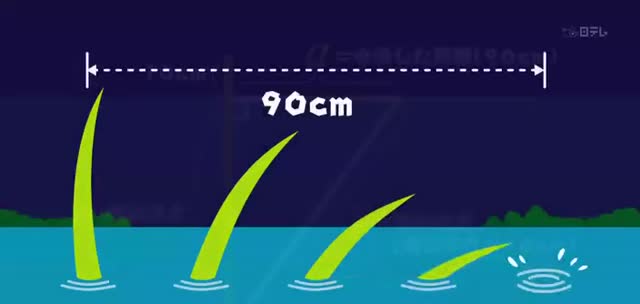
お堀の深さ知りたい時 忍者は→
When they wanted to know the depth of a moat, ninja --
エレーン
水面から出た「葦の長さ」と→
took the "length of a reed" sticking out of the water, and --
エレーン
横に引いて「水没する場所までの 距離」を測り→
pulled it sideways, measured the "distance to the spot where it goes under the water", and --
エレーン
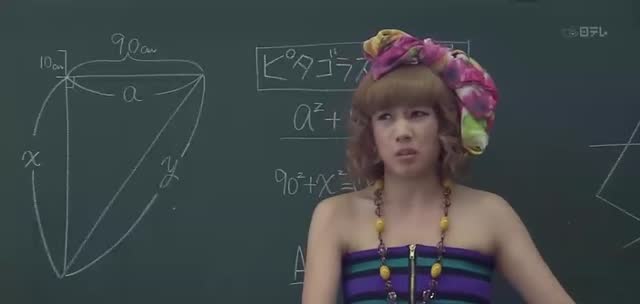
ピタゴラスの定理を使って 計算していたの。
used the Pythagorean theorem to calculate it.
ジャック
というのは 本当?
Is that true?
ハルコ
知らないわよ! 忍者じゃないんだから。
How should I know! I'm not a ninja!
Speaking notes
〜ていたの
〜ていたの = 〜ていた: past habit / repeated action
「計算していたの」 = "(back then) they calculated it this way." 「〜ていた」 expresses a past habit or a continuing state, and the sentence-final 「の」 gives it an explanatory tone: • 「毎朝走っていた」 = "I used to run every morning." Elaine introduces the ninja's mathin a storytelling tone.
知らないわよ
知らないわよ = 〜わよ: "how should I know" (testy)
「知らないわよ!」 = "How should I know!" The feminine 「わよ」 + a negative means "don't ask me". • 「忍者じゃないんだから」 = "because I'm not a ninja" (giving a reason with 「〜んだから」). Haruko is stumped by a string of "ninja trivia" and responds in a "I wash my hands of it" tone. This is a teacher's graceful retreat when she doesn't know: instead of saying "I don't know", she says "I'm not a ninja".
Haruko summons the courage to tell the students that active ninja don't exist, and they immediately push back.
ハルコ
ってか みんなの夢 壊すようで悪いけど→
I mean, I hate to ruin everyone's dream, but --
ハルコ
現役バリバリの 忍者なんていません。
there are no ninja at the height of their careers.
ハルコ
しかも ドロンと消えたり? 空飛んだり?
And besides, vanishing with a "doron"? Flying through the sky?
ハルコ
そんなのタダの作り話だから。
Those are just made-up stories.
ボブ
うちのお店で サラリーマンが ドロンとやってたぞ。
At my shop, a salaryman did a "doron" too, you know.
ハルコ
それタダのオヤジギャグね。しかもこのピタゴラスも怪しいからね。
That's just a dad joke. And this Pythagoras thing is also dubious.
Speaking notes
壊すようで悪いけど
壊すようで悪いけど = 〜ようで悪いけど: "I hate to ..., but"
「みんなの夢壊すようで悪いけど」 = "I'm sorry, it sounds like I'm destroying everyone's dream, but..." 「〜ようで」 = it seems like .... [そう/よう/みたい/らしい] Here 「ようで」 is a "self-assessment": the speaker uses 「ようだ」 to describe her own action as if she were "a wrecker", which is a polite "cushion". This is a polite cushion before delivering bad news: apologize first, then state the fact.
現役バリバリ
現役バリバリ = in one's prime, full of vigor
「現役バリバリ」 = in the front line, at the peak of activity. 「バリバリ」 is a mimetic word meaning "full of drive, highly capable": • 「バリバリ働く」 = "to work like a dynamo" Note: Bob's "salaryman did a 「ドロン」" joke uses the other meaning of 「ドロン」 (slipping away), and Haruko sees through it at once: 「タダのオヤジギャグ」.
Jack says Edo-period math texts record the Pythagorean theorem, and Haruko is left speechless.
ジャック
いえ 江戸時代の数学の文献に→
No, in a mathematics text from the Edo period --
ジャック
ピタゴラスの定理が載ってるって 何かで読んだことがあります。
I read somewhere that the Pythagorean theorem is recorded.
ハルコ
うそ? ほら 言わんこっちゃない!
No way? -- See, I told you so!
ハルコ
そんなに忍者が万能だったら→
If ninja really were that all-powerful --
ハルコ
とっくに世界征服 してるんじゃないの?
wouldn't they have conquered the world long ago?
ジャック
だって 忍者は平和主義者だから。
Well, ninja are pacifists.
Speaking notes
言わんこっちゃない
言わんこっちゃない = "I told you so!"
「言わんこっちゃない」 = "I told you so", "See?" It is a colloquial contraction of 「言わないことではない」 (it's not that I didn't say so): • 言わない → 言わん (dialectal/old-fashioned) • こと → こっ (sokuon) + ちゃ Used when someone ignored your advice and got burned: 「ほら、言わんこっちゃない!」 The usage here is a bit comical: Haruko is actually the one who just got "shot down", yet she reflexively delivers this "victory declaration".
とっくに
とっくに = long ago, ages ago
「とっくに〜している」 = "has/have already ... long ago". • 「とっくに終わった」 = "It ended long ago." Haruko uses this word to draw an "absurd conclusion": if ninja were really all-powerful, they would have ruled the world long ago. Jack defuses it easily with "ninja are pacifists", using 「だって〜から」 ("because ..."), a student-style excuse.
The students get carried away and start performing ninja techniques; Haruko slaps the desk, calls for quiet, and sends Elaine back to her seat.
ハルコ
あぁ~もう!いるいるいる! 探せばどっかいるんじゃないの?
Aah, honestly! There are some, there are some! If you look, there must be some somewhere, right?
生徒/ハルコ
忍者いるって! エレーン早く席着いて。
We said there are ninja! -- Elaine, sit down quickly.
生徒
みんな 忍者いるって!
Everyone, there are ninja!
生徒
ドロ~ン! 分身の術!
Doro~n! Clone technique!
生徒
まぬけの術!
Idiot technique!
ハルコ
「まぬけ」じゃない!「縄ぬけ」の術だよ!
It's not "manuke"! It's the "nawanuke" technique!
生徒たち
アハハ…。
Ahaha...
ハルコ
真面目にやれぇ~!!
Take it seriously!!
Speaking notes
まぬけ/縄ぬけ
まぬけ/縄抜け = manuke (fool) vs. nawanuke (rope escape)
「まぬけ (間抜け)」 = stupid, slow-witted; 「縄抜け (なわぬけ)」 = (ninjutsu) slipping free of ropes. The two words sound very similar: • まぬけ: a fool • なわぬけ: rope escape The student turned "縄ぬけの術" into "まぬけの術", both a slip of the tongue and a joke.
〜の術
〜の術 = ... technique
「〜の術 (じゅつ)」 is the naming pattern for ninja techniques. • 「分身の術」 = "clone technique" • 「変わり身の術」 = "substitution technique" • 「縄抜けの術」 = "rope-escape technique" The students name every move "〜の術" (noun + の + 術). 「〜と言って」「〜って」: 「忍者いるって!」 = "I'm telling you, there are ninja!" (「って」 marks quotation/emphasis).
In the staff room, Shibuya asks Haruko what she was yelling about in class; Haruko slumps over her desk and suggests swapping students.
渋谷
ねぇねぇ… 授業中 何 怒鳴ってたの?
Hey, hey... what were you yelling about during class?
ハルコ
もうさ 生徒交換しない?
Honestly, how about we swap students?
ハルコ
もうあたし このままじゃ 一生 高校教師になれないからね。
At this rate, I'll never become a high school teacher in my whole life.
渋谷
だったらさ ずっと日本語教師を…。
In that case, why not just keep being a Japanese teacher...
ハルコ
やりません。
No way.
Speaking notes
怒鳴る
怒鳴る = to shout, to yell
「怒鳴る (どなる)」 = to shout loudly (in anger). • 「怒鳴り声」 = "a shouting voice" Shibuya says 「何怒鳴ってたの?」 (using 「何」 in place of "why"): "What were you yelling about?", in a tone of concern plus curiosity. Note 「〜ってたの」 is the colloquial contraction of 「〜ていたの」.
このままじゃ
このままじゃ = このままでは: if things stay as they are
「このままじゃ〜ない」 = "at this rate, I can't ...". 「このまま」 = as things are now; 「〜では」 becomes 「〜じゃ」 (colloquial contraction). • 「このままじゃ間に合わない」 = "At this rate we won't make it."
Elaine clings to Haruko, calls her "master", and keeps asking where the ninja are.
エレーン/ハルコ
師匠! お~う エレーン。
Master! -- Oh, Elaine.
エレーン
ハルコ 忍者どこにいるの? 教えて。
Haruko, where are the ninja? Tell me.
ハルコ
また…。
Not again...
ハルコ
いい?忍者の存在は秘密で いないことにしなきゃいけないの。
Listen, okay? The existence of ninja is a secret, and we have to treat them as if they don't exist.
ハルコ/渋谷
だから 誰も知らないのよ。 ホントに?
So nobody knows about them. -- Really?
ハルコ
ハルコ先生。 いいの いいの。
It's Ms. Haruko. -- It's fine, it's fine.
Speaking notes
いないことにする
いないことにする = 〜ことにする: to treat as if
「いないことにしなきゃいけない」 = "we have to treat them as nonexistent." Here 「〜ことにする」 means "to treat ... as (an established fact)" rather than "to decide": • 「見なかったことにする」 = "to pretend I didn't see it" Haruko uses "it's a secret" to shut down the "where are the ninja" questions. Grammatically, 「〜なきゃいけない」 (must) and 「ことにする」 are two patterns strung together, expressing "a rule-based assumption".
師匠
師匠 = master, teacher
「師匠 (ししょう)」 = a master or teacher (of a craft or art). Mostly used for traditional crafts, martial arts, and performing arts: • 「落語の師匠」 = "a rakugo master" Elaine calls Haruko 「師匠」, treating her as a "ninja master". This form of address has more of a sense of "passing down a tradition" than 「先生」.
Elaine asks Haruko whether she can meet ninja by taking the Hanzomon Line to Hanzomon, since Hattori Hanzo's residence stood there.
エレーン
じゃあ 半蔵門線に乗って 半蔵門に行けば会えるかな?
Then, if I take the Hanzomon Line to Hanzomon, can I meet one?
エレーン
服部半蔵の屋敷があるから。
Because Hattori Hanzo's residence is there.
ハルコ
服部半蔵の屋敷って半蔵門?
Hattori Hanzo's residence is Hanzomon?
エレーン
半蔵門。伊賀忍者の 組頭の半蔵の屋敷が…。
Hanzomon. The residence of Hanzo, the head of the Iga ninja...
ハルコ
いいからね。わかったから。
That's enough. I get it.
エレーン
忍者探す!スッパ抜いたら 教えてあげるね。
I'll look for ninja! When I sniff one out, I'll tell you.
ハルコ
あ スッパ抜くの 「スッパ」って何?
Oh, "sniff out" -- what's "suppa"?
ハルコ
スッパ?
Suppa?
Speaking notes
半蔵門
半蔵門 = Hanzomon (a Tokyo place name) and Hattori Hanzo
「半蔵門 (はんぞうもん)」 is a gate on the west side of Edo Castle (today's Imperial Palace); next to it stood the residence of Hattori Hanzo (head of the Iga ninja), and the Tokyo subway's 「半蔵門線」 is named after it.
スッパ抜く
スッパ抜く = to expose, to scoop
「スッパ抜く」 = to expose (a secret or news story) ahead of everyone else. • 「スクープをスッパ抜く」 = "to land a scoop" 「教えてあげるね」: [giving/receiving verbs] Elaine uses 「あげる」 toward her "master".
After school, a man is waiting for Haruko at the school gate; Katori recognizes him as Haruko's ex-boyfriend from her university days.
生徒
ハルコ!
Haruko!
ハルコ
今度は誰よ?
Who is it this time?
向井
久しぶり!
Long time no see!
ハルコ
文也…。
Fumiya...
ハルコ/鹿取
誰だろ? たぶん 大学時代に→
Who could it be? -- Probably someone from her university days --
鹿取
お付き合いされてた方だと思いますよ。
who she was seeing, I think.
鹿取
前に聞いたことが。 高校の先生だと。
I heard about it before. He's a high school teacher.
Speaking notes
お付き合いされてた方
お付き合いされてた方 = お付き合いされる: (honorific) to go out with
「お付き合いされていた方」 = "the person (Ms. Haruko) was seeing." [Honorifics] 「お + verb stem + される」 is another form of the "honorific" (sonkeigo): • 付き合う (plain) • お付き合いされる (honorific) Katori uses honorific language even for Haruko's "private matters".
久しぶり
久しぶり = long time no see
「久しぶり」 = "long time no see" (after a long interval). • 「お久しぶりです」 (polite) Mukai uses the simplest plain form, 「久しぶり!」, with a natural tone. Haruko's reply is just a name, 「文也…」 -- using someone's given name is itself proof of an intimate relationship (Japanese people usually use the family name with people they aren't close to).
Key vocabulary
久しぶり ひさしぶり
久しぶり: long time no see.
大学時代 だいがくじだい
大学時代: university days.
付き合う つきあう
付き合う: to go out with, to be in a relationship with.
Mukai starts picking on Haruko's outfit the moment they meet, saying no wonder she failed her interview; Haruko fires back and they nearly argue.
ハルコ
何なの突然。
What's with you, all of a sudden?
向井
日本語教師って 結構 自由なんだな。
Japanese-language teachers sure are free-spirited, huh?
ハルコ/向井
別に普通じゃん。 忘れたのか?
It's perfectly normal. -- Have you forgotten?
向井
そういう自由な服装で面接 受けたから→
Because you went to the interview in such a casual outfit,
向井
高校の採用試験 落とされたんだろ?
you failed the high school hiring exam, didn't you?
ハルコ
人を見かけで判断するような学校は 好きじゃありません。
I don't like schools that judge people by their appearance.
Speaking notes
落とされた
落とされた = 落とす in the passive: to be failed
「落とされた」 = "was failed (by the exam)." The passive: the subject is "I", and the doer is "the school / the examiners". • 「試験に落ちた」 = "I failed the exam" (intransitive, stressing the "result") • 「試験で落とされた」 = "I was failed by the examiners" (stressing being "weeded out") Mukai uses the passive to pin the blame on Haruko's clothes; Haruko's answer turns the finger toward "the school": who is at fault? The school that judges by appearance, not my clothes.
見かけで判断する
見かけで判断する = 見かけ: appearance
「人を見かけで判断する」 = to judge people by their looks. 「見かけ」 = outward appearance. • 「見かけによらない」 = "Don't judge by appearances." This line is Haruko's "declaration of values". Note: Haruko uses the polite form 「好きじゃありません」, stating an "official position" to her ex-boyfriend -- cold and restrained in tone.
Mukai says Haruko is as childish as ever; Haruko asks whether he came all this way because he has something to say.
向井
はぁ…ガキだなぁ。
Haah... you're such a kid.
ハルコ
はあ?
Huh?
ハルコ
あんた ケンカしに来たわけ?
Did you come here to pick a fight?
ハルコ
はぁ~。
Haah~.
ハルコ
なんか話があって 来たんじゃないの?
Didn't you come because you have something to tell me?
向井
ずっと ここでやってくつもりか?まさか…。
Are you planning to keep doing this here forever? Surely not...
ハルコ
まだ 諦めてないし。
I haven't given up yet, you know.
Speaking notes
ガキ
ガキ = brat, kid
「ガキ」 = (derogatory) a kid, an immature person. • 「ガキの頃」 = "when I was a kid" Haruko's comeback 「ケンカしに来たわけ?」 uses "verb stem + に来る" (purpose), in a hard-edged tone.
やってくつもり
やってくつもり = 〜ていくつもり: plan to keep ...-ing
「ここでやってくつもりか」 = "Are you planning to keep doing this here?" 「やっていく」 = to keep doing (from now on) (「〜ていく」 expresses continuation from now into the future); 「やってく」 is the colloquial contraction. • 「このまま頑張っていく」 = "I'll keep working hard like this." Haruko's answer 「まだ諦めてないし」 means "I haven't given up yet (on my dream of being a high school teacher)".
"Hanzomon High School is hiring a Japanese teacher"
0:00 / 0:17
This scene
Mukai gets to the point: his private school, Hanzomon High School, is hiring a Japanese (kokugo) teacher starting with the September term; Haruko asks why her.
向井
私立半蔵門高校。うちの学校で 国語の教師を募集してるんだよ。
Private Hanzomon High School. Our school is recruiting a Japanese-language teacher.
ハルコ/向井
え? 採用は9月の新学期から。
Huh? -- The hiring starts with the new term in September.
ハルコ
9月ってもうすぐじゃん。
September is just around the corner.
向井
だから 会いに来たんだよ。
That's why I came to see you.
ハルコ
いや…でも何で?
No... but why?
Speaking notes
募集してる
募集してる = 募集する: to recruit
「募集 (ぼしゅう)」 = recruiting, inviting applications. • 「社員募集」 = "employees wanted" • 「学生募集」 = "students wanted" Mukai uses 「〜してるんだよ」 (explanatory tone) and calmly puts the "job opportunity" in front of Haruko. 「新学期 (しんがっき)」 = new term. In Japan the new school year starts in April and September is part of the "second term"; the drama's "hiring from September" is a mid-year recruitment.
「だから会いに来たんだよ」 = "That's why I came to see you." Here 「だから」 is not "therefore" but "precisely because of this" (picking up the earlier recruitment information): • 「だから言ったでしょ」 = "That's why I told you, didn't I?"
Mukai asks Haruko to come to Hanzomon at 5 tomorrow to meet the chairman, and says this is not the place for her.
向井
お疲れさまです。
Good work today.
ハルコ
お疲れさまでした。
Thank you for your work today.
向井
明日5時 半蔵門に来て。 理事長を紹介する。
Come to Hanzomon at 5 tomorrow. I'll introduce you to the chairman.
ハルコ/向井
明日? 理事長に会うだけでいい。 あとは俺が何とかするからさ。
Tomorrow? -- All you have to do is meet the chairman. I'll handle the rest.
ハルコ
いや でも急に言われても…。
No, but even if you tell me so suddenly...
向井
はっきり言って→
To be frank --
向井
ここは ハルコがいるべき 場所じゃないと 俺は思う。
I don't think this is the place Haruko should be.
Speaking notes
お疲れさまです/でした
お疲れさまです/でした = "good work" in present vs. past tense
「お疲れさま」 in the present vs. the past tense: Mukai says 「お疲れさまです」 (during work, ongoing), and Haruko replies 「お疲れさまでした」 (past tense, meaning "the day is over"). The two use different tenses: Mukai is "greeting" while Haruko is "saying goodbye". [Honorifics] 「お疲れさま」 is the all-purpose workplace greeting.
〜べき
〜べき = should, ought to
「いるべき場所」 = "the place where you should be." 「〜べき」 = ought to, as a matter of principle: • 「やるべきことをやる」 = "to do what needs to be done" Mukai uses "ought to" to decide Haruko's place for her. Note that he closes with 「俺は思う」: he packages an assertion as "my opinion" -- a typical Japanese way of being forceful without being rude.
Elaine walks the streets of Hanzomon alone, asking passersby where Hattori Hanzo's residence and the ninja are.
エレーン
すいません。 服部半蔵の屋敷はどこですか?
Excuse me. Where is Hattori Hanzo's residence?
エレーン
忍者は どこにいますか?
Where are the ninja?
通行人
半蔵門 甲州街道を真っ直ぐ…。
Hanzomon, go straight along Koshu Kaido...
通行人
消えた…。
She's gone...
Speaking notes
真っ直ぐ
真っ直ぐ = straight
「真っ直ぐ (まっすぐ)」 = straight, straight ahead. Often used when giving directions: • 「真っ直ぐ行って、右です」 = "Go straight, and it's on the right." The passerby answers in the stock phrasing for directions.
すいません
すいません = excuse me
「すいません」 = "excuse me", "may I ask...". Elaine politely opens with 「すいません」 to a stranger and ends with 「〜ですか」: the grammar is perfect.
Haruko tells Katori about Mukai's offer and says it really is a chance; Katori asks whether she hadn't also asked the principal to look for a place for her.
ハルコ
高校の採用試験?チャンスは チャンスなんだよね。
The high school hiring exam? A chance is a chance, I suppose.
鹿取
でも 校長先生にも あてを探してもらってるんじゃ?
But haven't you also asked the principal to find you a lead?
ハルコ
そうなのよ~。ただ 全員 卒業させないと 鷹栖がさぁ。
Yes, I did~. But if I don't get everyone to graduate, Takasu will...
鹿取
口出しするつもりはないけどさ せっかくここまでやって来たのに→
I don't mean to butt in, but after coming this far,
鹿取
生徒達を置いていくっていうのは どうなのかな?
what about leaving the students behind? Is that okay?
Speaking notes
チャンスはチャンス
チャンスはチャンス = AはA: concede, with reservations
「チャンスはチャンスなんだよね」 = "A chance is a chance, yes (but...)." 「AはA」 is a typical Japanese "concessive repetition": • 「高いことは高い」 = "It's expensive, yes (but...)" Haruko uses this pattern to admit that her ex-boyfriend's offer "has value" while leaving room for a "but".
探してもらってる
探してもらってる = 〜てもらっている: have someone ... for one
[Giving/receiving verbs] 「あてを探してもらってる」 = "you've asked (the principal) to look for (a place) for you." 「あて (当て)」 = a lead, a prospect. Katori uses 「もらう」 from Haruko's standpoint: "you've got them looking for one for you". [Compare] The same event: 「あげる」 (the principal's viewpoint) vs. 「もらう」 (Haruko's viewpoint) -- different viewpoint, different giving/receiving verb.
Key vocabulary
チャンス
チャンス: chance.
あて
あて: a lead, a prospect.
口出し くちだし
口出し: butting in, interfering.
置いていく おいていく
置いていく: to leave behind.
せっかく
せっかく: with great effort, after going to the trouble.
「申し訳ありませんでした」 = a formal, polite apology. The past tense means "I'm sorry for the trouble I caused." The officer's 「いえ」 means "please don't worry". [Compare] Haruko's tone with her student (「何してんの」) and her polite language with the police are very different -- this is switching speech styles.
しゃがみ込む
しゃがみ込む = to crouch down
「しゃがみ込む」 = to crouch down, to squat on the ground. 「しゃがむ」 = to crouch; 「〜込む」 means "going deep into / completely entering a state": • 「座り込む」 = "to sit down and stay put" The officer describes Elaine's behavior in an objective tone.
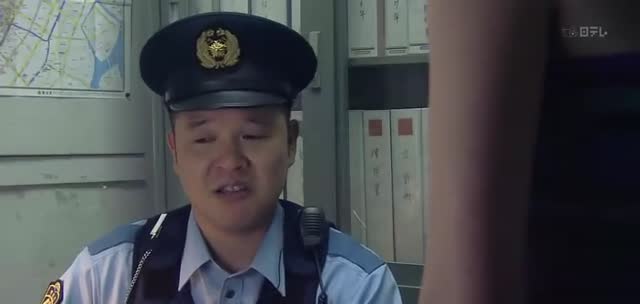
The police officer tells Haruko that an assault case against women has recently occurred in that area, and that the suspect is carrying a bladed weapon.
警官
最近 あの辺りで婦女暴行事件が 起こってましてね。
Recently, an assault case against women has been occurring in that area.
ハルコ
婦女暴行事件!?
An assault case against women!?
警官
容疑者は刃物を携帯していて→
The suspect is carrying a bladed weapon,
警官
顔や身体に 大ケガを負った 被害者が出てるんです。
and there are victims who have suffered serious injuries to the face and body.
渋谷
う~ん。
Hmm~.
ハルコ
よかった~無事で。
Thank goodness you're safe~.
Speaking notes
容疑者/被害者
容疑者/被害者 = police terms: suspect / victim
「容疑者 (ようぎしゃ)」 = suspect; 「被害者 (ひがいしゃ)」 = victim. These are standard terms in news and police reports: • 「容疑者を逮捕する」 = "to arrest a suspect" • 「婦女暴行」 is a police/legal term for violent crimes against women The officer speaks in "report style" (〜ましてね/〜んです) in a calm tone.
起こってまして
起こってまして = 〜ましてね: (formal) ... you see
「起こってましてね」 = "it's been happening, you see." 「〜まして」 is a formal abbreviation of 「〜ましたので」, and 「ね」 carries a "please be careful" reminder: The officer uses standard polite language, both courteous and weighty enough to serve as a warning.