LearnWithSubs

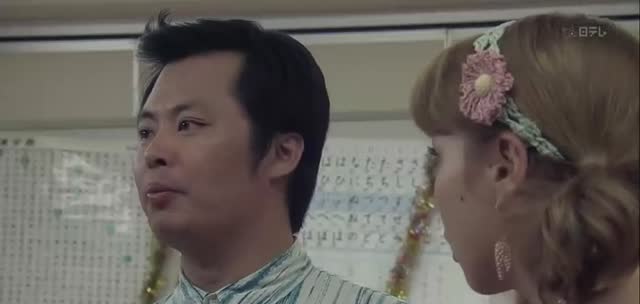
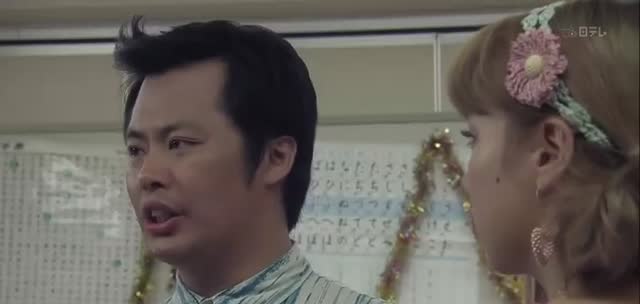
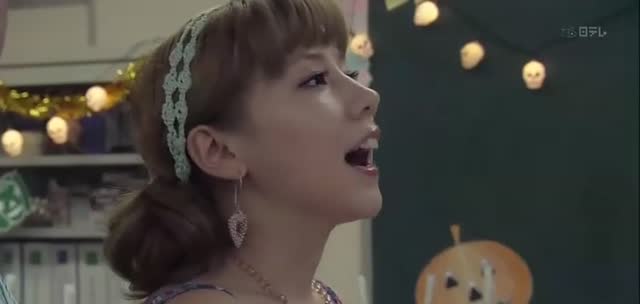
日本人の知らない日本語 Episode 5 (page 2/2)

Scenes on this page

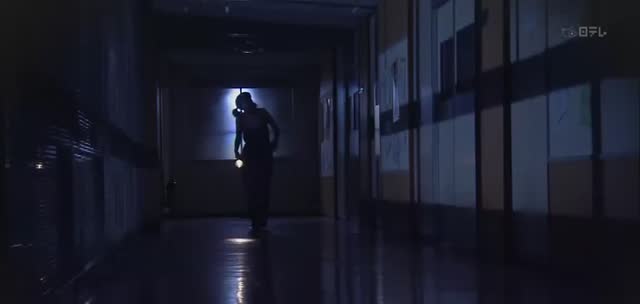
  1. Footsteps, getting closer!

    Scene 29 · 0:21

    Expressions: 聞こえない/聞こえる, 近づいてくる

  2. Mr. Shibuya!

    Scene 30 · 0:21

    Expressions: 来てみたら, 涼む

  3. A special lesson, then

    Scene 31 · 0:18

    Expressions: 授業してやろう, ただし

  4. Why does the character 取 have an ear?

    Scene 32 · 0:25

    Expressions: 取の字, 〜かい?

  5. The character 道 has a head in it

    Scene 33 · 0:24

    Expressions: 一説によると, そうじゃ!

  6. The character 県 is an upside-down head

    Scene 34 · 0:29

    Expressions: 県(縣)=逆さ首, 派生

  7. Why did it suddenly get cool?

    Scene 35 · 0:23

    Expressions: 涼しくなってねえか, どっかから

  8. The same chill that night...

    Scene 36 · 0:23

    Expressions: 同じです, 〜のような

  9. Fine, I'll go!

    Scene 37 · 1:02

    Expressions: 行けばいいんでしょ, ホントだった

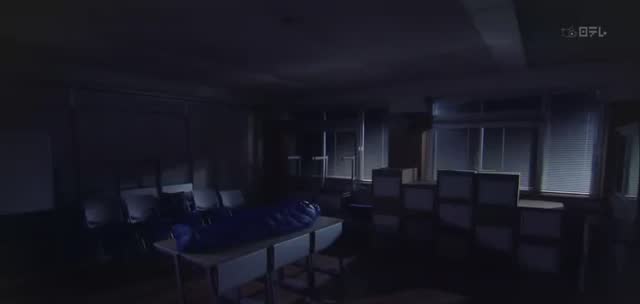
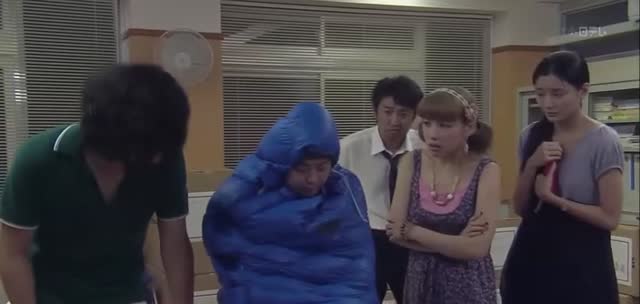
  10. Not a ghost, a snore

    Scene 38 · 0:42

    Expressions: 吹いとるぞ, いびき

  11. I have nowhere to go

    Scene 39 · 0:27

    Expressions: 入れてもらえない, タタリ

  12. Condensation solves the mystery

    Scene 40 · 0:31

    Expressions: 結露, 使いやがって

  13. Why was Wang kicked out?

    Scene 41 · 0:25

    Expressions: 追い出される, 〜やがって

  14. Get out and don't come back!

    Scene 42 · 0:23

    Expressions: 帰ってくんな, 頑固オヤジ

  15. All he did was eat some vegetables

    Scene 43 · 0:21

    Expressions: 良かれと思って, 〜くらいで

  16. A stubborn old man is part of Japanese culture

    Scene 44 · 0:34

    Expressions: いい人に決まってます, 文化の壁

  17. Eggplants and cucumbers...

    Scene 45 · 0:24

    Expressions: 待てよ, 関係ないでしょ

  18. You're the one who should apologize

    Scene 46 · 0:31

    Expressions: 謝らなきゃいけない, 謝ったくらいで

  19. The dream of everyone graduating is about to die

    Scene 47 · 0:27

    Expressions: となると, 身元引受人

  20. I brought the landlord!

    Scene 48 · 0:28

    Expressions: こればっかりは, ヤベ

  21. I will never forgive him!

    Scene 49 · 0:27

    Expressions: 許すつもりはねえ, 帰って頂きなさい

  22. The "spirit horse" mystery solved

    Scene 50 · 0:25

    Expressions: 精霊馬, ピーンときた

  23. I can understand getting emotional

    Scene 51 · 0:19

    Expressions: 分かんなくもない, なかなか分かんない

  24. This is a dragon, not a horse

    Scene 52 · 0:29

    Expressions: 乗せられるかってんだよ, 龍

  25. Please pick whichever you like

    Scene 53 · 0:31

    Expressions: どうぞお選びください, 座りやすい

  26. Please forgive Wang

    Scene 54 · 0:21

    Expressions: 許してあげてください, 自分なりに

  27. A lively Obon this year

    Scene 55 · 0:46

    Expressions: 揃いも揃って, 承知しねえぞ

  28. What a troublesome person

    Scene 56 · 0:24

    Expressions: 面倒なやっちゃ, いいのよ

  29. One... one is missing!

    Scene 57 · 0:51

    Expressions: いちま~い…足りな~い, 数え間違う

Speed
All scenes

Footsteps, getting closer!

This scene

日本人の知らない日本語 Episode 5 Footsteps, getting closer! still

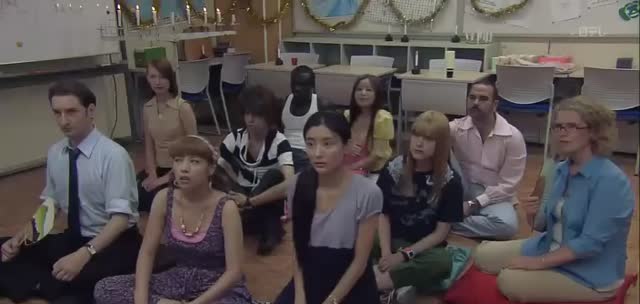
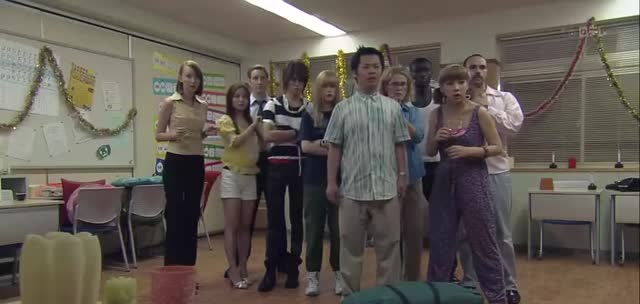
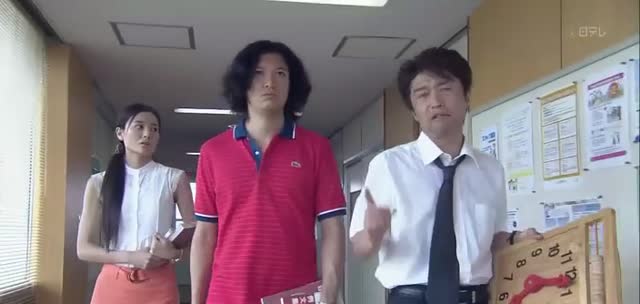
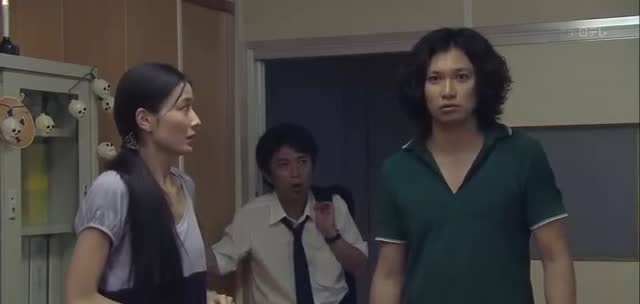
In the dark classroom, Luca says he thinks he hears footsteps. Haruko says she doesn't hear anything, and the students tell her to be quiet.
  1. ルカ

    It sounds like footsteps... (footsteps)

  2. ハルコ/生徒

    I-I don't hear anything! Shh!

  3. 生徒

    Listen... listen... (footsteps)

  4. 生徒/ハルコ

    It's true. — I can hear it. (footsteps)

  5. ボブ

    Whoa... it's coming closer! (footsteps)

  6. ハルコ

    Hey! Calm down!! (footsteps)

  7. ハルコ

    There's no way... hey...!! (footsteps)

Speaking notes

聞こえない/聞こえる

聞こえない/聞こえる = can't hear / can hear

「聞こえる」 = (a sound) reaches the ears naturally; 「聞く」 = to listen (actively).
• 「音が聞こえる」 = I can hear a sound
• 「音楽を聞く」 = to listen to music
Haruko's 「聞こえないわよ!」 is self-deception: she clearly hears it but pretends she doesn't.
Note that 「聞こえる」 is a "potential/spontaneous" verb with no will involved, so even if you want not to hear, you can't escape it.
近づいてくる

近づいてくる = coming closer (toward me)

「近づいてくる」 = to come closer (toward the speaker). 「〜てくる」 shows the action directed toward the speaker:
• 「彼が近づいてくる」 = he's approaching me
• 「近づいていく」 (away from the speaker) = to approach (somewhere)
Bob uses 「〜てくるぞ」 (a masculine warning) to build tension.
「落ち着きなさいよ!!」 is Haruko giving an order to her students.

Key vocabulary

近づく ちかづく
Approach.
落ち着く おちつく
Calm down.
しっ
Shh (hush).
ほんと
True, really.
聞こえる きこえる
Can be heard.

↑ Scenes on this page

Mr. Shibuya!

This scene

日本人の知らない日本語 Episode 5 Mr. Shibuya! still

A light shines in from the darkness, and it's Shibuya and Takasu. Haruko nearly collapses in fright and asks what they are doing here.
  1. ハルコ/鹿取

    Huh? — Mr. Shibuya!

  2. 渋谷/ハルコ

    Is everyone okay? — Why are you here?

  3. 渋谷

    Well, Ms. Catherine contacted me a little while ago.

  4. 鷹栖/ハルコ

    And I came to see, and what is this? — What are you doing, playing around!?

  5. ハルコ

    What's the big deal?

  6. ジャック

    We were all telling ghost stories to cool off.

Speaking notes

来てみたら

来てみたら = when I came and looked

「来てみたら、何だよこれは」 = When I came to look, what is this? 「〜てみたら」 means "I did it and found that ...":
• 「開けてみたら空だった」 = when I opened it, it was empty
Takasu uses 「何だよ、これは」 to express "surprise plus rebuke," directed at Haruko (the teacher) for leading the "playing around."

涼む

涼む = to cool off

「涼む(すずむ)」 = to cool off (in a cool place).
• 「木陰で涼む」 = to cool off in the shade of a tree
This verb itself implies "enjoying the coolness," so Jack uses 「涼んでたんです」 to recast "Hyakumonogatari" as a "cooling-off activity," being honest and making an excuse at the same time.

Key vocabulary

連絡 れんらく
Contact.
怪談 かいだん
Ghost story.
涼む すずむ
Cool off, enjoy the cool.
遊ぶ あそぶ
Play.
別に べつに
Particularly, (not) especially.

↑ Scenes on this page

A special lesson, then

This scene

日本人の知らない日本語 Episode 5 A special lesson, then still

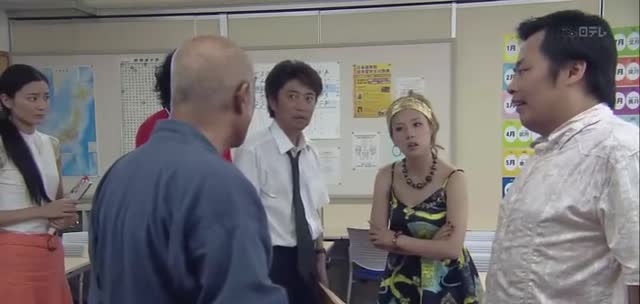
Instead of scolding them, Takasu says he'll give everyone a special lesson, and the students let out a collective groan.
  1. 鷹栖

    Hmm... All right!

  2. 鷹栖/生徒たち

    Then I'll give everyone a special lesson now. — Whaaat!

  3. 鷹栖

    However...

  4. 鷹栖

    The story I'm about to tell is a truly scary one.

  5. 鷹栖

    You'll cool right down, so once you've heard this, you'll all go straight home...

Speaking notes

授業してやろう

授業してやろう = I'll give (you) a lesson

【Giving and receiving verbs】 「特別授業してやろう」 = I'll give you a special lesson. The volitional form of 「〜てやる」 carries "doing a favor, looking down, and a hint of a threat":
• 「教えてあげる」 (gentle)
• 「教えてやる」 (I'll teach you a thing or two)
Takasu uses 「やる」 because he wants to "teach them a lesson," and the students are frightened and groan 「ええ~!」.

ただし

ただし = however (adding a condition)

「ただし〜」 = however, with one condition. It is used to add a restriction after granting permission or making an announcement:
• 「いいよ。ただし、一つだけ条件がある」 = Sure. But there's one condition.
Takasu's 「ただし…これからする話はほんとに怖い話だ」 is a "warning" that gets the audience tense in advance.

Key vocabulary

特別授業 とくべつじゅぎょう
Special lesson.
ただし
However, but (adds a condition).
すぐに
Right away.
帰る かえる
Go home, return.
涼しい すずしい
Cool, refreshing.

↑ Scenes on this page

Why does the character 取 have an ear?

This scene

日本人の知らない日本語 Episode 5 Why does the character 取 have an ear? still

Starting from the character 取 in Katori's name, Takasu asks the students if they know why it contains the character for "ear."
  1. 鷹栖

    Take, for example, the "取" in Katori. Why does this character...

  2. 鷹栖

    have the "耳" character in it, do you know?

  3. 王

    I'm Chinese, but I don't know.

  4. 鷹栖

    Long ago, in wartime, as proof of having defeated an enemy...

  5. 鷹栖/生徒たち

    they would cut off the ear. That's why. — Aaahh!

Speaking notes

取の字

取の字 = the kanji 取 = 耳 + 又 (hand)

「取」 = 「耳」 on the left and 「又」 (a pictograph of a hand) on the right: taking off an ear with the hand.
• 「耳」 + 「又」 = 取

〜かい?

〜かい? = ...? (masculine or elderly tone)

「知ってるかい?」 = Do you know? The sentence-final particle 「〜かい」 is a masculine or elderly way of asking, softer than 「〜か?」, with a hint of mystery, like a storyteller:
• 「知ってるかい?」 = Do you happen to know?
Takasu deliberately switches into an "old storyteller" tone.

Key vocabulary

耳 みみ
Ear.
取る とる
Take.
証拠 しょうこ
Proof, evidence.
戦争 せんそう
War.
倒す たおす
Defeat, beat.

↑ Scenes on this page

The character 道 has a head in it

This scene

日本人の知らない日本語 Episode 5 The character 道 has a head in it still

Takasu moves on to the character 道 and asks the students why it contains the character for "head."
  1. 鷹栖

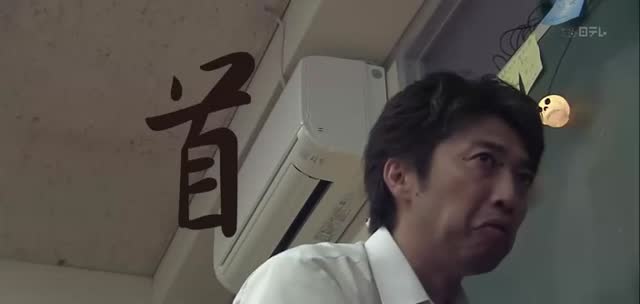
    The kanji "道." Why does this kanji have the character "首" in it?

  2. 鷹栖

    According to one theory, to ward off evil, people would carry a freshly severed head...

  3. 鷹栖

    and walk along the road. That was the custom.

  4. ジャック

    Was it such a terrifying character?

  5. 鷹栖

    That's right!

Speaking notes

一説によると

一説によると = according to one theory

「一説によると〜」 = according to one theory ... It is used to introduce an uncertain or disputed account:
• 「一説では」 = same meaning
【そう/よう/らしい】 In Japanese, "there is a theory that" is often expressed with 「〜という説がある」 or 「一説では」, which is more scholarly than 「〜らしい」.

そうじゃ!

そうじゃ! = That's right! (old man's speech)

「そうじゃ!」 = That's right! 「〜じゃ」 is an old-fashioned or dialectal variant of 「〜だ」, often found in the speech of old men, professors, and samurai.
Takasu keeps playing "the old man telling ghost stories": 「〜かい?」, 「〜じゃ」, 「ヒッヒッヒ」.

Key vocabulary

道 みち
Road, way.
首 くび
Neck, head.
お祓い おはらい
Purification, exorcism.
習慣 しゅうかん
Custom, habit.
生首 なまくび
Freshly severed head.

↑ Scenes on this page

The character 県 is an upside-down head

This scene

日本人の知らない日本語 Episode 5 The character 県 is an upside-down head still

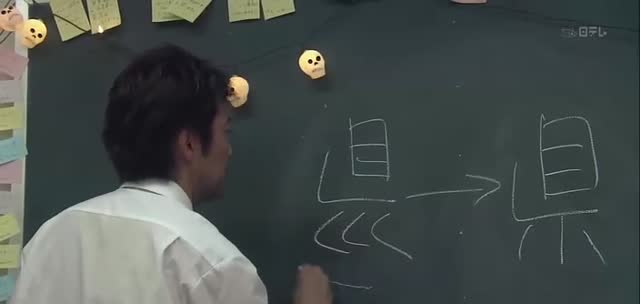
Takasu turns to the character 県 and says it was derived from a character that no longer exists.
  1. 鷹栖

    This character, "県."

  2. 鷹栖

    This character was derived from a character that no longer exists, called "キョウ"...

  3. 鷹栖/生徒

    You write it like this. — Wow...

  4. 鷹栖

    This is, you see, a head held upside down... a severed head.

  5. 鷹栖/生徒たち

    A head put on public display, you know! — Aaahh!!

Speaking notes

県(縣)=逆さ首

県(縣)=逆さ首 = 県 (縣) = upside-down head

The old form of 「県」, 「縣」, has 「県」 (an upside-down 「首」) on its left.
• 「さらし首」 = a head put on public display

派生

派生 = derive from

「派生(はせい)」 = to branch off from one source into something new.
• 「派生語」 = a derived word

Key vocabulary

県 けん
Prefecture.
派生 はせい
Derive, be derived.
逆さ さかさ
Upside-down, inverted.
さらし首 さらしくび
Head put on public display.
字 じ
Character, letter.

↑ Scenes on this page

Why did it suddenly get cool?

This scene

日本人の知らない日本語 Episode 5 Why did it suddenly get cool? still

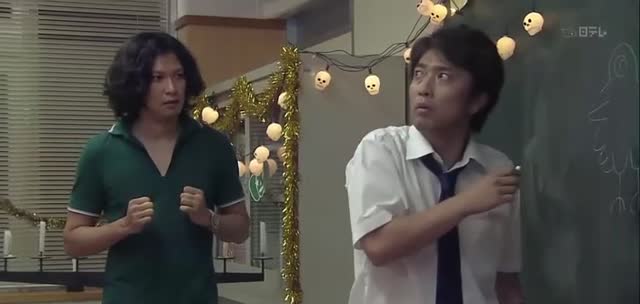
Takasu says there are plenty more characters like this, and Katori, terrified, calls for Haruko and begs Takasu to stop. The classroom seems to have suddenly grown cool.
  1. 鷹栖/生徒

    Hee hee hee... There's still more, you know.

  2. 鹿取/ハルコ

    Eek! It's scary! Stop, stop! — Haruko, Haruko!

  3. 鷹栖/ハルコ

    You're the loudest one. — What!?

  4. 渋谷

    Hm!? What's wrong?

  5. 鷹栖

    Doesn't it feel like it suddenly got cooler?

  6. 渋谷/ハルコ

    Now that you mention it, it's cooler than before. — Why is that?

  7. 鷹栖

    A cold wind is blowing in from somewhere.

Speaking notes

涼しくなってねえか

涼しくなってねえか = hasn't it gotten cooler?

「涼しくなってねえか?」 = Hasn't it gotten cooler? 「〜てねえか」 is an Edo-style rough form of 「〜てないか」, using a negative question to "check a feeling":
• 「寒くねえか?」 = Aren't you cold?
Takasu cautiously probes in masculine casual speech.
【そう/よう】 「そう言われれば」 = now that you mention it (the other person's words awaken your own sense), a stock phrase for "being reminded."

どっかから

どっかから = from somewhere (casual)

「どっかから」 = from somewhere (casual). 「どこか」 → 「どっか」 is a geminate (small 「っ」) shortening:
• どこか → どっか / 何か → なんか
「冷たい風がきてる」 = the progressive state of 「くる」: the wind "keeps blowing toward us."

Key vocabulary

急に きゅうに
Suddenly.
冷たい つめたい
Cold (to the touch).
風 かぜ
Wind.
どっか
Somewhere (casual).
涼しい すずしい
Cool, refreshing.

↑ Scenes on this page

The same chill that night...

This scene

日本人の知らない日本語 Episode 5 The same chill that night... still

No one knows where the cold wind in the classroom is coming from. Takasu asks where it's coming from, and Katori says it's the same as on that night.
  1. 鷹栖

    Even though no one's here... where's it coming from?

  2. 鹿取

    It's the same.

  3. 鹿取

    That night too, around my feet, from out of nowhere, a ch-chilly wind...

  4. ハルコ/鹿取

    W-wait... stop it! Not like that... — And then? And then?

  5. 鹿取

    When I went into the corridor, I heard it. Something like a groan...

  6. 鷹栖

    W-weren't you on rounds duty?

Speaking notes

同じです

同じです = it's the same

「同じです」 = It's the same. Note the grammar: 「同じ」 is a special na-type word that does not take 「な」 when it modifies a noun:
• 同じ本 (correct) / 同じな本 (incorrect)
• 同じです (correct)

〜のような

〜のような = like ...

【そう/よう/みたい/らしい】 「うなり声のような…」 = like a groan... Katori uses 「ような」 to mean "it felt like" (uncertain):
• 〜ようだ: judgment based on an impression
• 〜みたい: casual
• 〜らしい: hearsay
She can't be sure what the sound was, so she uses 「ような」 to put her "uncertain fear" into words as "something like...".

Key vocabulary

足元 あしもと
Around one's feet.
うなり声 うなりごえ
Groan, growl.
当番 とうばん
Duty, being on shift.
廊下 ろうか
Corridor, hallway.
同じ おなじ
Same.

↑ Scenes on this page

Fine, I'll go!

This scene

日本人の知らない日本語 Episode 5 Fine, I'll go! still

The students taunt Haruko, asking if she is scared. Haruko says "I get it already" and decides to go look in the corridor by herself.
  1. 生徒

    Hey, hey? Are you scared?

  2. ハルコ

    Fine, I get it!

  3. ハルコ

    I just have to go, right! Go!

  4. ハルコ

    Ugh... it's cold.

  5. ハルコ

    Aaaaah!!

  6. 生徒/鹿取

    Ah! Ms. Haruko! Are you all right!?

  7. 鹿取/生徒

    Ms. Haruko? — Whoa!

  8. ハルコ

    India! Tears... India, tears...

  9. ハルコ/鷹栖

    It's true. — What is it? — See!? I told you it was true, didn't I?

Speaking notes

行けばいいんでしょ

行けばいいんでしょ = I just have to go, right?

「行けばいいんでしょ!」 = I just have to go, right! 「〜ばいい」 means "all that's needed is to ...", and adding 「んでしょ」 gives a sulky, resentful tone.

ホントだった

ホントだった = it was true (confirmation in retrospect)

「ホントだったでしょ?」 = I was telling the truth, wasn't I? The past tense 「だった」 is a retrospective confirmation of "something that has already happened":
• 「言った通りだったでしょ?」 = I was right, wasn't I?

Key vocabulary

涙 なみだ
Tears.
ホント
True (casual form of 本当).
冷たい つめたい
Cold (to the touch).
大丈夫 だいじょうぶ
All right, okay.
行く いく
Go.

↑ Scenes on this page

Not a ghost, a snore

This scene

日本人の知らない日本語 Episode 5 Not a ghost, a snore still

Following the cold wind and the groans, Takasu says both are coming from right here.
  1. 鷹栖

    F-from h-h-here, the wind is blowing!

  2. 鷹栖

    I can hear the groaning too.

  3. ハルコ/鹿取

    Wait a moment... Shh, shh...

  4. 一同

    Whoa-oa-oa!

  5. 鹿取/ハルコ

    Huh? A snore? — What!? — A snore?

  6. 鷹栖

    What the heck! Isn't this Wang from your class!

  7. ハルコ

    Huh!? Wang?

Speaking notes

吹いとるぞ

吹いとるぞ = it's blowing, I tell you (dialect)

「吹いとるぞ」 = it's blowing, I tell you. 「〜とる」 is a western-Japan dialect or old-fashioned casual form of 「〜ている」.
When Takasu gets worked up, his dialect slips out, a case of speech style loosening when someone is tense or emotional.
「〜ぞ」 carries an announcing tone, like "look here, everyone."

いびき

いびき = snore

「いびき(鼾)」 = a snore (the sound made while sleeping).
• 「いびきをかく」 = to snore
Grammar: 「おめえとこのクラス」 = an Edo-style contraction of 「お前のところのクラス」, where 「〜とこ」 is the casual form of 「ところ」.

Key vocabulary

いびき
Snore.
うなり声 うなりごえ
Groan, growl.
吹く ふく
Blow.
シー
Shh (hush).
クラス
Class.

↑ Scenes on this page

I have nowhere to go

This scene

日本人の知らない日本語 Episode 5 I have nowhere to go still

Wang, woken up and embarrassed, is scolded by Haruko for scaring people, and she asks why he is sleeping in a place like this.
  1. ハルコ

    Hey... don't scare people like that!

  2. ハルコ

    Why on earth are you sleeping in a place like this! Honestly.

  3. 王

    They won't let me into my house.

  4. ハルコ/王

    Huh? Why, why? — It can't be helped.

  5. 王

    I... have a curse on me.

  6. ハルコ

    A c-curse?

Speaking notes

入れてもらえない

入れてもらえない = they won't let me in

【Giving and receiving verbs】 「入れてもらえないです」 = They won't let me in. 「〜てもらえない」 is the negative potential of 「〜てもらう」: "I can't obtain the other person's permission or goodwill."
• 「入れてもらう」 = to be let in (as a favor)
• 「入れてもらえない」 = not to be let in
Wang uses a receiving verb to turn "they won't let me in" into "I can't be allowed in," with "I" as the subject and a very humble stance.

タタリ

タタリ = curse, divine retribution

「祟り(たたり)」 = a calamity or curse brought down by gods or spirits of the dead. 「呪い」 is a curse cast by a person, while 「祟り」 is punishment from a supernatural power.

Key vocabulary

寝る ねる
Sleep.
入れる いれる
Let in; put in.
祟り たたり
Curse, retribution.
しかたない
Can't be helped.
びっくり
Startled; surprised.

↑ Scenes on this page

Condensation solves the mystery

This scene

日本人の知らない日本語 Episode 5 Condensation solves the mystery still

Takasu deduces that the "tears" on the calendar are condensation from the air conditioner, and Katori says she understands now.
  1. 鹿取

    I understand now. The Indian man's tears.

  2. 鷹栖

    That was condensation from the air conditioner.

  3. 鷹栖

    And I've also figured out who's been opening the building's door without permission lately.

  4. 渋谷/鷹栖

    Honestly, you, using the air conditioner without permission!

  5. 渋谷/ハルコ

    Ah... well, anyway, that settles it! Shall we go home? — Let's.

  6. 鹿取/ハルコ

    Oh, then me too. — What!? Wait a minute!

  7. 鷹栖

    You stay! Clean up all this and those candles...

  8. 鷹栖/ハルコ

    Look, put everything away before you go home! — What!?

  9. 鷹栖/ハルコ

    Well, I'm off first! — Hey...

Speaking notes

結露

結露 = condensation

「結露(けつろ)」 = water vapor in the air cooling on contact with a surface and forming droplets. Common near air-conditioner vents and on window glass.
Katori took it for "crying," but Takasu uses a scientific term (「結露ですね」) and instantly demystifies the whole thing.

使いやがって

使いやがって = how dare you use ...

「使いやがって」 = how dare you use (it). 「〜やがる」 is a contemptuous form for the other person's actions, expressing displeasure or anger:
• 「何しやがる!」 = What the hell are you doing!
The speaker uses 「やがる」 to express irritation about "secretly using the air conditioner," in a rough tone but half joking.
「お先に(失礼します)」 = I'll be leaving ahead of you; Takasu uses the shortest farewell and dumps the cleanup on Haruko.

Key vocabulary

結露 けつろ
Condensation.
犯人 はんにん
Culprit.
解決 かいけつ
Resolution, settlement.
片付ける かたづける
Tidy up, put away.
お先 おさき
Leaving ahead of others.

↑ Scenes on this page

Why was Wang kicked out?

This scene

日本人の知らない日本語 Episode 5 Why was Wang kicked out? still

Haruko stays behind to clean up the candles while Wang helps and apologizes. Haruko says that explains why he was so down after class.
  1. 王

    I'm sorry.

  2. ハルコ

    So that's why you had no energy after class.

  3. ハルコ/王

    Why did you get kicked out of your lodgings? — Well, that's...

  4. 大谷

    Hey!

  5. 大谷

    You big idiot!!

  6. 大谷

    You left an eyesore of a thing there and just walked off!

  7. 大谷

    My house is not your storage room!

Speaking notes

追い出される

追い出される = to be kicked out

「追い出されちゃった」 = got kicked out. 「追い出す」 (to drive out) + the passive 「れる」 + 「ちゃう」 (regret): being forced to leave a place.
• 「下宿(げしゅく)」 = lodging, renting a room in someone's house (often with meals and supervision from the landlord), which is different from an 「アパート」.

〜やがって

〜やがって = (rude) how dare you ...

「目障り(めざわり)」 = an eyesore, something offensive to look at.
• 「目障りだ」 = it's an eyesore
The landlord Otani curses in extremely rough language: 「大バカ野郎」, 「てめえ」, 「〜やがって」, three layers of rough words in a row.
Note that the landlord uses a metaphor of "living space": 「俺んちは、てめえの物置じゃねえんだ」 (my house isn't your storeroom), an anger at having one's space taken over.

Key vocabulary

下宿 げしゅく
Lodging, boarding (renting a room in a house).
追い出す おいだす
Throw out.
目障り めざわり
Eyesore.
物置 ものおき
Storeroom.
野郎 やろう
(rough) fellow, guy.

↑ Scenes on this page

Get out and don't come back!

This scene

日本人の知らない日本語 Episode 5 Get out and don't come back! still

The landlord Otani throws Wang's luggage into the street and tells him never to come back. Haruko is baffled about who this man is.
  1. 大谷

    Here's your stuff! Don't come back!

  2. 王/大谷

    Um... — Shut up!

  3. 大谷

    Don't you ever show your face here again!

  4. ハルコ

    Who's that?

  5. 王/ハルコ

    M-my landlord. — Your landlord!?

  6. ハルコ/マリー

    What's with him? — He's a stubborn old man.

  7. ハルコ

    What on earth did you do to make him that angry!?

Speaking notes

帰ってくんな

帰ってくんな = don't come back

「帰ってくんな!」 = Don't come back! It is the casual contraction of 「〜てくるな」: 「〜てくんな」. The verb 「帰ってくる」 = to come back (toward the speaker), and 「な」 = prohibition:
• 「二度と来んな」 = Never come again
The landlord uses the roughest tone: 「ツラ」 (「面」 = face, rude), 「見せんじゃねえぞ」 (an Edo-style form of 「見せるんじゃない」).

頑固オヤジ

頑固オヤジ = stubborn old man

「頑固オヤジ」 = a stubborn old man who won't bend.
「あんなに怒らせるなんて」 uses the causative 「怒らせる」: "how angry did you make him?"

Key vocabulary

大家 おおや
Landlord.
頑固 がんこ
Stubborn.
荷物 にもつ
Luggage, baggage.
二度と にどと
Never again.
一体 いったい
On earth, exactly.

↑ Scenes on this page

All he did was eat some vegetables

This scene

日本人の知らない日本語 Episode 5 All he did was eat some vegetables still

Wang says the landlord got angry because he ate, without asking, some vegetables the landlord had left there.
  1. 王

    The vegetables the landlord had left there...

  2. 王

    I ate them without asking.

  3. ハルコ

    What!? You only ate vegetables?

  4. 王

    Thinking I was doing a good thing, I made them into mapo eggplant and served it...

  5. 王

    and he got furious and said he wouldn't let me into the house anymore.

  6. ハルコ

    There's no reason to get that angry over eating a few vegetables!

Speaking notes

良かれと思って

良かれと思って = meaning well

「良かれと思って」 = thinking it would be good for the other person (and doing it). 「良かれ」 is the classical imperative form of the adjective 「良い」 ("let it be good"), a set phrase:
• 「良かれと思ってやったことが裏目に出た」 = Something I did with good intentions backfired
Wang's phrasing is very bookish.

〜くらいで

〜くらいで = over something as small as ...

「野菜食べたくらいで」 = just because of something as small as eating vegetables. 「〜くらい」 means "only this much," stressing "making a big deal out of nothing":
• 「これくらいで泣くな」 = Don't cry over something this small
Haruko's reaction is from the viewpoint of "Japanese common sense": eating some vegetables isn't worth getting that angry about.

Key vocabulary

野菜 やさい
Vegetables.
麻婆ナス まーぼーなす
Mapo eggplant.
良かれ よかれ
Meaning well.
怒る おこる
Get angry.
勝手に かってに
Without permission.

↑ Scenes on this page

A stubborn old man is part of Japanese culture

This scene

日本人の知らない日本語 Episode 5 A stubborn old man is part of Japanese culture still

Haruko angrily says the landlord is unforgivable, but Wang says he is a good man, even though he can be stubborn.
  1. ハルコ

    That landlord! He's unforgivable!!

  2. 王

    But the landlord is a good person. Although he is stubborn...

  3. 王/ボブ

    he's actually a kind-hearted person. — Where's he kind?

  4. 王

    Every morning, he prays for the old lady who died.

  5. 王

    He's certainly a good person.

  6. ハルコ

    But why would such a good person get angry over a thing like that?

  7. 王

    Because a stubborn old man is part of Japanese culture.

  8. 王

    The cultural wall is higher than you'd imagine.

Speaking notes

いい人に決まってます

いい人に決まってます = he's definitely a good person

「いい人に決まってます」 = He's definitely a good person. 「〜に決まっている」 expresses a "no doubt" assertion:
• 「そうに決まってる」 = it's surely so
Wang's trust in the landlord comes from the fact that he prays every day for the old lady who died, so he isn't just casually "defending" him; he truly believes the landlord is a good man.

文化の壁

文化の壁 = cultural barrier

「文化の壁」 = a communication barrier caused by cultural differences.
• 「言葉の壁」 = language barrier
「想像以上に高いものなんです」 = it's higher than you'd imagine:
• 「〜以上」 means "exceeding some standard"

Key vocabulary

祈る いのる
Pray.
文化 ぶんか
Culture.
壁 かべ
Wall, barrier.
想像 そうぞう
Imagination.
優しい やさしい
Kind, gentle.

↑ Scenes on this page

Eggplants and cucumbers...

This scene

日本人の知らない日本語 Episode 5 Eggplants and cucumbers... still

Hearing Wang talk about the landlord and the vegetables, Haruko suddenly thinks of something and asks for details.
  1. ハルコ

    Hm?... Wait a second.

  2. 王

    Japanese culture? — What is it?

  3. ハルコ

    Wang, were the vegetables left there only eggplants?

  4. ジャック/ハルコ

    Does the type of vegetable matter?

  5. 王

    There were cucumbers next to them.

  6. ハルコ

    Eggplants and cucumbers...

  7. 鹿取

    So what is it already!

  8. ハルコ

    Could it be...!?

Speaking notes

待てよ

待てよ = wait a second (as it hits you)

「待てよ」 = Hold on (a sudden thought). It is a "flash of insight" said to oneself:
• 「待てよ、あれは…」 = Wait, that was...
Tone: the imperative 「待て」 + 「よ」, said to oneself, not to anyone else.

関係ないでしょ

関係ないでしょ = it doesn't matter, does it?

「野菜の種類、関係ないでしょ?」 = What does the type of vegetable have to do with it? This is another person's (Jack's) doubt about Haruko's questioning.

Key vocabulary

種類 しゅるい
Kind, type.
きゅうり
Cucumber.
ナス
Eggplant.
関係 かんけい
Relation, connection.
そば
Beside, next to.

↑ Scenes on this page

You're the one who should apologize

This scene

日本人の知らない日本語 Episode 5 You're the one who should apologize still

Haruko tells Wang to go apologize to the landlord first, but the students all object, asking why he should have to.
  1. ハルコ

    Wang, anyway, first go and apologize properly to the landlord.

  2. 生徒

    What!? Are you kidding me! Why do we have to apologize!

  3. 生徒

    That's right! Wang didn't do anything wrong!

  4. 王

    Besides, a stubborn old man won't forgive you just for apologizing.

  5. ハルコ

    Then everyone, starting now...

  6. ハルコ

    shall we try calling back the dead?

  7. 生徒たち

    Whaaat!?

  8. ハルコ

    With this, even the stubborn old man will shut up.

Speaking notes

謝らなきゃいけない

謝らなきゃいけない = have to apologize

「謝んなきゃいけないんだよ」 = Why do we have to apologize! This is the casual contraction of 「〜なければいけない」:
• 謝らなければいけない → 謝んなきゃいけない (ら → ん)
The students' indignation is typical: "we're not at fault, so why admit it?"

謝ったくらいで

謝ったくらいで = just by apologizing

「謝ったくらいで許してくれません」 = He won't forgive you just because you apologize. 「〜くらいで」 = over something as small as ....
Wang knows the landlord's temper best: "an apology doesn't carry enough weight to dissolve his anger."

Key vocabulary

謝る あやまる
Apologize.
許す ゆるす
Forgive.
呼び戻す よびもどす
Call back.
悪い わるい
At fault.
ふざける
Fool around, joke.

↑ Scenes on this page

The dream of everyone graduating is about to die

This scene

日本人の知らない日本語 Episode 5 The dream of everyone graduating is about to die still

In the staff room, Katori and Shibuya worry that Wang got kicked out of his lodgings, and Takasu says that leaves him in a rough spot.
  1. 鹿取/渋谷

    This is terrible, Wang. He got kicked out of his lodgings.

  2. 鷹栖/渋谷

    If that's the case, he's in trouble too. — Hm?

  3. 鷹栖

    No, no... if he loses his guarantor and his place to live...

  4. 鷹栖

    there's no way he can keep attending school.

  5. 鷹栖

    In that case, her dream of "getting every student to graduate" too...

  6. 鷹栖

    It's over now. Heh heh heh...

  7. 渋谷

    I see... he can't get a recommendation letter either.

Speaking notes

となると

となると = in that case

「となると」 = now that things have come to this, then ... It draws a new conclusion following from the preceding situation:
• 「雨となると、試合は中止だ」 = If it rains, the game is canceled
Takasu "deduces" step by step: losing the guarantor → losing the housing → being unable to attend school → the dream of "getting every student to graduate" fails.
「〜っつう」 = a casual contraction of 「〜という」.

身元引受人

身元引受人 = guarantor

「身元引受人」 = a guarantor responsible for an international student during their stay in Japan.
The point here is that Wang's landlord is also one of his "identity guarantors," so when the landlord gets angry, Wang is left "without a guarantor."

Key vocabulary

下宿 げしゅく
Lodging.
通う かよう
Commute, attend.
推薦状 すいせんじょう
Letter of recommendation.
終わり おわり
End.
となると
In that case.

↑ Scenes on this page

I brought the landlord!

This scene

日本人の知らない日本語 Episode 5 I brought the landlord! still

Haruko drags the landlord Otani to the school. Shibuya believes Haruko will find a way, but Takasu thinks this is beyond saving.
  1. 渋谷

    No! If it's Ms. Haruko, she'll surely do something!

  2. 鷹栖/渋谷

    No, no... Mr. Shibuya. As for this one, really...

  3. 鷹栖/大谷

    there's nothing to be done... — I told you, let go!

  4. ハルコ/鷹栖

    Just for a moment, just a moment! Wait, will you! — What is she doing!? That woman!

  5. 大谷/ハルコ

    Let go! I said let go! — Stop right there!

  6. ハルコ

    Ah! Uh-oh!

  7. 鷹栖

    What do you think you're doing!

  8. 鷹栖/ハルコ

    Who's this? — He's Wang's landlord.

  9. 渋谷/鹿取

    What!? — You brought him here!?

Speaking notes

こればっかりは

こればっかりは = this one thing, though

「こればっかりは」 = this one thing, though (nothing can be done). 「Aばかりは」 means "other things might be fine, but A ...":
• 「これだけは譲れない」 = I can't give way on this one thing
Takasu uses it to say "even Haruko can't do anything about this."

ヤベ

ヤベ = uh-oh (short for やばい)

「ヤベ(やべっ)」 = a clipped, casual form of 「やばい」. 「やばい」 originally means "uh-oh, dangerous," and later in young people's speech can also mean "awesome."
Haruko's 「あっ!ヤベ!」 is the reaction of "getting caught": she wanted to bring the landlord in "quietly" and ran straight into them.
Takasu uses the rough 「おめえ」 and 「やってんだよ」.

Key vocabulary

離す はなす
Let go.
連れてくる つれてくる
Bring (someone).
やばい
Uh-oh; awful (or awesome, in slang).
ちょっと
A little, a moment.
こればっかりは
This one thing, though.

↑ Scenes on this page

I will never forgive him!

This scene

日本人の知らない日本語 Episode 5 I will never forgive him! still

The landlord is furious and won't listen to any explanation; Takasu scolds Haruko for acting on her own again.
  1. 鷹栖

    There you go again, doing things like that on your own!

  2. 鷹栖

    I bet you put him up to it, didn't you?

  3. 大谷

    I have no intention of forgiving him!

  4. ハルコ/鹿取

    As expected of a stubborn old man! — He won't forgive him even if he apologizes?

  5. 大谷/渋谷

    What did you say!? — No, I'm sorry, I'm sorry...!

  6. 鷹栖/ハルコ

    Never mind that, please send him home right away! — No way!

  7. ハルコ

    Wang! Hurry!

  8. 王/ハルコ

    Um... — Aaargh! Honestly...

  9. 王

    I can't put up with this anymore!

Speaking notes

許すつもりはねえ

許すつもりはねえ = I have no intention of forgiving

「許すつもりはねえからな!」 = I have no intention of forgiving you! 「〜つもりはない」 expresses "no intention whatsoever." 「ねえ」 is the Edo-style 「ない」.

帰って頂きなさい

帰って頂きなさい = please have him go home

「帰って頂きなさい」 = Please have him go home. 【Keigo + giving/receiving verbs】 「〜て頂く」 is the humble form of 「〜てもらう」, and 「〜なさい」 is a command: The speaker phrases "hurrying someone out" as "asking him to go home," which is polite in form but actually "throwing him out."
This is "polite forcefulness" in Japanese: the grammatical form is humble, while the content is a command.

Key vocabulary

そそのかす
Incite, put up to.
許す ゆるす
Forgive.
頑固 がんこ
Stubborn.
付き合う つきあう
Keep company with; put up with.
帰る かえる
Go home.

↑ Scenes on this page

The "spirit horse" mystery solved

This scene

日本人の知らない日本語 Episode 5 The "spirit horse" mystery solved still

Wang suddenly shouts that he made the "spirit horse" into mapo eggplant and ate it, and apologizes to the landlord. Katori and the students don't know what a spirit horse is.
  1. 王

    I'm sorry I turned the spirit horse into mapo eggplant and ate it!

  2. 鹿取/生徒

    Spirit horse? — Mapo eggplant?

  3. ハルコ

    When I heard what kind of vegetable Wang ate, it clicked for me.

  4. ハルコ

    I thought, isn't that a "shoryo uma", for sure?

  5. ハルコ

    When the Obon season comes, they treat vegetables as horses and cows...

  6. ハルコ

    and use them to welcome and see off their ancestors' spirits.

Speaking notes

精霊馬

精霊馬 = shoryo uma, Obon vegetable "animals"

「精霊馬」 is an offering used at Japan's Obon (お盆): a "horse" made from a cucumber and a "cow" made from an eggplant, with chopsticks or matchsticks stuck in as legs.
So what Wang ate wasn't just "vegetables" but "the transport the landlord had prepared for his late wife", and he even turned them into mapo eggplant.

ピーンときた

ピーンときた = it clicked

「ピーンとくる」 = to suddenly click, to get it. A mimetic word:
• 「ピンとくる」 = same
「見立てる」 = to treat A as B (「見立てて」 = treating vegetables as horses and cows), an important concept in traditional Japanese aesthetics.

Key vocabulary

精霊馬 しょうりょううま
Shoryo uma (Obon horse and cow made from vegetables).
お盆 おぼん
Obon (the summer festival of the dead).
先祖 せんぞ
Ancestors.
見立てる みたてる
Regard as, liken to.
送り迎え おくりむかえ
Welcoming and seeing off.

↑ Scenes on this page

I can understand getting emotional

This scene

日本人の知らない日本語 Episode 5 I can understand getting emotional still

Haruko explains to everyone that the spirit horse is a well-known part of culture in Japan, but is hard for foreigners to grasp.
  1. ハルコ

    In Japan, it's a well-known part of the culture, but...

  2. ハルコ

    it's pretty hard for foreigners to understand.

  3. ハルコ

    Having what you use to welcome and see off your late wife eaten...

  4. ハルコ

    well, I can kind of understand why he got so emotional.

  5. 王

    Um... here, this!

Speaking notes

分かんなくもない

分かんなくもない = I can kind of understand

「わかんなくもない」 = I can't say I don't understand (so I kind of do). 「〜なくもない」 is a double negative that expresses "qualified affirmation":
• 「食べられなくもない」 = I can't say it's inedible
Haruko uses this to take the landlord's side a little: he has a bad temper, but I can understand how he feels.

なかなか分かんない

なかなか分かんない = hard to understand

「なかなか分かんない」 = very hard to understand. 「なかなか + negative」 means "it's hard to ...":
• 「なかなか来ない」 = just won't come
Haruko is talking about how hard the spirit horse is for foreigners to understand.

Key vocabulary

亡くなる なくなる
Pass away.
感情的 かんじょうてき
Emotional.
なかなか
(Not) easily; quite.
知られる しられる
Be known.
奥さん おくさん
Wife (someone else's, respectful).

↑ Scenes on this page

This is a dragon, not a horse

This scene

日本人の知らない日本語 Episode 5 This is a dragon, not a horse still

Wang presents the offering he made as an apology, explaining it didn't turn out well because it was his first time. The landlord asks what on earth it is, and Wang says it's a dragon.
  1. 王

    It's my first time making one, so it didn't turn out well.

  2. 大谷/王

    What the heck is this? — It's a dragon.

  3. 王/大谷

    In China, it's the most magnificent animal. — Quit joking!

  4. 大谷

    What dragon! A weird thing like this...

  5. 大谷

    How could my wife ride on it!

  6. ハルコ

    Honestly... how stubborn can you be, you old man!

  7. ハルコ/大谷

    What!? — Why not just accept it graciously?

Speaking notes

乗せられるかってんだよ

乗せられるかってんだよ = How could she ride that?!

「乗せられるかってんだよ!」 = How could I let her ride that! The pattern 「〜かってんだよ」 is an Edo-style form of 「〜かと言っているんだ」, expressing a strong rhetorical question ("absolutely not"):
• 「やれるかってんだ!」 = How could anyone do that!
The landlord's anger actually contains "tenderness": he isn't objecting to the "horse" form, but to "letting my wife ride such a ridiculous thing."

龍

龍 = dragon

Linguistically, Wang says 「いっちばん立派な動物」 (「一番」 emphasized as 「いっちばん」), in a proud tone.

Key vocabulary

龍 りゅう
Dragon.
立派 りっぱ
Splendid, admirable.
妙 みょう
Strange, odd.
素直 すなお
Honest, straightforward.
受け取る うけとる
Accept, receive.

↑ Scenes on this page

Please pick whichever you like

This scene

日本人の知らない日本語 Episode 5 Please pick whichever you like still

Seeing the landlord won't let up, Haruko has the students bring out the spirit horses they made and asks him to choose one he likes. Takasu tells her to knock it off.
  1. 鷹栖/ハルコ

    Ms. Haruko. That's enough now.

  2. ハルコ

    If you don't like that spirit horse, we have plenty of others.

  3. ハルコ

    Please, take your pick.

  4. 生徒

    Mine is made from a zucchini. Stylish, isn't it?

  5. 生徒

    Mine is made from a bell pepper. It's easy to sit on.

  6. ルカ

    I gave mine robot legs.

  7. ボブ

    Mine has tires. It's fast!

  8. ポール

    With this one, you can see off and welcome your late grandma safely.

Speaking notes

どうぞお選びください

どうぞお選びください = please choose

「どうぞお選びください」 = Please, take your pick. 【Keigo】 「お + verb stem + ください」 = please ... (the honorific request form):
• 選ぶ → お選びください

座りやすい

座りやすい = easy to sit on

「座りやすい」 = easy or comfortable to sit on. 「〜やすい」:
• 「使いやすい」 = easy to use
• 「座りやすい」 = easy to sit on
The students design the "spirit horse" as a "vehicle": some aim for style, some for comfort, some for speed.

Key vocabulary

選ぶ えらぶ
Choose.
ズッキーニ
Zucchini.
パプリカ
Bell pepper.
タイヤ
Tire.
いい加減 いいかげん
Enough already; moderately.

↑ Scenes on this page

Please forgive Wang

This scene

日本人の知らない日本語 Episode 5 Please forgive Wang still

The students together beg the landlord to forgive Wang.
  1. ポール

    So please, Wang...

  2. 生徒たち

    forgive him!

  3. ハルコ

    Everyone...

  4. ハルコ

    Sometimes people get angry because they don't know about cultural differences.

  5. ハルコ

    But everyone is trying hard to learn, each in their own way!

  6. ハルコ

    Just like this.

Speaking notes

許してあげてください

許してあげてください = please forgive him

【Giving and receiving verbs】 「許してあげてください」 = Please forgive him. This is the request form of 「〜てあげる」: please do it "for his sake" (Wang's).
Note that the speakers (the students) stand on Wang's side, making a request on behalf of "the one to be forgiven," so they use 「あげる」: "please give him the favor of forgiveness."

自分なりに

自分なりに = in one's own way

「自分なりに学びたくて」 = wanting to learn in their own way. 「〜なりに」 means "within one's own ability or position":
• 「私なりに頑張った」 = I did my best in my own way
Haruko uses this word to defend the students' "clumsiness": they may be wrong, but they are sincere.

Key vocabulary

違い ちがい
Difference.
〜せいで
Because of ... (negative cause).
一生懸命 いっしょうけんめい
With all one's might; hard.
学ぶ まなぶ
Learn.
〜なりに
In one's own way.

↑ Scenes on this page

A lively Obon this year

This scene

日本人の知らない日本語 Episode 5 A lively Obon this year still

After a moment of silence, the landlord says to the students: you lot are all complete idiots!
  1. 大谷

    Every last one of you...

  2. 大谷

    is a total idiot!

  3. 大谷/ハルコ

    Teacher, I'll borrow your rooftop for a bit.

  4. ハルコ

    Huh!? Sure, but...

  5. 大谷

    Old girl. It's lively this year, isn't it?

  6. 大谷

    They're all strange horses, but ride whichever one you like.

  7. 大谷/王

    Wang! — Yes!

  8. 大谷

    If you turn them into mapo eggplant next year, I won't stand for it.

  9. 王

    Yes!

Speaking notes

揃いも揃って

揃いも揃って = every last one of them

「揃いも揃って」 = (negative) all of them are like that, without exception.
• 「揃いも揃ってバカばかり」 = every last one is an idiot

承知しねえぞ

承知しねえぞ = I won't stand for it

「承知しねえぞ」 = I won't allow it! 「承知する」 = to consent, to agree; to be aware. The negative 「承知しない」 = I absolutely won't allow it.
• 「ご承知おき下さい」 = please be aware (keigo)
The landlord expresses "forgiveness" in a "threatening" tone: "don't do it again next year," which implies "this year, it's fine."

Key vocabulary

揃う そろう
Be complete; gather.
屋上 おくじょう
Rooftop.
賑やか にぎやか
Lively.
承知 しょうち
Consent, awareness.
来年 らいねん
Next year.

↑ Scenes on this page

What a troublesome person

This scene

日本人の知らない日本語 Episode 5 What a troublesome person still

Shibuya tells Takasu that Ms. Haruko is really something, and Takasu agrees.
  1. 渋谷

    Ms. Haruko really is amazing, isn't she?

  2. 鷹栖

    Yeah.

  3. 鷹栖

    What a troublesome fellow.

  4. 王

    Ms. Haruko, thank you.

  5. ハルコ

    Don't mention it.

Speaking notes

面倒なやっちゃ

面倒なやっちゃ = what a troublesome person (Kansai dialect)

「面倒なやっちゃ」 = What a troublesome fellow. 「〜やっちゃ」 is a contraction of the Kansai-dialect 「〜やつや」, with a tone of affectionate exasperation.

いいのよ

いいのよ = it's fine (feminine)

「いいのよ」 = It's fine, really (don't mention it). 「〜のよ」 is a softened, feminine-sounding assertion, used to graciously respond to someone's thanks:
• 「気にしないで。いいのよ」 = Don't worry about it. It's fine.

Key vocabulary

面倒 めんどう
Trouble, bother.
やっちゃ
Fellow (Kansai dialect).
すごい
Amazing.
ありがとう
Thank you.
いい
Fine, all right.

↑ Scenes on this page

One... one is missing!

This scene

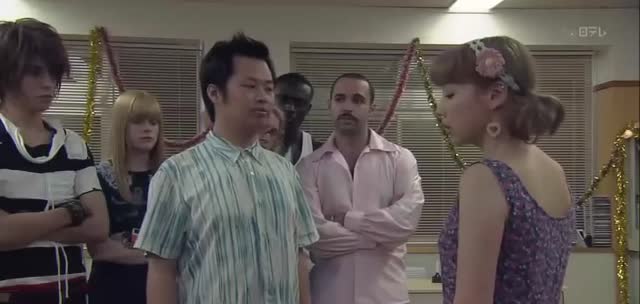
日本人の知らない日本語 Episode 5 One... one is missing! still

Haruko suggests taking a commemorative photo, and once the students line up, they start counting heads.
  1. ハルコ

    All right, everyone. Let's take a commemorative photo!

  2. 生徒たち

    Yay!

  3. 生徒

    One. Two. Three. Four.

  4. 生徒

    Five. Six. Seven. Eight.

  5. 生徒

    Nine...

  6. 生徒

    One is missing!

  7. ハルコ

    Isn't that the story about miscounting plates!?

  8. 生徒たち

    Ha ha ha...!

  9. ハルコ

    No, it's not!

Speaking notes

いちま~い…足りな~い

いちま~い…足りな~い = "One... one is missing!" (Sarayashiki)

「いちま〜い、にま〜い……足りな〜い!」 is the classic line of the Japanese ghost story 「皿屋敷(さらやしき)」: a ghost counts plates every night and, at the ninth, cries out that "one is missing."
The students turn "counting heads for a photo" into "counting plates."
Language-wise: 「〜枚(まい)」 is the counter for thin, flat things (plates, paper, photos).

数え間違う

数え間違う = to miscount

「数え間違える/数え間違う」 = to count wrongly. 「V + 間違う」 = to do ... wrongly:
• 「書き間違う」 = to write wrongly
• 「聞き間違う」 = to mishear
Haruko catches the reference immediately and snaps back. 「〜話ですか!?」 is a retort that pretends to ask a question.

Key vocabulary

皿 さら
Plate.
数える かぞえる
Count.
記念写真 きねんしゃしん
Commemorative photo.
枚 まい
Counter for flat things (sheets, plates).
足りない たりない
Be short of, be lacking.

↑ Scenes on this page

Back to 日本人の知らない日本語 · Back to all scenes