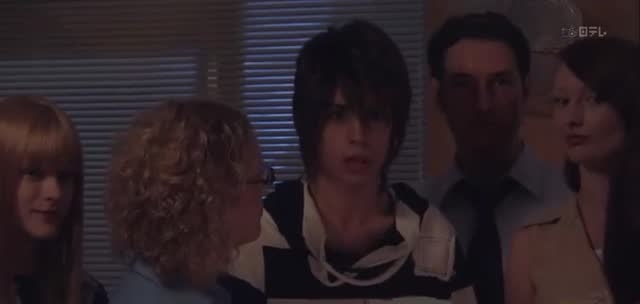
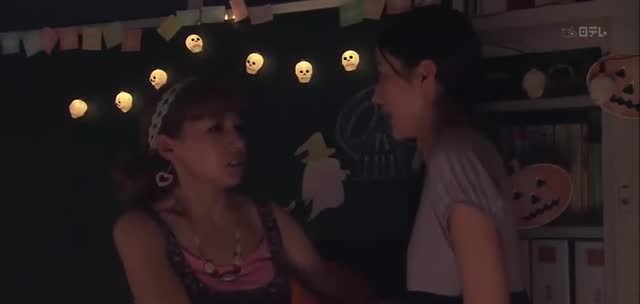
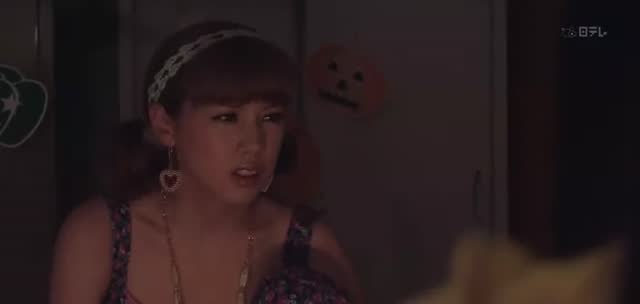
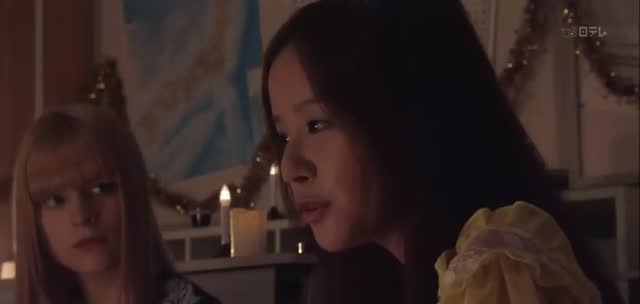
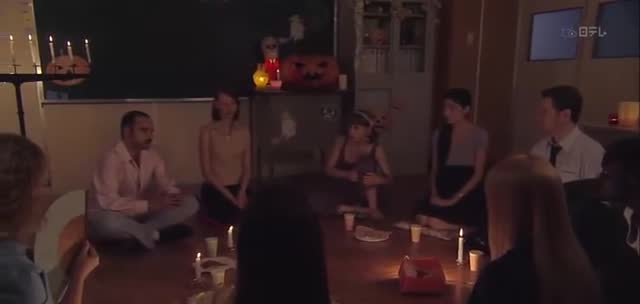
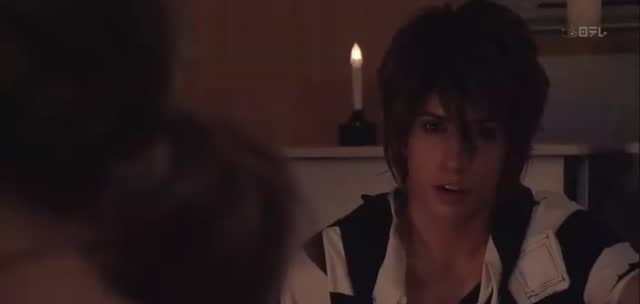
This episode has 57 dialogue scenes: why Japan tells ghost stories in summer, the difference between 「ぞっとする」 and 「ぞっとしない」, the tale of Miminashi Hoichi, 「百物語」, and ghost stories from students of many countries. The focus is on expressions related to fear and being scared.
Language highlights
「ぞっとする/ぞっとしない」(to get chills / not impressive)
「話の腰を折る」(to interrupt someone's story)
「百物語」(the Edo-period game of telling a hundred ghost stories)
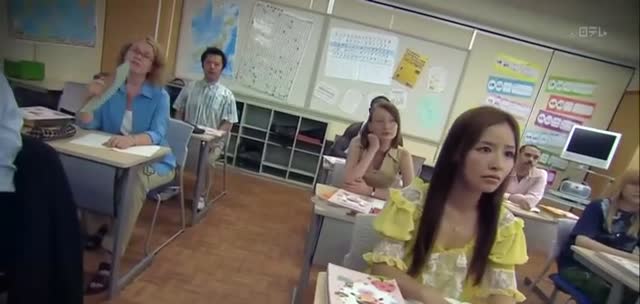
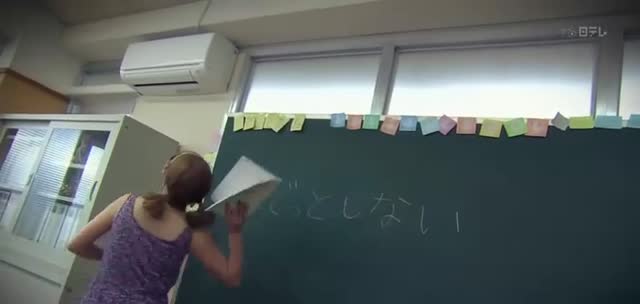
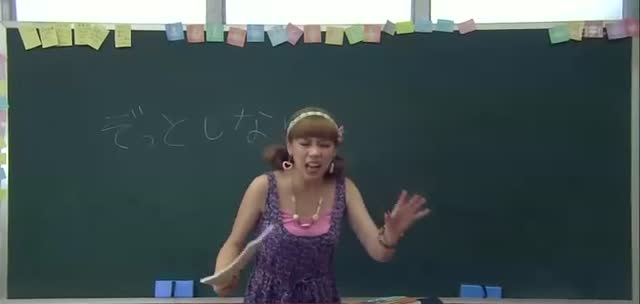
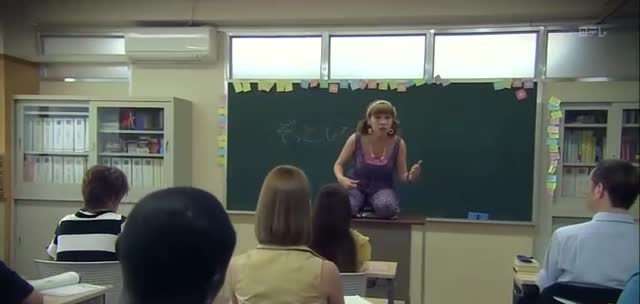
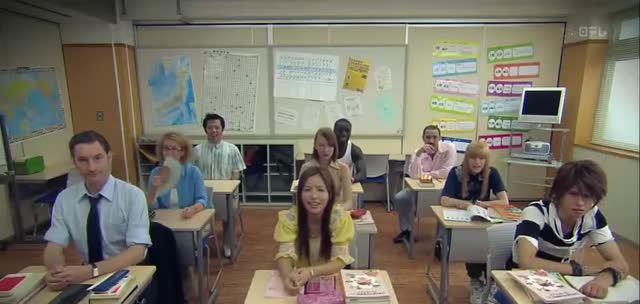
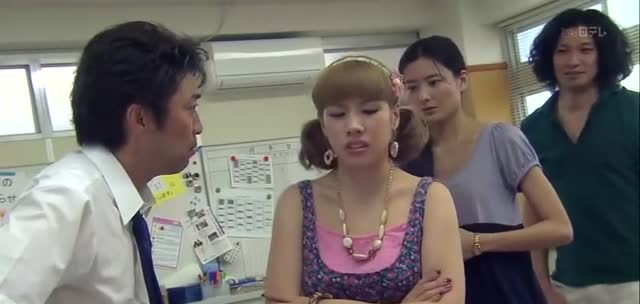
In a sweltering classroom, Haruko is teaching words that express feelings. Jack asks whether, if 「ぞっとする」 means to be scared, 「ぞっとしない」 means not to be scared.
ハルコ
え~ 心理を表す言葉は たくさんありますが→
Um, there are lots of words for expressing feelings, but...
ハルコ
この「ぞっとする」という表現は 恐怖を感じた時に使います。
The expression "ぞっとする" is used when you feel fear.
ジャック
じゃあ「怖くない」時は→
So when you're not scared...
ジャック/ハルコ
「ぞっとしない」と言うのですか? いい質問ね!
Do you say "ぞっとしない"? — Good question!
ハルコ
あんまり使われないけど 「ぞっとする」という表現には→
It's not used very often, but the expression "ぞっとする"...
ハルコ
実は恐怖以外に 「強く感動する」という意味もあるのね。
actually also means "to be strongly moved," apart from fear.
ハルコ
で「ぞっとしない」と 否定する時にだけ→
And only when it's negated, as "ぞっとしない"...
ハルコ
「感心しない」「あまり面白いと 思わない」という意味で使います。
it's used to mean "not impressed" or "don't find it all that interesting."
Speaking notes
ぞっとする/ぞっとしない
ぞっとしない = "not much to it" (ironic usage)
「ぞっとする」 = to shiver or get goosebumps (from fear or disgust). This is its most common meaning. It also has an older usage: 「ぞっとするほど美しい」 = so beautiful it gives you goosebumps (being strongly moved). The negative form 「ぞっとしない」 is used almost only in one sense: not impressive, not appealing: • 「ぞっとしない話だ」 = not a very appealing thing So Jack's reasoning (scared → ぞっとする; not scared → ぞっとしない) is perfectly logical, but it is not how Japanese is actually used. This is a classic example of "semantic asymmetry."
いい質問ね
いい質問ね = (teacher) good question
「いい質問ね!」 = "Good question!" A teacher's stock phrase for praising a student's question; 「ね」 adds a feminine, soft tone of approval. Grammar point: 「〜にだけ」 = only when ... (limiting), used to explain a "special usage."
Jin Li watches a ghost story on TV and asks Haruko why Japanese TV is full of scary stories every summer.
金麗
ハルコ!なんで日本は 夏になると→
Haruko! Why is it that in Japan, when summer comes...
金麗
テレビで 怖い話ばっかりすんのよ?
they do nothing but scary stories on TV?
生徒たち
ああ~。 それは…。
Ah... Well, that's...
ポール
日本のホラーって 本当に怖いんだよね。
Japanese horror really is scary, you know.
ポール/ボブ
ほら サダコとか…。 うおっ!!
See, like Sadako and so on... — Whoa!!
金麗
中国では 怖い話なんて テレビで放送しません!
In China, they'd never broadcast scary stories on TV!
金麗
怖くて うかつに テレビをつけられないよ。
I'm so scared I can't even turn on the TV carelessly.
Speaking notes
怖い話ばっかり
〜ばっかり = nothing but ...
「ばっかり」 = a casual, emphatic form of 「ばかり」: "nothing but, only." • 「怖い話ばっかり」 = nothing but scary stories It often carries a tone of dissatisfaction or complaint. 「すんのよ」 = 「するのよ」 (casual contraction), and the sentence-ending 「のよ」 is a feminine-sounding demand for an explanation.
うかつに〜ない
うかつに〜ない = can't carelessly ...
「うかつに」 = carelessly, rashly (without thinking it through). It is mostly followed by a negative: • 「うかつに手を出せない」 = can't afford to make a careless move When Jin Li says 「うかつにテレビをつけられない」, literally it means "I can't casually turn on the TV," but in effect it is an exaggeration for "I'm too scared to watch." 「テレビをつける」 = to turn on the TV (「つける」 means to make an appliance light up); the opposite is 「消す」.
Cornered by Jin Li, Haruko says that in Japan ghost stories are a seasonal feature of summer because they send a chill down your spine.
ハルコ
しょうがないでしょ。日本じゃ→
It can't be helped. In Japan...
ハルコ
怖い話っつったら 夏の風物詩だからね。
when you say scary stories, it's a feature of summer, after all.
生徒たち/ハルコ
なんでなんで~? いやいや…。
Why, why? — No, no...
ハルコ
そりゃあ こう…→
Well, it's like... you know...
ハルコ
「ぞっと」したら こう…涼しくなるでしょ?
When you get a "ぞっと" feeling, you know... it gets cool, right?
生徒たち
ああ~。
Ahh...
エレーン/ダイアナ
確かに日本の夏って 暑いよね。 とけちゃいそう…。
It's true that summer in Japan is hot. — I feel like I'm going to melt...
Speaking notes
怖い話っつったら
〜っつったら = speaking of ...
「〜っつったら」 = a casual contraction of 「〜と言ったら」: "speaking of ..., when it comes to ...". It is used to bring up the typical thing that comes to mind: • 「夏っつったら海でしょ」 = Speaking of summer, it's the beach, right? Haruko's "reason" is a shared association among Japanese people: summer → ghost stories → feeling cool.
風物詩
風物詩 = a seasonal feature
「風物詩(ふうぶつし)」 = something that best represents a particular season. • 「夏の風物詩」 = a sight of summer (fireworks, cicadas, wind chimes, ghost stories...) 「〜そう」: 「とけちゃいそう」 = looks like / feels like it's about to melt (appearance: on the verge of ...), not hearsay here.
The classroom is stiflingly hot, and the students ask what is wrong with the air conditioner. Haruko says it doesn't seem to be working well today.
マリー
エアコンは どうしたのですか?
What's wrong with the air conditioner?
ハルコ
今日 ちょっと 調子悪いらしくてさぁ。
It seems to be acting up today.
エレーン
暑い…。
It's hot...
ハルコ
この!こいつ!ポンコツ!!
You! You stupid thing! Piece of junk!!
ボブ/ハルコ
じゃあ ハルコ 怖い話 してくれよ。 えっ!?
Then, Haruko, tell us a scary story. — What!?
ボブ/生徒
エアコンの代わりに。 身体が凍りつくようなの お願いします!
Instead of the air conditioner. Please tell us one that'll freeze our bodies!
Speaking notes
調子悪いらしくて
調子が悪い = not working well
「調子が悪い」 = (a machine or body) not in good condition, not working properly. • 「パソコンの調子が悪い」 = my computer isn't working well 「〜らしくて」: 【らしい】 means "it seems" (based on indirect information or signs). Haruko hasn't checked it; she just sees that no air is coming out, so she uses 「らしい」. She curses the air conditioner as 「ポンコツ」 (a worn-out machine, a useless thing).
エアコンの代わりに
〜の代わりに = instead of ...
「AのかわりにB」 = B in place of A. 「エアコンの代わりに怖い話」 = a scary story instead of the air conditioner. • 「身体が凍りつくようなの」 = the kind (of story) that would freeze your body 【そう/よう】 The 「よう」 in 「〜ようなの」 expresses a comparison (like ...), and 「の」 stands for (a story).
The students all egg Haruko on to tell a ghost story, and Haruko protests that it's impossible to ask her so suddenly.
生徒たち/ハルコ
おお いいね~。 やめてよ~。
Oh, great! — Stop it, you guys...
ハルコ
ちょちょちょっと…無理だって! そんな急に言われても…。
W-wait a minute... I can't do it! You can't just ask me so suddenly...
ボブ
早く!早く!
Hurry up! Hurry up!
生徒たち/ハルコ
早く!早く! じゃ じゃあ…。
Hurry up! Hurry up! — Well, w-well then...
生徒たち
フゥー!ヒュー!
Woo-hoo! Whoo!
ハルコ
日本で有名な怖い話→
A famous scary story in Japan...
ハルコ
「耳なし芳一」を…。
"Miminashi Hoichi"...
Speaking notes
無理だって
無理だって = I said I can't!
「無理だって!」 = I'm telling you, I can't do it! The sentence-final 「って」 shows repeated emphasis. 「そんな急に言われても…」 is 「〜ても」 (even if) with the rest left unsaid: "Even if you ask me so suddenly... (I can't do anything about it)." In Japanese, sentences that trail off midway often convey reluctance better than saying it all outright.
耳なし芳一
耳なし芳一 = Miminashi Hoichi, a famous ghost story
「耳なし芳一」 is a famous Japanese folk ghost story: the blind biwa player Hoichi is summoned by spirits to perform the Heike Monogatari; the temple priest writes sutras all over his body to protect him but forgets his ears, so the ghosts tear them off. Lafcadio Hearn (Koizumi Yakumo) included it in his Kwaidan, which made it widely known. • 「〜なし」 = without ... (「耳なし」 = without ears)
Haruko clears her throat and begins "Miminashi Hoichi" in a storyteller's voice: long ago, a biwa player named Hoichi lived in a temple. Takasu happens to pass by and watches from outside the door.
ハルコ
昔々 ある寺に→
Once upon a time, in a certain temple...
ハルコ
芳一という名の 琵琶弾きがおったそうじゃ…。
there lived a biwa player named Hoichi, they say...
鷹栖
何やってんだ?あいつ。
What is she doing? That woman.
ハルコ
そして その夜 芳一が待っていると→
And so, that night, as Hoichi waited...
ハルコ
どこからともなく 足音が…。
from out of nowhere, footsteps...
ハルコ
ガシャーン!ガシャーン!!
Clank! Clank!!
ルカ
ガンダムですか? そんなの来ません!
Is it a Gundam? — That doesn't come here!
ハルコ
武士の幽霊よ。
It's the ghost of a samurai.
Speaking notes
昔々ある〜に
昔々ある〜に = "Once upon a time, in a certain ..." (folktale opening)
「昔々、ある〜に…」 is the standard opening of Japanese folktales. Features: • 「〜そうじゃ」: an old storyteller's sentence ending (「そうだ」 → 「そうじゃ」, "they say that ...") • 「おった」 = 「いた」 (old-fashioned/dialect; 「おる」 = 「いる」)
どこからともなく
どこからともなく = from out of nowhere
「どこからともなく」 = from somewhere, no one knows where (a sound or presence comes). It is a standard phrase in ghost stories: • 「どこからともなく声が聞こえる」 = a voice can be heard from somewhere It is often paired with 「いつの間にか」. Note that 「ガシャーン」 is the clanking of armor (an onomatopoeia).
Haruko reaches the part where the ghosts come looking for Hoichi and see only his ears, which had no sutras written on them, in the darkness.
ハルコ
そして…やって来た幽霊達が 芳一を探すと→
And then... when the ghosts who had come looked for Hoichi...
ハルコ
暗闇に お経が書かれていない 耳だけが→
in the darkness, only the ears, with no sutras written on them...
ハルコ
ぷか~り ぷか~りと… 浮いているではありませんか!
were floating, drifting, drifting... what do you know!
ルカ
耳だけが浮いてますか?
Only the ears are floating?
生徒
なんか かわいい~!
Somehow, that's cute!
ハルコ
え?そうかな…?
Huh? Is it...?
ボブ
ハルコ 続きは?
Haruko, what's next?
Speaking notes
〜ではありませんか
〜ではありませんか = (exclamation) ... would you believe it!
「浮いているではありませんか!」 = and what do you know, they were floating there! 「〜ではないか/ではありませんか」 is used for surprise or discovery (it is not a real question): • 「見ると、そこに犬がいるではありませんか」 = when I looked, there was a dog there, of all things This is a very typical "moment of suspense" pattern in folktales and narration.
ぷか~り
ぷか~り = floating lightly
「ぷかり/ぷかぷか」 = floating lightly on water or in the air. A mimetic word. Haruko meant to create horror, but the mimetic word 「ぷか~り、ぷか~り」 is so cute that the students immediately cry 「なんか かわいい~!」. This is the "power" of Japanese onomatopoeia and mimetic words: with the same image, changing one word switches it from scary to cute.
Reaching the climax of the story, Haruko mimes the ghosts grabbing the floating ears.
ハルコ
幽霊達は…→
The ghosts...
ハルコ
その浮かんでる耳をつかむと→
grabbed the floating ears
ハルコ
思いきり…うりゃあぁ~っ!!
and with all their might... yaaah!!
ジャック/ハルコ
少し質問が。 えっ ここで!?
I have a small question. — What, now!?
ジャック
そこで耳を引きちぎられたのだ とすると この話のタイトルは→
If the ears were torn off right there, then the title of this story...
ジャック/ハルコ
「耳なし芳一」では おかしいのでは? どういう意味?
"Miminashi Hoichi" is a bit odd, isn't it? — What do you mean?
Speaking notes
思いきり
思いきり = with all one's might
「思いきり」 = with all one's strength, without holding back. It can also be written 「思いっきり」. • 「思いきり泣く」 = to cry one's heart out To add atmosphere, Haruko imitates the ghosts and gives a hard yank, but her shout 「うりゃあぁ~っ!!」 (a cry when exerting force) just ends up sounding comical.
〜とすると
〜とすると = if it's the case that ...
「AだとするとB」 = if A is the case, then B. Jack interrupts the story in the tone of "logical deduction": 「そこで耳を引きちぎられたのだとすると」. 「〜のだ」 is an explanation/assertion, and 「〜とすると」 is a hypothetical inference. He uses a written-style, academic register, in sharp contrast to Haruko's "everyday storytelling".
The students get picky. Jack says that having no ears is a result, so a better title might be "Hoichi Who Had Ears."
ジャック
「耳なし」になったのは 結果なので→
Since becoming "earless" is the result...
ジャック
「耳あった芳一」の方が ふさわしいのでは?
wouldn't "Hoichi Who Had Ears" be more fitting?
ハルコ
いや…それだと語呂が よろしくないでしょう?
No... in that case, the ring of it isn't very good, is it?
ジャック
耳にお経を 書き忘れたのが原因だから→
Since the cause was forgetting to write the sutras on his ears...
ジャック
「書き忘れ芳一」ではないですか?
wouldn't "Hoichi Who Forgot to Write" be better?
ハルコ
それは ただの うっかりした人じゃん。
That's just a careless person, isn't it?
ハルコ
じゃあ…。
Well then...
Speaking notes
語呂
語呂 = the sound or rhythm of a phrase
「語呂(ごろ)」 = the rhythm of a phrase, how smoothly it rolls off the tongue. • 「語呂がいい/悪い」 = it sounds good / doesn't flow well • 「語呂合わせ」 = wordplay based on sound, such as memorizing numbers by turning them into words Haruko rejects 「耳あった芳一」 by saying 「語呂がよろしくない」 (「よろしい」 = a formal form of 「いい」). Interestingly, she uses a formal expression on a very casual topic, a half-joking "put-on" of stiffness.
〜のでは?/〜ではないですか
〜のでは?/〜ではないですか = isn't it ...? (negative question)
「おかしいのでは?」「ふさわしいのでは?」「書き忘れ芳一ではないですか?」 Jack uses three negative questions in a row, closing in step by step on a "better title." In Japanese, a negative question is a polite yet firm way of raising an objection: instead of saying "you're wrong," you say "wouldn't this be better?"
Haruko's ghost story is derailed by the students' discussion, and they press her: and then? what happens next?
ハルコ/生徒
完全に別人になっちゃった。 ハルコ それで?
He's become a completely different person. — Haruko, so then?
ハルコ/生徒
え? 続き!続き!
Huh? — The rest! The rest!
ハルコ
いや…これで終わりだけど。
No... that's the end, actually.
生徒たち/ボブ
ええ~!! 終わり!?ありえねえ!
Whaat!? — It's over!? No way!
ジャック
ハルコの話 全然怖くない。
Haruko's story isn't scary at all.
ハルコ
だってさぁ!あんなに 話の腰 折られたら 無理よ。
Well, but! If you cut me off like that, there's no way I can go on.
ジャック
二重の意味で ぞっとしないですね。
In two senses, it really is "ぞっとしない," isn't it?
Speaking notes
話の腰を折る
話の腰を折る = interrupt someone's story
「話の腰(こし)を折る」 = to interrupt midway so that the speaker can't continue. Literally, "to break the back of the story." • 「話の腰を折らないで」 = don't interrupt me Haruko's complaint is an excuse for the whole story's failure: it's not that I told it badly, it's that you interrupted me. This phrase is also a perfect example of the passive: 「折られたら」 = if it's broken (by someone), shifting the blame onto others.
二重の意味でぞっとしない
二重の意味でぞっとしない = pun on two senses of ぞっとしない
With this line, Jack turns 「ぞっとしない」 into a pun: ① not scary (literally: no goosebumps) ② not impressive, not interesting (the idiomatic meaning of 「ぞっとしない」: not appealing) = Haruko's story was neither frightening nor good.
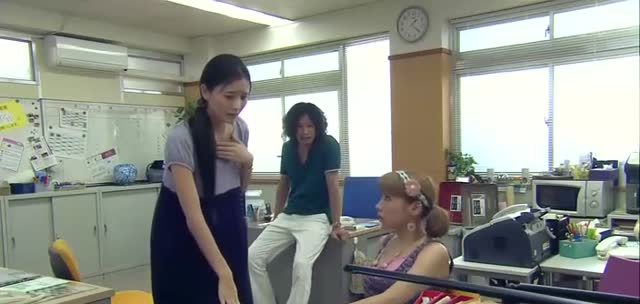
After class, Haruko notices Wang slumped over his desk and asks if he's all right. Meanwhile, Shibuya and Katori are talking in a low voice about something else in the staff room.
ハルコ
王…大丈夫?
Wang... are you okay?
ハルコ
元気ないじゃん。
You seem down.
王
いえ 大丈夫です…。
No, I'm fine...
渋谷/鹿取
ありえないよ そんな話。 いや…私 見たんです。
That can't be true, a story like that. — No... I saw it.
渋谷/鹿取
どうしたの? ハハハ…いや あのね→
What's wrong? — Ha ha ha... no, you see...
Speaking notes
元気ないじゃん
〜じゃん = ..., isn't it?
「元気ないじゃん」 = You don't look energetic, you know.「〜じゃん」 points out the obvious state the other person is in. Note that the particle 「が」 is dropped (元気がない): in casual speech, the subject particle is often omitted.
見たんです
〜んです = (explanatory) I did see it
「見たんです、私!」 = I saw it! (I really did!) Here 「〜んです」 stresses that it is a fact, in order to convince a doubtful listener. Shibuya's 「ありえないよ、そんな話」 is a typical flat denial; Katori insists using the polite form + 「んです」, putting "my own firsthand experience" on the table.
Katori earnestly tells of a strange incident: tears were running from the eyes of a man on an Indian calendar in the corridor.
渋谷/鹿取
昨日 カトリーヌ先生が→
Yesterday, Ms. Catherine...
渋谷
最後まで残って 仕事してたんだって。そしたら…。
apparently stayed until the very end, working. And then...
鹿取
見たんです 私! 廊下に貼ってあったカレンダー。
I saw it! The calendar hung up in the corridor.
渋谷
ああ あのインド人の生徒が 持ってきたカレンダー?
Oh, the calendar that the Indian student brought in?
鹿取
ええ。あのカレンダーの 男の人の目から…。
Yes. From the eyes of the man on that calendar...
鷹栖
ハハハハハッ!
Ha ha ha ha ha!
鷹栖
全然 感じない!あのポスター。 霊的なもの感じない。
I don't feel a thing! That poster. I don't sense anything supernatural.
Speaking notes
〜んだって
〜んだって = I hear that ...
「仕事してたんだって」 = I hear she was working.「〜んだって」 is the casual form for hearsay (equivalent to 「〜そうだ」 or 「〜らしい」): • 「彼、来ないんだって」 = I hear he's not coming Shibuya uses it to relay "what Katori experienced last night." 【そう/よう/みたい/らしい】 「んだって」 is more casual and friendly, used for passing on what a friend said.
霊的なもの
〜的なもの = something of a ... nature
「霊的なもの」 = something supernatural. 「〜的」 attaches to a noun and turns it into a na-adjective: • 「科学的」 = scientific • 「霊的」 = spiritual, supernatural Takasu uses the formal word 「霊的なもの」 to dismiss the idea of a crying calendar. His attitude is that of a "man of science": no sense of it, no supernatural.
Katori insists there were traces of tears on the calendar. Shibuya proposes patrolling the school at night, and Takasu decides they will take turns, starting with Haruko.
鹿取
いや…でも さっき見たら→
No... but when I looked just now...
鹿取
実際に涙が流れた跡が あったから。
there really were marks where tears had run down.
渋谷
やっぱり…夜 見回った方が いいと思うんだよね 学校。
As I thought... I think we should make rounds at night, at school.
鷹栖/渋谷
ハァ? ああ ここってさぁ→
Huh? — Ah, you see, this place...
渋谷
ビルの鍵の番号 知ってたら 実は 誰だって入ってこれちゃうんだよ。
if you know the building's key code, actually anyone can get in.
渋谷
何かあってからじゃ 遅いと思うんだよ。
I think it'll be too late once something has happened.
鷹栖
今日から持ち回りで 見回る事に しよう。まずは お前からな。
Starting today, let's take turns doing the rounds. You first.
Speaking notes
何かあってからじゃ遅い
何かあってからじゃ遅い = it's too late once something happens
「何かあってからじゃ遅い」 = it will be too late once something has happened.「〜てからでは遅い」 is a set phrase for taking precautions in advance: • 「病気になってからでは遅い」 = it's too late once you've fallen ill Shibuya uses it as a proper justification for the "night patrol."
持ち回り
持ち回り = taking turns
「持ち回り(もちまわり)」 = (duties, responsibilities) taken in turns. • 「当番を持ち回りにする」 = to rotate the duty 「〜ことにしよう」 = let's decide to ...; Takasu uses it to announce a decision, leaving no room for discussion. 「まずはお前から」 = "You go first,"presenting the workplace rule that "the newcomer goes first" as perfectly natural.
Haruko protests at being assigned the night patrol, but Takasu shuts her up by invoking seniority, while Katori asks why.
ハルコ
あたし?なんでよ!?
Me? Why!?
鹿取
どうしてですか? 鷹栖先生。
Why, Mr. Takasu?
ハルコ
ハァ… どうしてですか? 鷹栖先生。
Sigh... "Why, Mr. Takasu?"
鷹栖
てめえ ここじゃ一番の 後輩なんだから当たり前だろがよ。
You're the most junior one here, so it's only natural, isn't it?
ハルコ
だって…インドの何かほら…。
But... that thing from India, you know...
鷹栖
まさか お前…幽霊が怖くて 嫌だとか言ってんじゃねぇの?
Don't tell me... you're scared of ghosts and saying you don't want to?
鷹栖/ハルコ
フフフフ…。 違うわよ!
Hee hee hee... — That's not it!
Speaking notes
後輩なんだから当たり前
後輩なんだから当たり前 = of course, you're the junior
「後輩なんだから当たり前だろ」 = Because you're the junior, it's only natural.「〜んだから」 treats "seniority" as a reason that can't be argued with. The Japanese workplace's 「先輩/後輩」 culture: newcomers do the chores, take the night shifts, and make the tea. Takasu uses rough words like 「てめえ」 and 「だろがよ」 (「だろうが」 + 「よ」), in a forceful tone, but what he is stating is "the rule."
言ってんじゃねぇの
言ってんじゃねぇの = are you saying ..., by any chance?
「嫌だとか言ってんじゃねぇの?」 = You're not saying you don't want to go, are you?「〜んじゃないの?」 is a masculine, casual probe, often with teasing: • 「怖いんじゃないの?」 = aren't you scared? 「〜とか」 means "or something like that," making the tone more casual.
Shibuya and Katori both vie to accompany Haruko on her night patrol: Shibuya says he'll rush over if anything happens, and Katori says she'll come too.
渋谷
大丈夫!何かあったら 俺が すぐ駆けつけるよ。
It's okay! If anything happens, I'll rush right over.
鹿取
あっ じゃあ 私も!
Oh, then me too!
渋谷
いや あの…心配なんで。
No, well... because I'm worried.
ハルコ
あ ありがとう…。
Th-thank you...
ハルコ
確かに…雰囲気は不気味ね。
It's true... the atmosphere is eerie.
鹿取
ですよね…。
It is, isn't it...
Speaking notes
駆けつける
駆けつける = rush to the scene
「駆けつける」 = to rush over immediately (on hearing the news). • 「現場に駆けつける」 = to rush to the scene When Shibuya says 「何かあったら俺がすぐ駆けつけるよ」, it is a "manly promise": 「俺」 and 「すぐ」 give a decisive tone.
心配なんで
心配なんで = because I'm worried
「心配なんで」 = because I'm worried. 「なんで」 here is a casual contraction of 「なので」 (not the 「なんで」 meaning "why"): • 「用事なんで先に帰ります」 = I have something to do, so I'm heading home first
Late at night, the three walk around the school with flashlights. Katori suddenly stops Haruko and says a light is on in the classroom at the end of the corridor.
鹿取/ハルコ
あっ!ちょっと待って下さい! な 何!?
Ah! Please wait a moment! — W-what!?
鹿取/ハルコ
あの教室 明かりがついてます。 あれ?全部 消したよね?
That classroom, the light is on. — Huh? We turned them all off, didn't we?
鹿取
ええ…でも あの明かり 蛍光灯の明かりじゃないような…。
Yes... but that light doesn't seem like fluorescent light...
ハルコ/鹿取
もしかして…ひとだま!?
Could it be... a will-o'-the-wisp!?
ハルコ
そ…まさか!そんなはずないでしょ?
N-no way! There's no way, right?
Speaking notes
明かりがついてます
明かりがついてます = the light is on
「明かりがついている」 = the light is on; 「消した」 = (I) turned it off. Note the transitive/intransitive pairs: • つける (transitive): to turn on → つく (intransitive): to be on • 消す (transitive): to turn off → 消える (intransitive): to go out Katori uses the intransitive 「ついている」 to describe a "state": "the light is on." Nobody turned it on; it came on by itself, which makes it scarier. 「あれ?全部消したよね?」 is a confirming 「〜よね」: we did turn them off, right?
そんなはずない
そんなはずない = that can't be
「そんなはずないでしょ?」 = It can't be like that, right? 「〜はず」 = it should be so, by reason; 「〜はずがない」 = it's impossible by reason. • 「そんなはずはない」 = that can't possibly be 【そう/よう/みたい/らしい】 Katori's 「蛍光灯の明かりじゃないような」 uses 「ような」 to mean "it doesn't seem like," an uncertain judgment based on her own observation.
The three timidly open the door, and the students inside jump up screaming too. When they see it's Haruko, the students say it's just Haruko.
ハルコ
あれ?みんな…。
Huh? Everyone...
生徒
なんだ~ハルコかよ。
Oh, it's just Haruko.
ハルコ
も~ビックリした!
Geez, you scared me!
生徒/ハルコ
え?もう こっちのセリフよ!
Huh? That's our line!
ハルコ
あんた達 何やってんのよ!?
What on earth are you guys doing!?
ハルコ
暑いので みんなで怖い話をすれば→
It's hot, so we thought if we all told scary stories together...
ジャック
ぞっとして 涼しくなるかと思いまして。
we'd get chills and cool down.
ハルコ
ってかさ… 何なの?このロウソクは!
I mean... what's with these candles!
Speaking notes
こっちのセリフ
こっちのセリフ = that's my line
「こっちのセリフだ」 = That's my line (the other person said what I was about to say). • 「それはこっちのセリフだ!」 = I should be the one saying that! Haruko, scared in return by her students, instinctively throws the blame for "you scared me" back at them. Note that 「セリフ」 originally means "a line in a script": "that line is mine,"using a theater metaphor to talk about "the right to speak."
〜かと思いまして
〜かと思いまして = I thought perhaps ... (polite)
「涼しくなるかと思いまして」 = I thought it might get cooler.「〜と思いまして」 is a formal abbreviation of 「〜と思いましたので」, used for explaining one's reasons to someone. Jack answers the teacher's challenge in very polite keigo.
The students say they are playing "Hyakumonogatari": light a hundred candles, tell a hundred ghost stories, and blow out one candle after each story. They learned it from a Shigeru Mizuki manga.
ジャック/ハルコ
ヒャクモノガタリです。 ひゃ 百物語?
It's "Hyakumonogatari." — H-Hyakumonogatari?
ルカ
ミズキ・シゲルの マンガでありました。
It was in a Shigeru Mizuki manga.
ジャック
怖い話をしたら 1本ずつロウソクを消していく。
Each time you tell a scary story, you blow out one candle.
生徒
そしたら 本当に オバケが出るって!
And then, they say a ghost really appears!
ハルコ
ってか この部屋 よく見たら…→
I mean... now that I look at this room...
ハルコ
ハロウィンみたいに なってんじゃん!
it's turned into something like Halloween!
ボブ
ハルコも食うか?チキン。
Want some too, Haruko? Chicken.
ハルコ
いいわよ!あ~あ…。
No thanks! Oh, for crying out loud...
Speaking notes
百物語
百物語 = Hyakumonogatari, the "hundred stories" game
「百物語」 was a summer-night game popular in the Edo period: people light a hundred candles (or wicks), and after each ghost story they blow one out. The students "learned" it from manga, so they say 「マンガでありました」 (「〜であります」, military-style speech).
ハロウィンみたいに
ハロウィンみたいに = just like Halloween
【そう/よう/みたい/らしい】 「ハロウィンみたいになってんじゃん」 = It's turned into something like Halloween!「みたい」 expresses a comparison (like ...), the most common casual comparison form: • 「夢みたい」 = like a dream Haruko is grumbling: with the candles, chicken, and jack-o'-lantern-like mood, this isn't Japanese "百物語" at all, it's more like Halloween.
Key vocabulary
百物語 ひゃくものがたり
Hyakumonogatari (a game of telling a hundred ghost stories).
Haruko is bored and wants to go home, but the students and Katori stop her and ask her to stay a little longer.
ハルコ
もうバカバカしくなってきた。 もう帰ろ…。
This is getting ridiculous. I'm going home...
鹿取/ルカ
いや あの… ちょ ちょっと待って下さい!
No, um... please wait a moment!
ハルコ/ルカ
え? もう少し ここにいて下さい。
Huh? — Please stay here a little longer.
ルカ/ハルコ
もしかしたら 来るかもしれませんから。 誰がよ?
Because it might come, you see. — Who might?
鹿取
いや あの その…→
No, um, well...
鹿取
私が見た幽霊…が。
The ghost... I saw.
ハルコ
見間違いだってば! 来るわけないでしょ!
I told you, you just misread it! There's no way it would come!
Speaking notes
バカバカしくなってきた
バカバカしくなってきた = it's started to seem silly
「バカバカしくなってきた」 = (gradually) it's starting to seem utterly silly.「〜くなってくる」 expresses a gradual change that has reached the present: • 「暑くなってきた」 = it's getting hot 「帰ろ…」 = 「帰ろう」 shortened, an announcement made half to herself.
来るわけない
来るわけない = there's no way ... will come
「来るわけないでしょ!」 = There's no way it would come!「〜わけない」expresses strong impossibility.
Watching Haruko's reaction, the students ask whether she's bad at listening to ghost stories.
生徒
さては ハルコ。
I knew it, Haruko.
生徒
怖い話を聞くのは 苦手なんじゃないの?
Aren't you bad with scary stories?
ハルコ
ち…違うわよ!
N-no I'm not!
生徒
だから 話すのも下手なんだ。 かわいい!
That's why you're bad at telling them too. Cute!
ハルコ
下手で悪かったわね! そんな言うんだったら→
Sorry for being a bad storyteller! If that's how you're going to be...
ハルコ
あんた達の話 聞かせてみなさいよ。
then let me hear your stories!
Speaking notes
さては
さては = so that's it! (sudden realization)
「さては〜」 = So it was ... after all! (deduction). Mostly used when exposing someone's secret, with a playful "detective tone": • 「さては、お前の仕業だな」 = So it was you who did it!
苦手/下手
苦手/下手 = bad at (dislike) / unskilled
「苦手(にがて)」 = not good at, can't deal with (even a bit afraid of); 「下手(へた)」 = poor skill. The difference: • 苦手: psychological resistance to something (ghosts, bugs) • 下手: lack of ability (telling a story badly) 「聞かせてみなさいよ」 = the causative 「聞かせる」 (tell me, let me hear) + 「みなさい」 (command), a challenge: "Go ahead and tell, let me hear it."
Haruko sulkily has the students take turns telling ghost stories, and Bob goes first.
ジャック
よ~し!次は誰かな?
All right! Who's next?
ボブ
俺だけど。大丈夫~?
It's me. Are you sure you'll be okay?
ボブ
この話 マジで怖いぞ~。
This story is seriously scary.
ハルコ
大丈夫よ! 怖がらせてもらおうじゃないの。
I'll be fine! Go ahead and scare me, then.
ボブ
ケニアの友達の 話なんだけどさ…→
It's a story from a friend in Kenya...
ボブ
とにかく夜は 真っ暗なんだって。→
Anyway, apparently it's pitch dark at night.
ボブ
そして 家で寝てたら→
And when you're sleeping at home...
ボブ
どこからともなく→
from out of nowhere...
Speaking notes
怖がらせてもらおうじゃないの
怖がらせてもらおうじゃないの = Go ahead and scare me!
「怖がらせてもらおうじゃないの」 = Then let's have you scare me. How it's built: 怖がる (to be afraid) → 怖がらせる (causative: to frighten) → 怖がらせてもらう (to have you frighten me) → 〜ようじゃないの (let's go). 【Giving and receiving verbs】 Here 「〜てもらう」 means "I ask you to do it for me": Haruko is asking to be scared. 「〜ようじゃないの」 has a challenging tone: "Let me see what you've got." This one sentence combines three grammar points: causative, giving/receiving, and challenge.
真っ暗
真っ暗 = pitch dark
「真っ暗(まっくら)」 = completely dark. 「真っ」 attaches to color or state adjectives to mean "completely, purely": • 真っ白 / 真っ赤 / 真っ青 • 真っ暗 / 真っ先 「とにかく〜んだって」 is hearsay (a friend told him).
Bob tells a ghost story from Kenya: in the middle of the night, a "woooo" sound can be heard. Jack asks what on earth makes the sound.
ボブ
ウオォォ…ウオォォ… って声がするんだよ。
You hear a sound like "Wooo... wooo..."
ジャック
いったい 何のですか?
The sound of what, exactly?
ボブ/ハルコ
ライオンの。 は?
A lion's. — Huh?
ボブ
朝起きて 外に出たら→
In the morning, when you get up and go outside...
ボブ
あちこちにライオンの足跡が いっぱいなんだよ!
there are lion footprints all over the place!
一同
うわあぁ…!!
Waaah...!!
生徒
やだ~!こわい~!!
No way! That's scary!!
Speaking notes
何のですか
何のですか = the sound of what?
「何のですか?」 = Of what? (the sound of what?) The modified noun 「声」 is omitted: 「何の(声)ですか」. Jack presses for details in the most concise polite form, and Bob answers 「ライオンの」 in the same concise pattern.
〜っていいですか
足跡がいっぱい = lots of footprints (quantity and state)
「足跡がいっぱいなんだよ!」 = There are footprints all over! Here 「いっぱい」 means "a great many", and the sentence-ending 「なんだよ」 is an explanatory tone plus emphasis.
After Bob's story, the next student tells a story about crows. Haruko thinks it's a fear of nature.
ハルコ
いやいやいや…確かにね 怖いっちゃ怖いんだけど→
No, no, no... it's scary, I'll give you that, but...
ハルコ
自然に対する…それは 恐怖じゃない?
that's a fear of nature, isn't it?
生徒/ハルコ
カラスも怖いよ! カラス?
Crows are scary too! — Crows?
生徒
カラスは不吉な鳥。
Crows are birds of ill omen.
生徒
私の友達がいる村では→
In the village where my friend lives...
生徒
見ただけで死ぬと言われてる。
they say you die just from seeing one.
Speaking notes
怖いっちゃ怖い
怖いっちゃ怖い = scary, I'll admit
「怖いっちゃ怖い」 = It is scary, I'll give you that (but ...).「AっちゃA」 is the casual form of 「Aといえば A」: acknowledging something while leaving room for a "but": • 「高いっちゃ高いけど」 = It is expensive, I'll admit, but... Haruko first concedes that Bob's story "is indeed scary," then points out that "that's fear of nature, not a ghost story." This is a typical Japanese "concessive rebuttal."
不吉な鳥
不吉な鳥 = bird of ill omen
「不吉(ふきつ)」 = ominous, a bad omen. • 「不吉な予感」 = an ominous feeling 「〜と言われてる」 = it is said that ...; the passive expresses "so people say."
A student says that in a certain village people have died just from seeing a crow. Haruko says that can't be, but the students insist it's true.
ジャック/ハルコ
見ただけで? なんて恐ろしい…。
Just from seeing it? How terrible...
ハルコ/生徒
いや そこまでないでしょう。 ホントだよ!
No, it can't be that bad. — It's true!
生徒
その村では本当に 見た人が 死んだこともあるんだから!
In that village, there really have been people who saw one and died!
ハルコ/生徒
どんな人が? 100歳の おじいさんが!
What kind of person? — A hundred-year-old grandfather!
Speaking notes
そこまでない
そこまでない = not to that extent
「そこまでないでしょう」 = It's not that far, is it? 「そこまで」 = to that extent; followed by a negative, it means "it's not that serious": • 「そこまで言わなくても」 = you don't have to go that far Haruko gently denies "you die if you see one" with a degree adverb.
なんて恐ろしい
なんて恐ろしい = how terrifying
「なんて恐ろしい…」 = How terrifying... 「なんて」 before an adjective expresses strong exclamation: • 「なんて美しい」 = how beautiful
The student reveals the "ending" of the story: the hundred-year-old man died on seeing a crow. The students all pile on with retorts, and Haruko says that's just his lifespan.
生徒たち/ボブ
えええええ!? 何だよ それ!?
Whaaat!? — What's that supposed to be!?
ハルコ
それは寿命でしょ?
That's just his lifespan, isn't it?
生徒
でも…まあ 食べると美味しいんだけど。
But... well, they taste good when you eat them.
ジャック/ハルコ
食べる!? さらっと言いましたね。
You eat them!? — You said that so casually.
ボブ
そっちの方が 怖え~よ!
That's scarier than anything!
Speaking notes
寿命でしょ
寿命でしょ = that's just his lifespan
「寿命(じゅみょう)」 = the length of a life; the service life of a thing. • 「平均寿命」 = average life expectancy • 「電池の寿命」 = battery life With one line, 「それは寿命でしょ?」, Haruko reduces the entire "ghost story" to "a normal death."
さらっと言う
さらっと言う = say casually, matter-of-factly
「さらっと言う」 = to say (something that should be a big deal) lightly. A form of the mimetic word 「さらり」 with the small 「っ」 for emphasis: • 「さらっと流す」 = to gloss over lightly Jack points out the other student's casualness with the polite form + 「ましたね」. Bob's 「怖え~よ」 is the rough form of 「怖いよ」: 「〜え」 is an Edo-style variant of the adjective ending 「〜い」 (うるせえ, すげえ).
When the next student's turn comes, he says he once worked at a "company with a ghost."
生徒
じゃあ次 俺の番ね。
Okay, next is my turn.
生徒
俺…昔「幽霊のいる会社」で 働いたことがあって。
I once worked at a "company with a ghost."
ハルコ
「幽霊のいる会社」?
A "company with a ghost"?
生徒
うん…。その会社には 誰もいなくて→
Yeah... There was nobody at that company...
生徒
狭い部屋の中に電話1つ。
just one telephone in a small room.
生徒
たとえ その電話が鳴っても→
Even if that phone rang...
生徒
「誰も電話には出るな!」と 社長に言われたんだよ。
the president told us, "Nobody answer the phone!"
Speaking notes
働いたことがある
働いたことがある = I have worked
「働いたことがある」 = I have worked (there) before.「Vたことがある」 expresses "past experience": • 「日本へ行ったことがある」 = I have been to Japan • 「〜たことがない」 = have never ... This student builds suspense with 「昔」 and 「幽霊のいる会社」.
電話には出るな
電話には出るな = don't answer the phone
「電話に出る」 = to answer the phone. 「〜に出る」 expresses "to answer, to attend": • 「電話に出る」 = to answer the phone • 「会議に出る」 = to attend a meeting 「出るな!」 is a prohibition form. The president's order goes against the common sense that "you answer the phone," which is the "anomaly" of this ghost story.
The student continues the story of the "ghost company": one day, at the president's home... Haruko finds the situation eerie.
ハルコ
な なんか… シチュエーションは不気味ね。
S-somehow... the situation is creepy.
生徒
で ある日 その会社の 社長の家に…。
And then one day, at the company president's house...
ハルコ/生徒
何があったの? 査察が入ったっていう…。
What happened? — A tax raid came, they say...
ハルコ
それって もしかして…。
Could that be...
ジャック
いわゆる「幽霊会社」ですね。
That's what's called a "ghost company," isn't it?
生徒
結局 一家は バラバラになってしまったんだ。
In the end, the family fell apart.
生徒
追徴課税のせいで!
Because of back taxes!
ボブ
追徴課税 怖えぇ!
Back taxes are scary!
Speaking notes
幽霊会社
幽霊会社 = shell company (paper company)
「幽霊会社」 = a "shell company" that exists only on paper, with no real business or employees. Often used for tax evasion or money laundering. Literally it means "ghost company," so "a company with a ghost" is actually a pun: an empty shell, one telephone, and nobody may answer it. These are typical features of a shell company.
査察/追徴課税
査察/追徴課税 = tax terms: tax investigation; back taxes
「査察(ささつ)」 = a compulsory inspection (by tax authorities); 「追徴課税(ついちょうかぜい)」 = additional tax charged after the fact. • 「査察が入る」 = to be raided by tax inspectors
Haruko can't help interrupting and says the ghost stories the students are telling are a bit off.
ハルコ
あの…みんな ちょっといいかな?
Um... everyone, can I say something?
ハルコ
みんなの怖い話って ちょっと こう ずれてるっていうか…。
Your scary stories are, how should I put it, a bit off...
ジャック
ハルコの話よりは よほど怖いです。
They're a lot scarier than Haruko's story.
ハルコ
そうかもしんないけどさぁ…。
Maybe so, but...
ルカ
あの…何か聞こえません?
Um... don't you hear something?
Speaking notes
ずれてるっていうか
ずれてるっていうか = how should I put it, they're off
「ずれてる」 = off (in direction or focus). • 「ピントがずれる」 = to be out of focus • 「感覚がずれている」 = to have a skewed sense of things What Haruko wants to say is "what you're telling isn't ghost stories, it's real-world horror and news stories," but she can't say it outright, so she uses 「〜っていうか…」 (Japanese-style trailing off).
よほど
よほど = far more, considerably
「よほど」 = considerably, far more. • 「よほど怖い」 = far scarier Jack uses the polite form plus a comparison to reach an "irrefutable conclusion": 「ハルコの話よりはよほど怖いです」. The pattern 「〜よりは」 carries the contrast "by comparison." In Haruko's reply 「そうかもしんないけどさぁ…」, 「しんない」 is a contraction of 「しれない」.