
LearnWithSubs

日本人の知らない日本語 Episode 11 (page 2/2)

Scenes on this page

  1. Touting is banned too?

    Scene 23 · 0:18

    Expressions: 〜させて下さい, アウト

  2. A teacher's job is more than teaching

    Scene 24 · 0:31

    Expressions: 前代未聞, 〜そうだ

  3. Did he really not know?

    Scene 25 · 0:22

    Expressions: 〜と言いたいのか, 一方で

  4. Congratulations on the wedding, and skipping class

    Scene 26 · 0:25

    Expressions: ばっくれる, 〜から

  5. Please come to the extra lessons

    Scene 27 · 0:23

    Expressions: 待ってもらう, どうせ

  6. Japanese people are cold to foreigners

    Scene 28 · 0:37

    Expressions: やらされる, 騙される

  7. Why are police suspicious just because I'm walking?

    Scene 29 · 0:33

    Expressions: 決めつける, 偉そうに

  8. Didn't you all come for your dreams?

    Scene 30 · 0:38

    Expressions: 乗り越える, 〜じゃないの?

  9. My dream...

    Scene 31 · 0:23

    Expressions: 胸を張る, 〜てほしい(再)

  10. Jin Li's real dream

    Scene 32 · 0:37

    Expressions: 親孝行, 見てやれよ

  11. Just keep your name on the school roll

    Scene 33 · 0:17

    Expressions: 籍を置く, 〜なくてもできる

  12. Jin Li has been deceived

    Scene 34 · 0:33

    Expressions: 〜させられる, 連絡する

  13. She's our classmate, let's save her together

    Scene 35 · 0:30

    Expressions: 巻き込まれる, クラスメイト

  14. Call right away, and don't get into trouble

    Scene 36 · 0:19

    Expressions: 〜だけは, 見つけたら

  15. Searching while studying Japanese

    Scene 37 · 0:53

    Expressions: マジ(真面目), 〜ものだ/たい

  16. Do you know where 「やばい」 comes from?

    Scene 38 · 1:04

    Expressions: 怖がらなくてもいい, やばい(現場)

  17. Jin Li is my student!

    Scene 39 · 0:23

    Expressions: 私の生徒, イメージが悪くなる

  18. I want to graduate together

    Scene 40 · 0:33

    Expressions: 〜とけばよかった, 〜に来た

  19. What is your real dream?

    Scene 41 · 0:43

    Expressions: 見栄を張る, 〜くらい

  20. Why didn't you talk to me sooner?

    Scene 42 · 1:11

    Expressions: 相談する, 〜かもしれないけど

  21. A pinky promise

    Scene 43 · 0:44

    Expressions: 指切り, 〜てくれてた

  22. Do you think you can run?

    Scene 44 · 0:31

    Expressions: 〜と思ってんのかよ, 夢をあげない

  23. Don't touch my student!

    Scene 45 · 0:45

    Expressions: 〜てくれない, 触らないで

Speed
All scenes

Touting is banned too?

This scene

日本人の知らない日本語 Episode 11 Touting is banned too? still

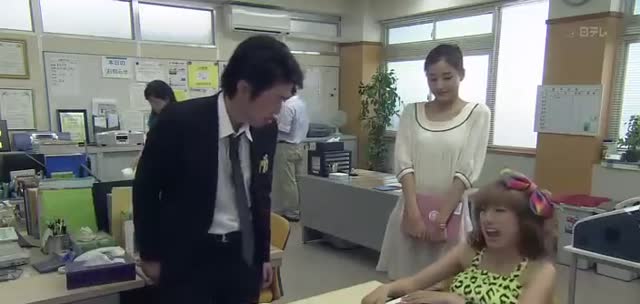
Shibata also comes to the school and looks surprised when Haruko tells him touting is banned too. Haruko asks him to make Jin Li quit her part-time job.
  1. 金麗

    I heard touting is out, too?

  2. ハルコ

    Please make her quit that part-time job right away.

  3. ハルコ

    International students are prohibited from touting as well.

  4. 柴田

    Oh, is that so? I'm sorry, I didn't know...

  5. ハルコ

    Jin Li, go change right now.

  6. 金麗

    Okay.

Speaking notes

〜させて下さい

〜させて下さい = please let/make (her)...

「辞めさせて下さい」 = "Please make her quit." 「Vさせる」 (causative) + 「てください」 = "please have (someone) do ...":
• 「彼を休ませてください」 = "Please let him rest."
Haruko uses polite form plus the causative to make a "demand" of Shibata, which sounds very courteous but is really an order.

アウト

アウト = out, not allowed

「アウト」 = (baseball) out; by extension, "not allowed, a violation". It is the opposite of 「セーフ」:
• 「その発言はアウトだ」 = "That remark is out of line."
Shibata's 「知らなくて…」 is the Japanese excuse of "I didn't know, so don't blame me".

Key vocabulary

アウト
out; not allowed.
辞める やめる
to quit.
知らない しらない
not to know.
すいません
sorry (casual form of すみません).
着替える きがえる
to change clothes.

↑ Scenes on this page

A teacher's job is more than teaching

This scene

日本人の知らない日本語 Episode 11 A teacher's job is more than teaching still

Because Haruko missed the extra lesson, Takasu is furious, saying a teacher standing up a remedial class is unheard of. Haruko pushes back that a teacher's job is not just teaching.
  1. 鷹栖

    Do you have any motivation at all?!

  2. 鷹栖

    A teacher skipping a remedial class, this is unheard of!

  3. ハルコ

    Then... if Jin Li gets arrested --

  4. ハルコ

    and deported, you'd be fine with that, would you!!

  5. ハルコ

    Teaching isn't the only job a teacher has, you know.

  6. 鷹栖

    Hmph! Talking big. So... --

  7. 鷹栖

    is the man who introduced that part-time job someone you can trust?

  8. ハルコ

    He seems mild-mannered, a nice guy~

  9. ハルコ

    And he seemed not to have known that touting was prohibited.

Speaking notes

前代未聞

前代未聞 = unheard of

「前代未聞(ぜんだいみもん)」 = never heard of before (something shocking).
• 「前代未聞の事件」 = "an unprecedented incident"
Takasu uses this four-character idiom to mean "gross dereliction of duty": a teacher standing up a remedial class is "a failure as an educator".

〜そうだ

〜そうだ = looks like...

[そう / よう / みたい / らしい] 「温厚そうな いい人」 = "a nice person who seems mild-mannered." 「Aそう」 expresses a judgment from appearance or first impression; the speaker has not confirmed the substance:
• 「おいしそう」 = "looks delicious"
With 「そう」, Haruko reveals her naivety in trusting Shibata on impression alone;
and 「知らなかったみたい」 is a guess with 「みたい」, a subjective inference from what he said: both are "judgments without evidence".

Key vocabulary

すっぽかす
to stand someone up, ignore.
信用 しんよう
trust.
温厚 おんこう
mild, gentle.
紹介 しょうかい
introduction; to introduce.
一丁前 いっちょうまえ
full-fledged, acting grown-up.

↑ Scenes on this page

Did he really not know?

This scene

日本人の知らない日本語 Episode 11 Did he really not know? still

Katori doubts whether Shibata's claim that he didn't know the rules is true.
  1. 鹿取

    Is that really so?

  2. 鹿取

    Mr. Shibata said he didn't know, but --

  3. 鹿取

    on the other hand, he told Jin Li it was safe, didn't he?

  4. ハルコ

    Hmm... well, that --

  5. ハルコ

    Are you trying to say he knew it was prohibited?

  6. 鹿取

    No, I wouldn't go that far...

Speaking notes

〜と言いたいのか

〜と言いたいのか = are you trying to say...?

「知ってたって言いたいのか?」 = "Are you trying to say he knew?" 「Vたいのか」 is a rhetorical question that spells out what the other person has not said:
• 「私が悪いと言いたいの?」 = "Are you saying it's my fault?"
Katori's 「そこまでは…」 is a soft step back that stops short of a conclusion: the speaker hints at suspicion without wanting to say it outright, which is Japanese "ambiguity" (あいまい).

一方で

一方で = on the other hand

「一方で」 = on the other hand (contrast); at the same time.
• 「忙しい一方で、充実している」 = "Busy, but on the other hand fulfilled."
Katori uses 「一方で」 to lay two pieces of evidence side by side: "said he didn't know" versus "said it was safe", letting the listener see the contradiction.

Key vocabulary

一方で いっぽうで
on the other hand.
そこまで
that far.
本当に ほんとうに
really.
言いたい いいたい
to want to say.
禁止 きんし
prohibition.

↑ Scenes on this page

Congratulations on the wedding, and skipping class

This scene

日本人の知らない日本語 Episode 11 Congratulations on the wedding, and skipping class still

The students congratulate Jin Li and ask to be invited to the wedding. Jin Li says she will help Shibata instead of going to the extra lessons, and Haruko loses her temper.
  1. ジャック

    Congratulations on getting married!

  2. 生徒たち

    Invite us to the wedding! -- Thank you.

  3. ボブ

    Ah, Haruko! You skipped the extra lesson yesterday, didn't you.

  4. ハルコ

    Ah~ sorry, sorry... sorry.

  5. ハルコ

    After school today I'll do it properly, so everyone come.

  6. 金麗

    I'm going to help Mr. Shibata, so I'm not going to the extra lessons.

  7. ハルコ

    Huh~... what are you talking about?

Speaking notes

ばっくれる

ばっくれる = (slang) to skip out, play dumb and vanish

「ばっくれる」 = (colloquial) to skip out on something on some pretext; to act as if you know nothing.
• 「授業をばっくれる」 = "to ditch class"
Bob uses young people's slang to accuse the teacher of ditching.

〜から

〜から = because...

「手伝うから補習出ない」 = "I'm going to help out, so I'm not attending the extra lessons." Jin Li puts her personal relationship first and announces the conclusion with 「から」, leaving no room for discussion.
[Contrast] Haruko also made a promise with 「ちゃんとやるから」: two uses of 「から」, one a promise and one a brush-off.

Key vocabulary

ばっくれる
to skip out (slang).
放課後 ほうかご
after school.
手伝う てつだう
to help.
昨日 きのう
yesterday.
おめでとう
congratulations.

↑ Scenes on this page

Please come to the extra lessons

This scene

日本人の知らない日本語 Episode 11 Please come to the extra lessons still

Haruko tells Jin Li she can't get a diploma at this rate. Jin Li says she doesn't care since she is getting married anyway, and her classmates urge her to graduate with them.
  1. ハルコ

    Let me be blunt. At this rate, you won't get your diploma.

  2. 金麗

    I don't care! I'm getting married anyway.

  3. ジャック

    That's not good. Let's graduate together, everyone.

  4. 鹿取

    That's right. There's not even a week until graduation.

  5. 金麗

    But my boyfriend asked me to work.

  6. ハルコ

    Work again?

  7. ジャック

    Wouldn't it be fine to have him wait until graduation? Right...

Speaking notes

待ってもらう

待ってもらう = to have (someone) wait

[Giving and receiving verbs] 「待ってもらえばいいんじゃない?」 = "Wouldn't it be fine to have him wait?" 「Vてもらう」 means "I ask the other person to do something for me", here "asking Shibata to wait for Jin Li".
With 「もらう」, the implication is "the initiative is yours: you can ask him", which is more respectful toward the other person than 「待たせればいい」 ("make him wait").
[Contrast] 「待たせる」 = causative (I order him to wait); 「待ってもらう」 = request (I ask him to wait).

どうせ

どうせ = anyway, after all (resigned)

「どうせ結婚するんだから」 = "I'm getting married anyway." 「どうせ」 means "the outcome is fixed anyway, so effort is pointless", with a feeling of resignation or giving up:
• 「どうせ私なんか」 = "Someone like me, anyway..."
Jin Li uses it to brush graduation off.

Key vocabulary

卒業証書 そつぎょうしょうしょ
diploma.
どうせ
anyway.
待つ まつ
to wait.
頼む たのむ
to ask, request.
彼氏 かれし
boyfriend.

↑ Scenes on this page

Japanese people are cold to foreigners

This scene

日本人の知らない日本語 Episode 11 Japanese people are cold to foreigners still

Haruko asks Jin Li whether Shibata can really be trusted. Jin Li angrily accuses Haruko of making everyone graduate so she can become a high school teacher, and says Japanese people are cold to foreigners.
  1. ハルコ

    Hey, Jin Li... that guy, can you really trust him?

  2. ハルコ

    Won't he make you do something like bar work again?

  3. 金麗

    Mr. Shibata isn't that kind of person!

  4. ハルコ

    I'm saying this because I'm worried about you, Jin Li!

  5. 金麗

    Liar! If I don't pass the graduation exam --

  6. 金麗

    Haruko can't become a high school teacher, isn't that why?

  7. 金麗

    Isn't it for yourself? Japanese people are cold to foreigners.

  8. 金麗

    So all this about everyone graduating together --

  9. 金麗

    everybody is just being tricked by Haruko.

Speaking notes

やらされる

やらされる = to be made to do

「やらされる」 = to be forced to do (causative-passive). 「Vさせられる」 means "to be made to do something against one's will":
• 「残業をさせられる」 = "to be made to work overtime"
Haruko uses it to say Jin Li might again be made to do something she doesn't want to.

騙される

騙される = to be deceived

「騙(だま)されてるだけ」 = "(they) are just being fooled." It is the passive of 「騙す」.
Jin Li takes Haruko's concern as "deception with an ulterior motive".
[Extra] The feminine or youthful tone of 「〜のよ」 and 「〜んじゃないの?」 makes the accusation sound sharp and hurt.

Key vocabulary

使役被动 しえきうけみ
to be made to do (causative-passive 「Vさせられる」).
騙す だます
to deceive, trick.
冷たい つめたい
cold, unfriendly.
信用 しんよう
trust.
心配 しんぱい
worry.

↑ Scenes on this page

Why are police suspicious just because I'm walking?

This scene

日本人の知らない日本語 Episode 11 Why are police suspicious just because I'm walking? still

Jin Li, getting angrier, asks why the police suspected her just for walking down the street. Haruko tells her to stop it.
  1. ハルコ

    Jin Li, enough is enough! What is cold about it!?

  2. 金麗

    Well, isn't it? Why do the police suspect me just for walking?

  3. 金麗

    Why do they assume I'm doing something bad!?

  4. 金麗

    You all thought so too when you came to Japan, didn't you?

  5. 金麗

    Don't act so high and mighty and say you're worried about me!

  6. ハルコ

    That's right. I'm saying it for the sake of making my own dream come true.

  7. ボブ

    Haruko. So that's your real feeling.

Speaking notes

決めつける

決めつける = to jump to conclusions

「決めつける」 = to declare something to be so without analysis, to pin it down.
• 「犯人だと決めつける」 = "to be certain someone is the culprit"
Jin Li uses 「決めつける」 to accuse the police of bias against foreigners.

偉そうに

偉そうに = in a lordly manner, acting important

「偉(えら)そうに言わないで」 = "Don't talk as if you're so important." 「Aそう」 = looking ... (appearance); 「偉そう」 = looking important (whether or not one actually is).
Jin Li takes the concern as "talking down to me", so Haruko finally says her 「本音」: "it's for my own dream", which is actually a more honest answer.
[Extra] 「本音(ほんね)」 = true feelings; 「建前(たてまえ)」 = the public face: Japanese people are very sensitive to the 「本音」/「建前」 distinction.

Key vocabulary

決めつける きめつける
to assume, jump to conclusions.
偉そう えらそう
arrogant, acting superior.
本音 ほんね
real intention, true feelings.
疑う うたがう
to suspect.
いい加減にする いいかげんにする
to stop it, knock it off.

↑ Scenes on this page

Didn't you all come for your dreams?

This scene

日本人の知らない日本語 Episode 11 Didn't you all come for your dreams? still

Haruko tells the students that everyone came to Japan to make their dreams come true, and that the anxiety and dissatisfaction have to be overcome through study.
  1. ハルコ

    It's the same for all of you, isn't it?

  2. ハルコ

    Didn't you come to Japan to make your own dreams come true?

  3. ハルコ

    Isn't that why you're going to school?

  4. ハルコ

    Like wanting to open a udon shop in Japan.

  5. ハルコ

    Like wanting to become a fisherman.

  6. ハルコ

    Like wanting to become an enka singer.

  7. ハルコ

    Of course, for all of you Japan is a foreign country, --

  8. ハルコ

    and I'm sure you have lots of anxieties and complaints.

  9. ハルコ

    But aren't you studying in order to get over those?

  10. ハルコ

    Even you, Jin Li, originally had some dream when you came to Japan, didn't you?

Speaking notes

乗り越える

乗り越える = to overcome, get past

「乗(の)り越(こ)える」 = to climb over (an obstacle), to overcome (a difficulty).
• 「困難を乗り越える」 = "to overcome hardship"
Haruko uses it to define studying Japanese as a means of getting past anxiety and dissatisfaction.

〜じゃないの?

〜んじゃないの? = isn't it that...? (pressing)

「来たんじゃないの?」 / 「通ってるんじゃないの?」 = "Didn't you come? Aren't you attending?" Haruko uses 「〜んじゃないの?」 repeatedly, a string of rhetorical questions that corner the listener logically: strong in tone, but the content is a reminder of their original resolve.

Key vocabulary

不安 ふあん
anxiety, unease.
不満 ふまん
dissatisfaction, discontent.
乗り越える のりこえる
to overcome.
元々 もともと
originally.
通う かよう
to attend (school).

↑ Scenes on this page

My dream...

This scene

日本人の知らない日本語 Episode 11 My dream... still

Jin Li quietly says her dream is to marry Shibata and open a restaurant. Haruko says Japanese is still necessary, and she wants her to work in Japan with her head held high.
  1. 金麗

    My dream is to marry Mr. Shibata and run a restaurant.

  2. ハルコ

    Even so, you need Japanese, don't you?

  3. ハルコ

    I want you to pass the graduation exam and work in Japan with your head held high.

  4. ハルコ

    I want all of you to graduate together. For everyone's dreams.

Speaking notes

胸を張る

胸を張る = to hold one's head high

「胸(むね)を張(は)る」 = to puff out one's chest, to stand tall with confidence and a clear conscience.
• 「胸を張って言える」 = "can say it with pride"
Haruko uses 「胸を張って」 to convey "don't sneak around, don't let people look down on you".

〜てほしい(再)

〜てほしい (again) = I want you to...

[Giving and receiving verbs] 「働いてほしい」 / 「卒業してほしい」 = "I want you to work" / "I want you to graduate." Haruko uses 「〜てほしい」 twice, putting "the teacher's wish" as a request rather than an order:
[Contrast] Earlier: 「〜しなさい」 (order) → now 「〜てほしい」 (wish): her way of persuading shifts from forceful to sincere.

Key vocabulary

胸を張る むねをはる
to puff out the chest, hold one's head high.
揃う そろう
to gather, be complete.
必要 ひつよう
necessary.
働く はたらく
to work.
夢 ゆめ
dream.

↑ Scenes on this page

Jin Li's real dream

This scene

日本人の知らない日本語 Episode 11 Jin Li's real dream still

Haruko walks out of the classroom, dejected, and Takasu stops her. He mentions Jin Li's plan to marry and open a restaurant and asks whether she has given up her dream of being an entertainer.
  1. 鷹栖

    What? I hear Jin Li is getting married and opening a restaurant?

  2. 鷹栖

    Has she given up on her dream of becoming a entertainer?

  3. ハルコ

    An entertainer!? -- Yes. Becoming an entertainer in Japan, --

  4. 鷹栖

    Her dream is to do right by her parents.

  5. ハルコ

    No, no... doing right by her parents? Isn't Jin Li's family --

  6. ハルコ

    a big corporation with 3,000 employees? -- What are you talking about! You --

  7. 鷹栖

    It's a textile factory with 30 employees.

  8. ハルコ

    Thirty? -- Yes. Until graduation --

  9. 鷹栖

    you're like her parent. Keep a good eye on Jin Li.

  10. ハルコ

    No... ha ha... I don't think a teacher is only someone who gives lessons.

Speaking notes

親孝行

親孝行 = filial piety, being good to one's parents

「親孝行(おやこうこう)」 = filial devotion, taking good care of one's parents. The opposite is 「親不孝(おやふこう)」.

見てやれよ

見てやれよ = look after her

[Giving and receiving verbs] 「しっかり見てやれよ」 = "Keep a good eye on her." 「〜てやる」 is giving and receiving from above to below, from the stronger to the weaker, with a tone of protection:
• 「面倒を見てやる」 = "I'll take care of you."
Takasu uses 「やれよ」 to hand the guardian's responsibility to Haruko.

Key vocabulary

親孝行 おやこうこう
filial piety.
タレント
entertainer, TV personality.
従業員 じゅうぎょういん
employee.
紡績 ぼうせき
spinning, textile manufacturing.
代わり かわり
substitute, replacement.

↑ Scenes on this page

Just keep your name on the school roll

This scene

日本人の知らない日本語 Episode 11 Just keep your name on the school roll still

Jin Li is told a new part-time job has been found. The man says she can skip the evening extra lessons, and that she only needs to keep her name on the school's register.
  1. 金麗

    Hey~ Jenny... -- Jin Li!

  2. 柴田

    Jin Li! I found you a new part-time job.

  3. 金麗

    But there are extra lessons in the evening...

  4. 柴田

    School, you can just keep your name on the roll, right?

  5. 柴田

    More importantly, it's a massage job.

  6. 柴田

    You can do it even without experience. The hourly pay is good, too.

Speaking notes

籍を置く

籍を置く = to keep one's name on the roll

「籍(せき)を置(お)く」 = to remain enrolled (or registered) without necessarily attending.
• 「大学に籍を置いたまま働く」 = "to work while remaining enrolled at a university"
Shibata talks about school as "just keep your name on the roll".

〜なくてもできる

〜なくてもできる = you can do it even without...

「経験がなくてもできる」 = "You can do it even without experience." This is a pattern common in job ads and in deceptive pitches:
• 「未経験者歓迎」 = "inexperienced applicants welcome"

Key vocabulary

籍 せき
register; enrollment.
時給 じきゅう
hourly wage.
経験 けいけん
experience.
バイト先 バイトさき
place of part-time work.
マッサージ
massage.

↑ Scenes on this page

Jin Li has been deceived

This scene

日本人の知らない日本語 Episode 11 Jin Li has been deceived still

The extra lesson begins, and Haruko notices Jin Li is absent. Jenny says something to everyone in English, Jack helps translate, and everyone is thrown into a panic.
  1. ハルコ

    OK. Let's begin the extra lesson~

  2. ハルコ

    Huh? Ah, you were with Jin Li...

  3. ハルコ

    Hm? By the way, where's Jin Li?

  4. ハルコ

    What!? W-wait a minute, what is she saying?

  5. ジャック

    Jin Li has been deceived by Shibata --

  6. ジャック

    she says she'll be forced to work in an adult-entertainment (風俗) establishment.

  7. ハルコ

    Forced to work in an adult-entertainment (風俗) establishment!? -- Wait, did you contact the police about this?

  8. ハルコ

    If we do that, Jin Li will be suspected!

  9. ハルコ

    Do you know where the place is?

Speaking notes

〜させられる

〜させられる = to be made to do

「働かされる」 = to be forced to work. The causative-passive means "to be made to do something against one's will by someone else":
• 「残業させられる」 = "to be made to work overtime"
Jack relays it in polite form with a calm tone, though the content is grave.

連絡する

連絡する = to contact (including calling the police)

「警察に連絡する」 = to contact the police (to report). In Japanese, reporting to the police is often 「警察に通報する」 (formal), 「警察を呼ぶ」 or 「110番する」.
[Extra] The police emergency number in Japan is 110, and ambulance or fire is 119.

Key vocabulary

騙される だまされる
to be deceived.
連絡 れんらく
contact.
警察 けいさつ
police.
疑う うたがう
to suspect.
場所 ばしょ
place, location.

↑ Scenes on this page

She's our classmate, let's save her together

This scene

日本人の知らない日本語 Episode 11 She's our classmate, let's save her together still

The students want to go look for Jin Li themselves. Haruko tells them not to, since they won't be able to graduate if they get into trouble, but they say Jin Li is their classmate.
  1. ボブ

    Let's go! Let's go look for her!

  2. ハルコ

    Wa... wait! If you get caught up in trouble --

  3. ハルコ

    you won't be able to graduate!

  4. ハルコ

    Anyway, I'll go. You wait here.

  5. ハルコ

    What's the name of the place?

  6. ジェニー

    Uh... Usami? Unagi? -- Unagi?

  7. ジャック

    Isn't it impossible to search by yourself, Haruko?

  8. ボブ

    Jin Li is our classmate.

  9. 生徒たち

    That's right, let's go!

  10. 生徒たち

    Let's all go and help her together!

Speaking notes

巻き込まれる

巻き込まれる = to get caught up in

「巻(ま)き込(こ)まれる」 = to be dragged into (an incident, trouble).
• 「事件に巻き込まれる」 = "to get caught up in an incident"
Haruko uses it to describe the students' risk: once involved, it could affect their graduation and residence status.
Note: Japanese uses the passive to express involuntary involvement, with a sense of being an innocent victim.

クラスメイト

クラスメイト = classmate

「クラスメイト (classmate)」 = a person in the same class (Japanese-made English).
• 「同級生」 = a student in the same year
Bob stresses 「俺たちのクラスメイト」, treating Jin Li as one of their own.

Key vocabulary

巻き込まれる まきこまれる
to get caught up in.
クラスメイト
classmate.
探す さがす
to look for.
助ける たすける
to rescue, help.
無理 むり
impossible.

↑ Scenes on this page

Call right away, and don't get into trouble

This scene

日本人の知らない日本語 Episode 11 Call right away, and don't get into trouble still

The students split up to look for Jin Li. Some report that they found nothing. Haruko tells them to call her the moment they find her and to avoid trouble.
  1. ハルコ

    How did it go? -- No good. Neither of them is there.

  2. ボブ

    No good here either. There's no Unagi or Usami at all.

  3. ハルコ

    Probably it's a three-letter place that starts with 「う」.

  4. ハルコ

    If you find it, call my cell phone right away.

  5. ハルコ

    Got it? Just avoid trouble, absolutely. -- Yes.

Speaking notes

〜だけは

〜だけは = at least; this one thing

「トラブルだけは絶対に避けてよ」 = "Just avoid trouble, absolutely." 「Nだけは」 means "anything else is fine, but not this", in a firm tone:
• 「嘘だけはつくな」 = "Whatever you do, don't lie."
Haruko sets a bottom line for the students: go and look, but don't cause trouble.
[Extra] The 「〜てよ」 of 「避けてよ」 is a colloquial mix of request and command, with an urgent "I'm counting on you".

見つけたら

見つけたら = once you find...

「見つけたら すぐ電話して」 = "When you find her, call me right away." 「Vたら」 expresses a conditional ("once you do something"), followed by an instruction or request:
• 「着いたら連絡して」 = "Contact me when you arrive."
This is the most common "condition + instruction" pattern in daily life, natural in tone, with no sense of compulsion.

Key vocabulary

避ける さける
to avoid.
始まる はじまる
to begin.
携帯 けいたい
cell phone.
多分 たぶん
probably.
だけは
just this (one thing).

↑ Scenes on this page

Searching while studying Japanese

This scene

日本人の知らない日本語 Episode 11 Searching while studying Japanese still

The students search the night streets for Jin Li in separate groups, chatting as they walk about wanting to graduate and keep studying Japanese.
  1. ジェニー

    I want to graduate from school...

  2. ジャック

    If you can speak Japanese that well, it's enough.

  3. ジェニー

    There are still lots of things I don't know.

  4. ジェニー

    Oh, hey, did you know the origin of 「うざい」 is a dialect?

  5. ボブ

    Is she in?

  6. ルカ

    She's not here! Let's go to the next one!

  7. ジェニー

    「マジ」, you know, originally --

  8. ジェニー

    meant 「真面目」 (serious). -- Right.

  9. ジェニー

    Japanese is hard, but it's interesting and I want to study more~

Speaking notes

マジ(真面目)

マジ (from 真面目) = seriously

「マジ」 = short for 「真面目(まじめ)」, meaning "serious, for real".
• 「マジで?」 = "Seriously?"
In youth slang, 「マジ」 = very (adverb), really (exclamation).
[Contrast] 「マジ」 = (abbreviated, colloquial); 「本当」 = (standard).

〜ものだ/たい

〜たいな = I wish I could...

「卒業したいな」 / 「勉強したいな~」 = "I want to graduate" / "I want to study." The sentence-final particle 「な」 expresses a musing, talking-to-oneself feeling:
• 「行きたいな」 = "I'd like to go..."

Key vocabulary

由来 ゆらい
origin.
真面目 まじめ
serious, earnest.
面白い おもしろい
interesting.
次 つぎ
next.
勉強 べんきょう
study.

↑ Scenes on this page

Do you know where 「やばい」 comes from?

This scene

日本人の知らない日本語 Episode 11 Do you know where 「やばい」 comes from? still

Shibata takes Jin Li into a massage parlor. She is frightened and hesitant, and brings up the origin of 「やばい」.
  1. 金麗

    Is this a normal massage place?

  2. 柴田

    Yes. Wait a moment.

  3. 柴田

    Jin Li. Here.

  4. 柴田

    Come over here.

  5. 柴田

    Even for a first time, it's totally fine.

  6. 柴田

    What's wrong? You don't have to be scared.

  7. 金麗

    Do you know where the word 「やばい」 comes from?

  8. 柴田

    ...Japanese again?

  9. 金麗

    In the Edo period there was a shooting range, and it was called a 「矢場」.

  10. 金麗

    But they ran an adult-entertainment (風俗) establishment there...

  11. 金麗

    It meant a dangerous place, and so the word 「やばい」 was born.

Speaking notes

怖がらなくてもいい

怖がらなくてもいい = you don't need to be scared

「怖がらなくてもいいよ」 = "You don't have to be scared." 「Vなくてもいい」 means "it's not necessary to ..." (permission not to):
• 「急がなくてもいい」 = "You don't have to hurry."
This line is meant as reassurance, but in this setting it makes things more unsettling.

やばい(現場)

やばい (on the spot) = 「やばい」 in the moment

Jin Li uses the word 「やばい」 to hint "this place is dangerous".

Key vocabulary

普通 ふつう
ordinary, normal.
怖がる こわがる
to be scared of.
危険 きけん
danger; dangerous.
生まれる うまれる
to be born.
初めて はじめて
first time.

↑ Scenes on this page

Jin Li is my student!

This scene

日本人の知らない日本語 Episode 11 Jin Li is my student! still

Jin Li tries to flee and Haruko bursts in, shouting that Jin Li is her student. She tells the man that people like him are why the image of Japanese people gets worse.
  1. 金麗

    I'm going home!

  2. 金麗

    Liar! Let go of me!

  3. ハルコ

    Jin Li!

  4. 柴田

    Haruko! You!

  5. ハルコ

    What do you think you're doing!

  6. ハルコ

    Jin Li is my student!

  7. ハルコ

    ...I mean, it's because there are men like you --

  8. ハルコ

    that the image of Japanese people gets worse!

Speaking notes

私の生徒

私の生徒 = my student

「私の生徒よ!」 = "She's my student!" Haruko uses "possessive + noun" to declare "I am responsible for her".
Note: 「生徒」 is the term a teacher uses for her own students, carrying warmth and a sense of responsibility.

イメージが悪くなる

イメージが悪くなる = the image gets worse

「日本人のイメージが悪くなんのよ」 = "(Because of you) the image of Japanese people gets worse." 「悪くなんのよ」 = the colloquial 「悪くなるのよ」 (る → ん).
Haruko raises "one person's misdeed" to the level of "the image of a nation or people".
[Extra] 「イメージ」 (impression) is a concept Japanese people care about a lot, especially in dealings with foreigners.

Key vocabulary

嘘つき うそつき
liar.
離す はなす
to let go.
イメージ
image.
男 おとこ
man.
生徒 せいと
student (a teacher's term).

↑ Scenes on this page

I want to graduate together

This scene

日本人の知らない日本語 Episode 11 I want to graduate together still

Jin Li escapes, and Haruko asks why she didn't just attend the extra lessons like a good girl. Jin Li says she came to tell Haruko she wants to attend and graduate with everyone.
  1. ハルコ

    That's why you should have gone to the extra lessons like a good girl!

  2. 金麗

    No...

  3. 金麗

    I came to say I want to attend the extra lessons.

  4. ハルコ

    Huh?

  5. 金麗

    I want to graduate with everyone, too.

  6. ハルコ

    Even so... -- It's all right now.

Speaking notes

〜とけばよかった

〜とけばよかった = I should have...

「受けとけばよかったのよ」 = "You should have attended." 「Vておけばよかった」 means "it would have been good if I had done it in advance" (regret):
• 「早く寝ておけばよかった」 = "I should have gone to bed earlier."
Haruko uses a regret pattern but really means "you should have listened".

〜に来た

〜に来た = came to...

「言いに来た」 = "I came to say it." 「V stem + に来る」 expresses "the purpose of coming":
• 「謝りに来た」 = "I came to apologize."
Jin Li uses it to show "I wasn't running away, I was coming to you".

Key vocabulary

大人しく おとなしく
obediently, quietly.
受ける うける
to take (a class or exam).
違う ちがう
to be wrong; not so.
卒業 そつぎょう
graduation.
言いに来る いいにくる
to come to say.

↑ Scenes on this page

What is your real dream?

This scene

日本人の知らない日本語 Episode 11 What is your real dream? still

Haruko tells Jin Li that her true dream isn't opening a restaurant but becoming an entertainer, and Jin Li begins to tell what she has kept inside for so long.
  1. ハルコ

    Your dream isn't running a restaurant, is it?

  2. ハルコ

    Your real dream is to become an entertainer, isn't it?

  3. ハルコ

    Honestly, why are you putting on airs~.

  4. ハルコ

    Is that what a socialite is?

  5. 金麗

    I'm cute, so I thought if I went to Japan --

  6. 金麗

    I'd be scouted right away.

  7. 金麗

    But there were girls cuter than me, so many it was annoying.

  8. 金麗

    No matter how many auditions I took, I was rejected.

Speaking notes

見栄を張る

見栄を張る = to put on a show, keep up appearances

「見栄(みえ)を張(は)る」 = to put on a grand or strong front for the sake of appearances.
• 「見栄っ張り」 = "someone who cares about appearances"

〜くらい

〜くらい = to the extent of...

「うざいくらいいた」 = "there were so many it was annoying." 「Aくらい+V」 describes a situation through an exaggerated degree:
• 「死ぬほど」 / 「泣きたいくらい」 (to the point of dying / of wanting to cry)

Key vocabulary

見栄 みえ
keeping up appearances, vanity.
スカウト
scouting (talent scouting).
オーディション
audition.
落とされる おとされる
to be rejected (in an audition).
カワイイ
cute.

↑ Scenes on this page

Why didn't you talk to me sooner?

This scene

日本人の知らない日本語 Episode 11 Why didn't you talk to me sooner? still

Jin Li tells of the past: when she wanted to go back to China, that man came into the cafe where she worked. Haruko asks sympathetically why she didn't consult her first.
  1. 金麗

    When I was thinking I wanted to go back to China --

  2. 金麗

    that man came to the cafe where I was working part-time.

  3. ハルコ

    So that's how you met?

  4. 金麗

    He listened to my worries. He was really kind.

  5. 金麗

    I thought meeting him gave me a new dream...

  6. ハルコ

    Honestly~ why didn't you come talk to me right away~

  7. ハルコ

    Don't cry.

  8. 金麗

    Of course, maybe you don't like me, but...

  9. ハルコ

    That's because it was before Haruko came to the school.

  10. 金麗

    Thank you, teacher.

Speaking notes

相談する

相談する = to consult

「相談(そうだん)する」 = to talk something over, to ask someone's advice. In Japanese, 「相談」 stresses "bringing a problem to someone for advice", and together with 「報告・連絡・相談(ほうれんそう)」 it is one of the three basics of the workplace:
• 「悩みを相談する」 = "to consult about one's worries"
Haruko's 「何であたしにすぐ相談しないのよ」 is both a scolding and an expression of sympathy.

〜かもしれないけど

〜かもしれないけどさ = it may be that..., but

「好きじゃないかもしれないけどさ」 = "Maybe you don't like me, but..." 「〜かもしれないけど」 acknowledges the other person's possible view before making one's own point:
• 「間違ってるかもしれないけど、私は……」 = "I may be wrong, but I..."
Jin Li wavers between doubting and relying on her teacher.

Key vocabulary

喫茶店 きっさてん
cafe.
悩み なやみ
worry, trouble.
相談 そうだん
consultation; to consult.
優しい やさしい
kind, gentle.
泣く なく
to cry.

↑ Scenes on this page

A pinky promise

This scene

日本人の知らない日本語 Episode 11 A pinky promise still

Haruko answers Jack's call, says Jin Li has been found and the situation is a bit dangerous. She tells Jin Li everyone has been looking for her, holds out her little finger, and makes a pinky promise to graduate together.
  1. ハルコ

    Hello, Jack? I found Jin Li.

  2. ハルコ

    The situation is a bit dicey now, so I'll hang up for a moment.

  3. ハルコ

    Anyway, tell everyone that she's safe.

  4. ジャック

    OK. See you.

  5. ハルコ

    See, everyone, like this --

  6. ハルコ

    has been worried and come looking for you.

  7. ハルコ

    Pinky promise.

  8. ハルコ

    Let's graduate from school together with everyone.

  9. 金麗

    A pinky promise?

  10. ハルコ

    A promise between me and you, Jin Li.

Speaking notes

指切り

指切り = pinky promise

「指切り(ゆびきり)」 = a pinky-finger promise (a Japanese children's custom). The chant goes: 「指切りげんまん、嘘ついたら針千本飲ます、指切った」 ("pinky swear, if you lie you swallow a thousand needles, pinky cut").
Haruko uses 「指切り」 to turn "a teacher's responsibility" into "a friends' promise".

〜てくれてた

〜てくれてた = had been doing (it) for us

[Giving and receiving verbs] 「探しに来てくれてたんだよ」 = "They came looking for you (for your sake)." 「Vてくれる」 = the other person does something for me / us (a favor), 「〜ていた」 = continuing or past.
Haruko uses 「〜てくれてた」 to let Jin Li feel her classmates' kindness: not "everyone was looking for you", but "everyone looked for you as a favor to you", stressing "done for you".
This is the charm of giving and receiving expressions: the same fact, said with 「くれる」, becomes a gift of goodwill.

Key vocabulary

指切り ゆびきり
pinky promise.
状況 じょうきょう
situation.
無事 ぶじ
safe and sound.
報告 ほうこく
report.
約束 やくそく
promise.

↑ Scenes on this page

Do you think you can run?

This scene

日本人の知らない日本語 Episode 11 Do you think you can run? still

Just after the pinky promise ends, the door bursts open and men chase in, saying "You think you can get away?" Haruko shouts to Jin Li to run.
  1. 男

    Do you think you can get away from us!

  2. ハルコ

    Jin Li! Run, quick!

  3. ハルコ

    Run, now!

  4. 金麗

    I'm not giving a guy like you my dream!

Speaking notes

〜と思ってんのかよ

〜と思ってんのかよ = do you think...?

「逃げられると思ってんのかよ!」 = "Do you think you can get away!" 「Potential form + と思う」 = to think one can ..., used as a rhetorical question to intimidate.
This is a typical threatening pattern; in Japanese, 「〜と思ってんのか」 is a condescending rhetorical question and must never be used to customers or superiors.

夢をあげない

夢をあげない = I won't give you my dream

「わたしの夢 あげないわよ!」 = "I'm not giving you my dream!" Jin Li uses 「あげる」 (a giving verb) to treat her "dream" as something that can be taken away, and refuses to give it:
[Giving and receiving verbs] 「あげる」 = I give to the other; 「あげない」 = I won't give.

Key vocabulary

逃げる にげる
to escape, run away.
あげる
to give.
夢 ゆめ
dream.
早く はやく
quickly.
思う おもう
to think.

↑ Scenes on this page

Don't touch my student!

This scene

日本人の知らない日本語 Episode 11 Don't touch my student! still

The police arrive and take Jin Li away as a suspect. She cries out that she has done nothing wrong, and Haruko rushes in to stop them, saying not to touch her student.
  1. 刑事

    Hey! Move it, now!

  2. 刑事

    Police. Hey, take them in. -- Yes.

  3. 金麗

    Me!? No!

  4. ハルコ

    Please wait! That girl has nothing to do with this!

  5. 金麗

    I haven't done anything wrong!

  6. 刑事

    Be quiet! You work at this place, don't you!

  7. 金麗

    Why won't you believe me? Is it because I'm a foreigner?

  8. 刑事

    Quiet!

  9. 刑事

    Quiet, I said! Hey!

  10. 刑事

    Come on, walk! Walk!

  11. ハルコ

    Don't you touch my student!

  12. 刑事

    You! Stop that!

Speaking notes

〜てくれない

〜てくれない = (why) won't you...?

[Giving and receiving verbs] 「何で信じてくれないの?」 = "Why won't you believe me?" 「Vてくれる」 + negative: a complaint or disappointment that "the other person did not do something for me":
• 「どうして分かってくれないの?」 = "Why don't you understand me?"
Jin Li uses 「くれない」 to say that the goodwill she expected did not come.

触らないで

触らないで = don't touch

「触んないでよ」 = the colloquial form of 「触らないでよ」.
• 「〜ないで」 = "please don't ..." (prohibition or refusal).
Haruko protects her student in the most direct way.
[Extra] 「警察だ」, 「連行しろ」, 「おとなしくしろ」: the 「〜しろ」 imperatives of police speech signal compulsion and are not used in polite everyday settings.

Key vocabulary

連行 れんこう
to take in custody.
関係ない かんけいない
unrelated, nothing to do with.
信じる しんじる
to believe.
触る さわる
to touch.
刑事 けいじ
detective.

↑ Scenes on this page

Back to 日本人の知らない日本語 · Back to all scenes