This episode collects 26 dialogue scenes: how to talk about being taken away by the police, warm-hearted Japanese words such as 「一期一会」, 「勿体ない」 and 「お疲れさま」, farewells and thanks in the classroom, and a message to the students. The focus is on expressions of gratitude, parting and encouragement.
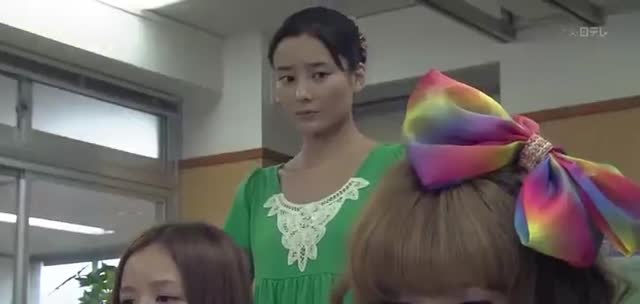
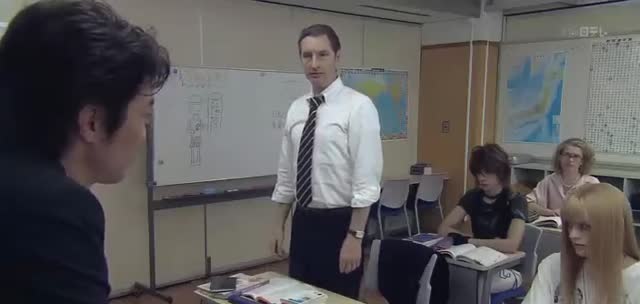
Haruko returns to school after a night in detention. Takasu scolds her for getting arrested and spending the night in a holding cell, and she protests that she did it for her students.
鷹栖
パクられた挙げ句ブタ箱に1泊か!
Getting nabbed, and on top of that a night in the clink!
ハルコ
ハルコ 悪くない! わたしのため。
Haruko did nothing wrong! It was for my sake.
鷹栖
たとえ 生徒のだめだろうがな 学校の ためにはならん!
Even if it was for the students, it does the school no good!
鷹栖
あ~ 鹿取先生 金麗を教室に連れてって。
Ah, Ms. Katori, please take Jin Li to the classroom.
鹿取
はい。いきましょう。
Yes. Let's go.
ハルコ
あたしも あとで行くから。 心配しなくていいよ。
I'll come along later. Don't worry.
Speaking notes
パクられる
being nabbed (slang)
「パクられる」 = (slang) to get arrested / hauled off by the police. The verb 「パクる」 means to nab a suspect (police) or to swipe/copy something (steal, plagiarize): • 「泥棒がパクられた」 = "The thief got nabbed." • 「アイデアをパクる」 = "to rip off an idea" Takasu strings two slang words together: 「パクられた挙げ句ブタ箱に1泊」 (「ブタ箱」 = slang for a holding cell, literally "pig box").
〜挙げ句
〜挙げ句(に) = after all that, (a bad) result
「パクられた挙げ句」 = "on top of getting arrested, ..." The pattern 「V挙げ句(あげく)」 means "after a lot of fuss, the result was ... (usually a bad outcome)": • 「悩んだ挙げ句、やめた」 = "After agonizing over it, I gave up." Takasu uses it to sum up Haruko's behavior as "a lot of trouble that ended in a bad result". [Extra] 「ハルコ悪くない!」 is Haruko's self-defense. There is no verb and she just negates an adjective, which makes it a raw, emotional outburst.
Takasu's old classmate Ikegami arrives from the Tokyo Immigration Bureau and asks for the person in charge. A staff member says the principal is in the hospital, and Takasu says he is in charge now.
池上
責任者は どなたですか?
Who is the person in charge?
職員
あの 校長先生は あいにく入院して…。
Um, the principal is, unfortunately, in the hospital...
鷹栖
今は俺が責任者だ 池上。
I'm the one in charge now, Ikegami.
池上
鷹栖。 来ると思ってたよ。
Takasu. I thought you'd show up.
渋谷
鷹栖先生?
Mr. Takasu?
鷹栖
東京入国管理局だ。
The Tokyo Immigration Bureau.
渋谷
入管に 同級生がいたのか…。
He has a classmate at the Immigration Bureau...
渋谷
でも 法務省の人が 何で わざわざウチに?
But why would someone from the Ministry of Justice come all the way to our school?
Speaking notes
どなた
どなた = who (polite)
[Honorifics] 「どなたですか?」 = "Who is it?" (polite) 「どなた」 is the respectful form of 「誰」: • 「誰ですか」 (plain) → 「どなたですか」 (polite) Ikegami uses 「責任者はどなたですか?」, which shows the politeness expected of an official. [Contrast] Between Takasu and Ikegami, though, they use casual speech (ため口): 「鷹栖。来ると思ってたよ」. The shift in register hints at their private relationship behind the official one.
入管
入管 = Immigration Bureau
「入管(にゅうかん)」 = short for 「入国管理局」, the office that manages entry and exit and residence status of foreigners. It is now called 「出入国在留管理庁」 (reorganized in 2019). A language school is closely tied to it: accepting international students and handling their "student" residence status both require its approval.
Takasu asks Ikegami whether there is any problem with Jin Li. Ikegami says she was cleared during questioning and has never worked in the entertainment trade, then talks about how Haruko's arrest affects the school.
鷹栖
金麗の方は 問題ないんだな?
Jin Li, there's no problem on her side, right?
池上
ああ。取調べで 無実は証明されたし→
Right. Her innocence was established during questioning, --
池上
それに 水商売や風俗で 働いていたわけでもない。
and besides, she has never worked in the bar trade or the sex industry.
鷹栖
ありがとうございます。
Thank you very much.
池上
問題は 君だ。
The problem is you.
池上
なあ 池上…。 この学校の教師が 逮捕されたのは事実だ。
Listen, Ikegami... The fact is that a teacher at this school was arrested.
池上
今後 ここに入学を希望している 外国人留学生の→
From now on, for foreign students who want to enroll here, --
池上
ビザの発給が停止される 可能性も 充分考えられる。
it's quite conceivable that visa issuance could be suspended.
渋谷
ビザの停止? 最悪 ここが潰れるってことだ。
Visas suspended? In the worst case, this place will go under.
Speaking notes
無実が証明される
無実が証明される = innocence is proven
「無実(むじつ)が証明された」 = "[Her] innocence was proven." • 「無実」 = not having committed the crime (different from 「無罪」, which is a court verdict). Ikegami uses legal vocabulary such as 「取調べ」, 「無実」 and 「証明」, which is official phrasing: calm and logical.
〜かねない/可能性
可能性も考えられる = it could well be that...
「発給が停止される可能性も充分考えられる」 = "It is quite conceivable that issuance will be suspended." The pattern 「〜可能性も考えられる」 is a veiled warning: it does not say "it will be suspended", only "it's possible": • Japanese officials often use 「可能性がある/考えられる」 for "very likely, but I won't commit". This is classic official vagueness: a warning that leaves no grounds to be held to it.
Ikegami says he understands the situation and asks Takasu to keep in touch, then asks how long Haruko will stay on. Haruko asks whether the school will survive if she quits.
池上
状況が分かったら 連絡してくれ。
Once you know where things stand, contact me.
池上
それはそうと 彼女は いつまでここに?
By the way, how long will she be here?
鷹栖
授業行くぞ! はい。
Off to class! -- Yes.
ハルコ
わたしが辞めたら この学校は 潰れずに済むの?
If I quit, the school won't go under, right?
鷹栖
なにバカなこと言ってんだよ!
What a stupid thing to say!
ハルコ
そうなんでしょ?あたしが この学校辞めたら→
That's how it is, isn't it? If I leave this school, --
ハルコ
生徒達は ここで 勉強できるんでしょ?
the students can keep studying here, right?
鷹栖
卒業試験まで 時間ねえぞ。
There's not much time left before the graduation exam.
鹿取
ほら 行こう!
Come on, let's go!
渋谷
生徒達も 待ってますよ。 辞めます。
The students are waiting for you, too. I quit.
ハルコ
ハルコ先生…。 もうこれ以上 迷惑かけたくないし。
Haruko-sensei... I don't want to cause any more trouble.
ハルコ
わたし 日本語教師辞めます。
I'm quitting as a Japanese teacher.
Speaking notes
〜ずに済む
〜ずに済む = get by without ...-ing
「潰れずに済む」 = "[it] won't have to go under; it can avoid collapse." 「Vずに済む」 = to get by without having to do something: • 「謝らずに済んだ」 = "I got out of it without having to apologize." Haruko uses this pattern to frame her own resignation as a way of sparing the school a disaster.
迷惑をかける
迷惑をかける = to cause trouble for
「迷惑をかけたくない」 = "I don't want to cause [everyone] trouble." Japanese culture puts great weight on not troubling others (人に迷惑をかけない), which is one of the core ethics of Japanese society: • 「ご迷惑をおかけしました」 = "I'm sorry for the trouble I caused you." Haruko chooses to resign under the pressure of 「迷惑」.
In class, the students hear that someone from Immigration came and ask what happened. Haruko reassures them that Jin Li's innocence has been proven.
ジャック
入国管理局が来たそうですね。 何の用だったのですか?
I heard someone from the Immigration Bureau came. What was it about?
金麗
わたしのこと?
Is it about me?
ハルコ
安心して。金麗の無実は 証明されたから。
Don't worry. Jin Li's innocence has been proven.
ボブ
ハルコは 大丈夫だった?
Haruko, were you OK?
ハルコ
大丈夫に決まってんじゃん!
Of course I'm fine!
王
よかったよ~。
That's a relief~
ジャック
ハルコ 授業を始めて下さい。
Haruko, please start the lesson.
Speaking notes
〜そうですね
〜そうですね = I heard that...
[そう / よう / みたい / らしい] 「来たそうですね」 = "I hear [they] came." 「Vたそうだ」 is hearsay: "I heard it from someone else": • 「雨が降るそうです」 = "I hear it's going to rain." Jack uses the hearsay form to keep a polite stance: "I didn't see it myself, I only heard".
〜に決まっている
〜に決まってる = of course...
「大丈夫に決まってんじゃん!」 = "Of course I'm fine!" 「〜に決まっている」 means "without a doubt", and in casual speech it is often used to put on a brave face: • 「当たり前でしょ」 = "Obviously."
Haruko stands at the lectern without starting the lesson and asks the students whether they have come to like Japanese at least a little by now.
ジャック
どうしました?
What's the matter?
ハルコ
いや…。みんな ここまで 勉強してきて どうだった?
No, it's just... after studying together all this way, how has it been for everyone?
ハルコ
ちょっとは 日本語のこと 好きになってくれた?
Have you come to like Japanese, even just a little?
ボブ
う~ん 難しいけど 嫌いじゃねえよ。
Hmm~ It's hard, but I don't hate it.
ハルコ
じゃあ 今日はみんなの好きな 日本語 教えて。
Then today, teach me the Japanese that each of you likes.
Speaking notes
好きになってくれた?
好きになってくれた? = Did you come to like (it) for me?
[Giving and receiving verbs] 「好きになってくれた?」 = "Did you come to like [Japanese] (for my sake)?" 「〜てくれる」 presents the students coming to like Japanese as a gift to the teacher: • Haruko uses 「くれた」 instead of 「なった?」 ("did you come to like it?") to express how much she hopes they will love Japanese. This is the "warmth" of giving and receiving verbs: the same fact, said with 「くれる」, sounds like kindness done for me.
嫌いじゃない
嫌いじゃない = I don't dislike it
「嫌いじゃねえよ」 = "I don't hate it." In Japanese, 「嫌いじゃない」 is an "ambiguous yes"; it means roughly "I kind of like it": • 「嫌いじゃない」 is not the same as 「好き」, but it is more reserved and shy than 「好き」. Bob uses the masculine, rough 「ねえ」 plus 「嫌いじゃない」.
Jack says they found out together that Japan has many words that do not exist in their countries. Haruko says these are words that exist only in Japan.
ジャック
それでしたら 先日 みんなで発見しました。
In that case, we discovered it together the other day.
ジャック
日本には わたし達の国にはない 言葉が たくさんあります。
Japan has many words that our countries don't have.
ハルコ
日本にしかない言葉ってこと?
You mean words that exist only in Japan?
ジャック
はい。中でも わたしが 感銘を受けた日本語は→
Yes. Among them, the Japanese that moved me most is --
ジャック
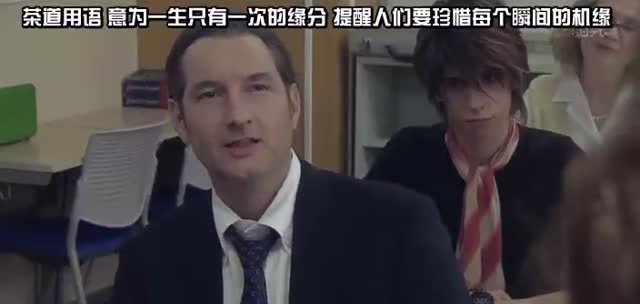
「一期一会」です。
「一期一会」.
ハルコ
あ~ 千利休ね。
Ah~, Sen no Rikyu, right.
ジャック
はい。出会いは一生に 一度限りという精神で→
Yes. With the spirit that a meeting happens only once in a lifetime, --
ジャック
最高の もてなしをする。 美しい日本語です。
you offer the finest hospitality. It's beautiful Japanese.
Speaking notes
一期一会
一期一会 = once in a lifetime meeting
「一期一会」 = a meeting that happens only once in a lifetime, so cherish every encounter. It is a tea ceremony term. [Extra] 「感銘を受ける」 = "to be deeply moved" (written style).
日本にしかない
日本にしかない = exists only in Japan
「日本にしかない言葉」 = "words that exist only in Japan". 「Nにしか+negative」 = "only N" (exclusive): • 「ここにしかない味」 = "a flavor you can only find here"
Jin Li says she likes the word 「お帰り」. Haruko asks whether people in her country don't say 「お帰り」.
ハルコ
そうだね。
That's right.
金麗
わたしは「お帰り」っていう 言葉が好きだよ。
I like the word 「お帰り」.
ハルコ
中国では「お帰り」って 言わないの?
Don't they say 「お帰り」 in China?
金麗
決まった言い方は ない。
There is no set phrase.
金麗
アパートに帰ると 大家さん「お帰り」って いっつも言ってくれる。→
When I get back to my apartment, my landlady always says "welcome home" to me.
金麗
あたたかい日本語だよ。
It's warm Japanese.
Speaking notes
お帰り
お帰り = welcome home
「お帰(かえ)り(なさい)」 = "Welcome home" (said to someone who has come home). It is used as a pair with 「ただいま」 ("I'm home"): • 「ただいま」 → 「お帰り」 Japanese has fixed greeting pairs for leaving and returning: 「行ってきます」 → 「行ってらっしゃい」; 「ただいま」 → 「お帰り」. [Extra] 「いっつも言ってくれる」 = the casual, emphatic form of 「いつも言ってくれる」, using 「くれる」 to show "the landlady's kindness to me".
〜ってくれる
〜ってくれる = (someone) does for me
[Giving and receiving verbs] 「いっつも言ってくれる」 = "[the landlady] always says it to me." 「Vてくれる」 marks "a kind act the other person does for me". Jin Li uses 「くれる」 to turn "being greeted" into "being treated kindly": the "warmth" of language comes from giving and receiving verbs. [Contrast] Saying just 「言う」 states a fact; saying 「言ってくれる」 makes it "a statement with gratitude".
The students go on to name their favorite Japanese words: Diana likes 「勿体ない」, Elaine likes 「お疲れさま」, and Jin Li likes 「指切り」.
ハルコ
あ それ知ってる。 日本にしかない表現なんだよね。
Oh, I know that one. It's an expression that only exists in Japan, right?
ダイアナ
モノを大切にする日本 素敵だと思います。
I think Japan, which treasures things, is wonderful.
エレーン
わたし 「お疲れさま」が好き。
I like 「お疲れさま」.
ハルコ
エレーンは 「忍者」じゃないの?
Isn't Elaine the one who likes 「忍者」?
エレーン
「忍者」は スウェーデンでも通じるけど 「お疲れさま」は言わない。
「忍者」 is understood even in Sweden, but nobody says 「お疲れさま」 there.
エレーン
「バイバイ」じゃなくて 「お疲れさま」。やさしい日本語。
Not "bye-bye" but 「お疲れさま」. It's gentle Japanese.
ハルコ
そっか。 わたしは「指切り」。
I see. I like 「指切り」.
ハルコ
指切り? 指切りに似た言葉なら→
「指切り」? As for expressions similar to 「指切り」, --
ハルコ
中国にも あるよ~! 横から 口はさまないでよ!
they have them in China, too! -- Don't butt in from the side!
Speaking notes
勿体ない
勿体ない = what a waste
「勿体(もったい)ない」 = it is a shame, wasteful (of things, resources, talent). • 「食べ物を残すのはもったいない」 = "It's a waste to leave food uneaten."
お疲れさま
お疲れさま = thanks for your hard work
「お疲れさま(でした)」 = "Thanks for your hard work" (an acknowledgment of effort to peers or juniors; also a parting phrase at work). • 「お先に失礼します」 / 「お疲れさまでした」 Elaine points out that it is not "bye-bye" but "recognition of what the other person has put in". [Honorific note] To a boss you say 「お疲れさまです」; 「ご苦労さま」 is for people below you (you cannot use it to a superior).
Marie and the other students ask Haruko what her favorite Japanese word is. Haruko dodges the question and says there is something she must tell them first.
マリー
ハルコが好きな日本語は 何ですか?
What is the Japanese you like, Haruko?
生徒たち
教えて!
Tell us!
ハルコ
それより!今日は みんなに言っておかなきゃ いけない事があんの。
More importantly! There's something I have to tell you all today.
ハルコ
実は…今日で 学校辞めることになりました。
The truth is... as of today, I'm leaving the school.
生徒たち
辞める!?なんで?
You're quitting?! Why?
ハルコ
高校教師の仕事が 見つかったのよ。
I found a job as a high school teacher.
ハルコ
1日も早く来てくれって もう お願いされちゃってさ~。
They said they want me to come as soon as possible, so they've already asked me, you know~
ポール
それって冷たくねぇ?
Isn't that cold?
ハルコ
しょうがないでしょ! これが あたしの夢なんだから。
It can't be helped, can it! This is my dream.
ハルコ
ほら あんた達も 学校早く卒業して→
Come on, you all, too, graduate from school soon --
ハルコ
自分の夢 叶えな。ねっ!
and make your own dreams come true. OK!
ハルコ
それじゃ!
Well then, see you!
ハルコ
みんなのこと よろしくお願いします。
Please take good care of everyone.
Speaking notes
言っておかなきゃいけない
言っておかなきゃいけない = I must tell you beforehand
「言っておかなきゃいけない事」 = "something I have to tell you in advance." 「Vておく」 = to do something in advance; 「なきゃいけない」 = must: • 「伝えておかなければ」 = "I have to let you know beforehand." Haruko uses this formal pattern to announce "big news". Note: 「それより!」 opens a change of subject and deliberately avoids "telling us the Japanese you like".
お願いされちゃって
お願いされちゃう = to get asked (a favor)
「お願いされちゃって」 = "I got asked [by them]." This is the passive of 「お願いする」 plus the casual 「ちゃう」. Haruko uses the passive to make "I chose to quit on my own" sound like "I'm needed".
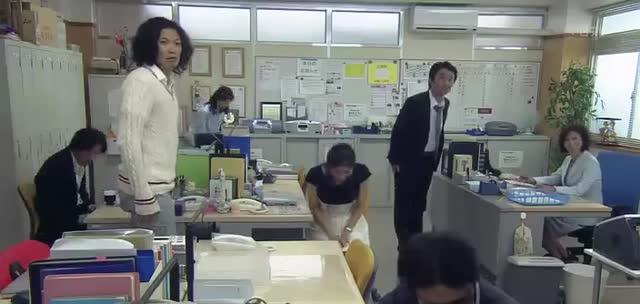
In the staff room, Katori remarks on how quiet it is and that she can't settle down. Takasu is teaching the students how verbs change in honorific speech.
鹿取
職員室って こんなに静かでしたっけ?
Was the staff room always this quiet?
鹿取
何か落ち着きませんね。
Somehow I can't settle down.
鷹栖
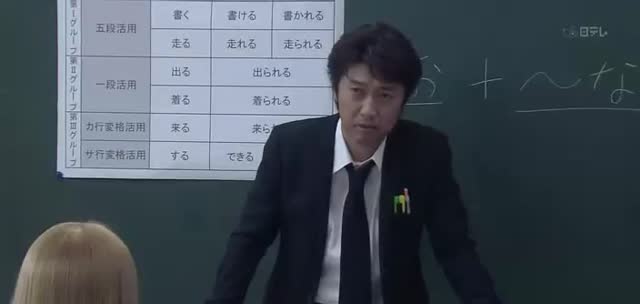
「る」の前が一文字の言葉と 第三グループは→
Words with one kana before 「る」, and Group 3 verbs --
鷹栖
「お」プラス「なります」 つまり お書きになりますとか→
You add 「お」 plus 「なります」, that is, things like 「お書きになります」 --
鷹栖
そういう風にならないって 覚えるんだ。分かったか?
You memorize that they don't take that form. Got it?
Speaking notes
お〜になる
お〜になる = honorific form
[Honorifics] 「お書きになる」 = "(you) write." Structure: 「お + verb stem (連用形) + になる」 = respectful form (honoring the other person's action): • 「お読みになる」 / 「お話しになる」 But Group 2 verbs whose stem before 「る」 is a single kana (like 「見る」 and 「着る」) and Group 3 verbs (する / 来る) cannot take this form: • 「見る」 → 「ご覧になる」 (special honorific) • 「する」 → 「なさる」 Takasu is covering the exceptions to honorific conjugation, a stumbling block for learners. [Extra] Special honorific verbs: いらっしゃる, おっしゃる, 召し上がる, ご覧になる.
落ち着かない
落ち着かない = can't settle down
「落(お)ち着(つ)かない」 = restless, ill at ease. • 「落ち着かない気分」 = "an uneasy feeling" Katori uses 「〜でしたっけ?」 (recalling and confirming) together with 「落ち着きませんね」.
In class, Jin Li suddenly says she doesn't understand. It isn't the grammar but why Haruko quit, and Takasu asks what she doesn't understand.
鷹栖
どうした どうした どうした? ここは一度習ったはずだろ?
What's wrong, what's wrong, what's wrong? You should have learned this once already, right?
金麗
分からない。 何が分からないんだ?金麗。
I don't get it. -- What don't you get, Jin Li?
金麗
ハルコが何で辞めたか 分からない!
I don't understand why Haruko quit!
ボブ
ハルコの話 するなよ。
Don't talk about Haruko.
ポール
ボブの強がり。 強がってねえよ!
Bob is putting on a tough front. -- I am not!
鷹栖
あん!?座れ ボブ。
Huh?! Sit down, Bob.
鷹栖
あいつはな もう 高校教師になったんだ。
That woman has already become a high school teacher.
金麗
ウソ!ハルコと約束した。→
No way! I made a promise with Haruko.
金麗
みんなで卒業しようって 約束したもん。
We promised we'd graduate all together!
鷹栖
なら 授業に集中しろ! みんなで卒業するために。
Then concentrate on the lesson! So that we can all graduate together.
Speaking notes
〜はずだろ
〜はずだ = should have; ought to
「一度習ったはずだろ?」 = "You should have learned this once, right?" 「〜はずだ」 expresses "an inference based on common sense or memory": • 「確かに言ったはずだ」 = "I'm sure I told you." Takasu uses 「〜はず」 to scold the students: "you ought to know this".
〜もん
〜もん = because...! (pouty excuse)
「約束したもん」 = "But I promised, you know!" The sentence-final 「〜もん」 is a childlike excuse or appeal for sympathy, meaning "because ... (and I feel wronged)": • 「だって、知らなかったもん」 = "But I didn't know!" With 「もん」, Jin Li suddenly reveals a girlish hurt.
Takasu says they must focus on the exam so that everyone can graduate, and Jin Li pushes back that this isn't "everyone". Jack explains that she means Haruko is included in "everyone".
金麗
それ みんなじゃない!
That's not everyone!
ジャック
金麗さんは みんなの中にハルコも 含まれているって言ってるんです。
Jin Li is saying that Haruko is included in "everyone".
エレーン
わたしも そう思います。
I think so, too.
ボブ
ハルコ 帰ってこねえのかよ!
Isn't Haruko coming back?!
Speaking notes
含まれている
含まれている = is included
「含(ふく)まれている」 = "is included." It is the passive of 「含む」: • 「税込み」 = "tax included" Jack explains in his own words, filling in "what Jin Li left unsaid".
〜のかよ
〜のかよ = you mean...?! (irritated)
「帰ってこねえのかよ!」 = "She's not coming back?!" 「〜のかよ」 is a masculine, casual question with a ring of frustration or anger: • 「来ないのかよ」 = "You're not coming?!" Bob shows he misses her in the most blunt way.
Haruko visits the principal, Akimoto, and says that being arrested means she has no right to teach anyone, so she is done with both Japanese teaching and high school teaching. Akimoto asks whether she remembers that time.
秋元
警察沙汰になったんじゃ 高校は紹介できないわよ。
If it's turned into a police matter, I can't recommend you to a high school.
ハルコ
教師は もういい。 日本語教師も 高校の教師も。
I'm done with teaching. Japanese teacher, high school teacher, either one.
ハルコ
人にモノを教える 資格なんてないよ。
I have no qualification to teach anyone anything.
ハルコ
わたしは やっと親らしくなれたと 思ってたんだけどなぁ。 親らしく?
And I thought I'd finally become something like a parent... -- Like a parent?
秋元
ねえ あの時のこと覚えてる?
Hey, do you remember that time?
ハルコ
あの時 あたしも 先生になれたらって思ってた。
Back then, I was thinking, too, "I wish I could become a teacher."
秋元
それを こんなことぐらいで 諦められるの?
And you can give that up over something like this?
ハルコ
でも…。
But...
秋元
教師に必要なのは 資格より想いよ。
What a teacher needs is not credentials but heart.
秋元
あなたの 生徒達への想いは もうなくなったの?
Is your heart for your students gone already?
Speaking notes
〜らしい(らしくなる)
Nらしい = typical of N, like a true N
「親らしくなれた」 = "I finally managed to become parent-like." 「Nらしい」 means "having the qualities proper to N" (a suffix, different from the 「らしい」 of conjecture): • 「男らしい」 = "manly" / 「学生らしい」 = "like a proper student" [Distinction] [そう / よう / みたい / らしい] 「らしい」 has two uses: (1) hearsay / conjecture (雨が降るらしい) and (2) typical character (Nらしい). Haruko uses (2): after becoming a teacher she felt she had finally become a bit like a "parent".
警察沙汰
警察沙汰 = a matter involving the police
「警察沙汰(けいさつざた)」 = an incident that has escalated to police involvement. • 「警察沙汰になる」 = "to end up involving the police" Japanese schools are very sensitive about scandals, and "警察沙汰" becomes a black mark on recommendations and hiring.
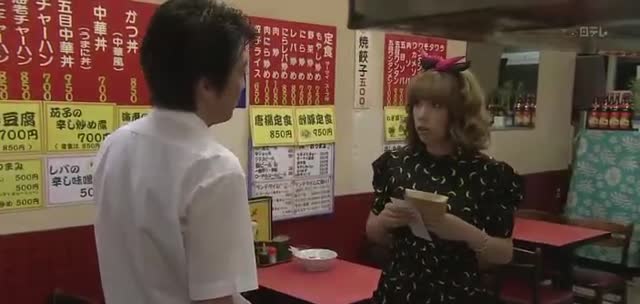
Haruko is working part-time at a restaurant. Takasu orders a meal and comes in, saying he would never say "come back to school" even if he died, but then talks about how the students are doing.
ハルコ
「何か用ですか?鷹栖先生」 でしょ。
You should say, "May I help you? Mr. Takasu." Right?
鷹栖
学校に戻ってこい。
Come back to school.
鷹栖
な~んてことは 死んでも言わねえぞ。
Something like that I'd never say, not even if I died.
ハルコ
わかってますよ!
I know that!
ハルコ
ってか もう何なの?
I mean, what is it with you?
鷹栖
お前のクラスは変だ。
Your class is weird.
鷹栖
そもそも外国人ってのは 日本人に比べて→
To begin with, foreigners compared to Japanese people --
鷹栖
個人主義なんだけど お前の クラスだけは ミョーに違う。
are individualistic, but only your class is strangely different.
ハルコ
どう違うの?
How is it different?
鷹栖
うん。俺も日本語教師やって 長いけど→
Well. I've been teaching Japanese for a long time, but --
鷹栖
あんだけ結束力のあるクラス 見たのは初めてだ。
I've never seen a class with that much unity.
鷹栖
みんな お前と一緒に 卒業したがってんだよ。
Everyone wants to graduate together with you.
Speaking notes
〜たがる
〜たがる = (someone else) wants to
「卒業したがってんだよ」 = "They want to graduate, you know." 「Vたがる」 = "wants to ..." for a third person (for the first person, use 「Vたい」): • 「子供が行きたがる」 = "The child wants to go." Takasu uses 「〜たがってる」 to describe the students' feelings objectively: not "I think" but "this is their state".
死んでも言わねえ
死んでも〜ない = not even if I die
「死んでも言わねえぞ」 = "I wouldn't say it even if I died." 「〜ても〜ない」 = "never, no matter what": • 「死んでも忘れない」 = "I'll never forget, even if I die." Takasu says "come back to school", then "I'd never say it, even if I died": an invitation by negation.
At the restaurant where Haruko works, Bob also has a kitchen part-time job, and he calls out the word 「てぼ」 as he works.
ボブ
「てぼ」持ってこいよ! 「てぼ」! はい!
Bring the 「てぼ」! The 「てぼ」! -- Yes!
ボブ
あ~ もう 違うだよ!
Ah, come on, that's wrong!
ボブ
「てぼ」は これでしょ!
The 「てぼ」 is this one, see!
ボブ
鍋使ったら すぐすすぐ!
As soon as you use a pot, rinse it!
鷹栖
ボブも頑張って 今じゃあ大将が留守のとき→
Bob has worked hard, too, and now, when the chef is out, --
鷹栖
店任されるようになったんだなぁ。
he's been trusted to watch the shop.
鷹栖
前は あんな怒鳴られてたのに。
He used to get yelled at so much.
鷹栖
あいつを成長させたのは お前だ。
The one who made him grow is you.
鷹栖
まっ 競馬で言うところの ビギナーズラックだと思いますけどもねぇ。
Well, in horse-racing terms, I'd say it's just beginner's luck, though.
ハルコ
それで あたしに どうしろっていうのよ?
So what are you telling me to do?
鷹栖
どうすりゃいいかは自分で考えろ。
Figure out for yourself what to do.
Speaking notes
〜ようになる
〜ようになる = come to be able to
「店を任されるようになった」 = "[he] came to be trusted with the shop." 「Vようになる」 shows a change in ability or habit (could not before, can now): • 「日本語が話せるようになった」 = "I've become able to speak Japanese." Takasu uses it to affirm Bob's growth and give Haruko the credit. [Extra] "Beginner's luck" is a gambling / horse-racing term.
〜させる
〜させる = make/let (someone) grow
「あいつを成長させたのは お前だ」 = "The one who made him grow is you." 「成長させる」 = causative (to make someone grow). Takasu casts Haruko as "the one who makes students grow".
When paying the bill, Takasu says he has worked out Haruko's remaining wages by the day and tells her to pay with that. Haruko says it's her own money.
ハルコ
あ ちょっ…伝票!
Ah, wait... the bill!
鷹栖
残りの給料 日割りにしといてやった。
I calculated your remaining pay by the day for you.
鷹栖
それで払っとけ。 は?
Pay with that. -- Huh?
ハルコ
ちょっ…これ あたしのお金!
Wait... this is my money!
Speaking notes
〜といてやった
〜といてやった = I went and did ... for you
[Giving and receiving verbs] 「日割りにしといてやった」 = "I went ahead and calculated it by the day for you." 「Vておく」 = to do in advance, 「Vてやる」 = to do something for someone (from a superior's standpoint): Takasu uses 「〜てやった」 for a "favor from above", though it actually means "making her pay with her own money".
日割り
日割り = calculated by the day
「日割(ひわ)り」 = calculated per day (wages, fees). • 「日割り計算」 = "daily pro-rated calculation" In Japan, pay is often settled by actual days worked on resignation. Takasu uses "the remaining pay" as a pretext to make Haruko "pay with her own money".
In the park, Haruko meets an elderly woman who asks for directions to the ward office. Haruko gives directions in polite Japanese.
老女
あの~すみません。 区役所まで行きたいんですが→
Um, excuse me. I'd like to go to the ward office, but --
老女
道を教えていただけませんか?
could you tell me the way?
ハルコ
あ 区役所でしたら 公園を出て真っ直ぐ西に向かっ…。
Oh, the ward office? Leave the park and head straight west...
ハルコ
あ よろしければ ご案内しましょうか?
Oh, if you'd like, shall I show you the way?
老女
いえ そこまでは。
No, I couldn't ask that much.
ハルコ
いえ あたしでよかったら 構いませんよ。どうせ暇ですし。
No, if I'm good enough, I don't mind at all. I'm free anyway.
老女
あなた 見かけによらず きれいな言葉 使うのね。
You know, for how you look, you speak beautiful Japanese.
鷹栖
失礼だろ!すいません。
That's rude! I'm sorry.
ハルコ
いえ 初めて言われました。 そんなこと。
No, it's the first time anyone has said that to me. Something like that.
老女
親御さんに教わったの?
Did your parents teach you?
ハルコ
違います。
No.
ハルコ
わたしに 日本語を 教えてくれたのは 外国人です。
The ones who taught me Japanese were foreigners.
ハルコ
わたしの初めての生徒達です。
They were my very first students.
Speaking notes
〜ていただけませんか
〜ていただけませんか = would you kindly ...
[Honorifics] 「教えていただけませんか?」 = "Could you tell me?" 「Vていただく」 = the humble form of 「Vてもらう」, 「ませんか」 = a softened request. The old woman uses the most courteous request pattern, and Haruko answers with 「ご案内しましょうか」 and 「よろしければ」, keeping to proper polite speech.
見かけによらず
見かけによらず = contrary to appearances
「見かけによらず」 = "contrary to how [you] look." • 「見かけによらず優しい」 = "kinder than he looks" The old woman praises Haruko for "using beautiful words", but in a slightly rude way with 「見かけによらず」, which is why Takasu hurriedly apologizes with 「失礼だろ!」.
On the day of the graduation exam, Shibuya and Katori are pacing in the office when the phone suddenly rings. Katori picks up and says "Haruko-sensei".
鹿取
渋谷先生 もう試験 始まりますよ。
Mr. Shibuya, the exam is about to start.
渋谷
まだだ。 まだだじゃなくて もう行かないと。
Not yet... -- It's not "not yet", we have to go now.
鹿取
もしもし?ハルコ先生!?
Hello? Haruko-sensei!?
ハルコ
もう卒業試験 始まっちゃった?
Has the graduation exam already started?
ハルコ
それじゃ 今から…。
Then from now on...
鹿取
ハルコ先生から伝言! みんな よく聞いて。
A message from Haruko-sensei! Everyone, listen carefully.
鹿取
ハルコ先生も 今から みんなと一緒にテストを受けます。
Haruko-sensei will also take the test together with all of you, starting now.
生徒たち
ハルコも!?
Haruko, too!?
鷹栖
みんなで卒業しようって 言ってたぞ!
She said we'd graduate together, all of us!
Speaking notes
伝言
伝言 = message
「伝言(でんごん)」 = a message passed on verbally. • 「伝言をお願いします」 = "Please take a message." Katori says 「伝言!」 first and then 「みんなよく聞いて」, turning a notice into a solemn announcement.
〜と一緒にテストを受ける
一緒に〜受ける = take (an exam) together
「みんなと一緒にテストを受けます」 = "I'll take the test together with everyone."
After the exam, Haruko returns to the classroom. Shibuya says the graduation exam ended without incident and everyone did their best, and Haruko says she only came to get her belongings.
渋谷
ハルコ先生。
Haruko-sensei.
渋谷
卒業試験なら 無事に終わったよ。 みんな精一杯やったと思う。
The graduation exam ended without incident. I think everyone did their very best.
ハルコ
そっか…。
I see...
ハルコ
あ 荷物取りに来ただけだから。 すぐ帰るから。
Oh, I just came to pick up my things. I'll be going right away.
鹿取
フフフ…生徒達の 言ったとおりでしたね。
Hehe... it turned out just as the students said.
ハルコ
ん?
Hm?
生徒たち
お帰り!
Welcome back!
ハルコ
何で?
Why?
生徒たち
ハルコが来るような気がして みんなで待ってました。
We had a feeling Haruko would come, so we all waited.
生徒たち
テスト一緒に受けてくれて お疲れさま。
Thank you for taking the test with us. Good work.
ハルコ
…うん。
...Yeah.
金麗
わたし 信じてた。指切りしたから。
I believed. Because we pinky-promised.
ハルコ
実はね あたしも みんなが ここにいるような気がして 来たの。
Actually, I also had a feeling you'd all be here, so I came.
Speaking notes
〜ような気がする
〜ような気がする = I have a feeling that...
「来るような気がして」 = "I had a feeling [you] would come, so..." 「〜ような気がする」 expresses intuition or a hunch: • 「雨が降るような気がする」 = "I have a feeling it's going to rain." [そう / よう / みたい / らしい] 「ような気がして」 is a Japanese way of not stating things outright: instead of "you will come", it says "I felt like you'd come", which leaves room and sounds gentler.
お疲れさま
お疲れさま (callback)
「テスト一緒に受けてくれて お疲れさま」 = "Thanks for taking the test with us. Good work." 「お疲れさま」 is a greeting that acknowledges the other person's effort. To a teacher or superior one normally says 「お疲れさまです/でした」, whereas 「ご苦労さま」 cannot be used to a superior.
Haruko tells the students she hasn't yet told them her favorite Japanese word. They ask her to tell them, and she says it is 「ありがとう」 and talks about her high school days.
ハルコ
そうだ!みんなにまだ あたしの好きな日本語 教えてなかったよね。
That's right! I haven't told you all my favorite Japanese yet, have I?
生徒たち
教えて!
Tell us!
ハルコ
あたしの好きな日本語は 「ありがとう」。
My favorite Japanese is 「ありがとう」.
ハルコ
わたしが 高校生の時ね→
When I was in high school, you see --
ハルコ
校則を破って 学校を退学になりそうになったの。
I broke the school rules and nearly got expelled.
ハルコ
その時に 担任の先生だった 秋元先生 この学校の校長先生ね。
At that time, my homeroom teacher, Ms. Akimoto, the principal of this school now.
ハルコ
その先生が あたしのことを 助けてくれたの。
That teacher helped me.
ハルコ
そのお礼として 子供達に ボランティアで 本を読んであげたの。
To thank her, I read picture books to children as a volunteer.
ハルコ
その時に 「ありがとう」って言われたの。
And then they said 「ありがとう」 to me.
ハルコ
すっごく嬉しかった。
I was really, really happy.
ハルコ
こんなあたしでも 誰かの役に立てるんだって→
Even someone like me can be of use to somebody --
ハルコ
初めて そう思ったの。
I thought that for the first time.
Speaking notes
ありがとう
ありがとう = thank you (from 有り難し)
「ありがとう」 = thank you. It comes from the adjective 「有り難し(ありがたし)」 = rare, hard to come by: "such a thing rarely happens, so I am grateful". [Extra] 「ありがとう」 (plain) → 「ありがとうございます」 (polite) → 「ありがとうございました」 (past, thanks after something has ended).
〜てあげた
〜てあげる = I did (it) for (someone)
[Giving and receiving verbs] 「本を読んであげたの」 = "I read books to [the children]." 「Vてあげる」 means "I do something for the other person", expressing "kindness / help": Haruko uses 「あげた」 as a plain statement: "I read to them".
The students ask Haruko whether this was what made her want to become a teacher, and she nods. Jin Li says then she should just teach again, since it is Haruko's dream.
ジャック
それが 教師を志した きっかけですか? うん。
Is that what made you aim to become a teacher? -- Yeah.
金麗
だったら また 先生やればいいじゃない!
Then why don't you just teach again!
金麗
ハルコの夢でしょ?
It's your dream, isn't it, Haruko?
金麗
鷹栖先生に全部 聞いたよ。
Mr. Takasu told us everything.
ジャック
夢を諦めるのは 勿体ないです。
Giving up on a dream is a waste.
Speaking notes
志す
志す = to aspire to
「志(こころざ)す」 = to set one's heart on (becoming ...). • 「医者を志す」 = "to aspire to become a doctor" 「きっかけ」 = trigger, occasion: • 「きっかけは何ですか?」 = "What was the trigger?"
勿体ない(人才)
勿体ない (for people)
「夢を諦めるのは勿体ないです」 = "Giving up a dream is a waste." Jack uses 「勿体ない」 (originally for things and food) for "a person's talent and dream": • 「才能がもったいない」 = "Such a waste of talent."
Haruko tells the students that although it was only three months, being thanked by them made her very happy.
ハルコ
あたしね たった3ヵ月だけど→
You know, it was only three months, but --
ハルコ
みんなに「ありがとう」って 言われて→
being told 「ありがとう」 by all of you --
ハルコ
すっごく嬉しかったよ。
made me really happy.
ハルコ
でもそれで 分かったの。
But that made me realize something.
ハルコ
生徒に感謝されるより→
Rather than being thanked by students --
ハルコ
もっと素敵なことが あるってことに気づいたの。
there is something even more wonderful, I noticed.
ハルコ
それはね あなたたち 生徒に出会えたこと。
That's getting to meet you, my students.
ハルコ
みんなが あたしの生徒で 本当によかった。
I'm so glad you were my students.
ハルコ
みんなが あたしの 初めての生徒で本当によかった。
I'm so glad you were my very first students.
ハルコ
一緒に勉強できて本当によかった。
I'm so glad we got to study together.
Speaking notes
〜でよかった
〜でよかった = I'm glad it was...
「あたしの生徒で本当によかった」 = "I'm so glad you were my students." 「Nで+よかった」 means "I'm glad because it is N": • 「あなたが友達でよかった」 = "I'm glad you're my friend." Haruko says 「本当によかった」 three times.
出会う
出会う = to meet (by chance or fate)
「出会(であ)える」 = to be able to meet. 「出会う」 means a chance meeting, a fateful encounter, with more of a sense of destiny than 「会う」: • 「運命の人に出会う」 = "to meet the person of one's destiny"
Haruko says being a teacher turns out to be this much fun, and that she can't give up after all. Jack calls out her name.
ハルコ
教師って こんなに楽しいんだよ。
Being a teacher is this much fun.
ハルコ
諦めるなんて やっぱ無理だよ。
There's no way I can give it up after all.
ジャック
ハルコ…。
Haruko...
ハルコ
あたしも夢を諦めない。
I won't give up on my dream, either.
ハルコ
いつかきっと ちゃんとした 教師になってみせるから。
Someday, for sure, I'll become a proper teacher, and show you.
ハルコ
それを気づかせてくれたのは みんなだよ。
It was all of you who made me realize that.
ジャック
これも 一期一会ですね。
This is also 一期一会, isn't it.
ハルコ
うん。
Yeah.
ハルコ
だから 卒業試験の結果が出る前にみんなに言わせてほしい。
So before the graduation exam results come out, I want to say something to everyone.
ハルコ
みんな わたしの生徒に なってくれて 本当にありがとう。
Everyone, thank you so much for becoming my students.
Speaking notes
〜てみせる
〜てみせる = I'll show you by doing
「ちゃんとした教師になってみせるから」 = "I'll become a proper teacher, just you watch." 「Vてみせる」 means "to prove (determination) through action": • 「必ず合格してみせる」 = "I'll definitely pass, you'll see." Haruko uses it to make a vow, both "a promise to her students" and "a promise to herself".
〜てほしい/言わせて
言わせてほしい = I'd like you to let me say
[Giving and receiving verbs] 「言わせてほしい」 = "I want [you] to let me say it." 「Vさせてほしい」 = causative + 「ほしい」 = "please allow me to ...": • 「やらせてほしい」 = "Please let me do it." Haruko uses this humble request, not "ordering" but "asking sincerely". In the final 「なってくれて 本当にありがとう」, she uses 「〜てくれて」 to treat "becoming my students" as a gift from them.
In the staff room, Katori asks the principal, Akimoto, whether the new Japanese teacher has been found. Akimoto says she should arrive any time now, and a "good morning" comes from the door.
鹿取
で 見つかったんですか? 新しい日本語教師。
So, did you find one? A new Japanese teacher.
秋元
うん。もう そろそろ 来ると思うんだけど。 えっ!?
Yes. I think she should be arriving about now. -- What!?
凪子
おはようございます!
Good morning!
凪子
今日からお世話になります 海野凪子と申します。
I'll be in your care starting today. My name is Nagiko Unno.
ハルコ
海野凪子?
Nagiko Unno?
秋元
凪子先生は 日本語教師4年のベテランよ。
Ms. Nagiko is a veteran with four years of experience teaching Japanese.
ジャック
よかった~今度こそ本命ですね。 フッフッ…。
Great~ This time she's the favorite for sure. Heh heh...
ボブ
大穴にかけた方が 面白くない?
Wouldn't it be more fun to bet on the long shot?
ハルコ
バーカ! 仕事は面白いだけじゃ…。
Idiot! Work isn't just about being fun...
Speaking notes
お世話になります
お世話になります = I'll be in your care
[Honorifics] 「今日からお世話になります」 = "I will be in your care from today." 「お世話になる」 is a humble expression for "receiving help from someone" and a set opening line for a new workplace or situation: • 「いつもお世話になっております」 (the standard opening of business calls and emails) Nagiko introduces herself with 「申します」 and greets with 「お世話になります」, a textbook example of a newcomer's etiquette.
本命・大穴
本命・大穴 = favorite / long shot (horse racing)
「本命(ほんめい)」 = (horse racing) the horse most likely to win, the favorite; 「大穴(おおあな)」 = a long shot that pays big if it wins. The students use horse-racing terms to rate the new teacher.
Haruko asks the principal what is going on, and Akimoto says the confirmation from the Ministry of Justice has come through. Haruko says, then, she's off to class.
ハルコ
どどどどど…どういうことですか 校長先生!!
Wh-wh-wh-wh-what's going on, Principal!?
秋元
法務省の確認がとれたのよ。
We got confirmation from the Ministry of Justice.
ハルコ
じゃあ 授業行ってきま~す!
Well then, I'm off to class~!
鷹栖
おいおいおい… 俺は許可してないからな!
Hey, hey, hey... I haven't given permission, you know!
ハルコ
何 言ってるんですか。 指切りしたじゃないですか。
What are you talking about? We pinky-promised, didn't we?
ハルコ
ねえ!鹿取先生。 わたしは鹿取じゃ…。
Right, Ms. Katori? -- I'm not Katori...
鹿取
鹿取です。ハハ…。 アハハ…。
I'm Katori. Ha ha... -- Ahaha...
鷹栖
指切り?
Pinky promise?
ハルコ
おはよう!
Good morning!
ボブ
何だよ またハルコかよ!
What the, it's Haruko again!
ハルコ
っていうか ジャック以外 全員不合格って→
I mean, everyone except Jack failed?
ハルコ
あんたたち どういうことよ!?
What's the meaning of this, you lot!?
ポール
ハルコの教え方が 悪かったんじゃないの?
Maybe Haruko just taught badly?
金麗
っていうか ハルコも不合格でしょ?
I mean, Haruko failed, too, didn't she?
ハルコ
名前 書き忘れちゃってさ。
I forgot to write my name, you see.
ジャック
遅れて申し訳ありません。
I'm sorry for being late.
ハルコ
ジャック! あんた合格したんじゃないの?
Jack! Didn't you pass?
ジャック
水臭いこと言わないで下さいよ。
Please don't say such distant things.
ジャック
みんなで卒業しましょうよ。ねえ!
Let's graduate together, all of us. Right!
ハルコ
よ~し!今度こそ 全員そろって合格よ!
All right! This time, everyone passes together!
生徒たち
ハルコ 質問!
Haruko, question!
ハルコ
どっからでも かかってきなさい!
Come at me from any direction!
Speaking notes
水臭い
水臭い = distant, standoffish
「水臭(みずくさ)い」 = distant or formal toward someone close. • 「水臭いことを言うな」 = "Don't say such distant things." Jack is not defying her; he is turning down Haruko's attitude of "leaving herself out" for the sake of graduating together. Jack uses polite form plus 「水臭い」, a "polite intimacy".
かかってきなさい
かかってくる = to come at (someone)
「どっからでもかかってきなさい!」 = "Come at me from anywhere!" (ask me anything) 「かかってくる」 = (a challenger) to come at you; to call by phone; to come looking for you. Haruko meets the students' 「質問」 in a fighting tone.