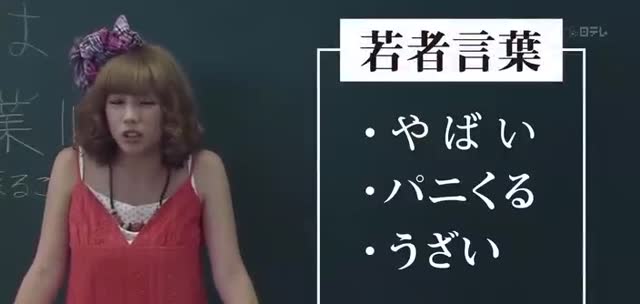
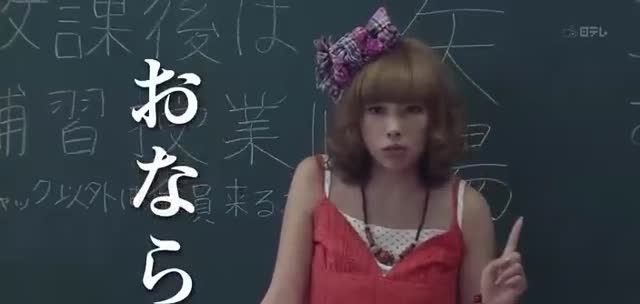
This episode collects 45 dialogue scenes: young people's slang (「やばい」, 「パニくる」, 「うざい」), Kansai dialect, women's court words such as 「お冷」, 「おしぼり」 and 「おなら」, the language used in police questioning and when acting as a guarantor, and ways of talking about dreams.
Language highlights
「パニくる」(to panic; slangy verb formed from a loanword)
「若者言葉」(young people's slang)
「女房言葉」(the old court women's vocabulary)
「身元引受人」(guarantor who takes responsibility for someone)
With graduation near, Shibuya sighs that teaching Japanese is a bittersweet job, since he will soon part with his students. Haruko asks why he does it then.
渋谷
もうすぐ生徒とも お別れか。→
Soon we'll be saying goodbye to the students, too.
渋谷
切ない仕事だよな~ 日本語教師って。
It's a bittersweet job, isn't it, being a Japanese teacher.
ハルコ
じゃあ 何で 日本語教師やってんのよ。
Then why are you a Japanese teacher?
渋谷
いや 何でって…。
Well, why... I mean...
鹿取
自分の教え子が世界中で 頑張ってるんです。→
My former students are working hard all over the world.
鹿取
それが日本語教師の やり甲斐だと思います。
I think that's what makes the job of a Japanese teacher worthwhile.
ハルコ
何それ? 卒業生から?
What's that? A letter from a graduate?
鹿取
ええ。ニュージーランドで日本人向けの 観光ガイドの仕事をしてます。
Yes. He works as a tour guide for Japanese visitors in New Zealand.
鹿取
いつか 遊びに来てほしいって。 ふ~ん。
He says he hopes I'll come visit someday. -- Hmm~
Speaking notes
切ない
切ない = bittersweet, painful
「切(せつ)ない」 = a squeezing, aching feeling of the heart (from longing, parting, or unfulfilled wishes). • 「切ない恋」 = "a bittersweet, painful love" Shibuya uses 「切ない仕事」 for the Japanese teacher who must send students off as soon as he has taught them: an adjective with a gentle sadness that is hard to translate with a single word.
〜てほしい
〜てほしい = I want (someone) to...
[Giving and receiving verbs] 「遊びに来てほしい」 = "I'd like you to come visit." 「Vてほしい」 means "I want the other person to do something for me", the wish version of giving and receiving expressions: • 「来てくれる」 (the other does it) → 「来てほしい」 (I want the other to do it) The graduate uses it to invite Katori politely without pressure: whether she comes is left up to her.
Haruko half-jokingly asks Shibuya whether he would like to go to New Zealand together. Shibuya hurriedly says he didn't mean anything strange by it, and Katori blushes.
ハルコ
なら 一緒に行く?
Then, shall we go together?
渋谷
あっ。いや… 変な意味じゃなくてね。
Ah. No... I don't mean it in a weird way.
鹿取
あっ。いや…。 あの…ご迷惑でなければ。
Ah. No... Um... if it's not a bother.
ハルコ
いいでないの。いいでないの~!
Isn't that nice~ Isn't that nice!
ハルコ
今度はニュージーランドで キスしちゃう~→
This time you'll kiss in New Zealand~
ハルコ
…っていうか 新婚旅行か?
...or rather, is it a honeymoon?
鹿取
いや ちょっと… からかわないで下さい!
No, wait... please don't tease us!
渋谷
そうだよ。まだ おばあさんの 許可も取ってないんだからね。
That's right. We haven't even got Grandma's permission yet.
Speaking notes
ご迷惑でなければ
ご迷惑でなければ = if it's no trouble
[Honorifics] 「ご迷惑でなければ」 = "If it wouldn't trouble you." It is a cushion phrase (クッション言葉) used before making an invitation or request: • 「よろしければ」 / 「差し支えなければ」 Katori uses it to say "I'd like to go with you" very indirectly: not "I want to", just "if it's no trouble", leaving the decision to the other person, which is typical Japanese consideration plus shyness.
〜でないの
〜でないの = isn't it...? (dialect)
「いいでないの」 = "Isn't that nice?" (with a Tohoku/Hokkaido dialect flavor). The standard form is 「いいじゃないの」. 「からかう」 = to tease, to poke fun at; Katori's 「からかわないで下さい」 is a polite "please stop teasing".
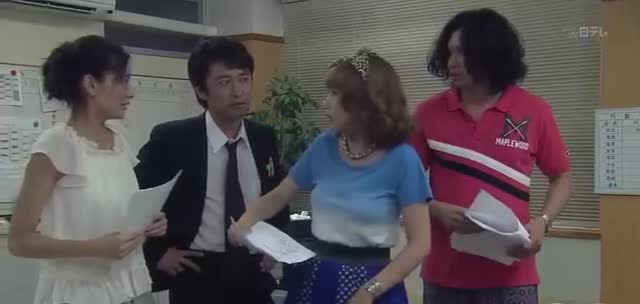
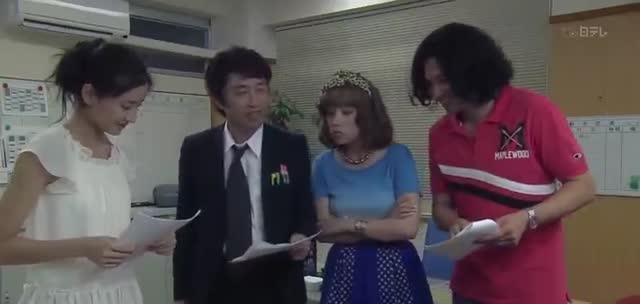
Takasu storms into the staff room with a stern face and says the graduation exam is near and they seem to be taking it easy. He tells Shibuya three people in his class will fail.
鷹栖
卒業試験も近いのに 余裕だな おめぇら~。
The graduation exam is near, and you're all so relaxed, you lot~.
鷹栖
渋谷く~ん! はい
Shibuya~! -- Yes.
鷹栖
このままだと おめえのクラス 3人は不合格だぞ!
If things go on like this, three people in your class will fail!
渋谷
えっ 3人も!? おう!
What, three!? -- Yeah!
鹿取
あの 私のクラスは?
Um, what about my class?
鷹栖
あ~。このままの調子でいけば 全員卒業だね…うん。 ああ…はい。
Ah~ At this rate, everyone will graduate... yeah. -- Ah... yes.
Speaking notes
余裕
余裕 = leeway, composure
「余裕(よゆう)だな」 = "You're pretty relaxed, aren't you?" (sarcastic) 「余裕」 means spare time or a spare state of mind: • 「余裕がない」 = "to have no room to spare" Takasu is sarcastic with 「余裕だな」: the exam is near and they are chatting about trips and romance. 「おめぇら」 = a rough form of 「おまえら」.
このままだと
このままだと = if things stay as they are
「このままだと不合格だぞ」 = "At this rate, you'll fail." 「〜と」 expresses the inevitable result of a hypothetical condition: • 「急がないと遅れる」 = "If you don't hurry, you'll be late." Takasu uses 「〜ぞ」 as a warning.
Takasu tells Haruko that in her class only Jack can graduate.
ハルコ
ねえねえねえ…ねえ?
Hey, hey, hey... hey?
鷹栖
あ~ お前のクラスは1人だ。
Ah~ Your class is one person.
ハルコ
1人以外 全員合格だって~。 バカちん!
Everyone but one person passes, he says~ -- You idiot!
鹿取
卒業できるのは ジャックさん 1人だけです。
The only one who can graduate is Jack.
ハルコ
えっ…うそ!?
What... no way!?
鷹栖
クラス全員 卒業試験に 合格できなかったら→
If not everyone in the class passes the graduation exam, --
鷹栖
高校教師の夢は 諦めるんだったよな?
you were going to give up your dream of being a high school teacher, right?
Speaking notes
バカちん
バカちん = silly fool (old-style)
「バカちん」 = a playful, affectionate way of saying 「バカ」. It is used for "half-joking scolding": • 「このバカちんが!」 = "You blockhead!"
〜だったよな?
〜だったよな? = didn't you say...?
「諦めるんだったよな?」 = "You said you'd give up, right?" 「〜たよな」 reminds the other person of something they said or promised, with a pressing tone: • 「約束したよな?」 = "We promised, right?" Takasu uses it to corner Haruko: "don't forget the bet you set yourself".
Haruko tries to get away with it by saying they should just let everyone pass. Takasu refuses, saying a diploma is not something to be handed out like a coupon.
ハルコ
フッ…この際 全員 合格でよくない? これ。
Heh... on this occasion, isn't it fine if everyone just passes? Don't you think?
鷹栖
いいわけねぇだろ!
Of course it's not fine!
鷹栖
ウチの卒業証書はな 就職や進学に有利になる→
Our diploma is something that helps with jobs and further study --
鷹栖
価値のあるものなんだよ。
it's something valuable.
鷹栖
そんなクーポン券みたいに ばらまけるか。
You can't scatter it around like coupons.
ハルコ
教育って そういうもんかなぁ?
Is that what education is about?
Speaking notes
〜わけがない
〜わけがない = there's no way that...
「いいわけねぇだろ」 = "Of course that's not okay." 「〜わけがない」 = "there's no way ...", a strong denial: • 「そんなわけない」 = "No way." 「ねぇ」 is a rough contraction of 「ない」. [Contrast] 「〜はずがない」 also means "there's no way", but 「わけがない」 stresses "it absolutely doesn't hold up logically".
ばらまく
ばらまく = to scatter, hand out freely
「ばらまく」 = to scatter around, to hand out indiscriminately (things or money). • 「チラシをばらまく」 = "to hand out flyers" Takasu describes giving diplomas to everyone as 「クーポン券みたいにばらまく」: he believes a certificate's value is kept by strict standards. Haruko's 「そういうもんかなぁ?」 is a half-doubting rhetorical question.
Takasu shows Haruko an answer sheet whose task is to fill the blanks with correct Japanese, but the students wrote 「やばいくらい」, 「パニくる」 and 「うざい」. He says slang is not correct Japanese.
鷹栖
ちょっと かしてみろ…フン!
Let me see that...hmph!
鷹栖
次の空欄に 正しい日本語を入れなさい。
Fill in the blanks below with correct Japanese.
鷹栖
昨日の夕飯は「やばいくらい」おいしかったです。 ハハハッ…。
"Yesterday's dinner was delicious 「やばいくらい」." -- Ha ha ha...
鷹栖
「とても」じゃなくて 「やばいくらい」?
Not "very", but 「やばいくらい」?
鷹栖
避難訓練は 「パニくる」と危険です。
"During an evacuation drill, if you 「パニくる」, it is dangerous."
鷹栖
6月の天気は「うざい」です。
"The weather in June is 「うざい」."
鷹栖
バカやろう~…。 俗語やスラングは→
You idiots... Colloquialisms and slang --
鷹栖
正しい日本語じゃないんだよ! 反省しろ!!
are not correct Japanese! Reflect on yourselves!!
Speaking notes
パニくる
パニくる = (slang) to panic
「パニくる」 = 「パニック」 (panic) + 「〜る」, a verb coined as slang: to panic, lose one's head. • 「テスト中にパニくった」 = "I panicked during the test." In Japanese, adding 「る」 to a loanword to make a new verb is a common way of coining words: • 「サボる」 (from sabotage) / 「ググる」 (Google) / 「ミスる」 [Note] This kind of slang should not be used in formal documents or exam answers.
俗語・スラング
俗語・スラング = colloquial words, slang
「俗語」 = vocabulary of everyday speech that is not standard written language; 「スラング」 = slang. Takasu's "正しい日本語" means the standard language (書き言葉). [Stance] He is a prescriptivist: exam answers must be in "standard Japanese".
Jin Li is accosted on the street by a salaryman speaking Kansai dialect, who even offers her pocket money, and she calls him annoying.
サラリーマン
なあなあ…ちょっと… 可愛いんちゃうん?
Hey, hey... wait a sec... aren't you kind of cute?
サラリーマン
ちょっと こっち向いてぇな~。 いやもう 切ないな~。
Look this way for a sec, will ya~. Ah, it really hurts, you know~
金麗
マジ うざい!
Seriously, so annoying!
サラリーマン
ん~ ほな分かった。 2万で どう?2万。小遣い。→
Hmm~ all right then, I get it. How about 20,000 yen? 20,000. Pocket money.
サラリーマン
どうせ 金稼ぐために 日本に来たんやろう…なあ?
You came to Japan to make money anyway, didn't you... right?
金麗
バカにしないでよ!
Don't look down on me!
Speaking notes
関西弁
関西弁 = Kansai dialect (ちゃう / ほな / やろう)
The man is speaking Kansai dialect: • 「可愛いんちゃうん?」 = 「可愛いんじゃないの?」 (ちゃう = 違う / じゃない) • 「ほな分かった」 = 「それじゃあ分かった」 (ほな = それなら) • 「来たんやろう」 = 「来たんでしょう」 (やろう = だろう) Kansai dialect often has a friendly or comical color in Japanese dramas, but here it is used for a "sleazy pickup line", and the contrast is unpleasant.
バカにする
バカにする = to look down on
「バカにしないでよ!」 = "Don't look down on me!" 「Nをバカにする」 = to belittle, to make fun of: • 「人をバカにするな」 = "Don't treat people like fools." Jin Li uses 「〜でよ」, a strong protest in feminine or youthful speech. [Note] Being treated as "a foreigner who came to Japan for money" is an insult to her dignity.
In the staff room, Haruko hears the students say 「うざい」 and 「マジ」 and mutters that this is young people's language. Then the phone rings. It's the police station.
ハルコ
「うざい」「マジ」…若者言葉か。
「うざい」, 「マジ」... so that's young people's language.
ハルコ
はい 光文学院です。
Hello, this is Kobun Gakuin.
ハルコ
えっ!?
What!?
警官
在留資格は?ビザの種類は?
What is your residence status? What type of visa?
警官
答えなさいよ!
Answer me!
ハルコ
金麗!
Jin Li!
ハルコ
もう ちょっと…あっ。
Wait a... ah.
ハルコ
お電話 頂いた…あの~ 日本語学校の教師ですが…。
Regarding your call... um, I'm a teacher at a Japanese language school...
ハルコ
あの…ウチの生徒が 人を殴ったって?
Um... one of our students hit someone, you say?
Speaking notes
若者言葉
若者言葉 = young people's language
「若者言葉(わかものことば)」 = words popular among young people (「うざい」, 「マジ」, 「やばい」, etc.). Characteristics: • abbreviation (「うざい」, 「ぱねぇ」) / loanword + 「る」 (「パニくる」) / meaning shift (「やばい」 = awesome)
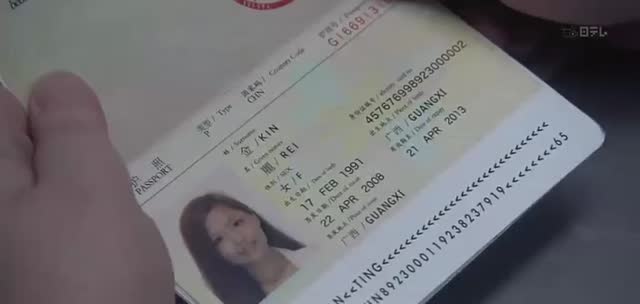
在留資格
在留資格 = status of residence
「在留資格(ざいりゅうしかく)」 = the status that allows a foreigner to reside and engage in activities in Japan (commonly called the "type of visa"). For international students, the 「留学」 status in principle does not allow work; it requires 「資格外活動許可」 (permission for activities outside the status), has hour limits, and does not allow work in 「風俗営業」 establishments. The officer uses short questions ending in 「〜は?」, a tone of official questioning, in contrast to Haruko's softened 「〜ですが…」. 「頂いた」 = the humble form of 「もらった」 (a giving-and-receiving verb in honorific form): by saying 「お電話頂いた」 to the police, Haruko takes a humble stance as the one who received the call.
At the police station, Jin Li claims to be a rich young lady whose father's company has 3,000 employees. The officer says the area has many foreigners working without permission and asks what she was doing there alone.
金麗
あいつ エロオヤジ! 被害者はこっちよ!
That dirty old man! The victim is me!
警官
なら何で あんな場所に 1人で居たんだ? いや~あの…。
Then why were you alone in a place like that? -- No, um...
警官
彼女を補導した場所には 許可なく水商売や風俗で働く→
In the place where we picked her up, there are many foreigners working --
警官
外国人が大勢いるんですよ。 不法滞在者も含めてね。
in the bar and sex trades without permission. Including overstayers.
金麗
私 セレブ! 父の会社3千人いる 大企業よ!
I'm a celebrity! My father's company is a big corporation with 3,000 employees!
警官
そう~ですよ。 ウチの子に限ってね~。→
Right, right. "Not my kid, of all kids", and so on.
警官
大体 こんな高飛車な子が接客業なんて できると思いますか?
Besides, do you think a haughty girl like this could do customer service work?
Speaking notes
補導
補導 = (police) taking into protective custody
「補導(ほどう)」 = the police guiding or taking away (minors, suspicious persons) with a warning. • 「深夜徘徊で補導された」 = "was picked up for loitering late at night" The officer says 「補導」, not 「逮捕」 (arrest), which shows Jin Li "has not been charged, only brought in for questioning".
〜に限って
〜に限って = of all..., that one never...
「ウチの子に限って」 = "(Other people's kids might, but) my kid, of all kids, would never..." 「Nに限って」 is a stock line of parents defending their children: • 「うちの子に限って、そんなことは…」 = "Not my child, of all children..." The officer is repeating it sarcastically: most parents say the same thing. 「高飛車(たかびしゃ)」 = domineering, arrogant.
At the police station, Jin Li's boyfriend Shibata rushes in and Haruko is also called in. She is asked to sign the paperwork as the school's guarantor.
警官
高飛車?
Haughty?
柴田
金麗!
Jin Li!
柴田
大丈夫?怪我とかしてない? メール見て驚いたよ。
Are you OK? You're not hurt or anything? I was shocked when I saw your message.
ハルコ
金麗? 私 彼氏とデートの 待ち合わせしてたの。
Jin Li? -- I had arranged to meet my boyfriend for a date.
ハルコ
知り合い? ただの日本語教師!
Do you know her? -- Just a Japanese teacher!
ハルコ
いや ただのって…。
No, what do you mean "just"...
金麗
もう いいでしょう。 ああ…。
That's enough now, isn't it. -- Ah...
柴田
柴田さん いきましょう。 ああ。
Mr. Shibata, let's go. -- Yeah.
ハルコ
ちょっと…金麗? ああ ちょっと…。
Wait a minute... Jin Li? -- Ah, wait a minute...
警官
ここに身元引受人のサインを。
Please sign here as the guarantor.
ハルコ
あ…もう何なのよ! 人のこと呼び出してといて!
Ah... what is this, honestly! Calling a person out and then...
Speaking notes
身元引受人
身元引受人 = guarantor, person who takes custody
「身元引受人(みもとひきうけにん)」 = the person who takes charge of, and vouches for, someone who has been detained or brought in. They must sign the paperwork at the police station. Haruko is called in to sign, but the person has "already been taken away by her boyfriend", so she has made a trip for nothing, which is why she snaps 「もう何なのよ!」.
ただの〜
ただの〜 = just a ..., a mere ...
「ただの日本語教師!」 = "Just a Japanese teacher!" 「ただの」 means "ordinary, nothing special", and is used to downplay: • 「ただの友達」 = "just a friend" Jin Li uses it to distance herself from Haruko, and it hurts Haruko: 「いや ただのって…」. 「呼び出しといて」 = short for 「呼び出しておいて」, meaning "after calling me out ..." (a complaint).
Haruko complains to Katori that she rushed to the police station only to find Jin Li on a date with a man. Katori says it's good that nothing happened, and Takasu reminds them the exam is only a week away.
ハルコ
もう…慌てて駆けつけたら 男とデートだよ!
Honestly... I rushed over in a panic, and she's out on a date with a guy!
鹿取
フッ…。でも 何ごともなくて 良かったじゃありませんか。
Heh... But isn't it good that nothing happened?
ハルコ
まあ そうだけどさ~…。
Well, that's true, but...
鷹栖
卒業試験まで あと1週間しかねぇぞ~。
There's only one week left until the graduation exam~
ハルコ
わかってるわよ!!
I know that!!
ハルコ
金麗。…マリー。ルカ!
Jin Li... Marie. Luca!
Speaking notes
駆けつける
駆けつける = to rush to the scene
「駆(か)けつける」 = to hurry to a place (after hearing news). • 「現場に駆けつける」 = "to rush to the scene" Haruko says 「慌てて駆けつけたら」 to stress "I came running desperately", only to find it was for nothing, hence the complaint.
何ごともなく
何ごともなく = without incident
「何ごともなくて良かった」 = "I'm glad nothing happened." • 「何事もなく終わる」 = "to end without incident" Katori comforts her in a mild, reasonable tone. Takasu's 「〜しかねぇぞ」 = 「〜しかないぞ」, using 「しか+negative」 to stress "only ... left".
Haruko announces extra lessons every day after school from today, and the students complain they have part-time jobs at night. Haruko asks which matters more, the part-time job or graduating.
ハルコ
はい!今日から毎日 放課後も授業やるからね~。
OK! From today there will be classes after school every day, too~
ボブ
夜はバイトがあるんだよ! そうだよ~!
I have my part-time job at night! -- That's right~!
ハルコ
バイトと卒業 どっちが大事なの?
Which matters more, your part-time job or graduating?
王
あれ?
Huh?
王
「パニくる」がバツになってるよ?
「パニくる」 got marked with an X?
王
「やばい」もバツになってる… ちょっと これ正解でしょ?
「やばい」 got an X too... Hey, isn't this the right answer?
ハルコ
それはね…。
Well, that's because...
金麗
今日 彼氏と約束あるのに! 補習 うざい!
I have a promise with my boyfriend today! Extra lessons are so annoying!
ハルコ
「うざい」じゃなくて 正解は…。
Not 「うざい」, the correct answer is...
金麗
でも「うざい」って よく言うじゃない?
But people say 「うざい」 a lot, don't they?
ハルコ
言うけどさ。さっきの…。
They do, but what you just...
Speaking notes
補習
補習 = supplementary class
「補習(ほしゅう)」 = remedial or supplementary lessons (for those with poor results). • 「補習授業」 = "a remedial class" The students use 「うざい」 to protest the extra lessons.
バツ
バツ = X, wrong
「バツ」 = × (wrong); 「マル」 = ○ (right). In Japanese grading, correct answers get ○ (丸) and wrong ones get × (バツ / ばってん). Note: a check mark 「✓」 (チェック) usually means "confirmed", and can also mean "partly right". Wang's 「バツになってるよ?」 states "it was marked wrong" with a note of dissatisfaction.
Haruko tells the students that these words are all "young people's language", that is, slang, but that they did not come from nowhere.
ハルコ
すべて「若者言葉」っていって俗語。→
All of these are called 「若者言葉」, and they are slang.
ハルコ
つまり スラングだから…→
In other words, since they are slang, --
ハルコ
答えとしては 間違ってるのよね。
as answers, they are wrong.
ジャック
若者が作った新しい言葉ですか?
Are they new words that young people made up?
ハルコ
そう。でも 新しい言葉だからって言って…由来はあるのよ。
Yes. But even though they're new words... they have origins.
Speaking notes
〜だからって
〜だからって = just because... (that doesn't mean)
「新しい言葉だからって言って…由来はあるのよ」 = "Even if they're new words, they have origins." 「〜だからって」 is the casual form of 「〜だからといって」, meaning "you can't conclude B just because of A": • 「高いからって、いいとは限らない」 = "Just because it's expensive doesn't mean it's good." Haruko uses it to rehabilitate slang: new does not mean groundless.
由来
由来 = origin
「由来」 = origin, derivation. • 「地名の由来」 = "the origin of a place name" Learners of Japanese find it easier to remember a word and grasp its nuance once they know where it comes from.
Haruko explains the origins of 「パニくる」, which Wang wrote, and of 「うざい」.
ハルコ
由来。元になった言葉ね。
Origins. The words they came from, that is.
ハルコ
王が書いた「パニくる」は→
The 「パニくる」 Wang wrote --
ハルコ
英語の「パニック」から来てるの。
comes from the English "panic".
ハルコ
あと「うざい」は「うざったい」っていう方言からきてるのよ。
And 「うざい」 comes from a dialect word, 「うざったい」.
ジャック
方言?
A dialect?
エレーン
地方の言葉でしょ? そう。
It's a regional word, right? -- Yes.
ハルコ
虫とかが うじゃうじゃいる様子を→
When insects and such are swarming together in great numbers --
ハルコ
東京の八王子の方では 「うざったい」って言うの。
in the Hachioji area of Tokyo, they call it 「うざったい」.
ハルコ
それが全国に広まって 省略されて→
That spread all over the country and was shortened --
ハルコ
「うざい」になったみたい。
and apparently became 「うざい」.
Speaking notes
うじゃうじゃ
うじゃうじゃ = (mimetic) swarming
「うじゃうじゃ」 = the look of bugs, people, etc., gathered in a crawling, messy swarm. • 「虫がうじゃうじゃいる」 = "bugs are swarming everywhere" 「うざったい」 means "bothersome, sticky and annoying".
〜みたい
〜みたい = it seems that...
[そう / よう / みたい / らしい] 「うざいになったみたい」 = "it seems it became 「うざい」." 「〜みたい」 expresses a guess based on the situation; it is more colloquial than 「ようだ」 and more subjective than 「らしい」. [Extra] When telling origin stories, using 「〜みたい/〜らしい/〜と言われている」 is the cautious way to speak in Japanese.
Jack asks about the origin of 「やばい」, and Haruko says there are various theories about it.
ジャック
じゃあ…「やばい」は?
Then... what about 「やばい」?
ハルコ
「やばい」の由来には いろんな説があるんだけど→
There are various theories about the origin of 「やばい」, but --
ハルコ
江戸時代のアトラクションに 射的場があってね→
in the Edo period, among the attractions there was a shooting range --
ハルコ
それを「矢場」って呼んでたの。
and it was called a 「矢場」.
ハルコ
でも ここでは裏で違法な 風俗店をやってたらしくて…。
But apparently, behind the scenes, an illegal brothel was run there...
ハルコ
ここは お役人が 目をつけてるんだってよ!」
"The officials have their eye on this place, you know!"
ハルコ
「じゃあ 下手に 合わせたら矢場だけに…」
"Then if we play along carelessly, at a 「矢場」 of all places..."
ハルコ
「やばいよ~」
"That's 「やばい」~"
ハルコ
つまり 危険な場所っていう意味で→
In other words, it meant a dangerous place --
ハルコ
「やばい」って 言葉が生まれたみたい。
and so the word 「やばい」 was apparently born.
エレーン
危険な場所?
A dangerous place?
ハルコ
金麗。デートはいいけど やばいバイトはしないでよ。
Jin Li. Dating is fine, but don't take any 「やばい」 part-time jobs.
Speaking notes
やばい(語源)
やばい (etymology) = one theory of where 「やばい」 comes from
Change in usage: at first it meant "dangerous, bad" (negative); now it can mean "awesome" (positive).
〜だけに
〜だけに = precisely because it's... (pun)
「矢場だけに」 = "since it's a 「矢場」, of all places..." 「Nだけに」 means "precisely because it is N, all the more ...", and here it is a pun (矢場 = 「やば」 + 「やばい」). [Extra] In this skit, 「下手に合わせたら」 means "if we play along carelessly with the officials", and 「やばいよ~」 is "that's dangerous".
Luca asks Haruko whether 「お家族」 is wrong. Haruko talks about Japanese words that start with 「お」.
ルカ
ハルコ。「お家族」は間違いなの?
Haruko. Is 「お家族」 wrong?
ハルコ
それね。 基本的に…。
That one, you see. Basically...
ハルコ
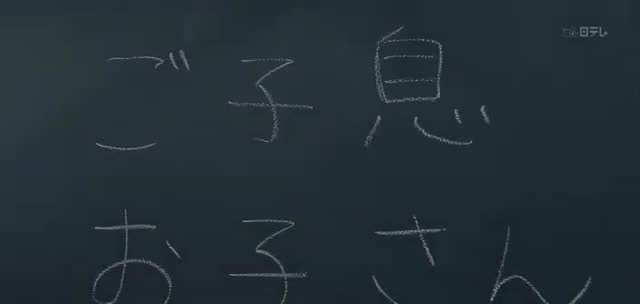
例えば 同じ子供でも「ご子息」と 「お子さん」って読むでしょ?
For example, even for the same word "child", you read it as 「ご子息」 and 「お子さん」, right?
マリー
「お子さん」の方が やさしく聞こえて好きですね。
I like 「お子さん」 better, it sounds gentler.
ハルコ
それはね…「お」がつく言葉は 女性が作ったからなの。
That's because... words with 「お」 were made by women.
ハルコ
「女房言葉」って言うのよ。
They're called 「女房言葉」.
ルカ
女房言葉?
「女房言葉」?
Speaking notes
お家族
お家族 = why it sounds odd
「お家族」 = (the student's phrase) putting 「お」 before 「家族」. In Japanese, 「お」 and 「ご」 can't be attached freely: • 「お」 mostly goes with native Japanese words (和語) (お水, お茶, お子さん) • 「ご」 mostly goes with Sino-Japanese words (漢語) (ご家族, ご両親, ご連絡) So you should say 「ご家族」, not 「お家族」. Haruko uses the "child" example to show the tendency "お + native word / ご + Sino-Japanese word".
お子さん/ご子息
お子さん/ご子息 = your child / your son
「お子(こ)さん」 = someone else's child, friendlier; 「ご子息(しそく)」 = someone else's son, more formal and written. In the dialogue, Marie finds 「お子さん」 gentler: because "お + native word" feels soft and familiar. [Extra] 「お子さん」 can mean a son or a daughter; 「ご子息」 means a son only, and 「お嬢さん/ご令嬢」 means a daughter. [Honorifics] All of these are respectful forms (honoring another person's child) and cannot be used for your own child (your own are 「子供」, 「息子」, 「娘」).
Haruko continues with words that start with 「お」 and asks the students whether they know how 「おなら」 is said with a single character.
ハルコ
室町時代に宮中で働いていた 女の人が使った言葉でね→
These are words used by women who worked at the imperial court in the Muromachi period --
ハルコ
例えば…「おなら」を ひと文字で「へ」って言うの 知ってる?
For example... do you know how to say 「おなら」 with a single character? It's 「へ」.
ハルコ
「へ」だってよ!ハハッ…。
Can you believe it, 「へ」! Ha ha...
ハルコ
でも それじゃあ 下品だから→
But that was vulgar, so --
ハルコ
音を鳴らす「鳴らす」に 「お」をつけて→
they put 「お」 before 「鳴らす」, to make a sound --
ハルコ
「おなら」っていう 言葉を作ったのよ。
and made the word 「おなら」.
生徒たち
へぇ~…。
Hee~...
王
ごめんなさい!
Sorry!
ハルコ
他にも身体の真ん中の「なか」に 「お」をつけて「おなか」。
Also, they put 「お」 before 「なか」, the middle of the body, to make 「おなか」.
ハルコ
「にぎりめし」に「お」をつけて→
They put 「お」 before 「にぎりめし」 --
ハルコ
「おにぎり」って呼ぶようになったのよ。
and it came to be called 「おにぎり」.
Speaking notes
女房言葉
女房言葉 = court ladies' vocabulary
「女房言葉」 = a refined, euphemistic vocabulary created by the court ladies (女房) in the early Muromachi period. Features: (1) adding 「お」: おなか, おかず, おでん, おひや (2) adding 「もじ」 at the end: しゃもじ, ひもじい (3) renaming: 「にぎりめし」 → 「おにぎり」 These words later spread to ordinary people and became everyday vocabulary. [Note] Many "お + noun" forms in modern Japanese (beautifying speech) are survivals of 女房言葉.
下品
下品 = vulgar, coarse
「下品(げひん)」 = vulgar, lacking in refinement (of words or behavior); the opposite is 「上品(じょうひん)」. • 「下品な言葉」 = "vulgar language" The court ladies used euphemisms to avoid saying indecent things directly. [A feature of Japanese] Adding 「お」 or swapping words makes a topic sound "elegant".
Haruko asks what other words start with 「お」. The students come up with 「お冷」 and 「おしぼり」, and then 「おビール」, and Haruko asks where they learned that.
ハルコ
じゃあ他に 「お」がつく言葉 知ってる人?
So, does anyone know other words that take 「お」?
生徒たち
「水」は「お冷」よ。 「お冷」って…。
"Water" is 「お冷」. -- 「お冷」 is...
生徒たち
あと「おしぼり」「おビール」。
And 「おしぼり」 and 「おビール」.
ハルコ
「おビール」なんて言葉 あんた どこで覚えてきたのよ?
Where did you learn a word like 「おビール」?
金麗
えっ?
Huh?
ハルコ
まさか マジで水商売とか やってないでしょうね?
Surely you're not really working in the bar trade or something?
金麗
ハルコも疑うの?…超うざい!
You doubt me too, Haruko?... Super annoying!
Speaking notes
お冷
お冷 = (restaurant) cold water
「お冷(ひや)」 = the iced water served in restaurants. It is also a survival of 女房言葉: 「冷や (cold water)」 + 「お」. • 「お冷をください」 = "Water, please." • 「おしぼり」 = a damp hand towel (from 「絞る」 + お) • 「おビール」 = adding 「お」 to the loanword 「ビール」 is in principle not standard (loanwords generally don't take 「お」), and is used by habit only in service settings such as bars and restaurants. Haruko sharply notices that this "service-trade vocabulary" is a trace of Jin Li's part-time job.
疑う
疑う = to doubt, suspect
「ハルコも疑うの?」 = "You doubt me too, Haruko?" 「も」 means "even you", showing the disappointment and anger of being doubted by someone she trusted. 「超(ちょう)うざい」 = 「超」 is a young people's intensifier, more colloquial than 「とても」: • 「超かわいい」 / 「超むかつく」
After the extra lessons, Shibuya and Katori talk about the students: everyone came to Japan to make their dreams come true, and they hope as many as possible get diplomas. Jack has something to tell Haruko.
鹿取
1人でも多く 卒業証書を もらってほしいですしね。→
I'd like even one more person to get a diploma.
鹿取
ま…みんな 日本に夢を かなえるために来たんですから。
Well... everyone came to Japan to make their dreams come true.
ハルコ
夢をかなえるため…。 ハルコ!
To make dreams come true... -- Haruko!
ジャック
あっ…。 夜なんですが…。
Ah... It's about the evening...
ハルコ
ああ~いい いい。ジャックは 補習 出なくていいから。
Oh, it's fine, fine. Jack doesn't need to attend the extra lessons.
ジャック
そうではなくて…。 実は先日 仕事の帰りに→
That's not it... Actually, the other day on my way home from work --
ジャック
金麗さんを見かけました。 金麗を?…どこで?
I saw Jin Li. -- Jin Li? ...Where?
Speaking notes
夢をかなえる
夢をかなえる = to make a dream come true
「夢をかなえる」 = to make a dream come true. 「叶える」 is transitive (to make a wish come true) and 「叶う」 is intransitive (a wish comes true): • 「夢を叶える」 = "to make a dream come true" / 「夢が叶う」 = "a dream comes true" Katori uses 「夢をかなえるために」 to restate the students' original purpose in coming to Japan.
〜てほしい
〜てほしい = I want (someone) to...
[Giving and receiving verbs] 「卒業証書をもらってほしい」 = "I want them to receive diplomas." 「Vてほしい」 means "I want the other person to do / become ...", where the speaker is the subject and the other person does the action. Katori expresses her hope with the gentle 「ほしい」, showing that as a teacher she can only "hope", not "force".
Jack gives Haruko a lead, and she rushes to where Jin Li works. She finds Jin Li on the street soliciting customers and shouts at her to stop. Jin Li claims that touting doesn't count as working.
ジャック
あの~…補習授業は? んっ?
Um... what about the extra lesson? -- Hm?
ハルコ
ジャックの話が本当だったら マジ やばいじゃん。
If what Jack says is true, that's seriously bad.
鹿取
いや…でも私 渋谷先生に 食事に誘われていて…。
No... but I've been invited to dinner by Mr. Shibuya...
ジャック
いました。あそこです。 いらっしゃいませ~。
Found her. She's over there. -- Welcome~
金麗
社長さん サービスしますよ~。
Boss, I'll give you a good deal~
ジャック
いい…行こう行こう じゃ またね…
Fine... let's go, let's go. Well, see you...
ハルコ
金麗!
Jin Li!
ハルコ
あんた 補習さぼって 何やってんのよ~!!
What are you doing, skipping extra lessons~!!
金麗
彼氏の手伝いよ。 はぁ~。水商売は禁止でしょうが!
I'm helping my boyfriend. -- Huh? Working in the bar trade is prohibited!
金麗
呼び込みはセーフよ!
Touting is safe!
ボブ
ガツンと言ったれ。ガツンと!
Give it to her straight. Straight!
Speaking notes
セーフ
セーフ = safe, OK
「セーフ」 = (baseball) safe at base; by extension, "no problem, not a violation". • 「ギリギリセーフ」 = "just barely safe" The opposite is 「アウト (out)」 = not allowed, a violation. Jin Li defends herself with 「セーフ」: "touting is not 'the bar trade', so it's fine".
ガツンと
ガツンと = (mimetic) bluntly, hard
「ガツンと言う」 = to say it bluntly and without holding back. 「ガツン」 is the sound of a heavy knock, extended to mean "strong and merciless": • 「ガツンと言ってやれ」 = "Give him a good talking-to." 「言ったれ」 = Kansai-dialect 「言ってやれ」.
Katori explains the rules to Haruko: international students cannot do any work connected with the bar trade, even just touting, and if arrested they will be forcibly sent home.
鹿取
呼び込みだろうが 水商売に関することは→
Even if it's touting, anything related to the bar trade --
鹿取
一切 禁止されてるんです。 逮捕されたら強制送還ですよ。
is prohibited entirely. If you're arrested, you'll be deported.
金麗
でも 彼氏がセーフだって。
But my boyfriend said it's safe.
鹿取
金麗さんの恋人が?
Jin Li's boyfriend said that?
鹿取
あなたも 留学生なら 今すぐ辞めなさい。
If you're an international student too, quit right now.
鹿取
ジェニーは 日本語 得意じゃないのよ。
Jenny isn't good at Japanese, you know.
Speaking notes
強制送還
強制送還 = forced repatriation
「強制送還(きょうせいそうかん)」 = being forcibly sent back to one's home country. International students who violate the limits of their residence status (e.g., working without permission, or working in 「風俗営業」 establishments) can be deported. Katori uses 「逮捕されたら強制送還ですよ」 to warn of the consequences. Note: Katori is usually gentle, but here she uses the command form 「〜なさい」, showing how serious the situation is.
〜だろうが
〜だろうが = whether it's... or ...
「呼び込みだろうが」 = "whether it's touting or whatever." 「Nだろうが(Nであろうと)」 means "no matter whether ...": • 「子供だろうが関係ない」 = "It makes no difference even if it's a child." Katori uses 「だろうが」 with a firm "no exceptions" tone.
Jin Li is brought back to school and says she is working to save money to open a restaurant with her boyfriend. Haruko asks why a rich young lady would need a job.
ハルコ
金麗 早く着替えなさい。
Jin Li, hurry up and change your clothes.
金麗
だって お金貯めて彼氏と レストランやるのよ!
But I'm saving money to open a restaurant with my boyfriend!
ハルコ
レストラン? あんた セレブなんじゃないの?
A restaurant? Aren't you a celebrity?
ハルコ
バイトなんか しなくていいでしょう!
You don't need to do part-time work, do you!
金麗
…けど。
...But.
金麗
わたしたち 結婚するの。
We're going to get married.
ハルコ
結婚? ええ まあ…。
Married? Uh, well...
Speaking notes
〜なんじゃないの
〜んじゃないの = isn't it that...?
「セレブなんじゃないの?」 = "Aren't you a socialite?" 「〜んじゃないの」 is used to point out a contradiction or voice doubt: • 「忙しいんじゃないの?」 = "Aren't you busy?" Haruko uses it to point out the contradiction of a rich young lady working, and Jin Li's trailing-off 「…けど。」 is a hesitant reaction.
貯める
貯める = to save up
「お金を貯める」 = to save money. 「貯(た)める」 = to accumulate (money); 「溜(た)める」 = to let build up (water, grudges, stress); 「溜まる」 is the intransitive form. Jin Li uses 「貯めて」 in the positive sense of "saving for the future". [Extra] 「結婚するの」 is a soft, explanatory tone used by women.