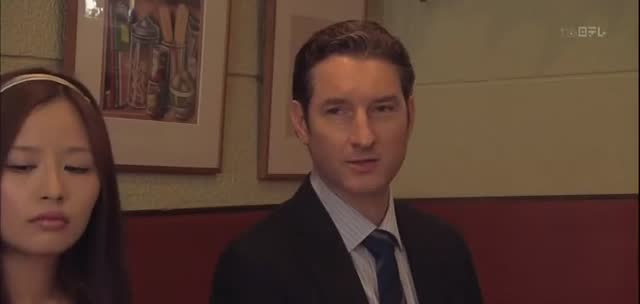
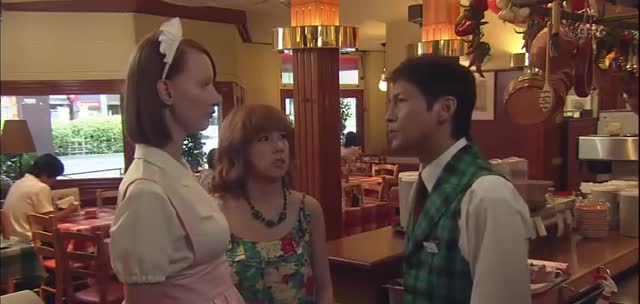
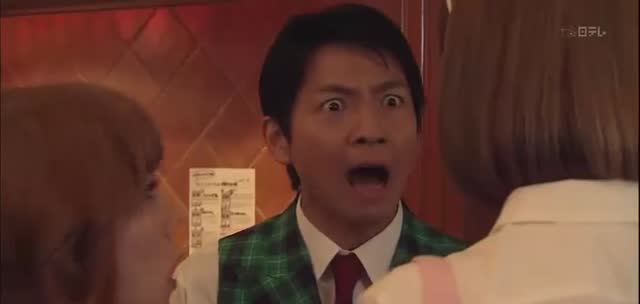
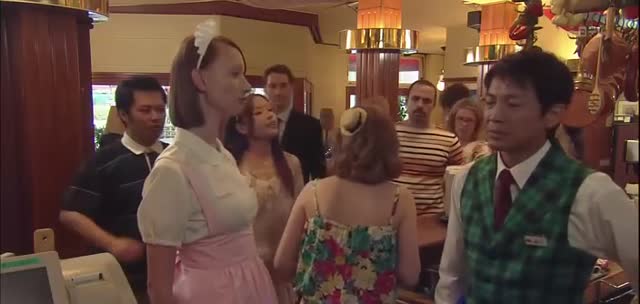
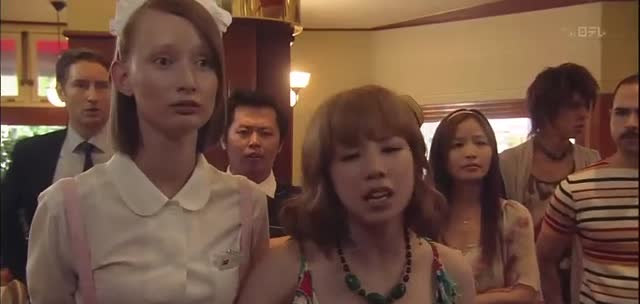
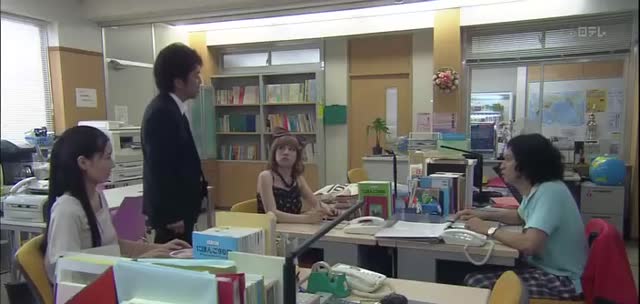
This episode collects 57 dialogue scenes: an introductory keigo class, the language used at a restaurant part-time job, how customers and staff speak to each other, and the much-discussed service phrase 「千円からお預かりします」. The main points are 「お+verb+になる」 and 「召し上がる」, and why double honorifics are incorrect.
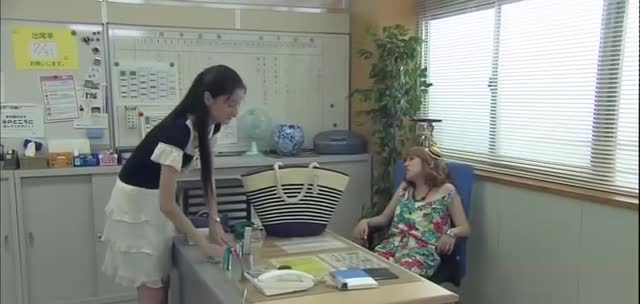
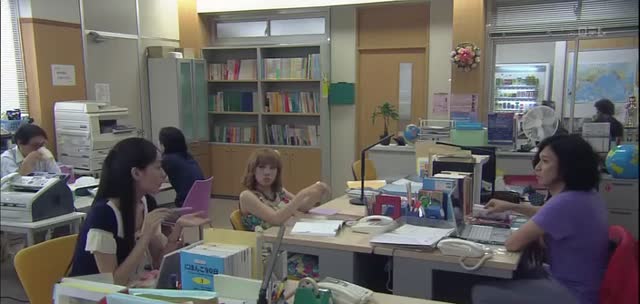
In the staff room, Katori works out for Haruko that getting the whole class through the graduation exam in just three months is impossible. Haruko groans that she has been set up.
鹿取
無理ですよ~。たった3ヶ月で→
It's impossible. In just three months...
鹿取
クラス全員を 卒業試験に合格させるなんて。
to get the entire class to pass the graduation exam, of all things.
ハルコ
はめられた~…。
I've been set up...
渋谷
おはようございます!→
Good morning!
渋谷
どうしたの?変な顔して?
What's wrong? Why the funny face?
ハルコ
チッ!変な顔に見えるなら 100パー 鷹栖のせいね!
Tsk! If I look weird, it's one hundred percent Takasu's fault!
Speaking notes
はめられた
はめる = to trap someone into something
「はめる」 literally means "to fit something into place," and by extension "to set someone up" or "to trick someone into a trap." The passive 「はめられた」 = "I got framed / I got played." • 「罠にはめる」 = to lure someone into a trap The drawn-out 「~…」 at the end is a deflated, trailing-off sigh.
〜なんて
〜なんて = (scornful/astonished) of all things...
「合格させるなんて」 = "to think we're supposed to make them pass..." 「なんて」 follows something absurd or hard to believe and expresses "how could that possibly work?" • 「無理ですよ」 + 「〜なんて」: state the conclusion first, then give the reason, a common inverted order in Japanese. Note that 「合格させる」 is causative: the teacher has to "make" the students pass, so the responsibility falls on the teacher, not the students, which makes it sound especially heavy.
100パー
パー = colloquial short form of パーセント
「100パー」 is the colloquial clipped form of 「100パーセント」 and is often used to say "a hundred percent sure." Haruko uses it to accuse Takasu: 「鷹栖のせい」 ("it's Takasu's fault"). 「〜のせい」 shifts the blame onto someone, in contrast to 「〜のおかげ」 ("thanks to..."): both give a cause, one negative, one positive.
Shibuya tells Haruko that Takasu goaded her so that she would take teaching Japanese seriously, and that deep down he has expectations of her. Haruko is only half convinced.
渋谷
ああ~。本気で日本語教師 やらせるために発破かけたんだよ。
Oh, well. He lit a fire under you so you'd teach Japanese seriously.
渋谷
内心 期待してると 思うんだけどな~ 俺は…。
I think deep down he's expecting something from you. That's what I think, anyway...
ハルコ/渋谷
あたしに? うん。
From me? — Yeah.
鹿取/渋谷
渋谷先生! …おはようございます。
Mr. Shibuya! — ...Good morning.
鹿取/渋谷
おはようございます。 カトリーヌ先生。
Good morning. — Good morning, Ms. Catherine.
鹿取
カトリーヌじゃなくて…鹿取です。あ~…。
It's not Catherine... it's Katori. Ah....
Speaking notes
発破をかける
発破をかける = to fire someone up with harsh words
「発破をかける」 = to encourage or push someone with stern words. 「発破」 originally means blasting explosives, so the literal image is "setting off a charge": blowing someone awake with strong medicine. • 「社員に発破をかける」 = to give the employees a jolt of motivation
やらせるために
使役:〜させる = to make/let (someone) do
「やらせる」 is the causative form of 「やる」: "to make her do it." Note the nuance: the subject is Takasu and the object is Haruko, so he wants to "make" her work hard rather than "ask" her to. The causative has two shades: ① coercion (making someone go) ② permission or leaving it to them (letting someone do it) Here it leans toward "pushing her forward."
内心期待してると思うんだけど
〜と思うんだけど = (softener) I think that...
「〜と思うんだけどな」 = "that's what I think, though..." The sentence-final 「けどな~」 leaves some room: it doesn't state the claim as fact and lets the listener judge. Shibuya always talks like this, soft and a little ingratiating: 「内心」, then 「思うんだけど」, then 「俺は…」, three layers of cushioning.
Key vocabulary
本気 ほんき
seriousness; for real.
発破 はっぱ
explosive charge for blasting; figuratively, stern encouragement.
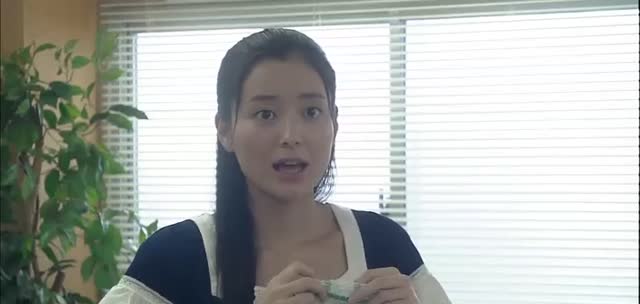
Haruko complains to Katori about what anyone could see in a sweaty guy like Takasu. She turns around, trips, and her bag spills everywhere. Takasu is sitting right there reading a racing paper.
ハルコ
あんな汗臭いのの どこが いいわけ?
What on earth is good about a sweaty guy like that?
ハルコ
ちょっ…。
Hey...
ハルコ
うわっ!
Whoa!
ハルコ/鷹栖
痛てっ…もう。くっ…。 大丈夫か?
Ow... geez. Ugh... — Are you okay?
ハルコ/鷹栖
もう…。 悪い悪い…。
Geez... — Sorry, sorry...
ハルコ
えっ!?
Huh!?
Speaking notes
あんな汗臭いのの
〜の = (omitted noun) the one / the person
The 「の」 in 「汗臭いの」 stands for "sweaty person" and refers to someone without naming them. It is common in speech: 「赤いの」 (the red one), 「ああいうの」 (that kind of thing). By calling Takasu 「あんな汗臭いの」, Haruko won't even deign to say his name, which carries a belittling contempt. 「どこがいいわけ?」 = "what exactly is good about him?" 「〜わけ」 is a colloquial way of demanding a reason, with a tone of "I can't understand it."
痛てっ
痛い → 痛てっ (masculine/rough)
「痛てっ」 is a clipped, colloquial form of 「痛い」 with a masculine flavor. Similar clipped exclamations: • 「あっつ!」 (from 熱い) • 「いってえ!」 (from 痛い)
悪い悪い
悪い = (casual) sorry
「悪い悪い」 is a casual apology a man makes to someone of equal standing: "my bad, my bad." Literally it means "bad," but by casting himself as the one at fault, he is admitting the mistake. • 「ごめん」: gentler • 「悪い」: blunt, with a touch of breezy heartiness Takasu says 「悪い悪い」 because he doesn't take it very seriously: it is only a token apology.
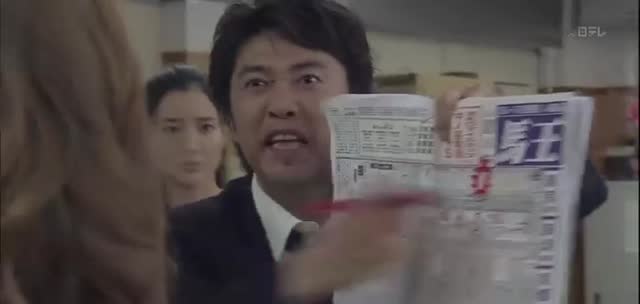
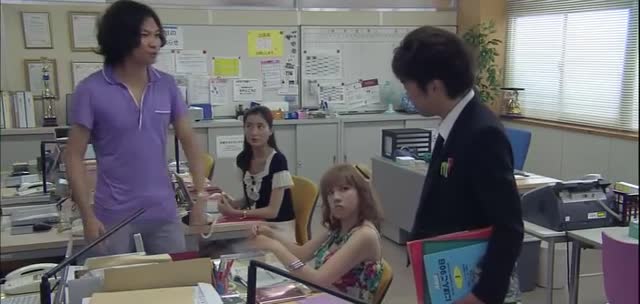
Without looking up from his racing paper, Takasu throws a jab at Haruko. She pretends not to care and repeats that teaching Japanese is only a stepping stone for her.
鷹栖
どう~転んでも 日本語教師には見えないな。
No matter how you fall, you still don't look like a Japanese teacher.
ハルコ
…とか何とか言って 本当は期待してるんでしょう?
...You say that, but you're actually expecting something from me, right?
鷹栖/ハルコ
誰に? あたしに。
From whom? — From me.
鷹栖
めでたいやっちゃな~。
What a happy-go-lucky one you are.
鷹栖
負け馬に期待するほど 落ちぶれちゃいないんだよ!
I haven't sunk so low that I'd put my hopes on a losing horse!
ハルコ
ハァ~…日本語教師は ただのステップだからね~。
Hah... Teaching Japanese is just a stepping stone, you know.
鷹栖/ハルコ
ステップです。 ステップです!
A stepping stone. — A stepping stone!
Speaking notes
どう転んでも
どう〜ても = no matter how...
「どう転んでも」 = "no matter how you fall (or how things turn out)." 「どう〜ても」 is a concessive pattern with a question word + 「ても」: 「どうやっても」, 「どう考えても」. Taking advantage of Haruko's tumble, Takasu jokes on the literal meaning: "however you fall, you won't come out looking like a Japanese teacher." It is a typical Japanese double meaning: on the surface it is about her fall, but in substance it says she isn't up to the job.
めでたいやっちゃな
めでたい = (ironic) naive, simple-minded
「めでたい」 originally means "auspicious, happy," but in speech it is turned around to mock someone who is "too optimistic or naive." 「めでたいやつ」 = a carefree fool. 「やっちゃな」 is the Kansai-dialect version of 「やつだな」: 「やっちゃ」 = 「やつや」, so Takasu's line has a teasing hint of a Kansai accent. His subtext: think that if you like; I won't stop you.
負け馬/落ちぶれる
負け馬/落ちぶれる = a horse-racing metaphor
「負け馬」 = a horse that is bound to lose. Takasu is reading a racing paper, so he compares Haruko to a horse: he wouldn't put his bet on her. 「落ちぶれる」 = to fall on hard times. 「落ちぶれちゃいない」 = I haven't sunk that low yet. Note that 「〜ちゃいない」 is the colloquial contraction of 「〜てはいない」: 「は」 is swallowed and becomes 「ちゃ」, which emphasizes the negation.
Haruko says her goal is to get the whole class to graduate and then have the principal introduce her to a high school teaching post. Takasu waves his racing paper and calls her his long shot. Furious, Haruko swears he will regret it.
ハルコ
クラス全員を卒業させて 高校教師の職を紹介してもらう。→
Get the whole class to graduate, and have them introduce me to a high school teaching job.
ハルコ/鷹栖
それが私の目的ですから。 それが出来たらな…→
That's my goal. — If you can pull that off...
鷹栖/ハルコ
お前は大穴だ! これが大穴だよ これこれ…。
You're a long shot! — This is what a long shot is, this, this...
ハルコ/鷹栖
ううっ!! 大穴に賭けなかったこと→
Ugh!! — That you didn't bet on this long shot,
ハルコ
絶対 後悔させてやっからな!
I'll make you regret it for sure!
鷹栖/生徒/ハルコ
何をやってくれちゃってんだよ。 大穴パルコ! ハッ!?
What the hell are you doing? — Long-shot Parco! — Huh!?
Speaking notes
紹介してもらう
〜てもらう = (I) get someone to do for me
「紹介してもらう」 = "to have (the principal) introduce me." 【Giving and receiving verbs】 • 〜てくれる: the other person does something for me, on their own initiative • 〜てあげる: I do something for the other person • 〜てもらう: I "receive" the other person's doing something for me (the subject is the beneficiary) By using 「もらう」, Haruko takes the position of the one who benefits and casts the principal as the giver.
大穴
大穴 = (horse racing) a long shot
「大穴(おおあな)」 = in horse racing or gambling, the least favored option, which pays enormous odds if it wins. Categories in horse racing: • 本命: the favorite • 対抗: the second pick • 穴: a long shot • 大穴: an extreme long shot When Takasu says 「お前は大穴だ」, it is a jab (your chance of winning is tiny).
後悔させてやっからな
使役+〜てやる+から = I'll make you...
「後悔させてやる」 = "I'll make you regret it." It is built in three layers: ① 後悔する: to regret ② 〜させる: causative, to make (the other person) regret ③ 〜てやる: "I'll do it (defiantly)" 【Giving and receiving verbs】 「やる」 is the rough form of 「あげる」; in a confrontation it carries no sense of a favor, only a determined "I'll show you." 「〜からな」 is a masculine-sounding declaration.
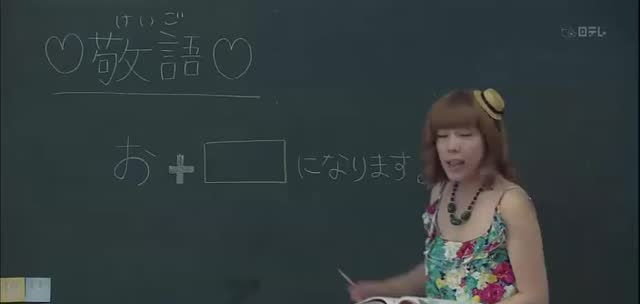
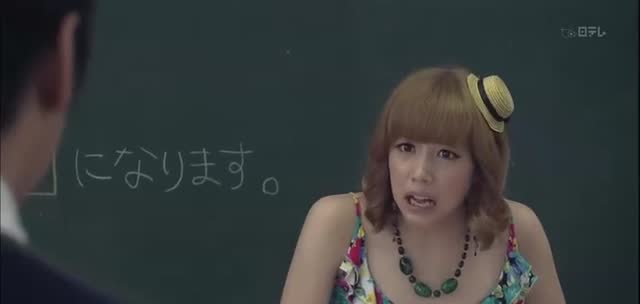
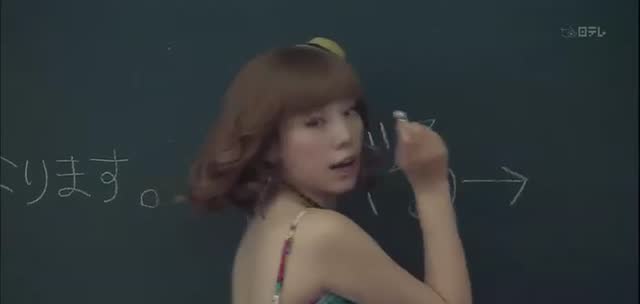
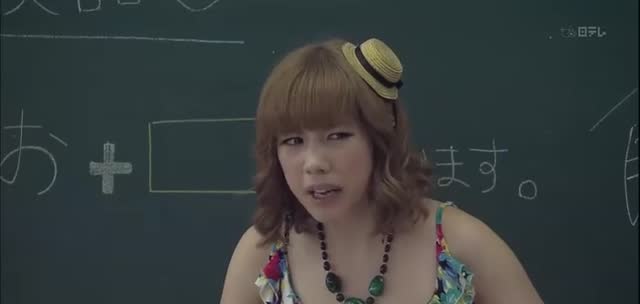
The new lesson is keigo. Haruko writes "お+□+になります" on the board and leads the class in repeating honorific expressions one by one.
ハルコ/生徒たち
お帰りになります。 お帰りになります。
You are going home. — You are going home.
ハルコ/生徒たち
お乗りになります。 お乗りになります。
You are getting on (a vehicle). — You are getting on.
ハルコ
こうやって 動詞に 「なります」を付けると→
If you add 「なります」 to a verb like this,
ハルコ/生徒たち
尊敬語になるの。いい? 分かった? は~い。
it becomes honorific language. OK? Got it? — Yes!
ハルコ
じゃあね…他の言い方で 言ってみて下さい。
Now then... please try saying it with other verbs.
Speaking notes
お帰りになります
お+V連用形+になる = the basic honorific form
【Keigo, part 1: how to make honorific language】 Japanese honorifics fall into three main types: • 尊敬語: raises the other person's (or a third party's) actions • 謙譲語: lowers your own actions • 丁寧語: です/ます, simple politeness Haruko is teaching the most general honorific formula: お+verb stem+になる. • 帰る → お帰りになる • 乗る → お乗りになる • 書く → お書きになる Note that her explanation, "add なります to the verb," is oversimplified: you first add 「お」, take the stem (the ます form minus ます), and then attach 「になる」.
いい?分かった?
いい?分かった? = checking understanding in class
「いい?」 and 「分かった?」 are the teacher's checks after explaining a point. The tone is plain form with rising intonation: friendly, a bit pushy. Compare: • 分かりましたか? (polite, with distance) • 分かった? (familiar, treating students as "one of us") The students' chorus of 「は~い」 that follows is the standard classroom response in Japan.
Key vocabulary
尊敬語 そんけいご
honorific language (elevating the listener or a third party).
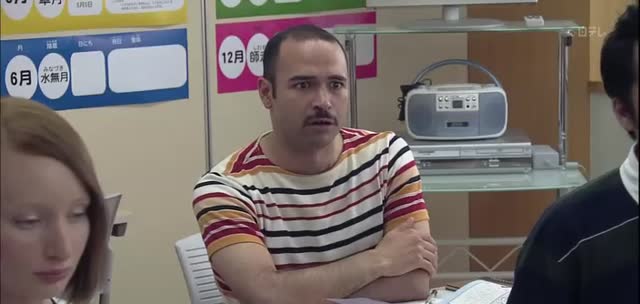
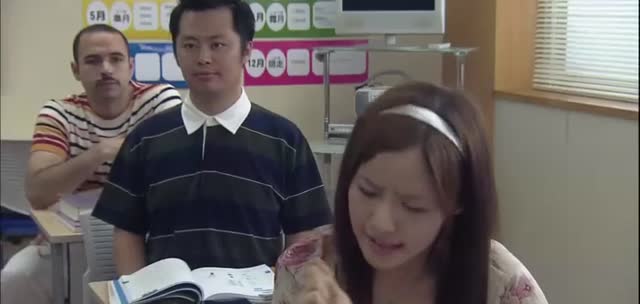
Haruko asks the class for another honorific expression and calls on Jack, Elaine and Wang. The students shout out answers, which get wilder and wilder.
ハルコ
ええ~…ジャックと エレーンと王。
Um... Jack, Elaine, and Wang.
生徒
はい。
Yes.
ハルコ
いいよ!
Go ahead!
ハルコ/ボブ
お母さん!? ちげぇよ!
"Okaasan"!? — That's wrong, man!
ハルコ
動詞だってば。 「お母さん」は名詞でしょう。
I said a verb! "Okaasan" is a noun, isn't it?
王
あっ!
Ah!
ポール/生徒たち
年取っちゃったよ。 (笑い)
I've gotten old! — (Laughter)
ハルコ
静かに~!!
Quiet, please!!
Speaking notes
動詞だってば
〜だってば = I told you it's...!
「〜だってば」 = "I'm telling you it's...!" It is used when the other person hasn't understood and you repeat yourself for emphasis. 「って」 is a quotation and 「ば」 strengthens it, so together they give a slightly impatient repetition. • 「違うってば!」 = I said that's wrong! • 「本当だってば!」 = It's true, I tell you! Note that she ends with 「でしょう」, leaving it to the students to judge whether the answer is right.
お+noun
お+noun = the beautifying お vs. the honorific お
The 「お」 of 「お母さん」 is part of "beautification language," not the 「お+V+になる」 of honorifics. The two 「お」 look the same but function differently: ① お母さん/お水: 「お」 before a noun, which makes the word more refined ② お帰りになる: 「お」 before a verb stem, which forms honorific language Seeing "お+□+になります" on the board, the students just plugged in a noun that starts with 「お」. This is a typical look-alike mistake for foreign learners. Haruko immediately points out the difference in part of speech.
The class quiets down. Wang, called on by Haruko, says that the name Diana means "goddess of the moon," and the other students tease him.
ハルコ
ええっとね…。
Um...
王
ダイアナ。 「月の女神」という意味だよ。
Diana. It means "goddess of the moon."
ハルコ/生徒
詳しいね~。 何で そんなこと知ってんの?
You know a lot! — Why do you know something like that?
生徒/王
キャ~ 王さま。カッコイイ! 何か おかしいよ。何かあるか?
Ooh, Mr. Wang. Cool! — Something's fishy. Is there something going on?
王/生徒
やめろ~よ!! アハッ…そういうこと。
Cut it out!! — Ahaha... I see, so that's it.
ハルコ
じゃあね…じゃあ ダイアナ。
Well then... let's go with Diana.
ハルコ
ん~…「食べる」の尊敬語は…。
Hmm... the honorific of 「食べる」 is...
Speaking notes
詳しいね
詳しい = well-informed about...
「詳しい」 = to know something in detail (about a field). Common pattern: 「Aに詳しい」. • 「車に詳しい」 = to know a lot about cars When Haruko says 「詳しいね~」 here, it is half praise, half teasing. 「知ってんの」 = 「知っているの」, a colloquial contraction.
〜という意味だよ
〜という意味だよ = it means...
「AはBという意味だ」 = "A means B." It is the all-purpose pattern for explaining the meaning of a word. • 「大穴」はビッグホールという意味じゃない When learners first meet this pattern, they use it with 「〜ってどういう意味ですか」 ("what does ~ mean?"). Note that Wang ends with 「だよ」, sharing his knowledge in a friendly way.
そういうこと
そういうこと = so that's how it is
「そういうこと」 = "I see," "that's how it is." It is used at the moment when the truth comes out. In Japanese, 「そういうことか」「そういうことね」「そういうこと!」 are common "I get it" phrases, and the different endings subtly distinguish talking to oneself, checking, and announcing.
Diana, called on in class, asks Haruko whether 「お食べ下さい」, which she often hears at her restaurant part-time job, is incorrect.
ダイアナ
「お食べ下さい」は 間違いですか?
Is 「お食べ下さい」 wrong?
ハルコ
ん~…。まあ よく使うけど 正確には 間違った言い方かな。
Hmm... Well, it's used a lot, but strictly speaking, it's an incorrect way to say it, I guess.
ハルコ
あのね 敬語には言葉によって いろんな使い方があるの。
You see, with keigo, there are different ways of using it depending on the word.
ハルコ
「召し上がる」は…。
「召し上がる」 is...
ハルコ
「召し上がる」はね 一番 敬意が高い言葉で→
「召し上がる」 is the word with the highest level of respect, and
ハルコ
今のだったら…。
in the case of the one we just had...
ハルコ
例えば 他には…。
For example, others include...
Speaking notes
召し上がる
食べる/飲む → honorific 召し上がる
【Keigo, part 2: special honorific verbs】 Not every verb can take 「お+V+になる」. Japanese has a set of verbs that have their own dedicated honorific forms: • 食べる/飲む → 召し上がる • 言う → おっしゃる • する → なさる • 行く/来る/いる → いらっしゃる • 見る → ご覧になる • くれる → くださる So the honorific of 「食べる」 is not 「お食べになる」 but 「召し上がる」. 「お食べ下さい」 forces the 「お+V+ください」 formula onto 「食べる」; it sounds like keigo but is non-standard. The correct form is 「召し上がってください」.
お〜ください
お+V+ください = please (do)...
「お待ちください」 and 「お入りください」 are standard honorific request forms. Structure: お+verb stem+ください. It works with most verbs, except: ① verbs that already have their own honorific form (食べる, 言う, 見る, 来る...) ② verbs whose stem is a single syllable (見る → 見, 寝る → 寝 ... these sound unnatural)
まあ よく使うけど
けど = concede first, then qualify
「よく使うけど、正確には間違った言い方かな」 = "it's used a lot, but strictly speaking it's the wrong way to say it." Pattern: 「Fact A だけど、the real point is B」. • 「かな」 marks a judgment made with some uncertainty: "I think it's..."
Paul imitates the catchphrase of the comedian Katsura Sanshi. Haruko loses her temper and announces that today's homework will be three times everyone else's, and the students answer back with the keigo they just learned.
ポール
いらっしゃ~い!
Irasshaaai!
ジャック/ハルコ
桂 三枝ですか? ポール!
Are you Katsura Sanshi? — Paul!
ハルコ
今日…宿題 みんなの3倍だからね。
Today... your homework is three times everyone else's, you know.
生徒/ハルコ
マジかよ!? 先生に対しては敬語でしょう?
Seriously!? — Keigo is what we use toward a teacher, isn't it?
生徒
マジでございますか?
Is that for real, madam? (in over-polite speech)
ハルコ/生徒
あのさ…。 ちゃんと 勉強しようよ。
Listen... let's actually study properly.
Speaking notes
桂三枝ですか?
桂三枝ですか? = background to the "Irasshai" joke
「いらっしゃ~い!」 is the casual form of the shop greeting 「いらっしゃいませ」. 「いらっしゃる」 is the honorific verb for 来る/行く/いる, and 「いらっしゃい」 is its imperative form, used to welcome people. Paul drawls out 「いらっしゃ~い」, and Jack jokes back with 「桂三枝ですか?」 ("Are you Katsura Sanshi?").
マジでございますか
マジでございますか = casual マジ + formal ございます
「マジ」 is young people's slang for "for real," while 「ございます」 is an extremely formal polite form. Mixing the two creates an absurd mismatch. 【Keigo supplement】 「ございます」 is the polite/humble form of 「ある」 and also the formal form of 「です」: 「〜でございます」. It is mostly used by shop staff, hotels and customer service, with a solemn tone and a strong sense of distance. The student's logic is: "toward a teacher we use keigo" = just add 「ございます」 and it counts. He doesn't notice that the 「マジ」 in front is what breaks the effect. Keigo is not about one particular word, but about keeping the style of the whole sentence consistent.
先生に対しては
〜に対して = toward / with regard to
「〜に対して」 = "toward, with regard to, in the case of." It is somewhat more formal than a simple 「に」 and is used when you specify the person or thing an action or attitude is directed at. 「先生に対しては敬語でしょう?」 = "toward a teacher, you use keigo, don't you?" Haruko uses this pattern to remind the students of the rule that keigo is used toward a teacher.
Halfway through the keigo lesson, the students complain it is a hassle. Haruko can't help asking everyone why they came to Japan in the first place, and the answers are all over the place: one says to find ninja, another says to meet the yakuza.
ハルコ
みんな 何しに日本に来たの?
What did you all come to Japan to do, anyway?
エレーン/ハルコ
忍者を探しに来た! 忍者!?
I came to look for ninja! — Ninja!?
マリー
ヤクザに お会いしとうございます。
I wish to have the honor of meeting the yakuza.
ハルコ
あなたは ヤクザですか?
Are you a yakuza?
ルイ/ハルコ
同人誌 買いに来た。 君 オタク?
I came to buy doujinshi. — Are you an otaku?
生徒
敬語 面倒くさいよ~。 日本も英語にしようぜ!
Keigo is such a hassle~. Let's make Japan switch to English too!
金麗
漢字の国は全部 中国語 するべきよ!
All the kanji countries should switch to Chinese!
ハルコ
敬語を覚えないと日本で 生きていけないんだからね!
If you don't learn keigo, you can't survive in Japan, you know!
Speaking notes
〜しに来た
〜しに来た = came in order to...
「V stem+に来る/行く」 = to come/go in order to do something. It expresses the purpose of movement: • 探しに来た: came to look for • 買いに来た: came to buy • 会いに行く: go to meet Haruko's 「何しに」 is a shortening of 「何をしに」: "to do what?"
お会いしとうございます
お会いしとうございます = humble お〜する + ございます + u-onbin
【Keigo, part 3: humble language】 • 「会いたい」 → お会いしたい (humble: lowering your own action) • add the formal 「ございます」 → お会いしとうございます Here 「〜しとうございます」 is the u-onbin (sound change) of 「〜したくございます」: adjective stem 「〜く」 + 「ございます」 → 「〜う」 + 「ございます」. • 「おいしい」 → 「おいしゅうございます」 • 「うれしい」 → 「うれしゅうございます」 This is a very old-fashioned, extremely formal way of speaking. Marie uses it to say she wants to meet the yakuza, creating a huge gap between the politeness and the content. Haruko's retort 「あなたはヤクザですか?」 points exactly at that.
〜ないと〜んだからね
〜ないと…んだからね = if you don't..., you will...
「覚えないと生きていけないんだからね!」 = "if you don't learn it, you won't be able to survive in Japan, you know!" Structure: 「V+ないと+consequence」 (if you don't... then...) + 「んだから」 (stressing the reason) + 「ね」 (seeking the listener's agreement).
Diana suddenly tells Haruko that even Japanese people don't know keigo: at the family restaurant where she works, Japanese customers say 「お食べ下さい」.
ダイアナ/ハルコ
日本人も敬語 知らないです。 えっ!?
Japanese people also don't know keigo. — Huh!?
ダイアナ
私 バイトするファミレスで→
At the family restaurant where I work part-time,
ダイアナ
日本人「お食べ下さい」って言う。
Japanese people say 「お食べ下さい」.
金麗/ハルコ
ああ。それ バイト敬語 じゃありませんか? バイト敬語!?
Ah. Isn't that "part-timer keigo"? — Part-timer keigo!?
金麗
ご存知ないのですか?
You don't know it?
ハルコ/金麗
あっ…ああ。あれね。 あれって?
Oh... ah. That. — What is that?
ハルコ
ん…ってかさ~ それ 知りたいなら→
Well, I mean, if you want to know that,
ハルコ
ファミレス行った方がよくない ねっ!その方が早いよ。
wouldn't it be better to go to a family restaurant? Right! That would be faster.
Speaking notes
バイト敬語
バイト敬語 = part-timer keigo (manual keigo)
「バイト敬語」 = the plausible-sounding but incorrect keigo used by part-timers and shop staff who follow a manual. It is also called 「マニュアル敬語」. Its feature: very polite in form, but wrong in grammar. Typical examples: • 〜になります (「こちら〜になります」) • 〜のほう (「お会計のほう」) • 〜からお預かりします (「千円からお預かりします」) • 〜でよろしかったでしょうか (confirming with the past tense)
ご存知ないのですか
ご存知 = honorific of 知っている
【Keigo 4】 「ご存知(ごぞんじ)」 is the honorific form of 「知っている」. • 知っていますか → ご存知ですか • 知らない → ご存知ない When Jin Li says 「ご存知ないのですか?」 to Haruko, grammatically it is honorific, but in tone she is challenging her teacher: you don't know? It is a classic case of using keigo as a weapon: sarcasm hidden inside a polite shell.
ってかさ
ってかさ = by the way / I mean (changing the subject)
「ってかさ」 = 「というかさ」, used to change the topic or to correct what was said before. It is a young person's conversational opener: • 「ってか、今何時?」 = By the way, what time is it? Here Haruko uses 「ってかさ」 to steer the topic toward "let's go check out a restaurant". 「〜た方がよくない?」 = "wouldn't it be better to...?" Proposing something with a negative question is a softened suggestion.
Haruko only says she might go to a restaurant to check, and the students seize on it and cheer that Haruko is paying. Haruko hurriedly asks who said anything about treating them.
生徒たち/ボブ
よ~し! ハルコの おごりだ~!!
All right! Haruko's treat!!
ハルコ
ええっ…ちょちょっ…。 誰が おごるって言ったのよ。
Wh-what... who said I'd treat you?
生徒
俺たち 卒業するからさ。
We're going to graduate, you know.
生徒/ハルコ
そうすると ハルコ 大穴になるんだろ? はっ!?
If that happens, Haruko becomes the long shot, right? — Huh!?
生徒
おごってくれたら 勉強するよな。
If you treat us, we'll study, right?
Speaking notes
おごり
おごり = treat (おごる)
「おごる」 = to treat someone, paying so that others can eat. The noun form 「おごり」 = someone's treat. 「ハルコのおごり」 = Haruko's treat. • 割り勘: splitting the bill • 奢り: one person pays Haruko never offered; the students decided on their own that it is a treat. In Japanese, this tactic of stating something as if it were already settled is common among people who are close.
おごってくれたら
〜てくれたら = if you would (do it for us)
【Giving and receiving verbs】 「おごってくれたら」 = if you (would) treat us. With 「くれる」, the speaker is on the receiving end: we are the ones who get the benefit. • おごってもらえたら: if (I) could be treated • おごってくれたら: if you'd be willing to treat us, so the initiative lies with the other person
そうすると
そうすると = in that case
「そうすると」 = if it goes like that / in that case. It is a conjunction that introduces an inferred result. 「大穴になるんだろ?」 = "you'd become the long shot, wouldn't you?"
The students chant 「大穴!」 in unison. Flustered, Haruko asks whether they even know what 「大穴」 means.
生徒たち
大穴!大穴! (手拍子)
Ooana! Ooana! — (Clapping)
生徒たち
大穴!大穴! (手拍子)
Ooana! Ooana! — (Clapping)
ハルコ
ちょちょっ…静かに!
Wait, wait... Quiet!
ハルコ
あんたら…「大穴」って言葉 知ってて言ってんの?
You guys... do you even know what 「大穴」 means when you say that?
生徒たち
ビッグホール! ビッグホール!
Big hole! Big hole!
ポール/生徒たち
エブリバディ! ビッグホール! ビッグホール!
Everybody! — Big hole! Big hole!
生徒たち
ビッグホール! ビッグホール!
Big hole! Big hole!
ハルコ
こいつら…。
These guys...
Speaking notes
大穴=ビッグホール
大穴=ビッグホール = the joke of the literal translation
Take 「大穴」 apart: 「大」 = big, 「穴」 = hole. The foreign students read the kanji literally and get 「ビッグホール」, so they shout it with full confidence. This is a typical learner's "guessing the meaning from the characters": the correct meaning is the horse-racing "long shot," while the literal meaning is "big hole."
知ってて言ってんの?
〜てて = 〜ていて/言ってんの
「知ってて言ってんの?」 = 「知っていて言っているの?」. There are two colloquial contractions: • 知っていて → 知ってて • 言っているの → 言ってんの The meaning is "do you say it knowing what it means?".
手拍子
手拍子 = rhythmic clapping
「手拍子」 = clapping along to a rhythm. The (手拍子) in the subtitles is a sound cue showing that the students are keeping the beat while they shout, like fans cheering a team. Note: 「拍手」 (はくしゅ) is applause, while 「手拍子」 (てびょうし) is clapping out a beat.
Shibuya and Katori talk with Haruko about "part-timer keigo." Katori gives examples often heard at convenience stores and family restaurants, such as 「千円から」.
ハルコ/渋谷
バイト敬語? うん…知ってる?
Part-timer keigo? — Yeah... do you know it?
鹿取
あれですよね。 コンビニやファミレスで→
It's that, isn't it? At convenience stores and family restaurants,
鹿取
「千円から お預かりします」とか 「レシートの お返しになります」とか。
things like 「千円からお預かりします」 and 「レシートのお返しになります」.
ハルコ
えっ?それ 間違ってんの?
Huh? Is that wrong?
鷹栖
お前みたいな 中途半端な教師 初めてだよ。
I've never seen such a half-baked teacher as you.
Speaking notes
千円からお預かりします
千円からお預かりします = (incorrect) "from 1,000 yen"
「千円からお預かりします」 is one of the most famous examples of 「バイト敬語」. • Correct: 「千円お預かりします」 (I'll take 1,000 yen from you) • Incorrect: 「千円から」: 「から」 means "from," so it can sound like "I'm taking part of it out of the 1,000 yen." 【Keigo supplement】 「お預かりする」 itself is humble language (お+V+する) and perfectly fine; the problem is only the extra 「から」.
お返しになります
〜になります = (mistaken) used to mean "is"
「レシートのお返しになります」 = "this is your receipt (returned)." The mistake is in 「なる」: • 〜になる = to become... (change) • 〜です = to be... (judgment) The receipt doesn't "become" anything at the moment it is handed over, so using 「なる」 mistakes "is" for "become." The correct forms are 「レシートのお返しです」 or 「こちらがレシートです」.
中途半端な教師
中途半端 = half-baked, incomplete
「中途半端」 = neither one thing nor the other, not thorough. Takasu's line is both a jab and an assessment. 「お前みたいな〜初めてだよ」 = "I've never seen one like you" is a half-mocking, half-admiring pattern, and the judgment is often left unsaid.
Takasu teases that Haruko will treat the students to a meal. Shibuya tries to cover for her and casually says a flawed double honorific, which Katori promptly corrects.
渋谷
いやいやいや…こう見えて 熱いんですよ ハルコ先生は。
No, no, no... despite how she looks, Ms. Haruko is quite passionate, you know.
鷹栖
なあ 今日だってな。 生徒に自腹で ご馳走すんだよな?
Hey, you're doing it today too, right? Paying for the students' meal out of your own pocket?
ハルコ
ご馳走?
A meal?
渋谷
まあ…コミュニケーション? そう!コミュニケーション大事だって→
Well... communication? Right! Communication is important
渋谷
校長も よく おっしゃられてた じゃないですか。
the principal often said so, too, didn't he.
鷹栖/渋谷
バ~カ!お前も勉強し直せ。 えっ?
Idiot! You go study it again, too. — Huh?
鹿取
「おっしゃる」は尊敬語。 「られる」は尊敬形で→
「おっしゃる」 is honorific. 「られる」 is also an honorific form,
鹿取
二重敬語になるので 単に 「おっしゃった」で良いんですよ。
so it becomes a double honorific. Just 「おっしゃった」 is fine.
【Keigo, part 5: double honorifics】 「おっしゃる」 is already the honorific of 「言う」. Adding the honorific auxiliary 「れる/られる」 produces 「おっしゃられる」 = honorifics stacked twice, called 二重敬語 (double keigo) and generally regarded as non-standard. • ✖ おっしゃられた/ご覧になられた/召し上がられた • ◯ おっしゃった/ご覧になった/召し上がった Rule of thumb: if a verb already has its own honorific form (おっしゃる, いらっしゃる, 召し上がる), don't add 「れる/られる」 on top.
自腹で
自腹で = out of one's own pocket
「自腹(じばら)を切る」 = to pay out of your own pocket (for something that someone else or an organization should have paid for). • 「ご馳走する」 = to treat someone to a meal Note that he says 「ご馳走すんだよな?」 (contracted from 「ご馳走するんだよな」), a masculine confirming question that already carries the prejudgment "you're bound to pay, right?"
勉強し直せ
V+直す = do over / again
「勉強し直す」 = to study again from scratch. 「直す」 after a verb stem means "redo after correcting": 「やり直す」, 「書き直す」. Katori, meanwhile, uses the gentle correction pattern 「単に〜で良いんですよ」, which gives the other person both the "rule" and the speaker's goodwill at once.
At the restaurant, the students chat as they eat, using plenty of new words Haruko has never heard. Haruko eats and keeps asking where they learned them.
生徒/ハルコ
しけてんな~。 おおっ…!
What a cheap spread~. — Oh... !
ハルコ
うるさいわね…ってか どっから 覚えてくんのよ その言葉?
Shut up... and anyway, where do you learn those words?
生徒
あっ ダイアナ!
Ah, Diana!
生徒
萌え…。
Moe...
生徒
もう お腹いっぱいだよ。
I'm already full.
ハルコ/生徒
じゃあ もう食べない? 食べるよ。
Then you're not eating anymore? — I'll eat.
Speaking notes
しけてんな
しけてる = shabby, stingy, dull
「しけてる」 = lame, shabby, stingy. It is also used to mean "times are bad / not lavish." Looking at the table, the student says 「しけてんな~」, which actually means "the meal Haruko is paying for isn't generous enough." Haruko's reaction: 「どっから覚えてくんのよ、その言葉?」 = "where do you pick up words like that?"
覚えてくる
V+てくる = do and bring back
「覚えてくる」 = to learn (somewhere else) and come with it. 「〜てくる」 shows "an action is completed and one comes with the result": • 「宿題をやってくる」 = do the homework and bring it • 「覚えてくる」 = learn the word and bring it back
うるさいわね
〜わね = feminine soft assertion
「うるさいわね」 = "you're so noisy." 「〜わね」 is feminine speech: 「わ」 softens the tone and 「ね」 seeks agreement. • Masculine: 「うるさいな」 • Feminine: 「うるさいわね」
Higuchi brings the dishes to the table and uses the typical part-timer keigo 「〜になります」. The students question its literal meaning.
樋口
お待たせしました。こちら 四川風麻婆豆腐になります。
Thank you for waiting. This is Sichuan-style mapo tofu-becoming.
ハルコ/生徒
なります?じゃあ まだ 麻婆豆腐じゃないの? はい!?
"Becoming"? So it's not mapo tofu yet? — Huh!?
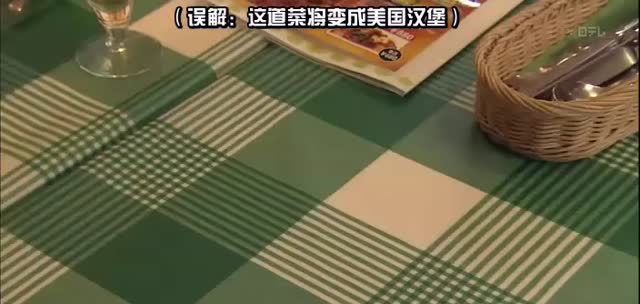
店員
こちら アメリカンバーガーになります。
This is an American burger-becoming.
生徒/ハルコ
なります? これから なるのかよ!?
"Becoming"? — Is it going to become one from now!?
ハルコ
じゃあ今の これは何!?
Then what is this right now!?
生徒
それがバイト敬語よ!
That's part-timer keigo!
ハルコ
正しくは…。
The correct way is...
Speaking notes
〜になります
〜になります = "become" used for "is"
The 「なる」 in 「こちら麻婆豆腐になります」 is the most classic example of 「バイト敬語」. • 「なる」 originally means "change": 氷が水になる (ice turns into water) • 「です/でございます」 is what expresses "identification": これは麻婆豆腐です Restaurants say "become" in place of "is," which sounds indirect and soft, but in effect weakens "is" into "is about to become." Correct form: 「こちらが麻婆豆腐でございます」 (polite).
お待たせしました
お待たせしました = humble お〜する
「お待たせしました」 = "sorry to have kept you waiting." Structure: お+待たせ (causative)+しました. In a restaurant it is a standard, correct humble expression. Compare: • 待たせた: (plain) • お待たせしました: (humble + polite) • お待たせいたしました: (more formal, using 「いたす」) Note: this phrase is fine by itself; what is wrong is the 「〜になります」 that follows. Whether keigo is right or wrong must be judged element by element, not by vetoing the whole sentence.
なるのかよ!?
〜のかよ = (retort) are you saying...?
「これからなるのかよ!?」 = "so it's going to become one from now!?" 「〜のかよ」 is a masculine retort expressing "what are you talking about?" The students' jab hits the heart of the problem: "になります" implies a future change, whereas the thing on the plate is already mapo tofu.
Higuchi asks whether the customers are fine on drinks and then confirms the order with 「でよろしかったでしょうか」. The students pick at each phrase.
店員
お飲み物は 大丈夫ですか?
Are you all right on drinks?
ハルコ/生徒
大丈夫じゃない時も あるの? イカサマですか!?
Are there times when it's not all right? — Is this a swindle!?
樋口/ハルコ
イカサマ!? 静かに!
A swindle!? — Quiet!
樋口
あっ!すいませんね~もう…。
Ah! I'm very sorry about this, really...
店員
ご注文の方は以上で よろしかったでしょうか?
Was the order side all right with the above?
生徒
ご注文じゃない方も あるの?
Is there a side that's not the order?
ハルコ/樋口
あのですね…。 アッハハ…すいません。
Um, you see... — Ahaha... I'm sorry.
Speaking notes
大丈夫ですか
大丈夫ですか = widened use of 「大丈夫」
「お飲み物は大丈夫ですか?」 is typical 「バイト敬語」: it uses 「大丈夫」 in place of "would you like / is that enough?" • Original meaning: 「いかがですか」「よろしいですか」 • In everyday speech: 「大丈夫」 has become an all-purpose word: it can mean "no thanks," "yes, fine," or "no problem." The students' doubt is 「大丈夫じゃない時もあるの?」, because the only meaning of 「大丈夫」 they have learned is "okay."
ご注文の方は
ご注文の方は = the "〜の方" of part-timer keigo
The 「方」 in 「ご注文の方は〜」 is the second type of 「バイト敬語」: "〜のほう." 「方」 has two proper uses: ① comparison: AよりBの方が〜 ② direction / vague reference: 東京の方から来ました The 「ご注文の方」 in the restaurant has neither comparison nor direction; it is just an attempt to make the speech sound "softer." That is why the students ask: 「ご注文じゃない方もあるの?」 — taken literally, 「方」 becomes "the other side."
「以上でよろしかったでしょうか?」 = a past-tense confirmation, used for "the order we just took." The error is the past tense 「た」: • Correct: 「以上でよろしいでしょうか?」 (present-tense confirmation) • Misused: 「よろしかったでしょうか?」 (past tense) The clerk uses the past tense to mean "is what you ordered just now correct?," but it ends up sounding as if they are asking about something that is already over. 【Keigo supplement】 「よろしい」 = the formal form of 「いい」.
Diana can't help asking Haruko why Japanese people use incorrect keigo when correct keigo exists.
ダイアナ
日本人 なぜ 間違った敬語を使うの?
Why do Japanese people use wrong keigo?
ハルコ
いや なぜって…。
Well, why, you ask...
金麗/ハルコ
信じられない! ダイアナ!?
I can't believe it! — Diana!?
ジャック
彼女が怒るのも 無理はありません。→
It's no wonder she's angry.
ジャック
私たちは 正しい日本語を 学びに来たのですから。
After all, we came to learn correct Japanese.
ダイアナ
嫌です!お店の日本語 デタラメです!
I refuse! The Japanese at shops is nonsense!
Speaking notes
無理はありません
〜のも無理はない = it's no wonder that...
「彼女が怒るのも無理はありません」 = "it's only natural that she's angry." Pattern: 「〜のも無理はない」 = understandable, no wonder. Close equivalents: 「〜のも当然だ」, 「〜のも仕方がない」. Jack uses the polite 「ありません」 (です/ます style).
学びに来た
V stem+に来た+のですから = because we came to...
「学びに来たのですから」 = "because we came to learn." The word here is 「学ぶ」, not 「勉強する」: • 学ぶ: written and formal, with the sense of "learning something, taking it in" • 勉強する: colloquial, focusing on "the process of studying"
デタラメ
デタラメ = nonsense, baseless
「でたらめ」 = groundless, haphazard. It is used for "words that have no credibility" or "slapdash ways of doing things." Diana says 「お店の日本語デタラメです」, using the usually polite 「です」 ending while the content is extremely strong.
Manager Higuchi hears Diana say to his face that the Japanese at the shop is wrong. He loses his temper and snaps at the foreign part-timer, and at Haruko, who backs her up.
樋口
アルバイトが偉そうなこと 言うんじゃないよ!
A part-timer shouldn't say such presumptuous things!
ハルコ
どうしたの!?
What's going on!?
ダイアナ
間違った日本語 喋りたくない!
I don't want to speak wrong Japanese!
樋口
そんなワガママが 通用すると思ってんのか!
Do you think that kind of selfishness will fly!?
ジャック
彼女は ただ…ちゃんとした敬語を 使いたかっただけなんです。
She just... wanted to use proper keigo.
樋口
ちゃんとしてますよ! うちは→
We are proper! We
樋口
本社のマニュアル通り やってんですから!!
do everything by the head office's manual!!
ハルコ
マニュアルったって…。
Manual or not...
Speaking notes
偉そうなこと言うんじゃないよ
偉そうなこと言うんじゃないよ = don't talk so high and mighty
「偉そうなこと」 = things said as if one were important. 【Comparing そう / よう / みたい / らしい】 「〜そうだ」 attaches to the stem of adjectives and shows "looks like..." (an impression from appearance): • 偉そう = looks important (not necessarily true; negative) • おいしそう = looks tasty (with anticipation) • 〜らしい = living up to the name (偉い人らしい = behaving like a big shot, positive) By saying 「偉そうな」, the manager doesn't mean Diana is actually 偉い, but "you are acting like you're lecturing me." 「〜んじゃないよ」 = a prohibition or scolding: don't...
マニュアル通り
マニュアル通り = exactly by the manual
「マニュアル通り」 = by the book, exactly following the manual. 「〜通り」 after a noun means "as, in accordance with": • 「予定通り」 = as planned • 「言われた通り」 = as told Haruko's 「マニュアルったって…」 is a contraction of 「と言ったって」: even if you say it's the manual.
Higuchi insists on a uniform service by the manual, while Diana wants staff to speak their own words. Neither will give way.
ダイアナ
お店 人と人! マニュアルいらない!
A restaurant is person to person! No manual needed!
ダイアナ
なぜ 自分の言葉 喋らないですか?
Why don't you speak your own words?
樋口
サービスを 統一するためにやってんだよ!
We do it to make the service uniform!
ダイアナ/樋口
日本人 バカ! バカ!?バカって…。
Japanese people, fools! Fools! — Fools!? You call us fools...
ハルコ
ちょちょっ…。正直→
Wait, wait... Honestly,
ハルコ
このマニュアルに 問題があるっていうか こう…。
there's a problem with this manual, or rather, you know...
樋口
問題あるのは彼女の方でしょ! 何でバイトから→
The one with the problem is her! Why do I have to get
樋口
クレームつけられなきゃ いけないんだよ。しかも外国人に!
a complaint from a part-timer? And a foreigner, at that!
Speaking notes
なぜ〜ないですか
なぜ〜ないですか = a learner's negative question
「なぜ自分の言葉喋らないですか?」 = "why don't you speak your own words?" Grammatically, the correct forms would be 「喋らないんですか」 or 「喋らないのですか」. Diana's 「〜ないですか」 is a common deviation among learners forming negative questions in polite style. Note that the whole sentence drops the particle 「を」 (自分の言葉を) and also lacks 「の」. Such particle-dropping is common in speech and learner Japanese.
クレームをつける
クレームをつける = to lodge a complaint
The Japanese 「クレーム」 = a customer complaint. Unlike the English word "claim" (to assert), in Japanese it almost always means a negative complaint. • 「クレームをつける」 = to make a complaint • 「クレーム対応」 = handling complaints The manager's 「クレームつけられなきゃいけないんだよ」 uses the passive + 「なきゃいけない」: "why do I have to be complained at?" — the tone of a wronged, offended victim.
正直
正直 = honestly
「正直」 used as an adverb means "honestly, to tell the truth." It is a lead-in for gently introducing an opinion that's not easy to say: • 「正直、難しいと思います」 = Honestly, I think it's difficult Haruko is about to say 「このマニュアルに問題がある」 but falters. 「〜っていうか こう…」 is the most typical Japanese way of trailing off: start, correct yourself, give up.
Higuchi's remark about a "foreigner" angers Jin Li. The students in the class stand up one after another to back her, with Haruko caught in the middle.
金麗
外国人は 関係ないんじゃない!
Being a foreigner has nothing to do with it, does it!
生徒たち
そうだよ! そうだ!そうだよ!
That's right! That's right! That's right!
金麗/ハルコ
ダイアナ 正しいわよ。 ちょちょっ…。
Diana is right. — Wait, wait...
ハルコ
みんなね 面倒くさくなるから あっち行ってて…。
Everyone, this will only get more troublesome, so go over there...
樋口
日本中 どこ行ったってね→
All over Japan, wherever you go...
Speaking notes
関係ないんじゃない
関係ないんじゃない = it has nothing to do with it, does it?
「関係ないんじゃない!」 = "it's got nothing to do with that, has it!" Jin Li uses an assertive 「〜んじゃない」, nailing down her argument in question form: it is not a question but a declaration.
あっち行ってて
〜ていて = stay (like that) for a while
「あっち行っててよ」 = "go over there and stay there." 「行ってて」 is the contraction of 「行っていて」 and means "please stay in the state of being over there." Unlike 「行って」 (go), 「行ってて」 emphasizes "stay there and don't move."
どこ行ったってね
〜たって = no matter... (concessive)
「どこ行ったって」 = "no matter where you go." 「〜たって」 is the colloquial form of 「〜ても」 and means "whatever the condition, the result is the same": • 「何を言ったって無駄だ」 = No matter what you say, it's useless What the manager means: "all of Japan is full of such manuals; it's the same wherever you go."
Higuchi turns on Haruko, claiming that her school teaches half-baked Japanese, and asks whether she, as a teacher, isn't ashamed.
樋口
うちと同じようなマニュアル 使ってますよ。あっ…→
Other places use the same kind of manual as we do. Ah...
樋口/ハルコ
おたくの教え方が 悪いんじゃないの? はぁ?
Isn't it your teaching that's bad? — Huh?
樋口
おたくが 中途半端な日本語 教えたからじゃないの?
Isn't it because you taught them half-baked Japanese?
ダイアナ/ハルコ
間違った日本語 嫌です! ダイアナは引っ込んでて!
I hate wrong Japanese! — Diana, step back!
ハルコ
中途半端な日本語 教えたのは そっちの方でしょ!!
The ones who taught half-baked Japanese are you people, aren't they!!
樋口
外国人にね 間違い指摘されてんだよ?
You've had a foreigner point out your mistake, you know?
樋口
日本人として 恥ずかしくないわけ!?
Aren't you ashamed as a Japanese person!?
樋口
嫌なら 辞めてもらって 構わないんだぞ。
If you don't like it, I don't mind if you quit.
Speaking notes
おたく
おたく = you (at your place)
「おたく(お宅)」 = the other party's home or organization, used as "you (over there)." It is mostly used with people you aren't close to and want to keep at a distance: • The manager's 「おたくの教え方」 = the way you people teach • Unlike 「あなた」, 「おたく」 has a "workplace to workplace" flavor and carries a slight sarcasm. (The homophone 「オタク」 = "otaku" is a completely different word.)
〜んじゃないの
〜んじゃないの = isn't it that...? (accusing)
「悪いんじゃないの?」 = "isn't that your fault?" The manager uses question form, but in effect pushes the blame onto the other side. 「〜からじゃないの?」 works the same way: 「〜からではないか」 = "isn't it because...?", with the arbitrary certainty of "I bet that's it." This type of sentence is called a rhetorical question: it looks like asking, but it is passing judgment. Haruko's counterattack uses the same pattern: 「〜そっちの方でしょ!!」 — she fights back with the opponent's own weapon.
辞めてもらって構わない
辞めてもらって構わない = I don't mind if you quit
「辞めてもらって構わない」 = "it's fine with me if you quit (if you're unhappy)." 【Giving and receiving verbs】 • 「辞めてもらう」 = (I) have you leave: the subject is the employer, and what he "asks" the other to do is something favorable or acceptable to himself This is a euphemism for firing in Japanese workplaces: instead of saying 「クビだ」 directly, one says 「辞めてもらう」. 「構わない」 = don't mind, don't care; with 「んだぞ」 added, it becomes a condescending final ultimatum.
Pushed past her limit, Haruko blurts out that they will quit first. Higuchi tells them to go home and never come back.
ハルコ
そんなこと 言われなくったってね→
You don't have to tell us that,
ハルコ
こっちから 辞めてやるわよ こんな店!
we're quitting on our own! A place like this!
樋口
帰ってくれ! 二度と来るな。
Get out! Don't ever come back.
ハルコ/生徒
店長さん! ダイアナ 我慢しなくていいよ。
Manager! — Diana, you don't have to put up with it.
ハルコ/ダイアナ
もう帰ろう…ねっ! 私 辞めるって言ってない…。
Let's go home... okay! — I didn't say I'm quitting...
ハルコ
えっ!?
Huh!?
ジャック
ダイアナは単に 意見をしたかっただけなのでは…。
Diana just wanted to give her opinion, didn't she...
ハルコ
ハルコのバカ~…。
Haruko, you idiot~...
Speaking notes
言われなくったって
言われなくったって = even if you don't tell me
「言われなくったって」 = "even if you didn't say so (I would...)." 「〜なくったって」 is the emphatic colloquial form of 「〜なくても」. • 「言われなくたってわかってる」 = I know that without being told Here Haruko is so angry that she jumps ahead and "quits" on Diana's behalf, using 「辞めてやるわよ」, where 「〜てやる」 = "I'll do it, just to spite you" (a confrontational giving verb).
我慢しなくていい
我慢しなくていい = you don't have to put up with it
「我慢しなくていいよ」 = "you don't have to bear it." 「〜なくていい」 means "it's fine not to...".
単に〜だけ
単に〜だけ = merely, only
「単に意見をしたかっただけ」 = "she just wanted to give her opinion." 「単に」 and 「だけ」 are used together as a double limitation, meaning "there was no other intention whatsoever." Jack speaks with 「〜だけなのでは…」 ("isn't it just...?"), gently offering a view.
Back at school, Takasu rages at Haruko for charging ahead alone and getting a part-timer who never meant to quit fired. Haruko protests that they treated her like a fool.
鷹栖
バカか お前は!? 一人で突っ走って→
Are you an idiot!? Charging ahead all by yourself,
鷹栖/ハルコ
辞めるつもりのないバイト 辞めさせて! だって!
you made a part-timer who had no intention of quitting leave! — But!
ハルコ
教え方が悪いって バカにされたんだよ!
They looked down on us by saying our teaching is bad!
鷹栖
ペーペーの お前に プライドなんかあるのか?
What pride could a rookie like you have?
鷹栖
敬語も ろくに知らないくせに!
You don't even know keigo properly!
ハルコ
知ってます! 滅多に使わないだけです!
I do know it! I just rarely use it!
鷹栖
そこ威張るな! これ以上 余計なことするなよ。
Don't brag about that! Don't make any more unnecessary trouble.
Speaking notes
ろくに知らないくせに
ろくに知らないくせに = even though you hardly know it
「AくせにB」 = "even though A, you B." It is used to reproach someone for inconsistency, with strong contempt: • 「知らないくせに偉そうに」 = acting high and mighty when you don't even know • 「ろくに〜ない」 = not properly doing... (「ろくに」 must be followed by a negative) Takasu hits the mark: in the restaurant Haruko criticized the manager's keigo on Diana's behalf, yet hasn't fully learned keigo herself.
辞めさせて
辞めさせて = made (someone) quit
「辞めさせる」 = to make (someone) quit, formed from the causative of 「辞める」. Takasu's 「辞めるつもりのないバイト、辞めさせて!」 uses the causative of "quit" to point at Haruko's responsibility: Diana didn't quit by herself; you made her quit. • 辞めた: quit on one's own • 辞めさせた: was forced or driven to leave With a change in grammar, the attribution of responsibility changes completely.
威張るな
威張る = to throw one's weight around, to brag
「威張る」 = to act important, to be arrogant. Haruko says 「知ってます!滅多に使わないだけです!」, turning "I can't" into "I rarely use it," and Takasu cuts off her excuse with 「威張るな」. 「そこ」 means "that point (the thing you're bragging about)". Note how he ends: 「余計なことするなよ」 — 「余計」 = unnecessary.
Why teachers can't find part-time jobs for students
0:00 / 0:23
This scene
Unconvinced, Haruko says a part-time job is easy to find if you look. Shibuya tells her that, by the rules, a teacher is not allowed to arrange part-time jobs for students.
ハルコ
何が余計なことよ。
What do you mean, unnecessary trouble?
渋谷
教師が生徒に アルバイトを斡旋しては いけないことになってるんです。
It's a rule that teachers are not allowed to arrange part-time jobs for students.
ハルコ
斡旋するっつったって… バイトなんか 探せば→
Arrange or not, a part-time job, if you just look,
ハルコ/鷹栖
いくらだってあるでしょ。 ないんだよ!
there's plenty of them, isn't there? — There aren't!
鷹栖
日本語が不自由な上に 文化の違いとかがあってさ。
On top of their not being fluent in Japanese, there are things like cultural differences, you see.
鷹栖
できれば辞めない方が よかったんです。
If possible, it would have been better if she hadn't quit.
Speaking notes
斡旋
斡旋 = to mediate, to arrange
「斡旋(あっせん)」 = to act as an intermediary, to arrange. It is mainly used in formal contexts such as jobs and dispute mediation: • 「就職を斡旋する」 = to arrange a job • 「斡旋業者」 = an agency, a broker Shibuya uses the regulation-style 「〜ことになっている」 ("it is set that..."): not "I think it's not allowed," but "the system stipulates it."
探せばいくらだってある
いくらだってある = there are plenty
「いくらだってある」 = "there's any amount of them." 「いくら」 + 「だって」 = "any quantity", stressing an unlimited amount.
〜上に
〜上に = on top of that
「AうえにB」 = "not only A, but also B" (piling up). It is mostly used for stacking negative or positive factors: • 「雨の上に風も強い」 = rain, and on top of that a strong wind 「〜とかがあってさ」 is a colloquial way of listing without being exhaustive: "things like cultural differences."